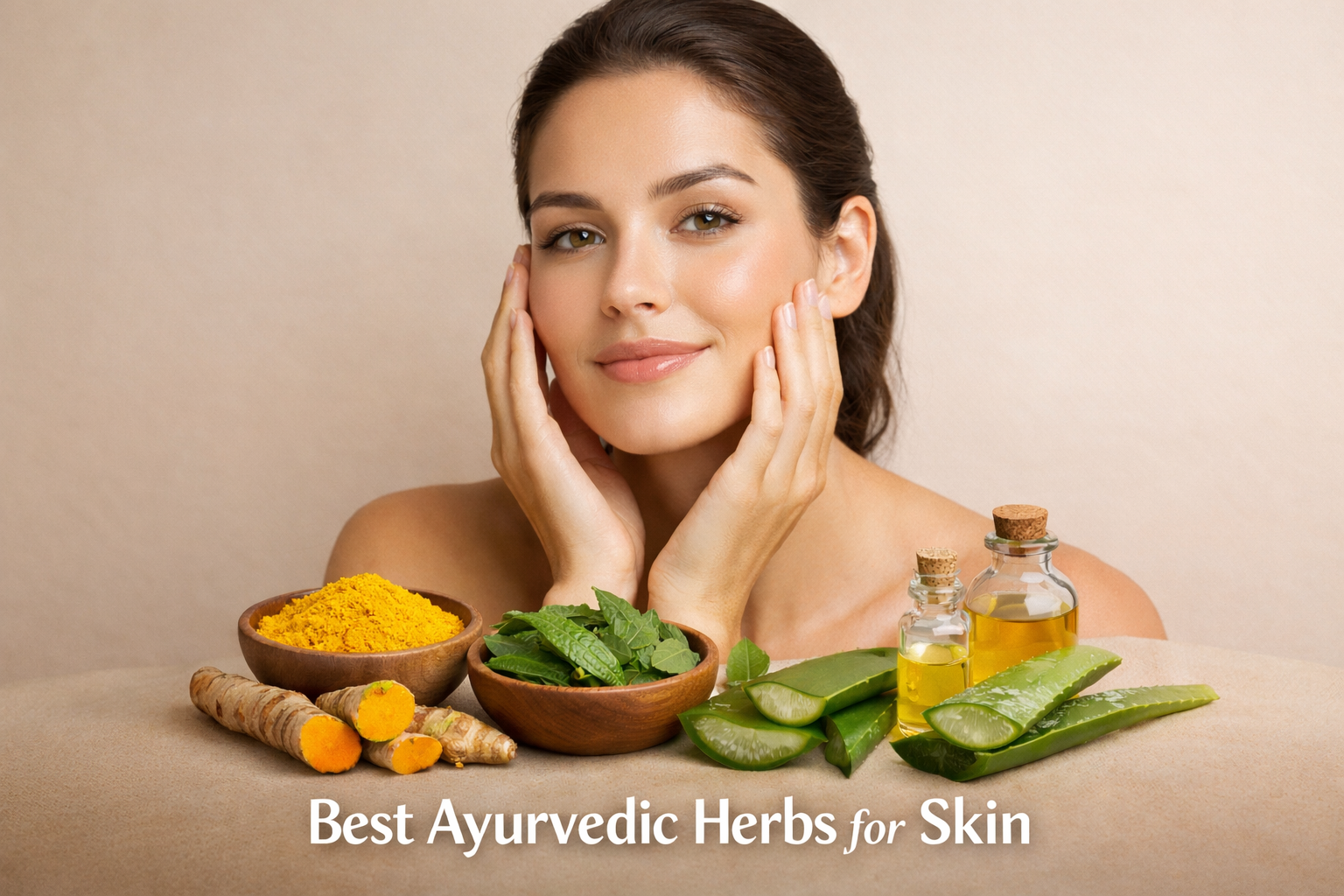
Best Ayurvedic Herbs For Skin: Natural Support For Radiant Skin
Best Ayurvedic Herbs for Skin: Natural Support for Healthy, Radiant Skin
Ayurvedic herbs have been used in skincare for centuries to support natural healing, balance, and long-term skin health. Instead of harsh chemicals or quick fixes,
Ayurvedic skincare focuses on nourishing the skin from within while supporting the body’s natural detox and repair systems.
Today, many people are turning back to these traditional herbs as part of a more balanced and sustainable skincare routine.
Whether you are dealing with dryness, irritation, breakouts, or early signs of aging, Ayurvedic herbs offer a gentle, natural approach that works with your body rather than against it.
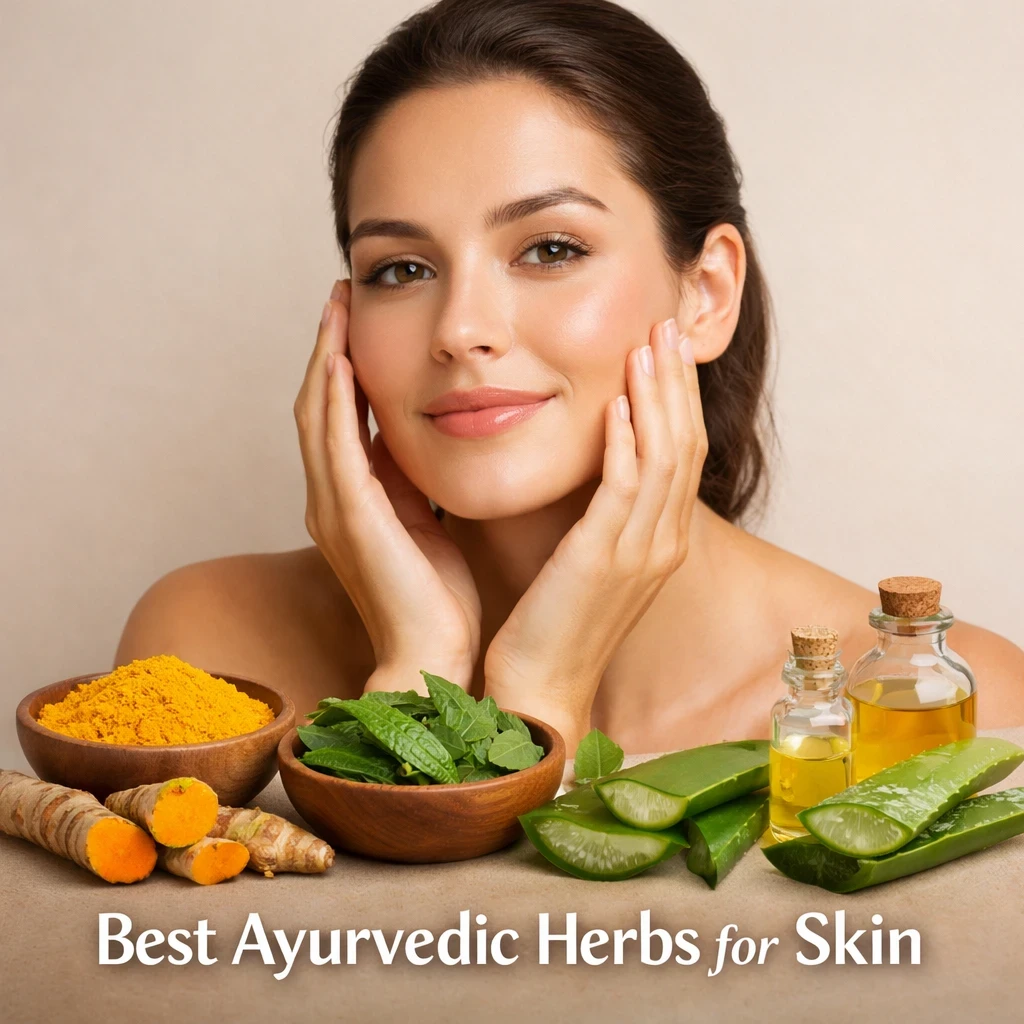
What Are Ayurvedic Herbs for Skin?
These fabulous herbs for skin come from ancient Indian medicine, where skin health is seen as a reflection of internal balance.
These herbs are carefully selected based on their ability to cool inflammation, support detoxification, improve circulation, and nourish tissues.
Rather than targeting just one symptom, Ayurvedic skincare aims to address the root cause of skin issues. This could include stress, poor digestion, toxin buildup, or imbalance in the body’s natural systems.
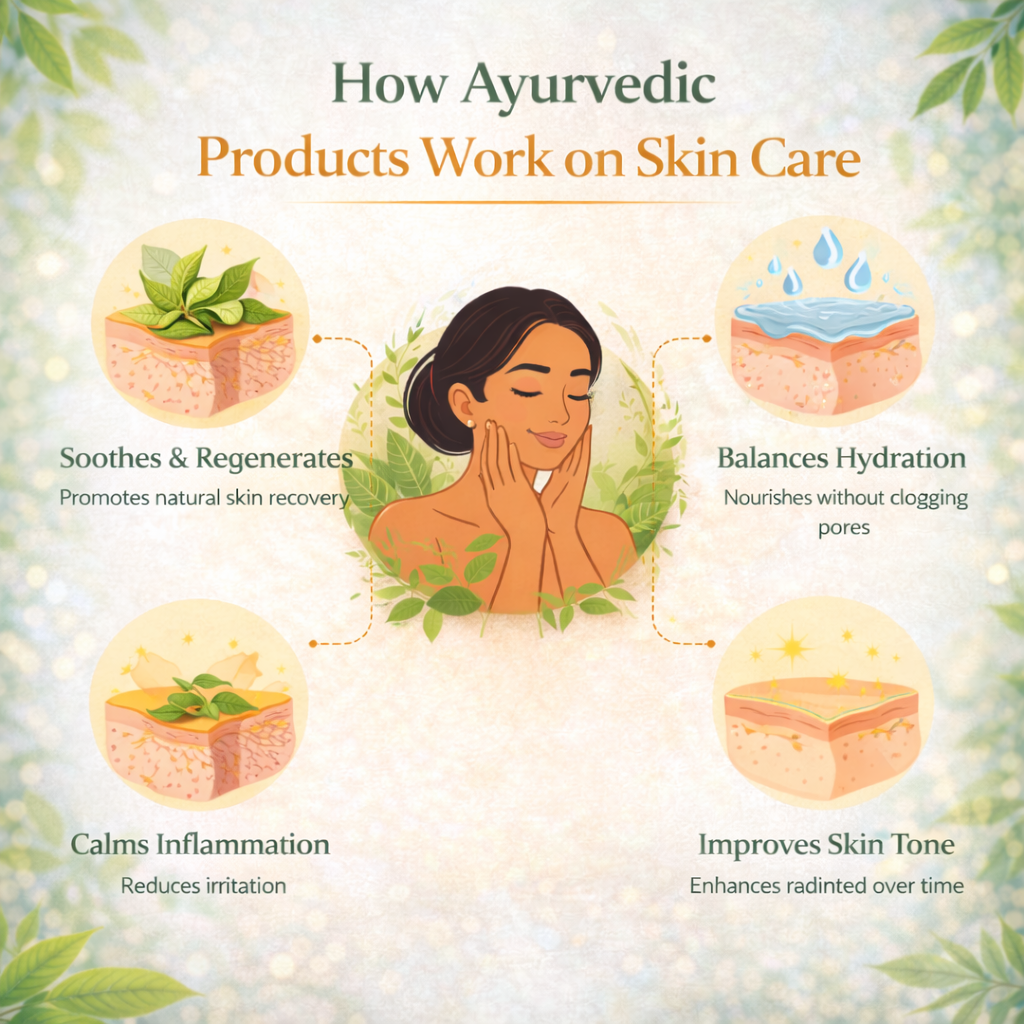
How Ayurvedic Herbs Support Skin Health
The reason Ayurvedic herbs for skincare are so effective is because they work on multiple levels at once.
They do not just sit on the surface of the skin but help improve internal processes that directly affect how your skin looks and feels.
- Support natural detox pathways
- Reduce inflammation and redness
- Improve blood flow and nutrient delivery
- Promote collagen and tissue repair
- Help balance oil production
This whole-body approach is why Ayurvedic herbs are often used both topically and internally for better results. Read Ayurvedic herbs for wellness.
Best Ayurvedic Herbs for Skin Health
There are several standout herbs that are widely considered among the top Ayurvedic herbs for skin. Each one offers unique benefits depending on your skin concerns.
Neem
Neem is known for its powerful cleansing and antibacterial properties. It is commonly used for acne-prone or oily skin as it helps reduce breakouts and calm irritation.
It also supports detoxification, which can be helpful if skin issues are linked to internal imbalance.
Turmeric
Turmeric is one of the most well-known Ayurvedic herbs for skin. It helps reduce inflammation, brighten skin tone, and support healing.
It is often used for dull skin, pigmentation, and redness, making it a key ingredient in many natural skincare formulations.
Aloe Vera
Aloe vera is widely used for its soothing and hydrating effects. It helps calm irritated skin, reduce dryness, and support recovery after sun exposure or environmental stress.
This makes it ideal for sensitive or reactive skin types.
Manjistha
Manjistha is known as a blood-purifying herb in Ayurveda. It helps improve circulation and supports detoxification, which can lead to clearer, healthier-looking skin.
It is often used for chronic skin issues such as uneven tone or recurring breakouts.
Sandalwood
Sandalwood has cooling and calming properties that make it particularly useful for irritated or inflamed skin. It can help reduce redness and promote a more even complexion.
It is also commonly used in face masks and herbal pastes.
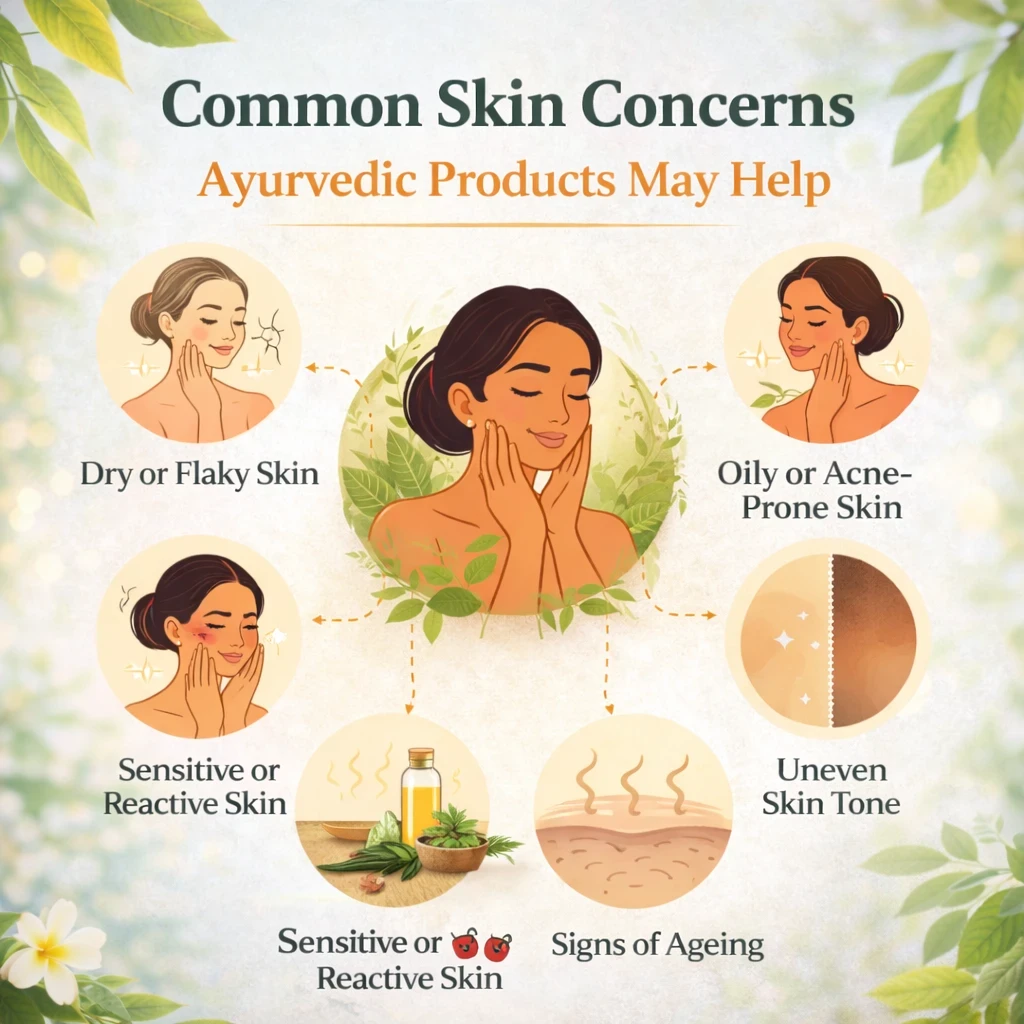 Common Skin Concerns Ayurvedic Herbs May Help
The best Ayurvedic herbs for skin can support a wide range of skin concerns. While results vary, many people find them helpful as part of a consistent routine.
- Acne and breakouts
- Dry or flaky skin
- Redness and irritation
- Uneven skin tone
- Early signs of aging
- Sensitivity and reactivity
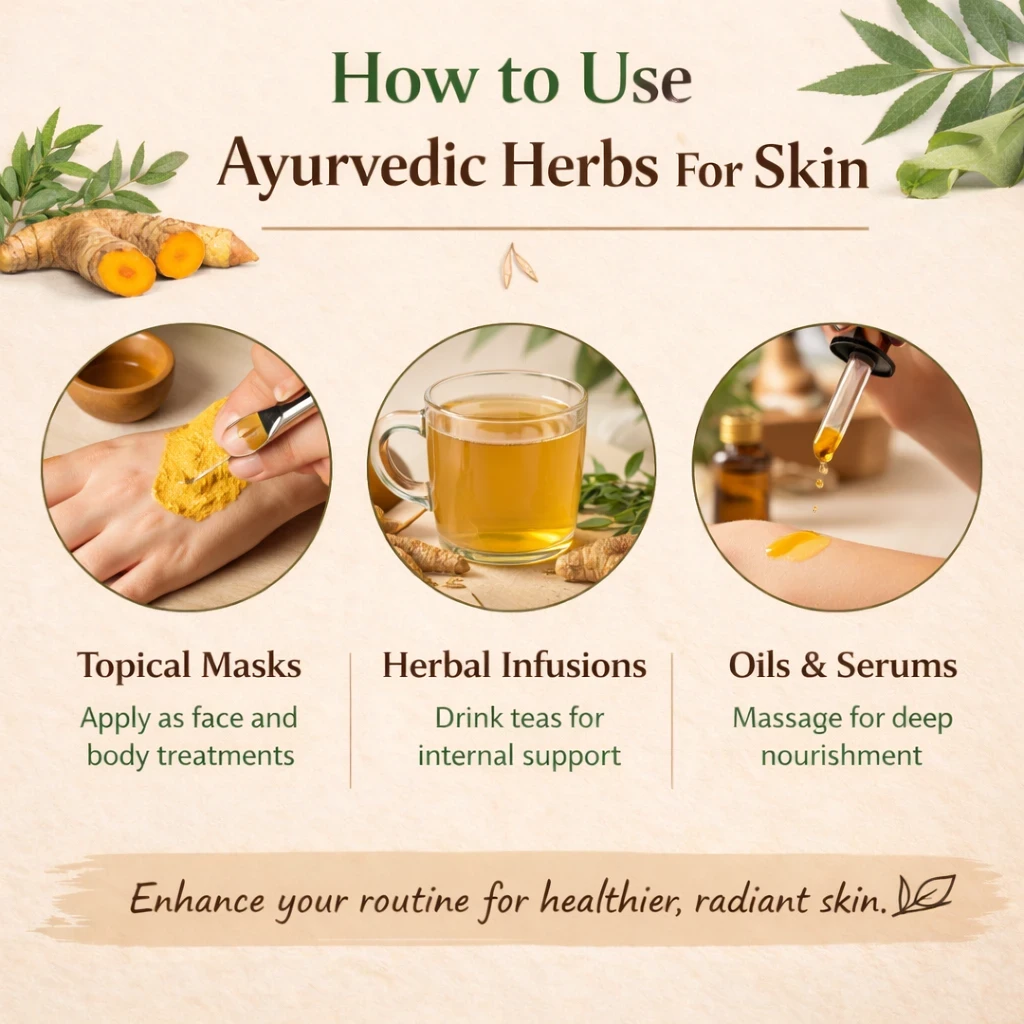
How to Use Ayurvedic Herbs for Skin
Using ancient medicine herbs for skin can be simple once you understand the different forms available.
Many products combine multiple herbs for a more balanced effect.
Topical Application
Herbal creams, oils, and face masks allow you to apply the herbs directly to your skin. This can help with hydration, calming irritation, and improving texture.
Internal Support
Some Ayurvedic herbs are taken internally as supplements or teas.
This approach focuses on improving digestion, detoxification, and overall balance, which can reflect in healthier skin.
Daily Routine Integration
Consistency matters more than intensity. Gentle daily use often produces better results than occasional heavy treatments.

Why Quality Matters in Ayurvedic Skin Care Products
Not all herbal products are created equal. The effectiveness of Ayurvedic herbs for skin depends heavily on sourcing, preparation, and formulation.
High-quality products are made using carefully selected herbs, traditional preparation methods, and minimal additives. This helps preserve the natural benefits of each ingredient.
Lower-quality products may contain fillers or poorly processed herbs, which can reduce effectiveness or irritate the skin.
Shop for Quality Assured Ayurvedic Skin Care Products
If you are looking to explore the benefits of Ayurvedic herbs, choosing trusted, well-formulated products is essential.
A curated selection of traditional and modern Ayurvedic skincare options can make it easier to find what suits your needs.
Shop for Quality Assured Ayurvedic Skin Care Products Here
These products are designed to combine time-tested herbal knowledge with modern quality standards, helping you build a reliable skincare routine.
What Ayurvedic Herbs Can and Cannot Do
It is important to stay realistic when using best Ayurvedic herbs for skin. While they can support healthier skin over time, they are not instant cures.
They work best when used consistently and alongside good lifestyle habits such as proper hydration, balanced nutrition, and stress management.
For more severe or persistent skin conditions, it may be helpful to combine natural approaches with professional medical advice.
Frequently Asked Questions
What are the best Ayurvedic herbs for skin?
The best skincare Ayurvedic herbs typically include neem, turmeric, aloe vera, manjistha, and sandalwood. Each herb offers different benefits, from calming inflammation to supporting clearer, more balanced skin.
How do Ayurvedic herbs improve skin health?
Ayurvedic herbs support skin health by reducing inflammation, improving circulation, and helping the body detox naturally.
This inside-out approach is a key reason why the Ayurvedic herbs for skin are used for long-term results.
Can Ayurvedic herbs help with acne?
Yes, many of the best Ayurvedic herbs for skin, especially neem and turmeric, are commonly used to help manage acne by reducing bacteria and calming irritation.
Are Ayurvedic herbs suitable for sensitive skin?
Most Ayurvedic herbs are gentle, but it is always recommended to do a patch test first. Even the top Ayurvedic herbs for skin can cause reactions if your skin is particularly sensitive.
How long does it take to see results?
Results can vary, but many people notice gradual improvements over a few weeks. Consistent use of Ayurvedic herbs for skin is important for noticeable and lasting changes.
Can I use Ayurvedic herbs daily?
Yes, many herbal products are designed for daily use. In fact, regular use of these wonderful herbs for skin often leads to better long-term outcomes.
Do Ayurvedic herbs help with aging skin?
Some herbs support hydration, collagen production, and skin repair, which may help reduce the appearance of fine lines and maintain a healthier skin texture over time.
Where can I find quality Ayurvedic skincare products?
You can explore trusted formulations here: Shop for Quality Assured Ayurvedic Skin Care Products. Choosing high-quality products ensures you get the full benefit of these ancient herbs for skincare.
Final Thoughts
Best Ayurvedic herbs for skin offer a natural, balanced approach to skincare that focuses on long-term health rather than quick fixes.
By supporting both internal and external processes, these herbs can help improve the overall look and feel of your skin.
With the right products and consistent use, Ayurvedic skincare can become a simple but effective part of your daily routine, helping you maintain healthier, more resilient skin over time.