How Anxiety Affects Perception It Changes How
How Anxiety Affects Perception
How anxiety affects perception is not just a psychological concept — it is a lived experience.
When anxiety rises, the brain shifts into protection mode.
Sights feel sharper, sounds louder, and neutral events can suddenly feel loaded with meaning.
The world hasn’t changed, but your interpretation of it has.
This shift happens fast and often outside conscious awareness.
Understanding how anxiety affects perception helps you separate real external threat from internal alarm signals.
That distinction alone can reduce the intensity of anxious episodes.
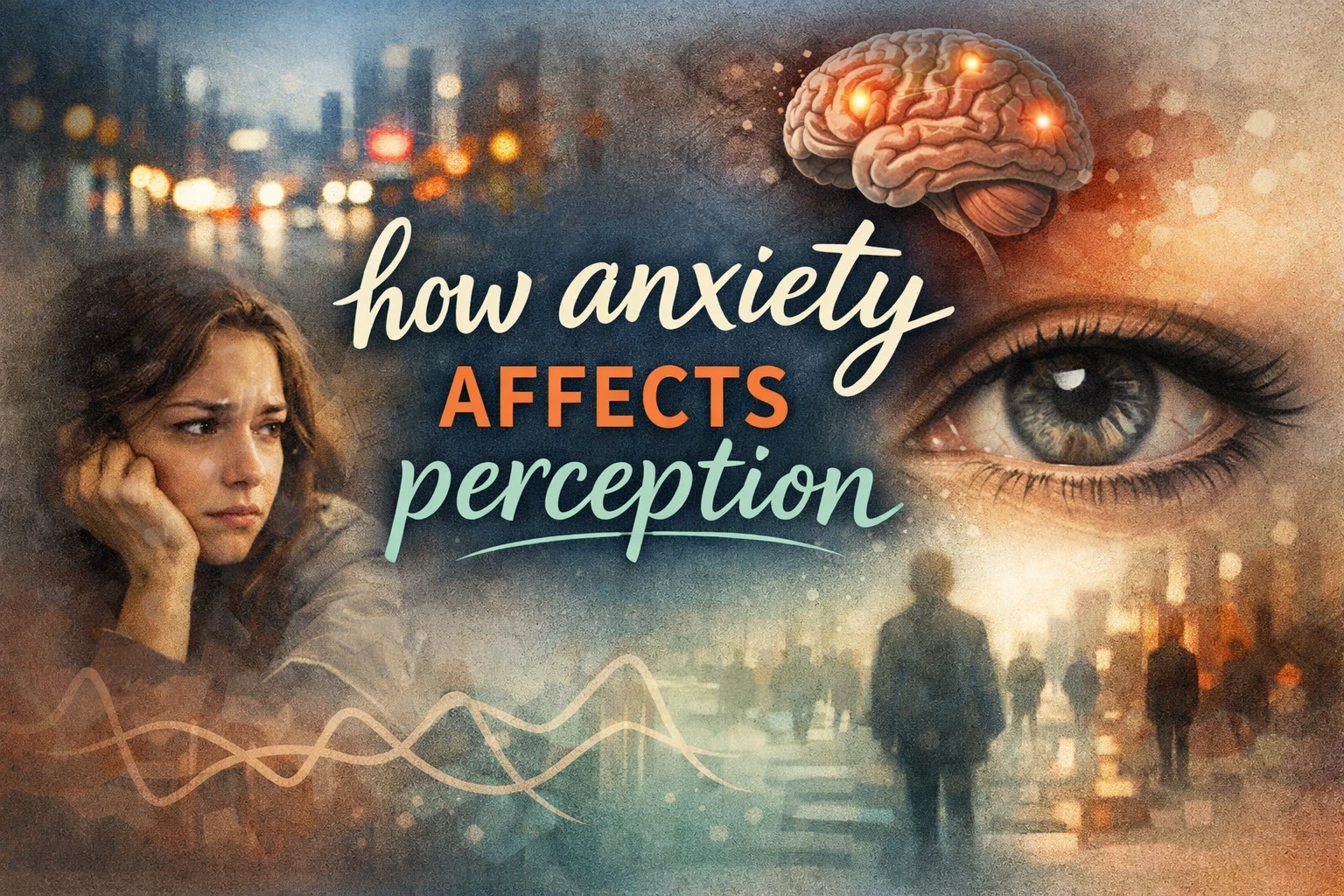
The Brain on Alert: Why Perception Changes
Anxiety activates the amygdala and related stress pathways. These systems evolved to detect danger quickly.
The problem is that modern stressors — emails, conversations, financial concerns — trigger the same ancient alarm response.
When this happens:
• Neutral facial expressions can look hostile
• Small body sensations feel threatening
• Ambiguous situations seem negative
• Future events are imagined as worst-case scenarios
This is not weakness. It is a survival mechanism misfiring.
If you’ve read our article on
https://beyond-pain-relief.com/what-is-chronic-pain-a-clear-human-explanation/
you’ll recognize a similar theme: the nervous system can amplify signals when it perceives risk.
The same amplification happens with anxiety and perception.
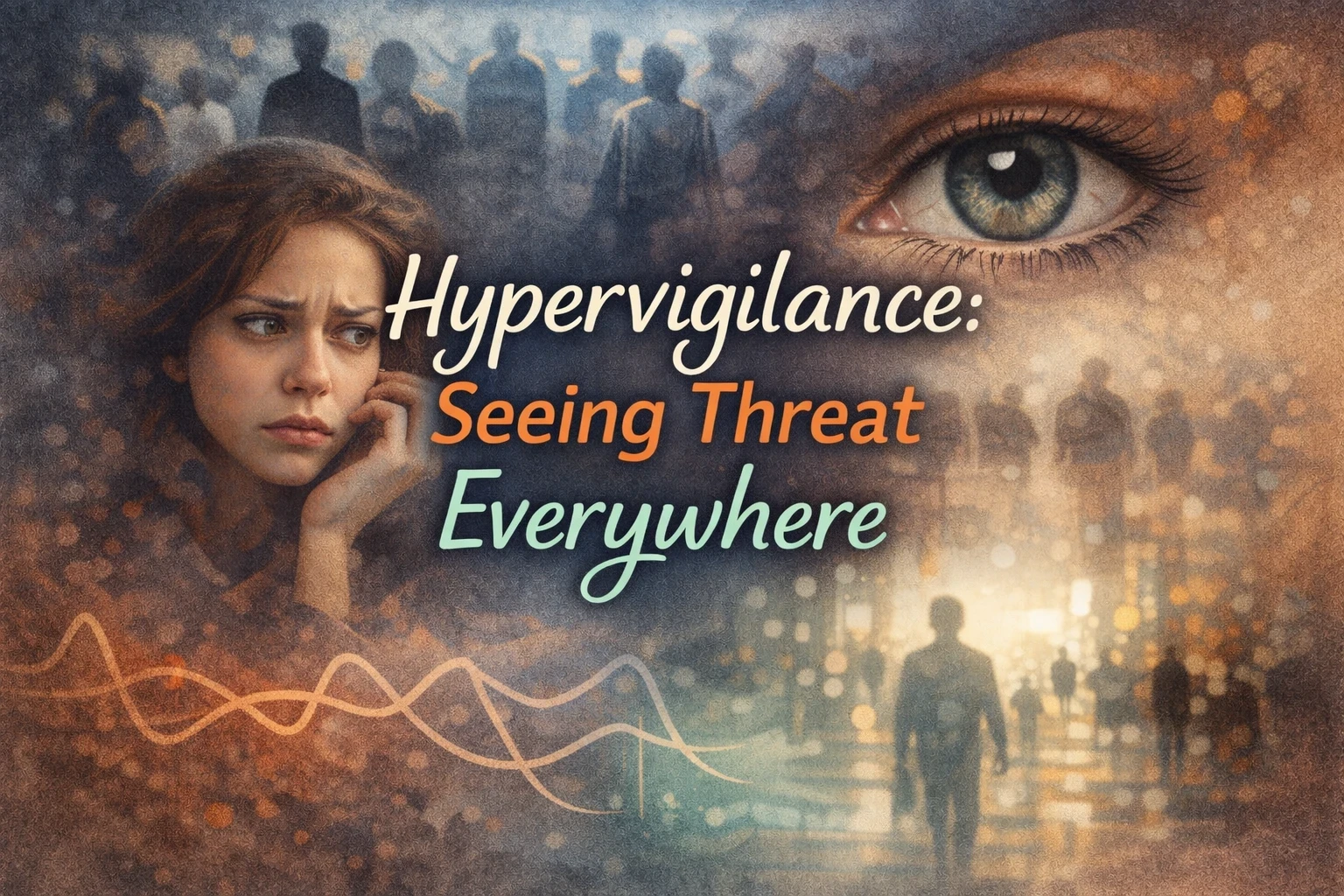
Hypervigilance: Seeing Threat Everywhere
One of the clearest examples of how anxiety affects perception is hypervigilance.
The anxious brain constantly scans for problems.
You may notice:
• Overanalyzing text messages
• Interpreting silence as rejection
• Reading neutral feedback as criticism
• Feeling physically unsafe in safe environments
Your perception narrows toward potential danger. This is efficient in true emergencies.
It is exhausting in daily life.
Research shows anxiety biases attention toward threatening stimuli and away from neutral or positive cues.
That imbalance reshapes your lived experience of the world.
Body Sensations and Misinterpretation
Anxiety does not just distort external perception. It alters internal perception too.
A mild increase in heart rate may be interpreted as a serious health issue.
A small muscle twitch can feel alarming. Normal digestive shifts may be seen as signs of disease.
This connects closely to nervous system sensitivity. If you’ve explored
https://beyond-pain-relief.com/movement-load-and-pain-sensitivity/
you’ll know that the brain can amplify signals when it expects danger.
Anxiety works the same way — expectation shapes sensation.
When you believe something is wrong, perception adjusts to confirm that belief.
Cognitive Distortions: The Mind’s Filters
How anxiety affects perception is deeply tied to cognitive distortions.
These are habitual thinking patterns that color reality.
Common distortions include:
Catastrophizing – Expecting the worst possible outcome
Mind reading – You mistakenly think that other people think about you in a negative way.
All-or-nothing thinking – Viewing situations as total success or failure
Selective attention – Noticing only negative details
Over time, these distortions feel like objective truth. But they are interpretations, not facts.
Learning to label these patterns gently — without judgment — can weaken their grip.
Social Perception Under Anxiety
Anxiety especially affects how we interpret other people.
A delayed reply becomes rejection.
A neutral tone sounds annoyed.
A busy friend seems distant.
Your brain fills in gaps with threat-based assumptions.
This is one reason anxiety can strain relationships. Not because the threat is real — but because perception feels real.
Understanding how anxiety affects perception socially can create space for pause.
Before reacting, ask: “Is this evidence, or is this my anxious filter?”
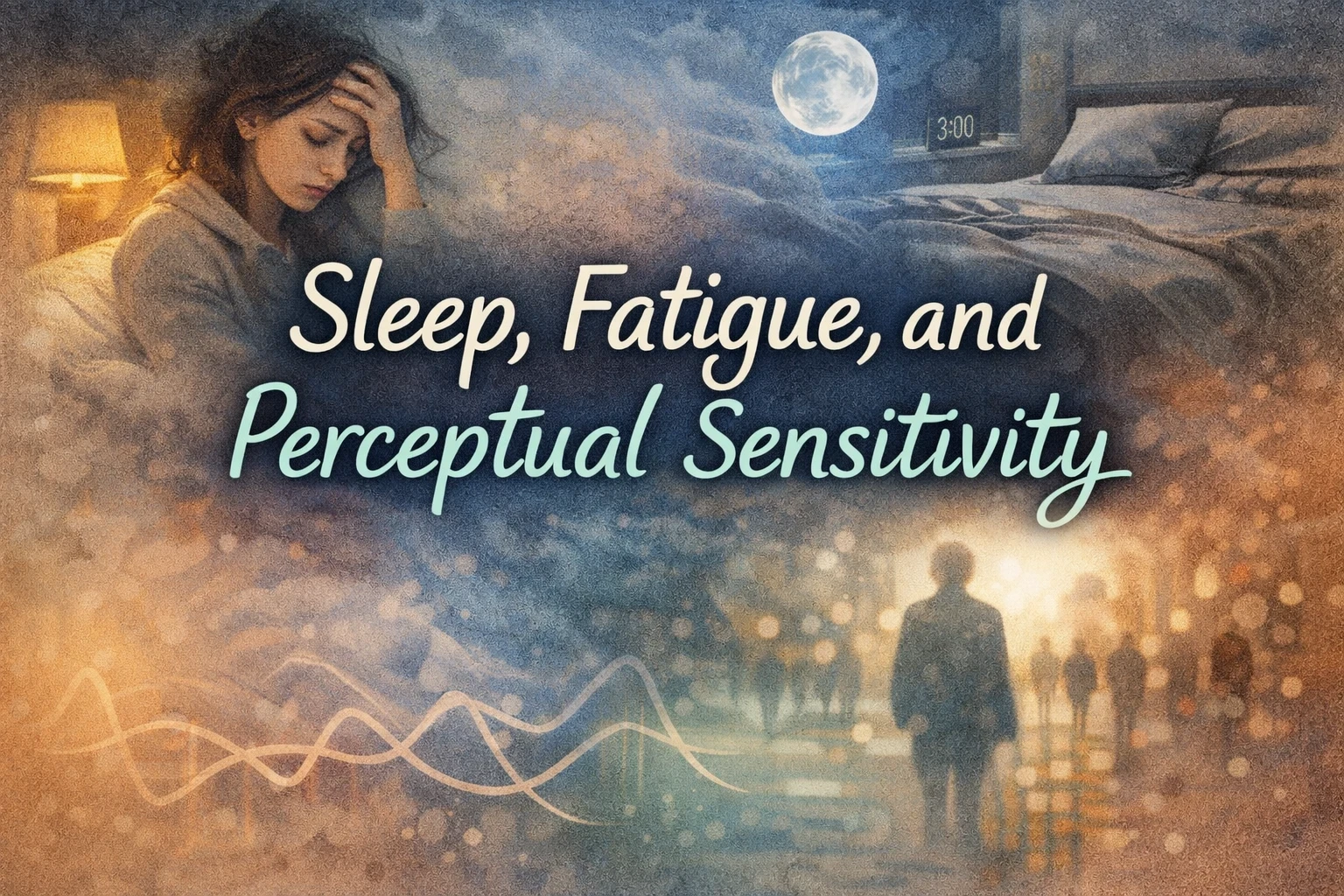
Sleep, Fatigue, and Perceptual Sensitivity
Sleep deprivation intensifies perceptual distortion.
When the brain is tired, emotional regulation declines and threat detection increases.
Even one poor night of sleep can:
• Heighten emotional reactivity
• Reduce rational interpretation
• Increase negative bias
If anxiety has been persistent, reviewing
https://beyond-pain-relief.com/sleep-hygiene-tips-practical-habits-that-improve-sleep-quality/
can support more stable perception over time.
A rested brain interprets the world more accurately.
The Feedback Loop
Anxiety affects perception. Distorted perception increases anxiety. This creates a feedback loop.
Example:
You feel slightly nervous.
You interpret someone’s expression as negative.
That interpretation increases anxiety.
Heightened anxiety makes perception even more negative.
Breaking this loop does not require eliminating anxiety. It requires gently questioning interpretation.
Practical Ways to Reset Perception
- Slow down sensory input
Pause and take five slow breaths. This signals safety to the nervous system. - Name the filter
Say internally: “This might be anxiety affecting perception.” - Seek neutral evidence
What facts support this interpretation? What facts don’t? - Regulate the body first
Light movement, hydration, and steady breathing can recalibrate perception faster than logic alone. - Reduce constant stimulation
News cycles, social media, and overwork intensify threat bias.
What Anxiety Can and Can’t Do
Anxiety can distort perception.
It can amplify neutral signals.
It can narrow attention to threat.
But anxiety cannot rewrite objective reality. It cannot predict the future.
And it cannot permanently damage your ability to interpret the world accurately.
Perception becomes clearer when the nervous system feels safer.
Final Thoughts
How anxiety affects perception is both powerful and reversible. The brain is adaptive.
With awareness and regulation, perception can soften, widen, and stabilize.
The goal is not to eliminate anxiety entirely. The goal is to recognize when perception is being filtered through fear — and respond with calm curiosity instead of panic.
Scientific references:
https://pubmed.ncbi.nlm.nih.gov/24828504/
https://pubmed.ncbi.nlm.nih.gov/19362050/
 Previous Post
 Next Post