How Pain Signals Are Generated
How Pain Signals Are Generated
How pain signals are generated is often misunderstood.
Many people believe pain comes directly from injured tissues. This is not how pain works.
Pain is created by the nervous system. Its purpose is protection, not damage reporting. Pain begins with specialised nerve endings. These are called nociceptors. They are found in muscles, skin, joints, and organs.
Their role is to detect potential threat. They respond to pressure, heat, cold, and chemical changes. Nociceptors do not produce pain. They only send information.

From Nerves to the Spinal Cord
When nociceptors are activated, they send electrical signals. These signals travel through nerves. They move toward the spinal cord. At this stage, there is still no pain.
What is moving is raw data. Think of it as a warning message, not a feeling. The spinal cord acts as a relay station. It decides how much of this information is sent upward.
Some signals are reduced. Others are amplified. This depends on many factors, including past experience.
The Brain Makes the Final Decision
Pain only occurs when the brain decides it is needed. The brain constantly asks one question: Is the body in danger? To answer this, it gathers information from many sources:
Signals from nerves
Memory of previous pain Beliefs about injury Stress levels Mood and emotions Sleep quality Environment and context If the brain decides protection is required, it produces pain. Pain is the output. It is not the signal itself.
Why Pain Levels Differ
Two people can have the same injury. One may feel intense pain. The other may feel very little. This happens because pain is not a direct measurement of tissue damage.
The brain’s decision is influenced by many factors. Fear increases pain. Confidence reduces it. Understanding reduces threat. This explains why pain can change quickly. It also explains why reassurance matters.
Acute Pain Has a Purpose
Short-term pain is useful. It encourages rest and protection. It helps the body heal. When healing is complete, pain usually fades. The system calms down. Signals reduce. This is how pain is meant to work.
When Pain Persists
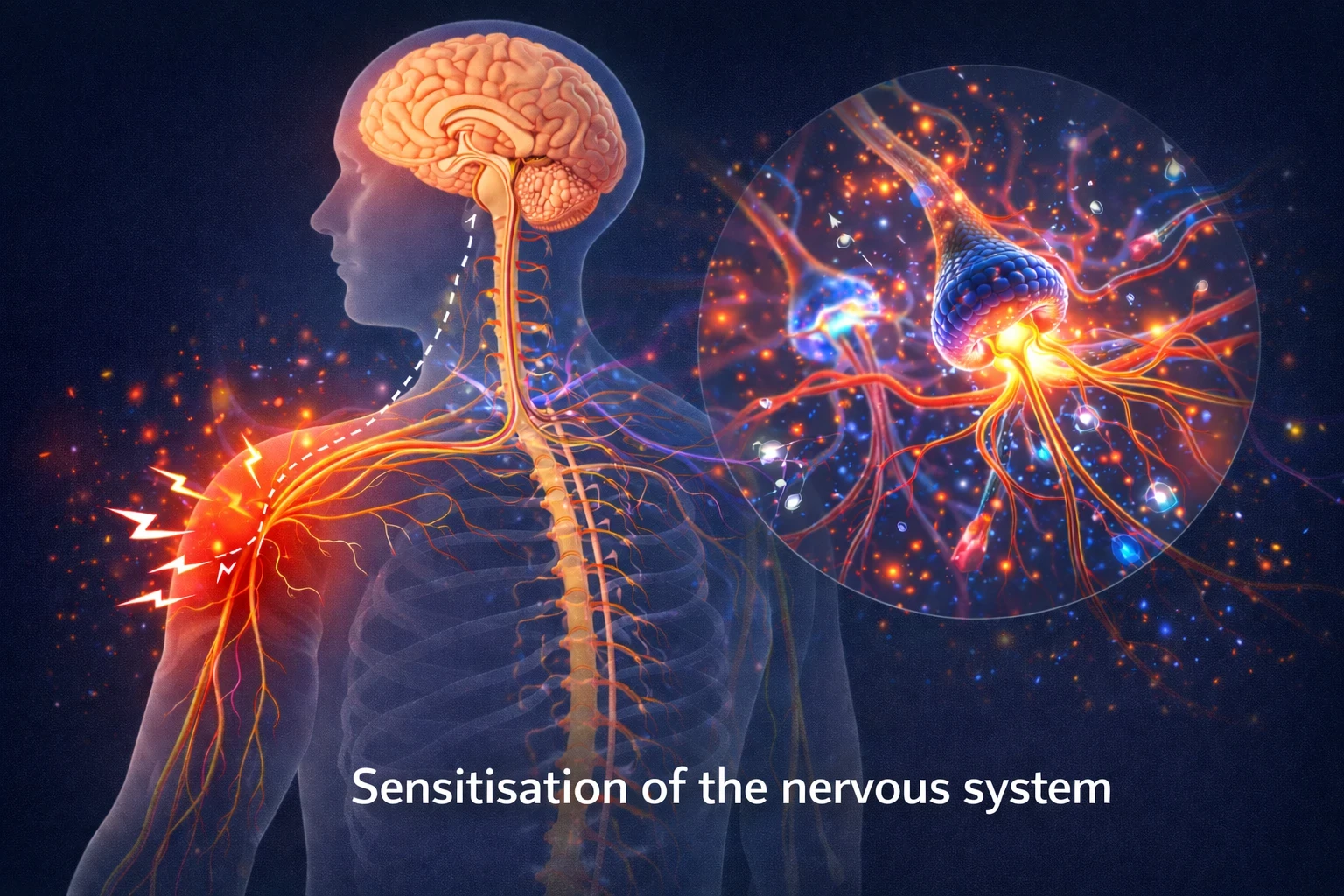
Sometimes pain continues long after healing. This does not mean something is broken. It means the nervous system has become more sensitive.
The nerves may fire more easily. The spinal cord may amplify signals. The brain may interpret normal sensations as dangerous.
This is called sensitisation. Sensitisation is not damage. It is a learned response. And learned responses can change.
 Pain Without Visible Injury Scans often show “nothing wrong.” This can be confusing. It can feel invalidating.
However, pain does not need tissue damage to exist. The brain can produce pain based on perceived threat alone.
Stress, poor sleep, fear of movement, and past injuries all increase sensitivity.
Over time, the system becomes overprotective. This does not mean pain is imaginary. It means the alarm system is set too high.
Thoughts and Emotions Matter
Thoughts and emotions affect biology. They change how the nervous system behaves. Fear increases danger signals. Safety reduces them.
Learning how pain signals are generated can reduce fear. Reduced fear often leads to reduced pain. This is why understanding pain is powerful.
Why Education Helps
Pain education does not ignore symptoms. It explains them. Understanding pain can help people: Feel less afraid Move with more confidence Reduce avoidance Calm the nervous system Change often starts with understanding.
A Simple Way to Understand Pain
Pain is like a car alarm. It protects the vehicle. Sometimes it goes off for real danger. Sometimes it goes off for no reason. The alarm is still real. The threat may not be. Understanding why the alarm sounds helps you respond calmly.
Final Thoughts
How pain signals are generated is not mysterious. Pain is a protective output. It is shaped by the brain, nervous system, and experience. Pain is real. But it is also changeable. Understanding is the first step toward calm.