How To Choose Magnesium Supplements Which is best for you
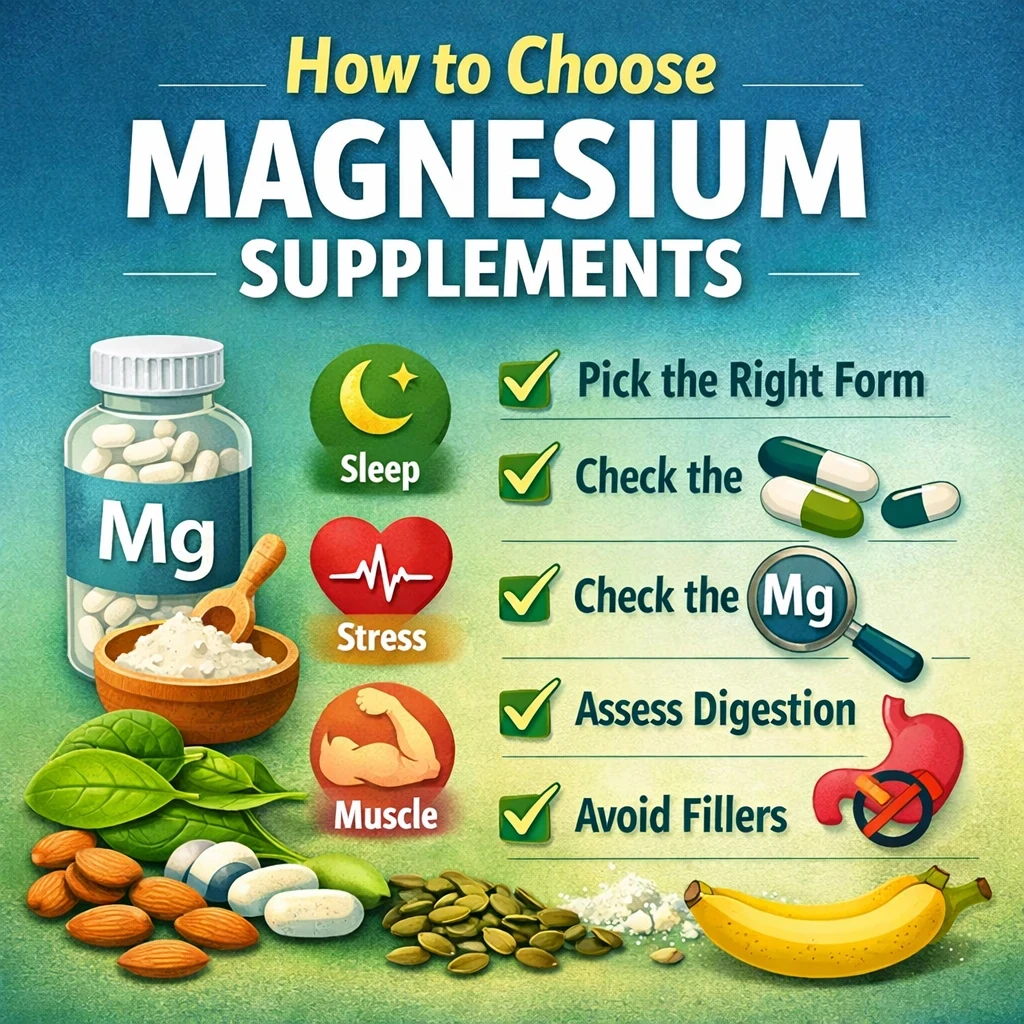
How to Choose Magnesium Supplements
How to choose magnesium supplements is a question more people are asking as magnesium becomes one of the most recommended nutrients for sleep, stress, muscle tension, and overall recovery.
Walk into any pharmacy or browse online and you’ll see capsules, powders, glycinate, citrate, oxide, blends—it can feel unnecessarily complicated.
The short answer? How to choose magnesium supplements depends on your goal, your digestion, and how your body responds.
Not all forms behave the same way.
Let’s break it down clearly so you can make a confident decision.
Step 1: Be Clear on Why You’re Taking It
Before worrying about brands, start with purpose.
Over 300 chemical reactions happening
n your body involve Magnesium.
That sounds impressive—but practically, most people take it for one of four reasons:
• Sleep support
• Stress reduction
• Muscle relaxation and cramps
• Digestive support
If your main goal is sleep, you might benefit from reading https://beyond-pain-relief.com/magnesium-for-sleep-improvement/ to understand how different forms influence the nervous system.
If stress regulation is your focus, you’ll also find helpful context in https://beyond-pain-relief.com/how-magnesium-helps-with-stress/
Your goal determines the form.
Step 2: Understand the Different Types
When learning how to choose magnesium supplements, the form matters more than the label design.
Magnesium Glycinate
Often recommended for sleep and nervous system support.
It tends to be gentle on the stomach and less likely to cause loose stools.
Magnesium Citrate
Commonly used for digestion and constipation support. It pulls water into the bowel, which can be helpful—but not ideal if that’s not your goal.
Go to Amazon for the best range of Magnesium supplements here.
Magnesium Oxide
Contains a high percentage of elemental magnesium but is less well absorbed. Often used for digestive effects rather than nervous system support.
Magnesium Threonate
Sometimes marketed for cognitive function because it may cross the blood-brain barrier more effectively.
Magnesium Malate
Often chosen for muscle fatigue and general energy support.
There is no universally “best” type. There is only what fits your situation.
Go to Amazon for the best range of Magnesium supplements here.
Step 3: Check the Elemental Magnesium Dose
Here’s where many people get confused.
A supplement might say “Magnesium Glycinate 500mg” on the front. That does not mean you’re getting 500mg of elemental magnesium.
The actual magnesium content may be closer to 100–150mg.
Flip the bottle and look for “elemental magnesium” on the label.
For most adults, typical supplemental intake ranges between 200–400mg per day, depending on diet and individual needs.
Always factor in dietary magnesium from foods like leafy greens, nuts, seeds, and whole grains.
If you’re unsure whether your symptoms are even magnesium-related, reviewing foundational lifestyle factors first is wise.
For example, sleep disruption itself can heighten muscle tension and sensitivity. See https://beyond-pain-relief.com/sleep-hygiene-tips-practical-habits-that-improve-sleep-quality/ for context.
Step 4: Assess Your Digestion
A practical rule when thinking about how to choose magnesium supplements: your gut reaction matters—literally.
If a supplement causes cramping or loose stools, that’s feedback.
Some forms are more osmotically active (like citrate), while glycinate and malate are often gentler.
Start low. Increase gradually. Your body will tell you quickly if the dose is too high.
Step 5: Look at Additives and Fillers
Magnesium itself is simple. The capsule contents often are not.
Check for:
• Artificial dyes
• Excessive binders
• Unnecessary sweeteners (in powders)
Powders can be useful for people who dislike swallowing capsules, but make sure they don’t contain large amounts of sugar or flavoring agents.
Checkout the different forms of Magnesium here.
Step 6: Timing Matters
When learning how to choose magnesium supplements, timing is often overlooked.
• For sleep support: take 30–60 minutes before bed.
• For muscle recovery: evening can still be helpful.
• For digestion: timing may vary depending on your goal.
Consistency usually matters more than perfect timing.
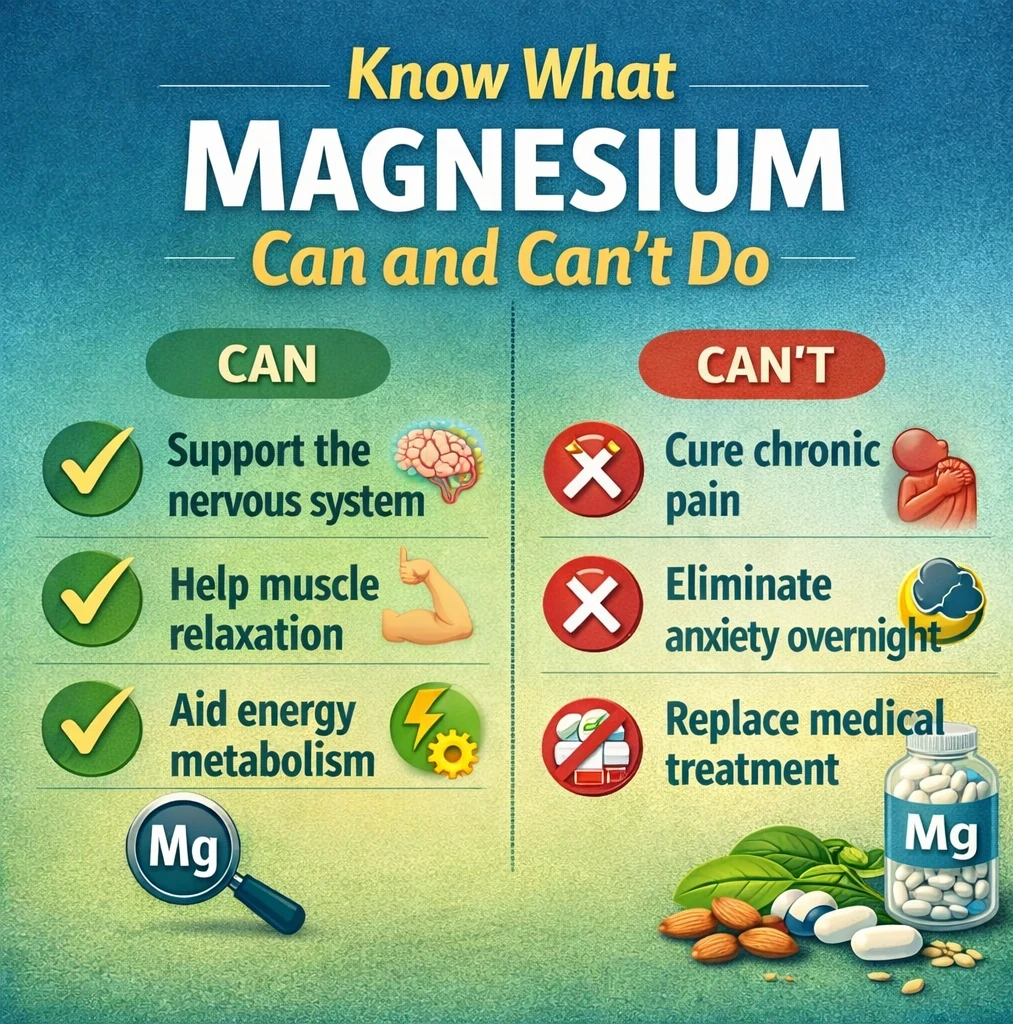
Step 7: Know What Magnesium Can and Can’t Do
Magnesium supports the nervous system, muscle relaxation, and energy metabolism.
It does not “cure” chronic pain, eliminate anxiety overnight, or replace medical treatment.
In the broader context of pain and sensitivity, nutrients are supportive tools—not magic solutions.
If you want a deeper understanding of how lifestyle inputs influence symptoms, read https://beyond-pain-relief.com/movement-load-and-pain-sensitivity/
Magnesium works best as part of a bigger picture: sleep, movement, nutrition, and stress regulation.
Step 8: When to Be Cautious
If you have kidney disease, are on certain medications (such as diuretics or proton pump inhibitors), or have significant medical conditions, speak with a healthcare professional before supplementing.
More is not better. Excessive magnesium can cause diarrhea, low blood pressure, and electrolyte imbalance.
Practical Takeaway
If you’re still wondering how to choose magnesium supplements, simplify the decision:
- Define your goal.
- Choose the form that aligns with that goal.
- Check elemental magnesium dose.
- Start low and assess tolerance.
- View it as support—not a cure.
That’s it. No hype required.
Scientific References
https://pubmed.ncbi.nlm.nih.gov/29480918/
https://pubmed.ncbi.nlm.nih.gov/23853635/