Natural Anti-Inflammatory Herbs
Natural anti-inflammatory herbs are often explored by people looking to calm pain, stiffness, or inflammatory flare-ups without relying entirely on medication.
While herbs are not cures, certain plant-based options may gently support the body’s inflammatory response when used thoughtfully and alongside other supportive strategies.
Inflammation itself is not the enemy. It is a normal biological process involved in healing and protection.
Problems tend to arise when inflammation becomes persistent, overactive, or poorly regulated.
Understanding this distinction helps set realistic expectations around natural anti-inflammatory herbs.
How Inflammation and Pain Are Connected
Inflammation can sensitise nerves, increase tissue pressure, and amplify pain signals.
Over time, this can make the body more reactive to normal movement, posture, or load.
The relationship between inflammation, pain sensitivity, and activity is explained further here:
👉 https://beyond-pain-relief.com/movement-load-and-pain-sensitivity/
This is one reason natural anti-inflammatory herbs tend to work best as part of a broader plan rather than as standalone solutions.
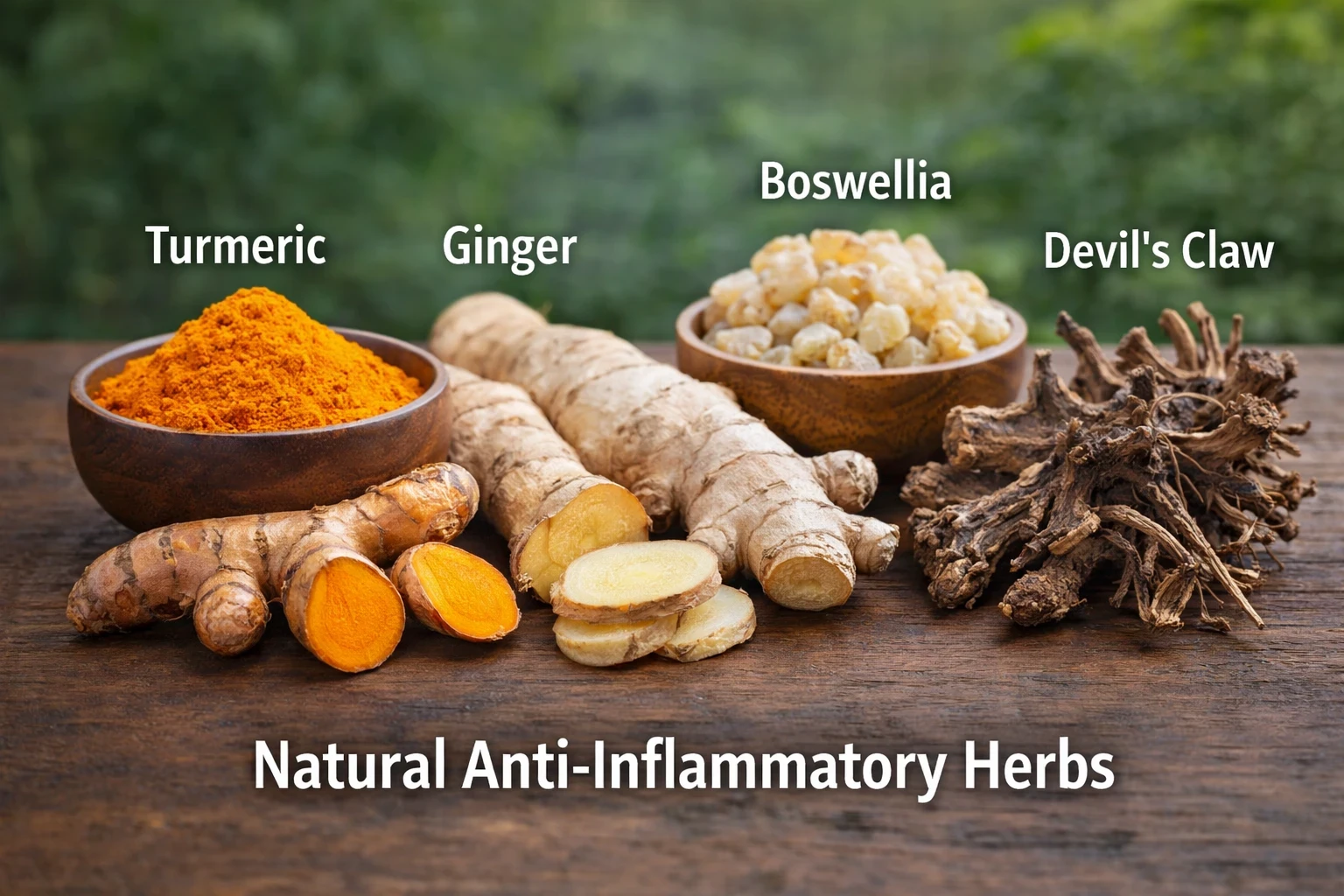
Common Natural Anti-Inflammatory Herbs People Use
Below are herbs frequently discussed for inflammatory support. Responses vary from person to person.
Turmeric (Curcumin)
Turmeric is one of the most researched natural anti-inflammatory herbs. Its active compound, curcumin, interacts with several inflammatory pathways.
Key considerations:
- Absorption improves when paired with black pepper (piperine)
- Often used for joint stiffness and post-activity soreness
- Effects tend to build gradually rather than immediately
Ginger
Ginger has a long history of use for inflammatory and digestive support.
Why people choose it:
- Mild influence on inflammatory markers
- May help morning stiffness
- Often well tolerated in food or supplement form
Boswellia (Frankincense)
Boswellia serrata is commonly used for joint and connective tissue discomfort.
Noted for:
- Targeting inflammatory enzymes differently from turmeric
- Use during inflammatory flare-ups
- Potentially gentler on digestion for some people
Devil’s Claw
Traditionally used for musculoskeletal discomfort.
Important notes:
- Often used short-term
- Not suitable for everyone, especially alongside certain medications

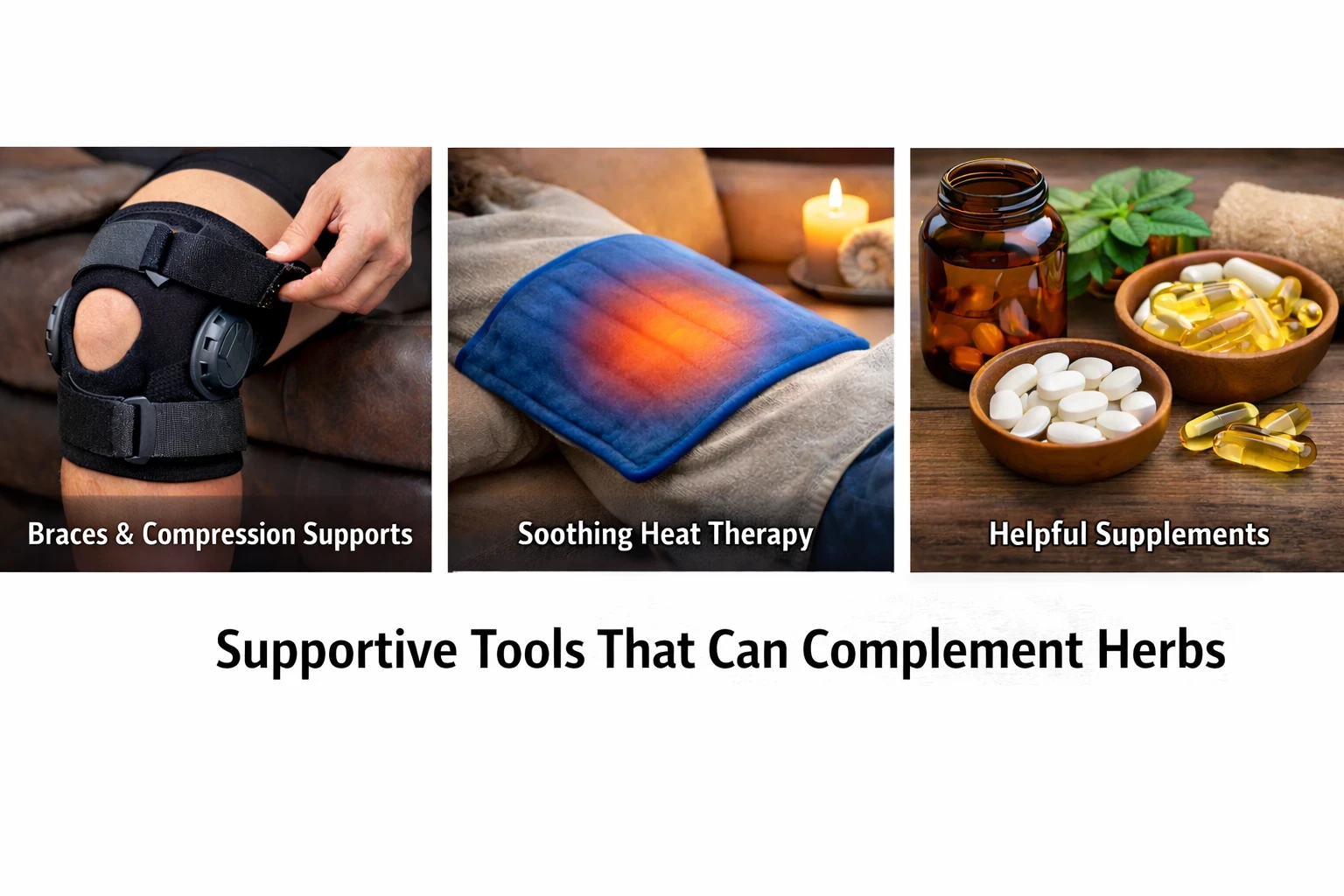
Supportive Tools That Can Complement Herbs
While natural anti-inflammatory herbs may offer biochemical support, mechanical and environmental tools can reduce ongoing irritation that keeps inflammation active.
Supportive tools are not cures, but they may help during flares or recovery phases.
Braces and compression supports
- Can reduce excessive movement during short-term flares
- Useful for joints such as knees, wrists, or elbows
- Best used temporarily rather than continuously
Heat therapy
- Helps relax tight muscles around inflamed areas
- Can improve local circulation
- Often useful before gentle movement or stretching
Supplements
- Omega-3 fatty acids
- Magnesium (for muscle tension and nervous system support)
- Vitamin D (when deficient)
Supplements tend to work best when paired with movement confidence and realistic expectations rather than as quick fixes.
Herbs Are Supportive — Not Standalone Solutions
A common misunderstanding is expecting natural anti-inflammatory herbs to resolve pain on their own. Pain rarely has a single cause.
This broader understanding of pain biology is explained clearly here:
👉 https://beyond-pain-relief.com/what-is-chronic-pain-a-clear-human-explanation/
Herbs are most effective when combined with:
- Gentle, reassuring movement
- Load management rather than pushing through pain
- Sleep consistency and stress regulation
- Short-term supportive tools during flares
When Herbs May Be Most Helpful
People often explore natural anti-inflammatory herbs:
- During inflammatory flare-ups
- Alongside rehabilitation or return-to-movement phases
- When looking for non-drug options to complement medical care
They are not replacements for medical evaluation, particularly when symptoms are worsening, unexplained, or systemic.
Quality and Safety Considerations
Not all herbal products are equal. Quality, sourcing, and dosing matter.
Keep in mind:
- Supplements are not regulated like medications
- Higher doses are not necessarily better
- Interactions with medications are possible
- Consistency matters more than intensity
Reducing ongoing mechanical strain also matters. Ergonomic stress can quietly amplify inflammatory sensitivity, especially in the neck, back, and hips:
👉 https://beyond-pain-relief.com/ergonomic-office-chairs-for-back-pain-relief/
A Calm, Realistic Perspective
Natural anti-inflammatory herbs are best viewed as gentle supports rather than solutions. They may help nudge the body toward a calmer inflammatory state when fear, overload, and stress are already being addressed.
Progress usually comes from stacking small, supportive changes rather than searching for a single powerful fix.
Scientific Reference (External)
Curcumin and inflammatory pathways:
👉 https://pubmed.ncbi.nlm.nih.gov/17569207/