Natural Remedies For Muscle Tension That Don’t Cost The Earth
Natural Remedies for Muscle Tension
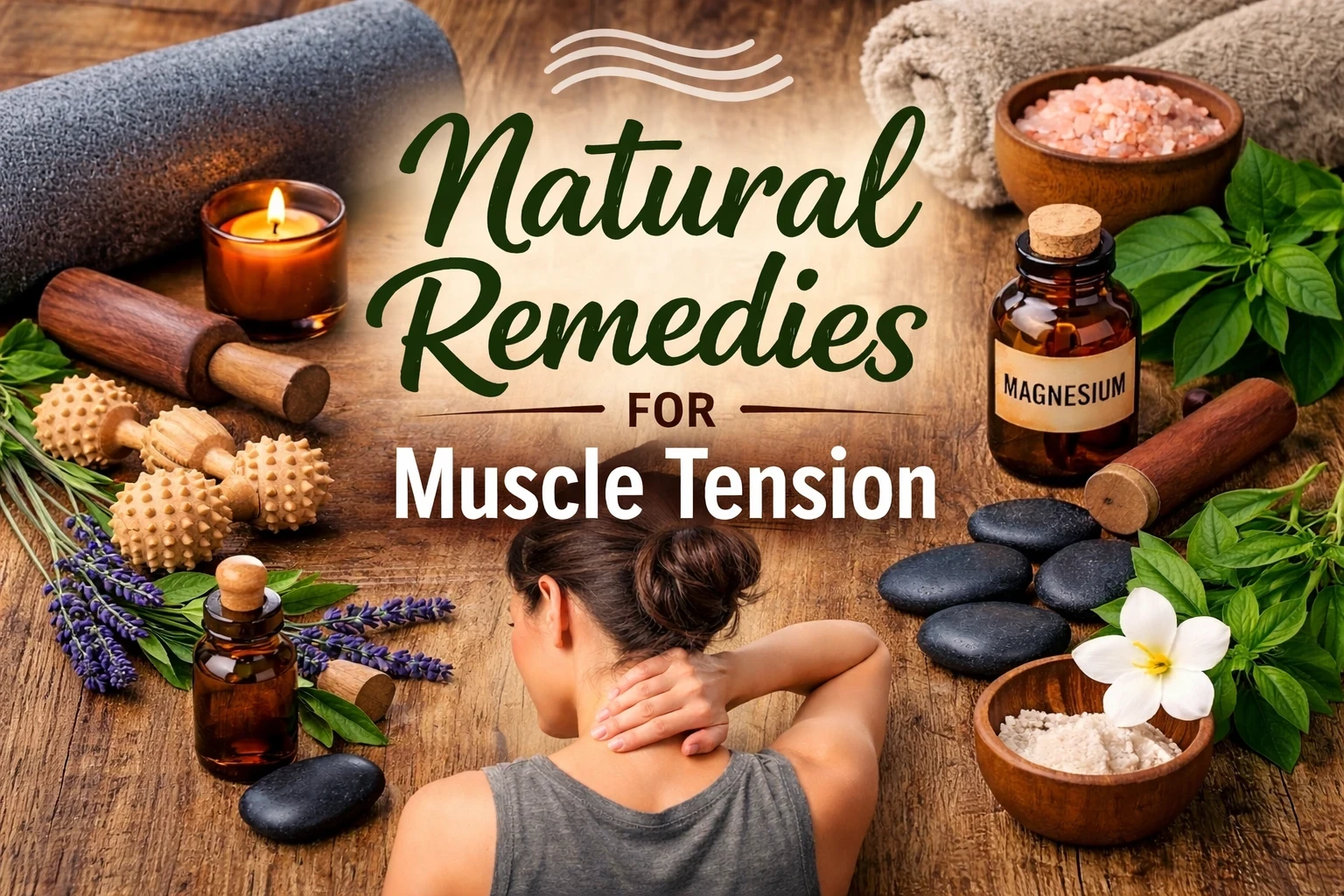
Natural remedies for muscle tension are becoming more popular as people look for practical ways to ease tightness without relying entirely on medication.
Muscle tension often builds slowly from stress, long hours sitting, repetitive movement, or poor sleep.
It commonly shows up in the neck, shoulders, lower back, or jaw.
The sensation may feel dull and heavy or sharp and restrictive.
The encouraging part is that small, consistent lifestyle changes can make a meaningful difference.
Why Muscle Tension Happens
Muscle tension is rarely just a “tight muscle” issue. It often reflects how the nervous system responds to stress or perceived threat.
When stress levels rise, your body increases protective muscle activation.
Over time, this constant guarding can turn into stiffness and discomfort.
If you want a deeper understanding of how the brain influences pain and tightness, this guide on
pain education and reducing fear explains the concept clearly.
Understanding this connection makes natural strategies more effective because they address both the muscle and the nervous system.

1. Gentle Movement Over Aggressive Stretching
One of the most effective natural remedies for muscle tension is controlled, low-intensity movement.
Light walking, mobility drills, or slow range-of-motion exercises improve circulation and reduce protective guarding.
Movement reassures the nervous system that it is safe to reduce tone.
If stiffness is joint-related, it may also help to understand
what causes chronic joint pain and how load tolerance develops.
Short, consistent sessions are more effective than long, infrequent stretching routines.
2. Breathwork and Down-Regulation
Breathing patterns directly influence muscle tension.
Shallow chest breathing keeps the stress response active.
Slower nasal breathing with longer exhales signals safety to the brain, often reducing muscle guarding.
Among natural remedies for muscle tension, breathwork is powerful because it works upstream at the nervous system level.
Try inhaling for four seconds and exhaling for six seconds for five minutes.
It sounds simple — but done consistently, it can shift baseline tension.
3. Heat Therapy
Heat increases local blood flow and temporarily reduces stiffness.
Warm showers, heating pads, or hot water bottles may ease neck, shoulder, or lower back tightness.
Apply heat for 15–20 minutes at a time.
For a broader, layered approach, this article on
best therapies for chronic pain outlines how different tools work together.
Heat is one of the most accessible natural remedies for muscle tension and works well when combined with movement.
Go to the Carex Website for the full range of heat therapy options here.
4. Magnesium and Hydration
Magnesium plays a role in muscle contraction and relaxation.
In some individuals, inadequate intake may contribute to tightness or cramping.
Hydration also matters more than people think.
Even mild dehydration can increase muscle irritability.
While supplements are not a standalone solution, they can support a broader plan that includes movement and stress reduction.
5. Self-Massage and Myofascial Release
Foam rollers, massage balls, or gentle manual pressure can reduce perceived tightness.
The key word is gentle.
Aggressive rolling may increase sensitivity.
Short sessions of 60–90 seconds per area are usually enough.
These tools work by stimulating sensory receptors that signal safety — allowing tension to soften gradually.
6. Sleep as a Recovery Tool
Poor sleep lowers pain thresholds and increases muscle sensitivity.
Improving sleep hygiene — consistent bedtime, reduced evening screen time, and a cooler bedroom — may reduce overall tension patterns.
Many people overlook sleep as one of the most sustainable natural remedies for muscle tension, yet recovery largely happens overnight.
7. Stress Regulation
Chronic psychological stress keeps muscles semi-contracted.
Mindfulness practices, journaling, light exercise, or even setting clearer work boundaries can lower baseline muscle tone.
Muscle tension is often a form of bracing. When perceived stress decreases, that bracing gradually softens.
This is why natural remedies for muscle tension work best when they address both physical and emotional load.

How to Combine These Approaches
The most effective plan is layered:
- Daily gentle movement
- Breathwork practice
- Occasional heat therapy
- Proper hydration
- Sleep consistency
Rather than searching for a single “fix,” stack small habits that create safety and circulation.
Over time, this layered approach tends to outperform quick fixes.
Natural remedies for muscle tension are rarely dramatic.
They are steady, repeatable actions that gradually retrain the nervous system.
When to Seek Medical Advice
While lifestyle strategies help many people, consult a healthcare professional if:
- Pain radiates down arms or legs
- There is numbness or weakness
- Symptoms follow trauma
- Tightness progressively worsens
Natural care supports recovery but does not replace proper evaluation when red flags are present.
Balanced Perspective
No single tool permanently eliminates tension.
Muscle tightness reflects stress load, movement patterns, sleep quality, and nervous system sensitivity.
The goal is not to force muscles to relax but to create conditions where they no longer feel the need to guard.
With consistency and patience, natural remedies for muscle tension can reduce stiffness and improve comfort in a sustainable way.
Scientific Studies
https://pubmed.ncbi.nlm.nih.gov/28644321/
https://pubmed.ncbi.nlm.nih.gov/25451620/