What Causes Chronic Joint Pain
What causes chronic joint pain is a question many people ask when discomfort lingers beyond normal healing time.
Chronic joint pain generally means pain lasting longer than three months.
It can affect knees, hips, shoulders, hands, or multiple joints at once.
While it often feels like “wear and tear,” the real answer to what causes chronic joint pain is usually more layered.
Chronic joint pain rarely has one single cause. It typically involves a mix of joint stress, inflammation, nervous system sensitivity, and recovery capacity.

Understanding the Difference: Acute vs Chronic
Acute pain follows an injury and improves as tissues heal. Chronic pain continues beyond expected healing timelines.
That does not automatically mean ongoing damage. It often means the joint, immune system, and nervous system are interacting in a more sensitive way.
If you’re unsure how persistent pain develops, it helps to understand the broader picture of pain processing. See:
https://beyond-pain-relief.com/what-is-chronic-pain-a-clear-human-explanation/
Mechanical Changes and What Causes Chronic Joint Pain
One common contributor to what causes chronic joint pain is gradual cartilage thinning. This is often associated with osteoarthritis.
Cartilage acts as a shock absorber. Over time, repetitive load, previous injury, or ageing can reduce its thickness.
This may lead to:
• Stiffness after rest
• Aching with activity
• Reduced range of motion
However, research consistently shows that many people have joint changes on scans without severe pain. That tells us structure is only part of the story when exploring what causes chronic joint pain.
Persistent Inflammation
Inflammation plays a major role in what causes chronic joint pain, especially in autoimmune conditions like rheumatoid arthritis.
Inflammatory joint pain often includes:
• Morning stiffness lasting more than 30 minutes
• Swelling
• Warmth around the joint
• Fatigue
Even outside autoimmune disease, low-grade systemic inflammation from poor sleep, high stress, or metabolic imbalance can amplify joint sensitivity.
If inflammation is a recurring theme for you, this article may help:
https://beyond-pain-relief.com/how-to-reduce-inflammation-naturally/
Nervous System Sensitisation
Sometimes the joint itself is not the main driver. The nervous system can become more protective over time.
When pain persists, the brain may increase sensitivity — a process often called central sensitisation.
Movement that was once neutral can start to feel threatening.
You can learn more about this mechanism here:
https://beyond-pain-relief.com/movement-load-and-pain-sensitivity/
This doesn’t mean pain is psychological. It means the body is in protection mode.
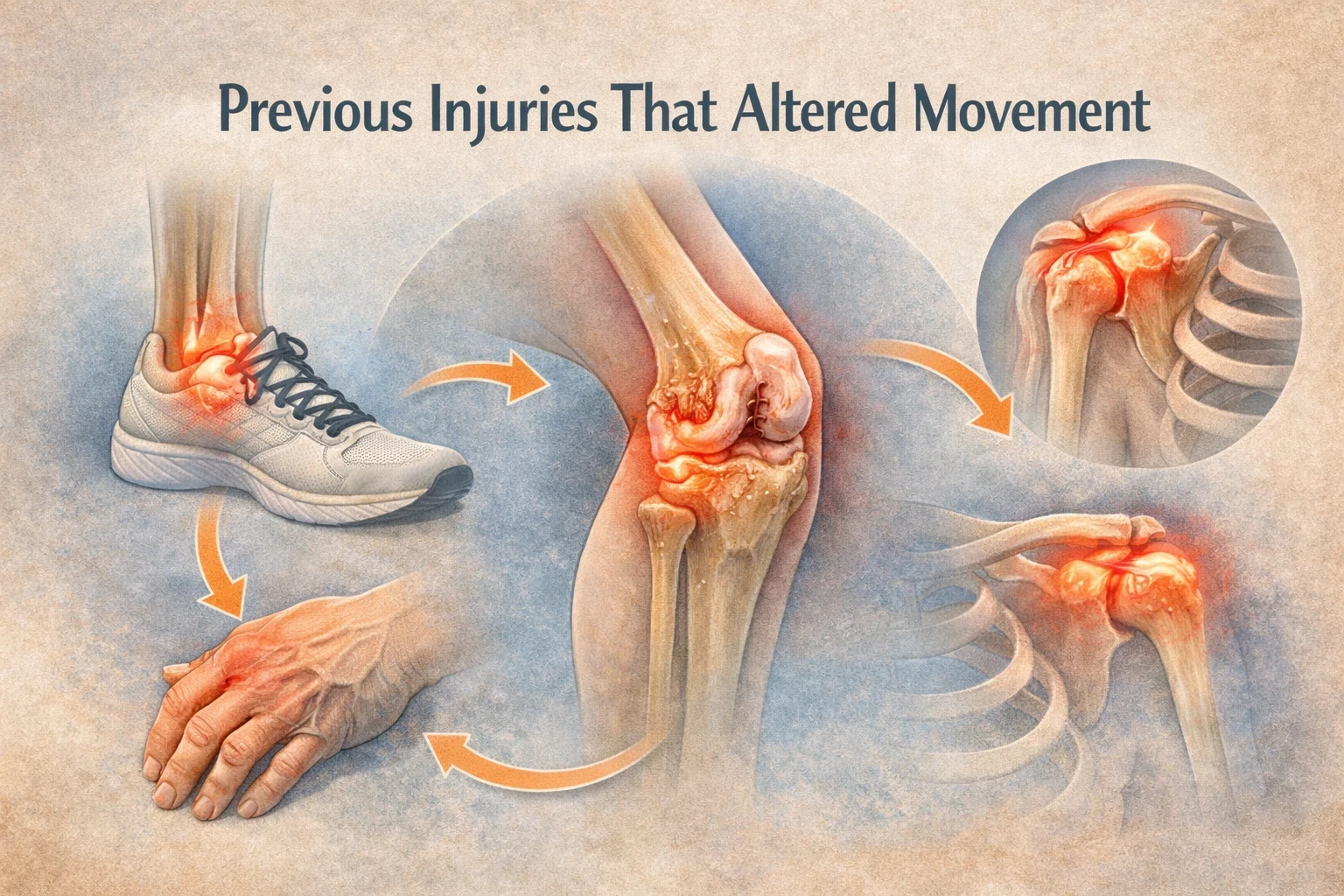
Previous Injuries That Altered Movement
Old sprains, ligament injuries, or cartilage damage can subtly change how you move.
For example:
• An ankle injury can alter knee mechanics
• Knee instability can shift stress to the hip
• Shoulder injuries can change spinal loading
Over months or years, compensation patterns may overload nearby joints, contributing further to what causes chronic joint pain.
Repetitive Strain and Load Mismanagement
Modern lifestyles can overload joints without obvious injury.
Examples include:
• Long hours sitting with poor hip alignment
• Repetitive keyboard work
• Heavy lifting without adequate recovery
• High-volume sport without strength balance
Joints thrive on movement — but they also need load progression and recovery.
When load repeatedly exceeds recovery, this imbalance becomes another explanation for what causes chronic joint pain.
Metabolic and Systemic Contributors
Joint health is influenced by overall physiology.
Conditions such as gout involve crystal deposits within joints, creating intense inflammation.
Metabolic factors like insulin resistance may also increase inflammatory activity.
Poor sleep is another overlooked driver. Inadequate rest reduces tissue recovery and lowers pain tolerance.
Stress and Pain Amplification
Chronic stress does not damage cartilage directly, but it influences muscle tension, inflammatory markers, and nervous system sensitivity.
When stress hormones stay elevated:
• Muscles tighten
• Recovery slows
• Pain thresholds drop
Many people notice joint pain flares during emotionally demanding periods.

Supportive Tools That May Help
Addressing what causes chronic joint pain usually requires a layered approach rather than a single quick fix.
Helpful strategies may include:
• Progressive strength training
• Mobility exercises
• Anti-inflammatory nutrition
• Sleep hygiene improvements
• Stress regulation practices
Some individuals explore supplements such as omega-3 fatty acids, turmeric, or magnesium.
These may support inflammatory balance when used appropriately and alongside lifestyle foundations.
Compression supports or joint braces can provide temporary stability during flare-ups.
The key is using them strategically rather than long-term dependency.
The Bigger Picture: What Causes Chronic Joint Pain
When stepping back, what causes chronic joint pain is rarely just “damage.” It is often the result of:
• Mechanical load
• Immune activity
• Nervous system sensitivity
• Lifestyle stressors
• Recovery capacity
Pain intensity does not always reflect severity of structural change.
With reassurance, graded movement, inflammation management, and nervous system support, many people find chronic joint pain becomes significantly more manageable.
Understanding the causrs allows you to respond strategically instead of reacting with fear.
References
https://pubmed.ncbi.nlm.nih.gov/30370434/
https://pubmed.ncbi.nlm.nih.gov/19363606/





4 Comments
This is such a clear and balanced explanation of what causes chronic joint pain. I really appreciate how you moved beyond the simple “wear and tear” narrative and explained the layered interaction between mechanics, inflammation, the nervous system, and lifestyle stressors. The distinction between acute and chronic pain is especially helpful, as many people assume persistent pain always means ongoing damage. Your section on nervous system sensitisation is powerful and reassuring, it validates pain without making it purely structural or purely psychological. I also like how you highlighted load management and recovery, since modern habits absolutely influence joint health. The practical strategies at the end tie everything together nicely. This kind of education reduces fear and empowers people to respond thoughtfully instead of reactively. Very informative and encouraging post.
Hi Andrejs, thank you for your kind comments.
All the best,
Fintan
It looks like I’ve ended up exploring several articles on your site! This is another interesting one. I noticed that, similar to your previous guide on pain relief techniques, you explain how chronic joint pain can be influenced by several different factors rather than just one simple cause. That perspective is helpful because many people assume joint pain always comes only from wear or injury. Understanding the bigger picture really makes the topic clearer. In your experience, what is the most common factor people overlook when trying to understand or manage their joint pain?
The nervous system plays a part in creating pain. Thats probably the hardest thing for people to understand.