Best Techniques For Managing Anxiety
Best Techniques for Managing Anxiety
Best techniques for managing anxiety focus on regulating the nervous system rather than trying to eliminate anxiety completely.
Anxiety is protective by design. It becomes overwhelming when it stays switched on too long. The goal is steady regulation, not perfection.
If you notice racing thoughts, tight muscles, shallow breathing, or restless sleep, your system may be stuck in stress mode.
That state can be retrained.

Understanding Anxiety and the Nervous System
Anxiety is a physiological response. Heart rate increases. Muscles tighten. Breathing shortens. Attention narrows.
In short bursts, this is helpful. When prolonged, it becomes exhausting.
Persistent activation can also amplify pain.
When the system remains alert, sensations feel stronger and more threatening. You can explore this connection further here:
https://beyond-pain-relief.com/why-nerve-pain-ooccurs/
and
https://beyond-pain-relief.com/what-is-chronic-pain-a-clear-human-explanation/
Calming the nervous system often reduces both emotional distress and physical sensitivity.
1. Regulate the Breath
One of the best techniques for managing anxiety is slow, controlled breathing.
Try this:
• Inhale through the nose for 4 seconds
• Pause briefly
• Exhale slowly for 6–8 seconds
• Repeat for 3–5 minutes
Longer exhalations signal safety to the brain. The goal is rhythm, not force.
Research on slow breathing and nervous system regulation: https://www.frontiersin.org/articles/10.3389/fnhum.2015.00353/full
Breathing is often the fastest entry point to calm.
2. Gentle Movement Over Avoidance
When anxiety rises, many people withdraw. Light movement helps discharge stress chemistry.
Walking, mobility work, stretching, or light resistance training are effective.
If anxiety overlaps with pain, graded exposure builds confidence. More on this approach:
https://beyond-pain-relief.com/movement-load-and-pain-sensitivity/
Movement should feel safe and repeatable.
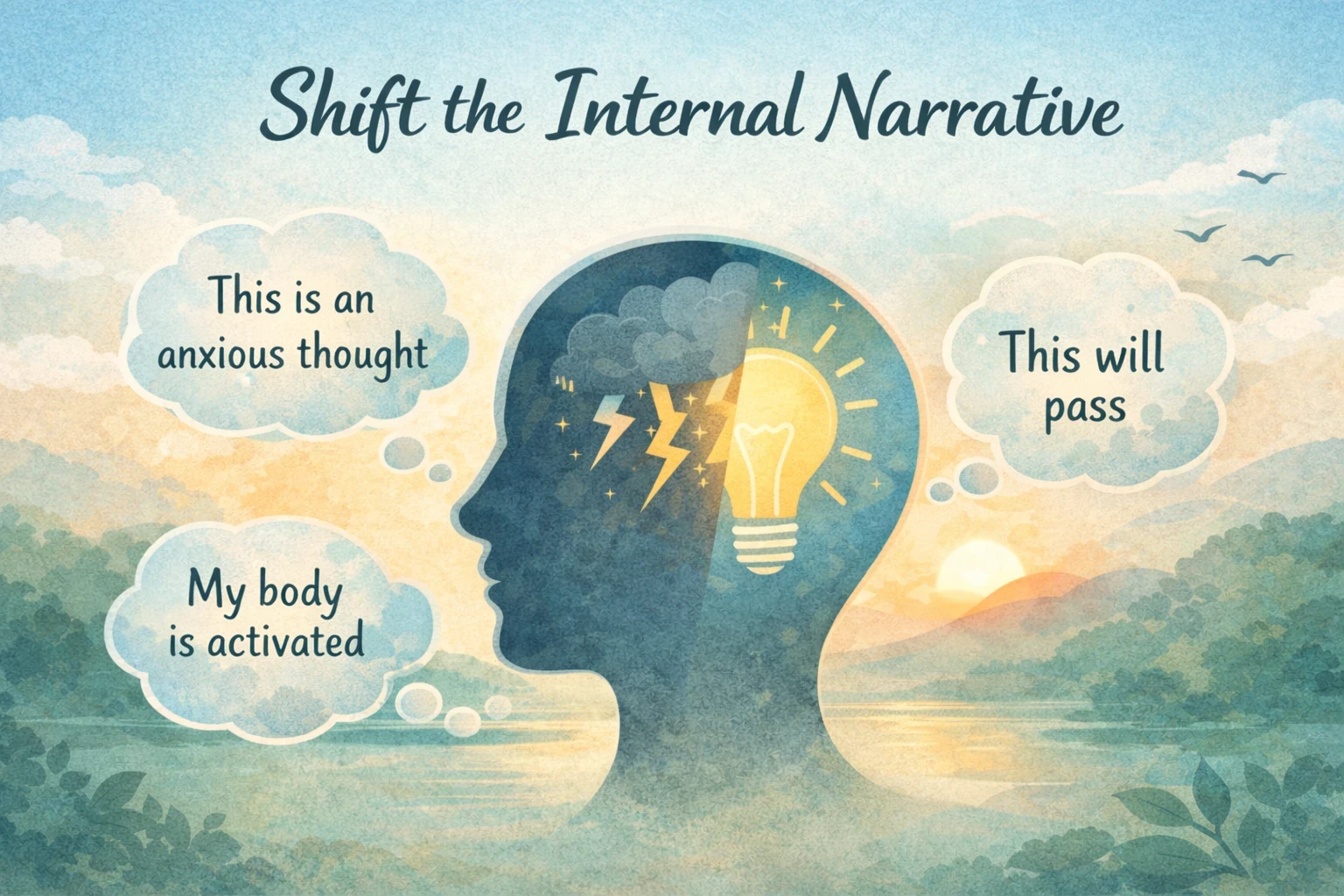
3. Shift the Internal Narrative
Anxiety intensifies when thoughts become catastrophic.
Instead of arguing with the thought, label it: “This is an anxious thought.” “My body is activated.” “This will pass.”
Creating distance reduces emotional intensity. You are not forcing positivity. You are reducing threat interpretation.
Cognitive behavioral approaches have strong evidence for anxiety reduction: https://link.springer.com/article/10.1007/s10608-012-9476-1
4. Protect Sleep
Sleep disruption increases emotional reactivity. Protect the final 60–90 minutes before bed.
• Dim lights
• Reduce screens
• Avoid heavy discussions
• Keep timing consistent
Sleep is nervous system recovery time.
5. Use Supplements Thoughtfully
Some individuals explore magnesium or calming herbal blends. These may support relaxation in certain cases.
Natural Supplements for anxiety available here.
They should be supportive tools, not primary solutions. Combine them with breathwork, movement, and cognitive work.
Consult a healthcare professional before starting supplements.
6. Create Predictable Structure
An anxious brain struggles with uncertainty. Consistent routines reduce background stress.
• Consistent wake time
• Regular meals
• Scheduled work blocks
• Defined rest time
Structure provides stability when emotions fluctuate.
7. Gradual Exposure Instead of Avoidance
Avoidance feels relieving short term but reinforces anxiety long term.
Instead: • Take small exposure steps
• Repeat consistently
• Track progress
Gradual exposure retrains the nervous system to interpret situations as manageable.
What These Techniques Can and Can’t Do
The best techniques for managing anxiety lower intensity and increase control. They do not remove all stress from life. Some anxiety is normal and adaptive.
Professional support may be necessary if anxiety: • Disrupts daily functioning
• Causes panic attacks
• Leads to significant avoidance
• Persists despite consistent effort
Self-regulation builds resilience. Therapy can accelerate progress when needed.
The Bigger Picture
Best techniques for managing anxiety work best in combination.
Breathing regulates physiology.
Movement discharges activation.
Sleep restores balance.
Cognitive reframing reduces perceived threat.
Structure creates stability.
Over time, consistent practice reshapes your baseline.
Anxiety does not mean weakness.
It means your system has been under strain.
With steady application of the best techniques for managing anxiety, regulation becomes more natural and sustainable.