Natural Tietze Syndrome Cure – Honest Options When There Is No Cure
Natural Tietze Syndrome Cure –
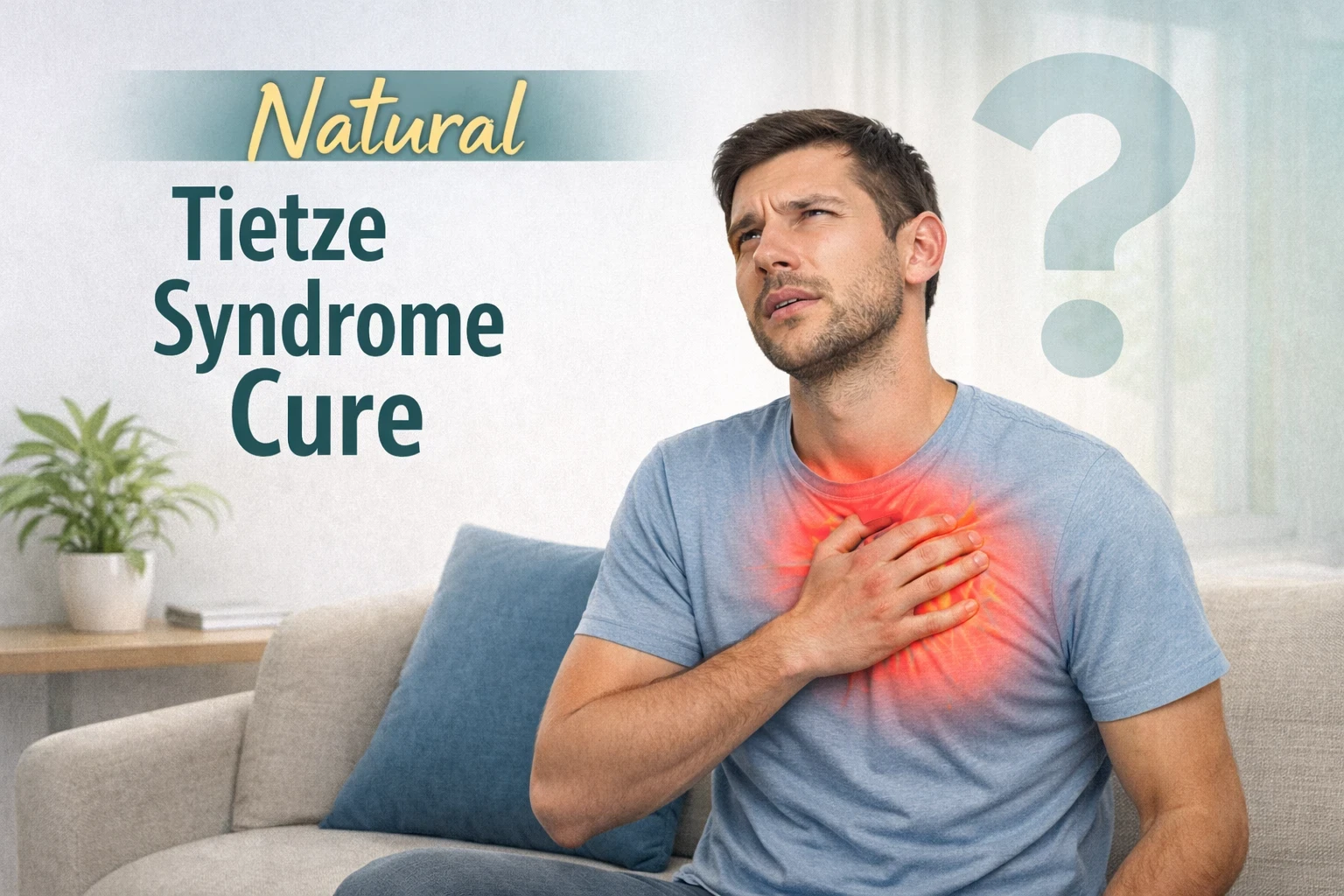
I know that there is no Natural Tietze Syndrome Cure, however read on and there may be some options that could help.
Tietze syndrome causes inflammation and pain around the rib-to-breastbone joints, often leading to sharp chest pain, localised tenderness, and ongoing worry.
Even after serious causes are ruled out, symptoms can persist and interfere with daily life.
While there is no proven cure, many people look for ways to manage symptoms without prescription drugs or pain-killing injections.
This article focuses on supportive, non-invasive options that may help reduce pain sensitivity and improve function over time.
Gentle Movement Instead of Prolonged Rest
Short periods of rest can be useful during flare-ups, but prolonged inactivity often increases stiffness and pain sensitivity around the chest wall.
Carefully graded movement may help by:
- Improving rib and thoracic mobility
- Reducing muscle guarding
- Supporting natural breathing mechanics
This approach reflects how pain responds to load and movement and is explained here:
https://beyond-pain-relief.com/movement-load-and-pain-sensitivity/
Movement should always remain slow, controlled, and well below sharp pain levels.
Breathing Retraining to Reduce Chest Tension
Chest pain often leads to shallow or guarded breathing.
Over time, this can increase rib stiffness and keep the nervous system in a heightened state.
Breathing retraining may help:
- Reduce chest tightness
- Calm the nervous system
- Improve comfort with deeper breaths
Supportive breathing and calming strategies are discussed here:
https://beyond-pain-relief.com/pain-relief-techniques-for-anxiety/
Slow nasal breathing with a longer exhale is commonly used during flare-ups.
Reducing Pain Sensitivity Through Understanding Pain
One reason people continue searching for a natural Tietze syndrome cure is fear — fear of movement, fear of heart problems, and fear that pain means damage.
Understanding pain mechanisms may help:
- Reduce catastrophising
- Improve confidence with movement
- Break cycles of avoidance and flare-ups
A broader explanation of persistent pain mechanisms can be found here:
https://what-is-chronic-pain/
Reducing fear does not remove pain instantly, but it often lowers intensity and improves tolerance.
Supportive Tools (Temporary Aids, Not Fixes)
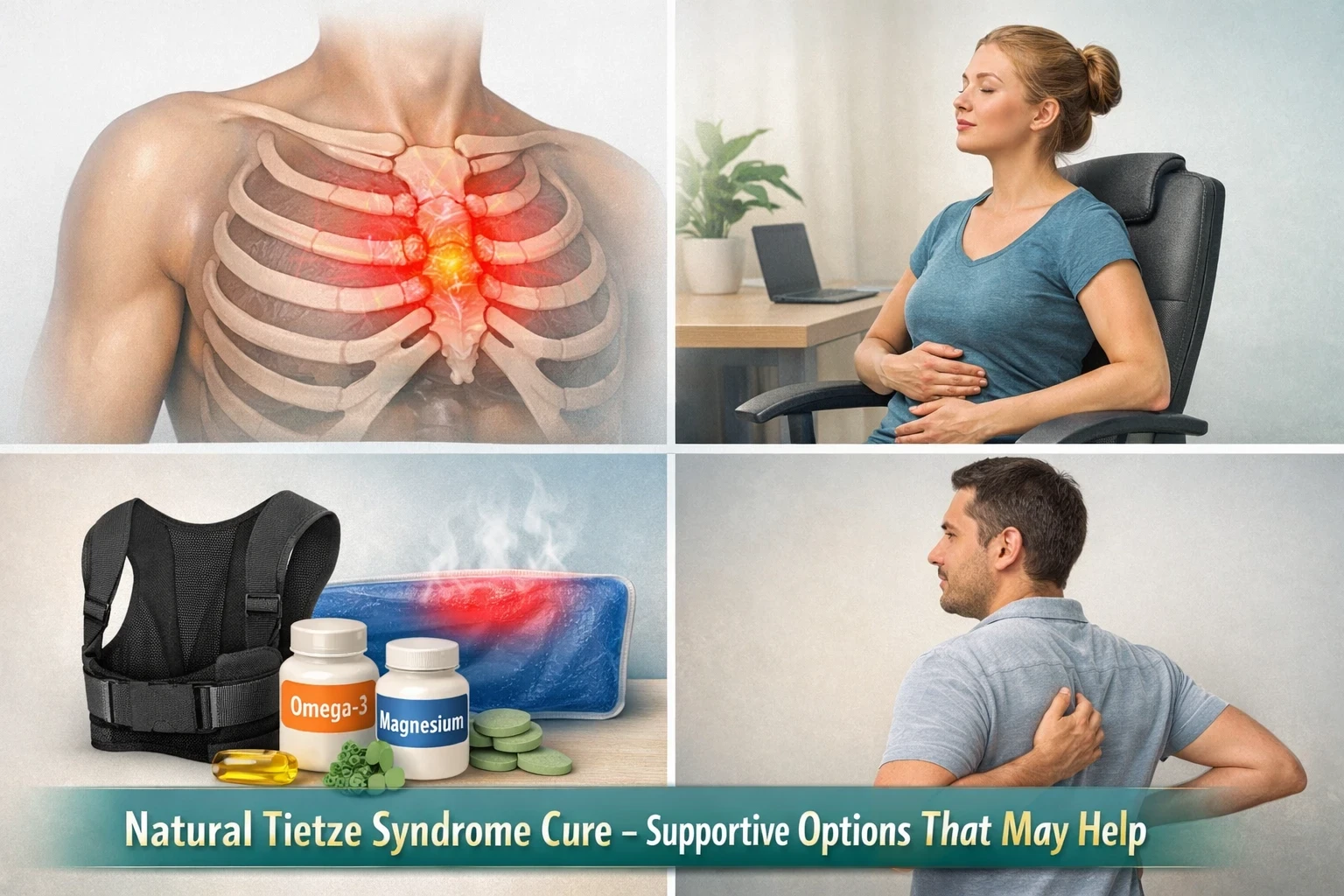
Supportive tools do not cure Tietze syndrome, but some people find they help manage symptoms during flare-ups when used carefully and temporarily.
Braces and Light Supports
- Soft posture or rib supports may reduce strain during short periods
- Best used during aggravating activities only
- Over-reliance can increase stiffness and sensitivity
Check out what help there is on Amazon here.
Heat Therapy
- Heat may help relax tight chest, shoulder, and upper-back muscles
- Often useful for stiffness and muscle guarding
- Apply for short periods rather than continuously
Ergonomic Chairs and Work Setup
- Poor sitting posture can increase upper-rib and thoracic strain
- Ergonomic chairs may help reduce sustained chest compression
- Regular position changes matter more than perfect posture
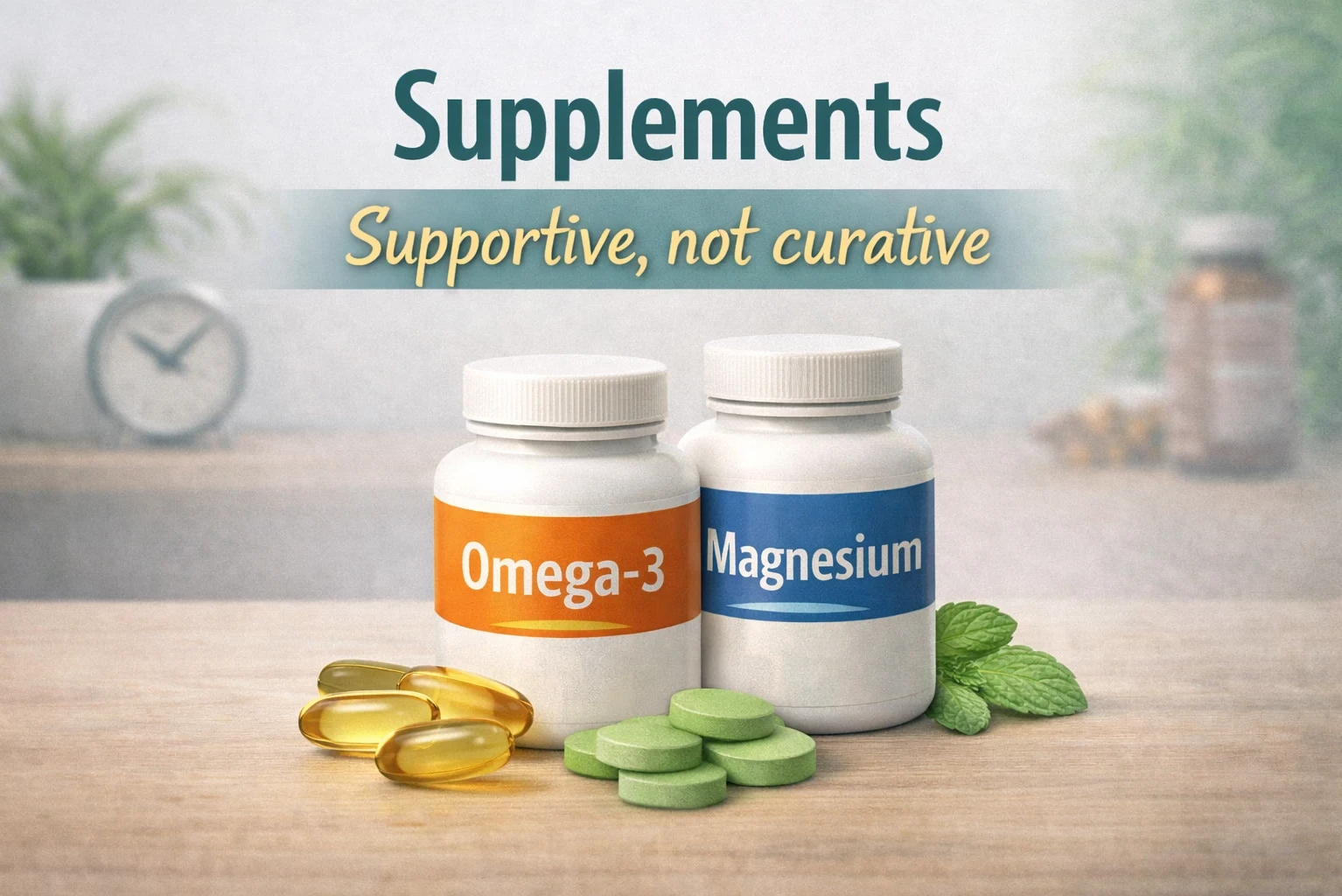
Supplements (Supportive, Not Curative)
Some people explore:
Supplements should be used cautiously and discussed with a healthcare professional, especially if other conditions or medications are involved.
What to Avoid During Flare-Ups
Avoid:
- Aggressive chest stretching
- Forceful manipulation
- Exercises that provoke sharp or localised pain
Sudden symptom changes such as breathlessness, dizziness, or spreading pain should always be medically assessed.
Scientific Research Reference
Musculoskeletal causes of non-cardiac chest pain, including chest wall syndromes similar to Tietze syndrome, are documented in medical literature:
https://pubmed.ncbi.nlm.nih.gov/22833755/
A Realistic Takeaway
There is no natural Tietze syndrome cure supported by science.
However, many people find that gentle movement, breathing retraining, pain understanding, and short-term supportive tools help them manage symptoms while the condition gradually settles.
Progress is often uneven and slow — but improvement without injections or long-term medication is possible for some people.
Scientific Studies
literature:
https://pubmed.ncbi.nlm.nih.gov/22833755/