Sciatica Pain Exercises For Relief To Ease Symptoms and Support Recovery
Sciatica Pain Exercises for Relief
Sciatica pain exercises for relief can help calm nerve irritation, improve flexibility, and get you moving comfortably again.
Struggling with shooting leg pain?
These simple daily movements are designed to ease symptoms and support real recovery.
Sciatica pain exercises for relief can play a key role in easing discomfort, improving mobility, and helping you regain confidence in movement.
If you’re dealing with sharp, radiating pain down the leg, targeted exercises may help reduce pressure on the sciatic nerve and support long-term recovery.
Many people assume rest is the best option.
However, gentle, structured movement is often more effective for managing symptoms and preventing stiffness.
What Is Sciatica and Why Movement Matters
Sciatica is a condition that occurs if the sciatic nerve gets irritated or becomes compressed.
This can happen due to disc issues, muscle tightness, or inflammation in the lower back and hips.
When pain appears, the body naturally becomes protective.
You may move less, sit more, and avoid activity. Over time, this can increase stiffness and sensitivity.
This is where sciatica pain exercises for relief become important. The right movements help maintain flexibility, improve circulation, and reduce pressure on sensitive tissues.
For a deeper understanding of how nerve-related pain develops, explore why nerve pain occurs.
How Sciatica Pain Exercises Work
The goal of exercise is not to “push through pain” but to gently restore normal movement patterns.
Sciatica pain exercises for relief typically focus on three areas:
- Reducing nerve irritation
- Improving flexibility in the hips and lower back
- Strengthening supportive muscles
When these elements improve, the nerve becomes less sensitive, and symptoms often begin to settle.
You can also learn more about broader recovery strategies in back pain treatment science-backed human guide.

Best Sciatica Pain Exercises for Relief
Below are simple, effective exercises that are commonly used to support recovery.
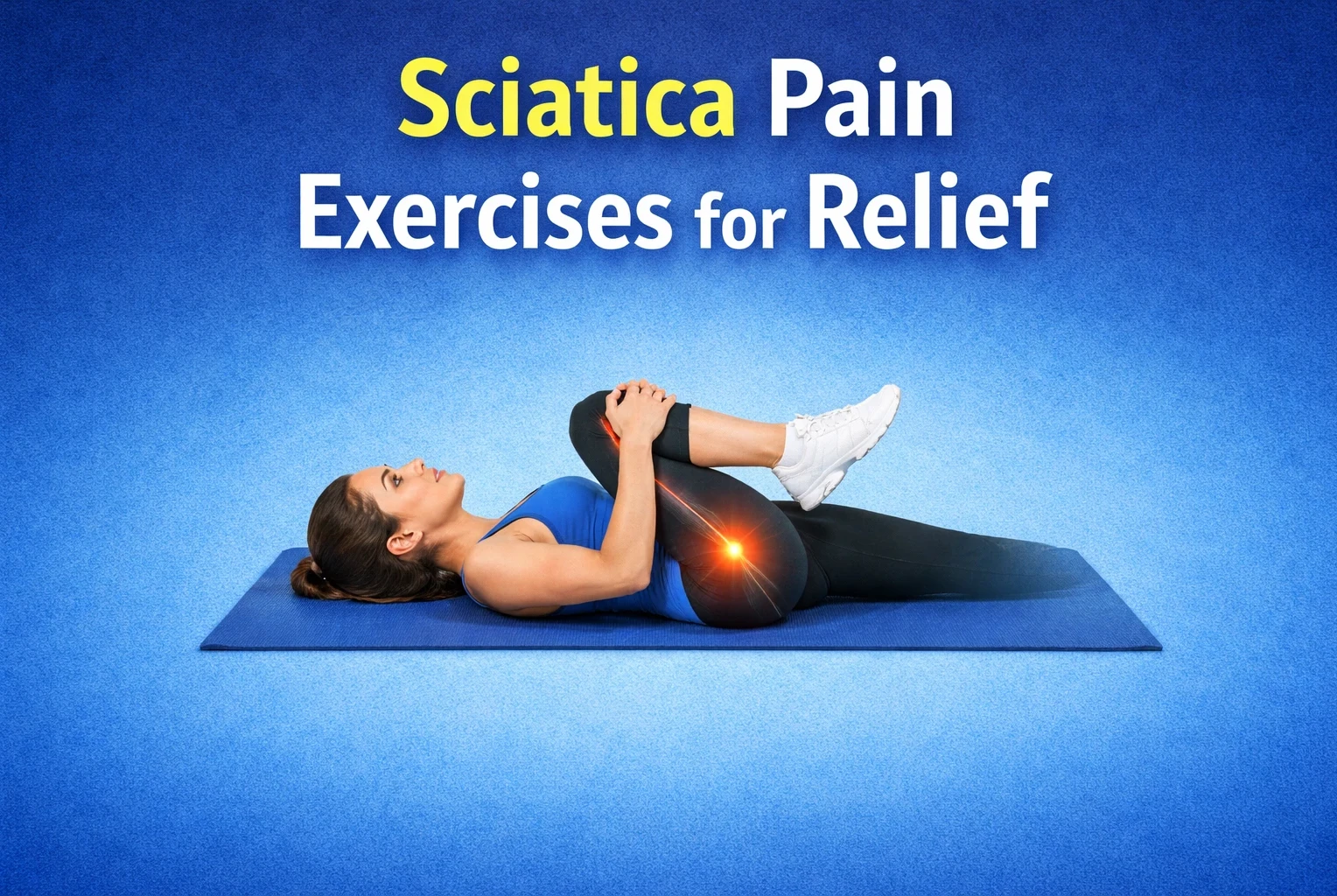
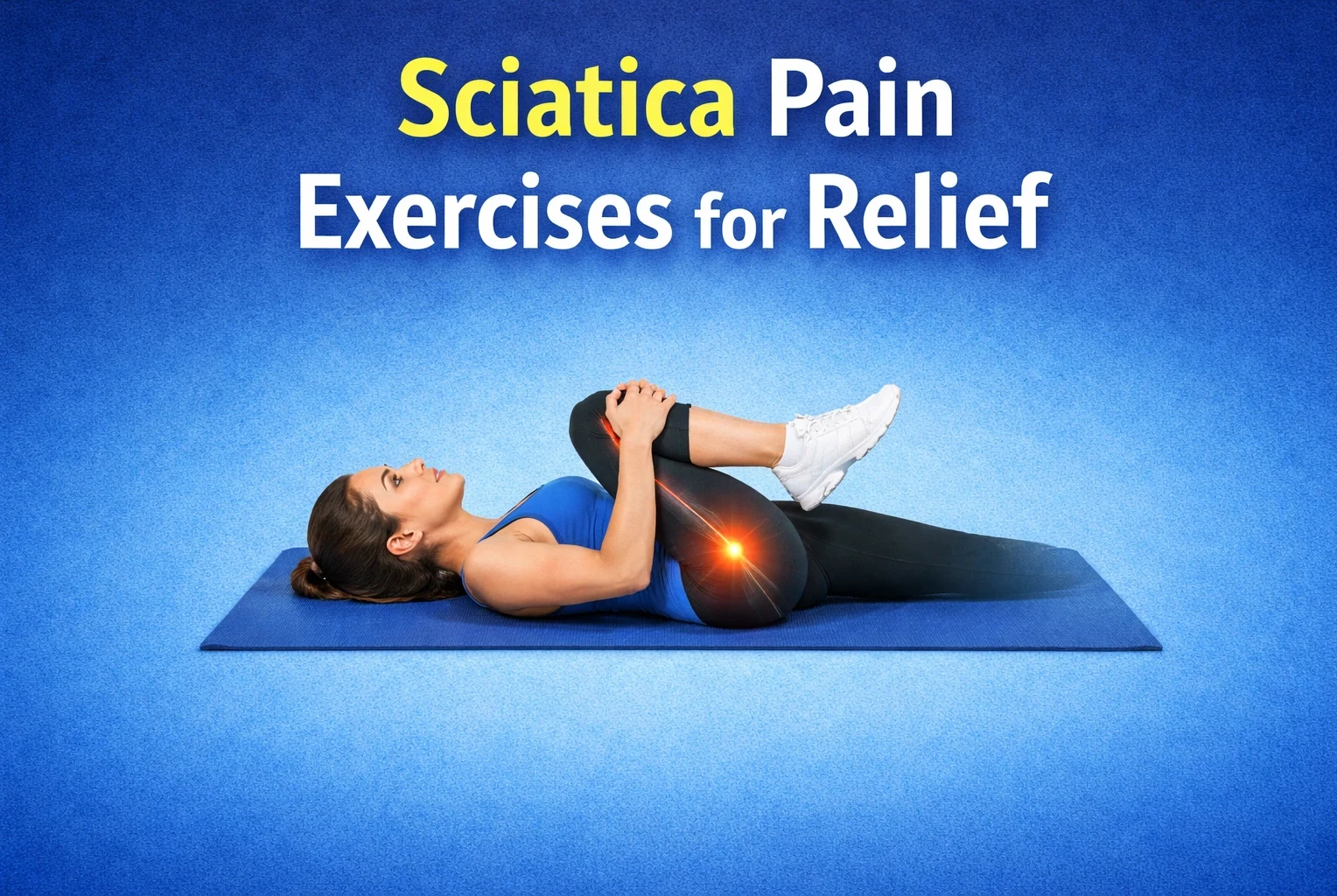
1. Knee-to-Chest Stretch
This gentle stretch helps relieve tension in the lower back.
- Lie on your back
- Bring one knee toward your chest
- Hold for 20–30 seconds
- Switch sides
This is one of the easiest sciatica pain exercises for relief to begin with, especially during flare-ups.
2. Piriformis Stretch
The piriformis muscle can press on the sciatic nerve when tight.
- Lie on your back
- Cross one ankle over the opposite knee
- Gently pull the supporting leg toward you
- Hold for 20–30 seconds
This stretch targets a common source of sciatic irritation.
3. Pelvic Tilts
Pelvic tilts help activate core muscles and support the lower back.
- Lie on your back with knees bent
- Flatten your lower back into the floor
- Hold for a few seconds, then relax
- Repeat 10–15 times
Adding this to your routine can improve stability and reduce strain.
4. Cat-Cow Movement
This movement improves spinal mobility and reduces stiffness.
- Start on hands and knees
- Arch your back upward (cat)
- Then gently lower and extend (cow)
- Repeat slowly
Consistent practice of sciatica pain exercises for relief like this can help restore natural movement.
5. Hamstring Stretch
Tight hamstrings can increase tension on the sciatic nerve.
- Sit or lie down
- Gently stretch the back of the leg
- Hold for 20–30 seconds
Keep the movement comfortable and controlled.
When to Use These Exercises
Timing matters. During severe pain, start with gentle stretches only. As symptoms improve, you can gradually add strengthening exercises.
Consistency is more important than intensity.
Doing sciatica pain exercises for relief daily, even for a few minutes, can make a noticeable difference over time.
For a full recovery approach, you may find it helpful to read sciatica pain treatment complete guide to relief recovery and long-term management.
Conditions That May Benefit
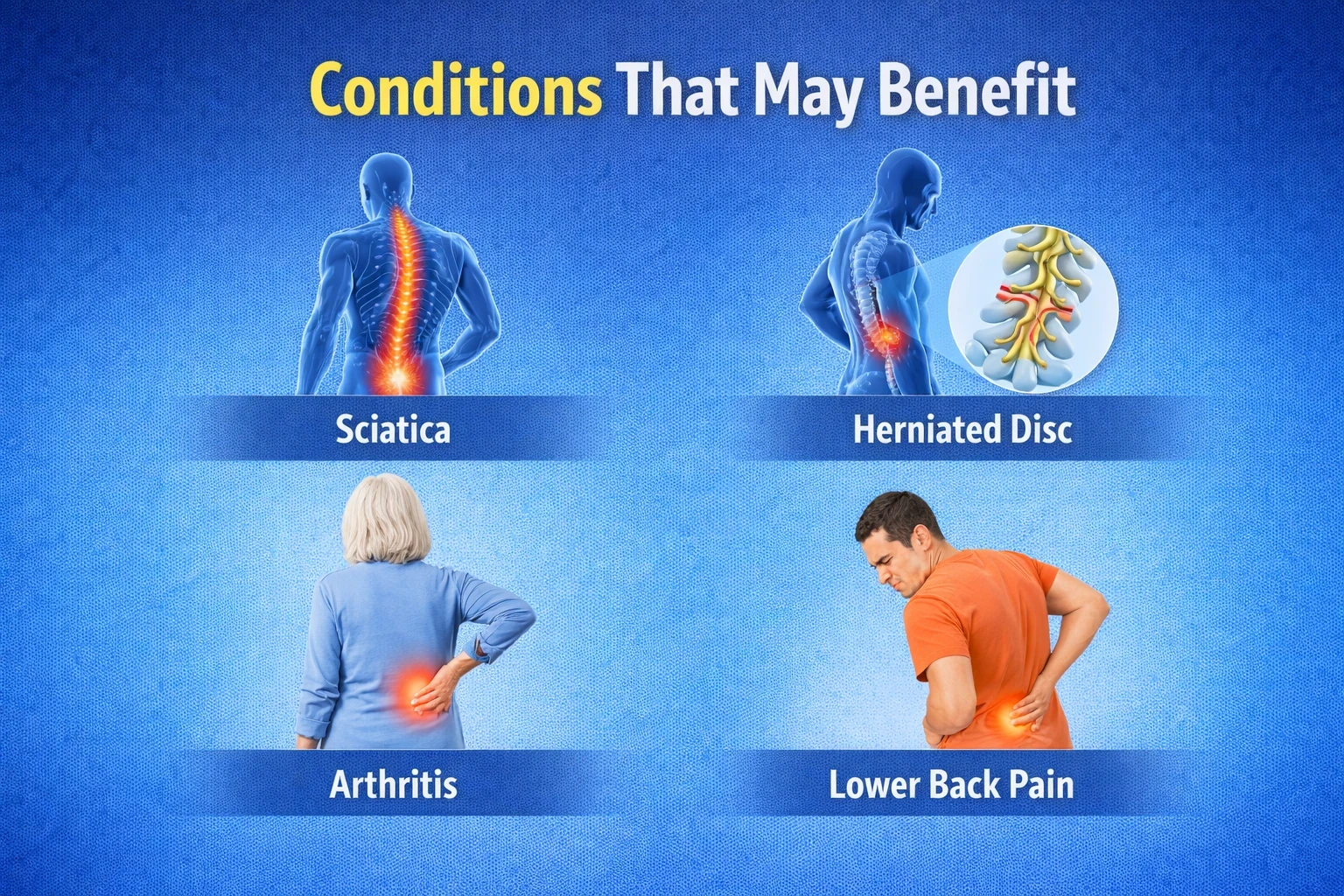
These exercises are often helpful for:
- Herniated discs
- Piriformis syndrome
- Muscle imbalances
- Lower back stiffness
- Nerve sensitivity
However, not all sciatica is the same. If symptoms worsen, it’s important to adjust your approach.
Additional Tips for Better Results
To get the most from sciatica pain exercises for relief, consider these simple tips:
- Move regularly throughout the day
- Avoid long periods of sitting
- Use supportive seating if needed
- Apply heat to relax tight muscles
- Focus on slow, controlled movements
You can also explore supportive tools in natural remedies for joint pain to complement your exercise routine.
Safety Considerations
While exercise is helpful, it should never increase sharp or worsening pain.
Stop if you experience:
- Increased leg pain
- Numbness or tingling worsening
- Sudden weakness
In these cases, a professional assessment may be needed.
The Long-Term Benefits
Over time, consistent use of sciatica pain exercises for relief can help:
- Reduce flare-ups
- Improve flexibility
- Build strength
- Restore confidence in movement
Recovery is rarely instant, but small daily improvements can lead to meaningful long-term results.
Scientific Research
https://pubmed.ncbi.nlm.nih.gov/31295159/
https://pubmed.ncbi.nlm.nih.gov/28980354/