Sciatica Symptoms And Causes You May Recognise
Sciatica Symptoms and Causes
Sciatica symptoms and causes are among the most searched pain-related topics because this condition can disrupt daily life quickly.
Sciatica refers to irritation or compression of the sciatic nerve, which runs from the lower back down through the hips and legs.
Understanding sciatica symptoms and causes helps you take early action, reduce discomfort, and improve recovery outcomes.
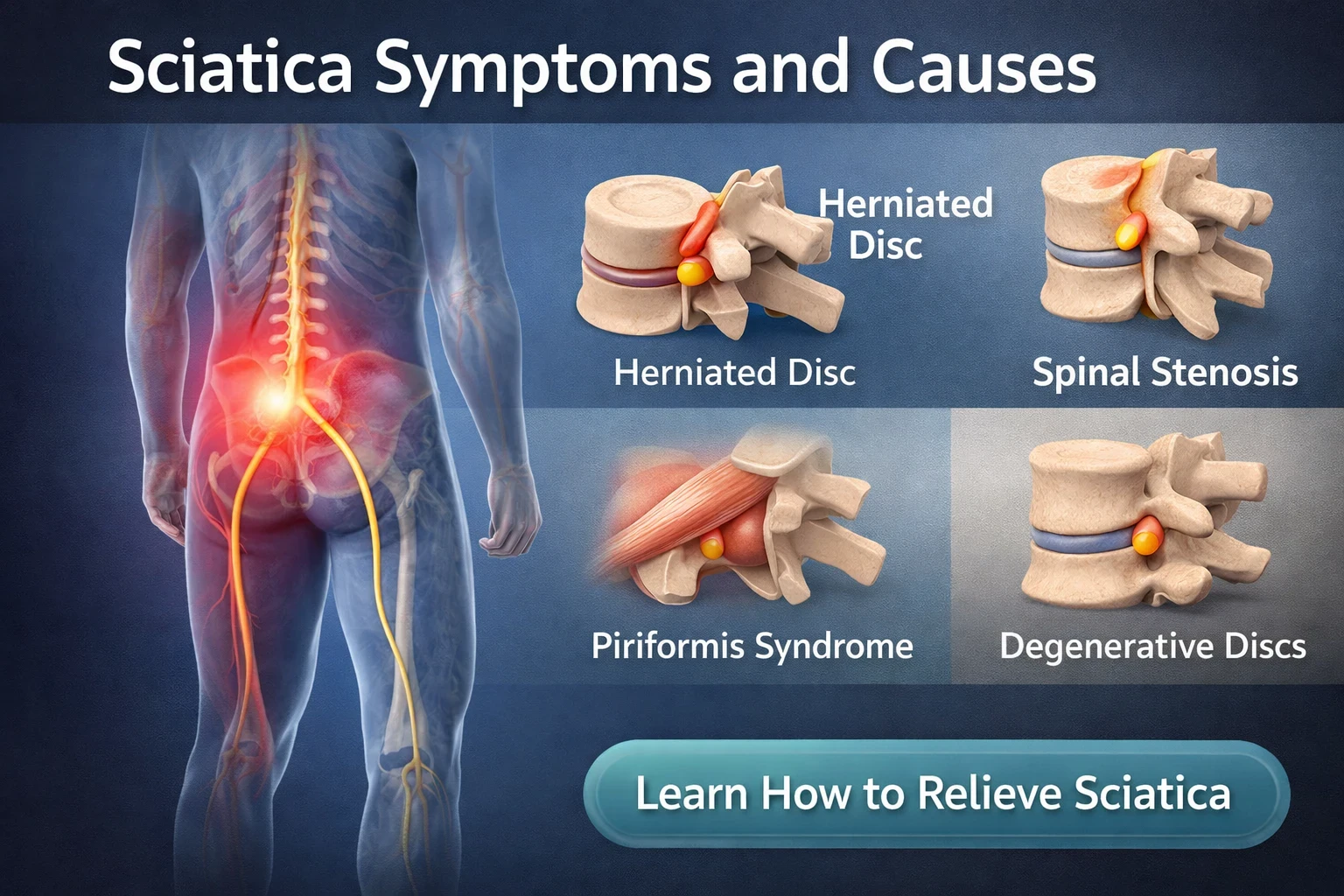
What Is Sciatica?
Sciatica is not a condition itself but a symptom of an underlying issue affecting the sciatic nerve.
It typically presents as pain that radiates from the lower back into the buttock and down one leg.
In many cases, people researching sciatica symptoms and causes are experiencing this radiating pattern and wondering what triggered it.
The sciatic nerve is the largest nerve in the body, so even minor irritation can create noticeable discomfort.
Learning how this nerve functions can make symptoms feel less alarming and more manageable.
For a deeper breakdown of recovery strategies, see this complete guide to sciatica pain treatment and long-term management.
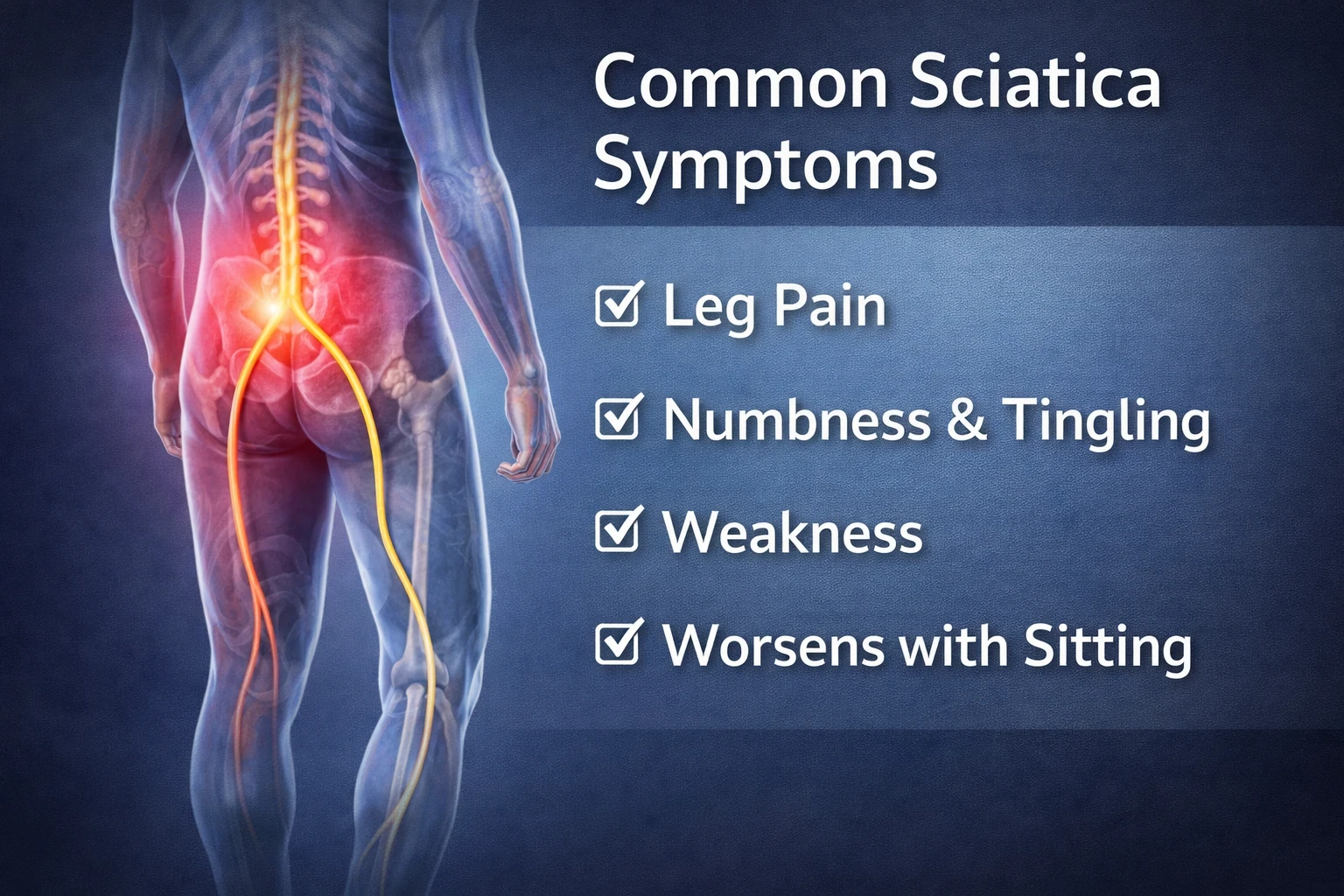
Common Sciatica Symptoms
Recognising early signs is key when exploring sciatica symptoms and causes.
Symptoms can vary from mild to severe, depending on the level of nerve involvement.
Typical symptoms include:
Sharp or burning pain radiating down the leg
Tingling or “pins and needles” sensations
Numbness in the leg or foot Muscle weakness in the affected side
Pain that worsens when sitting or bending
Some people notice that symptoms come and go, while others experience constant discomfort.
The intensity does not always reflect the severity of the underlying cause, which is why understanding sciatica symptoms and causes is so important.
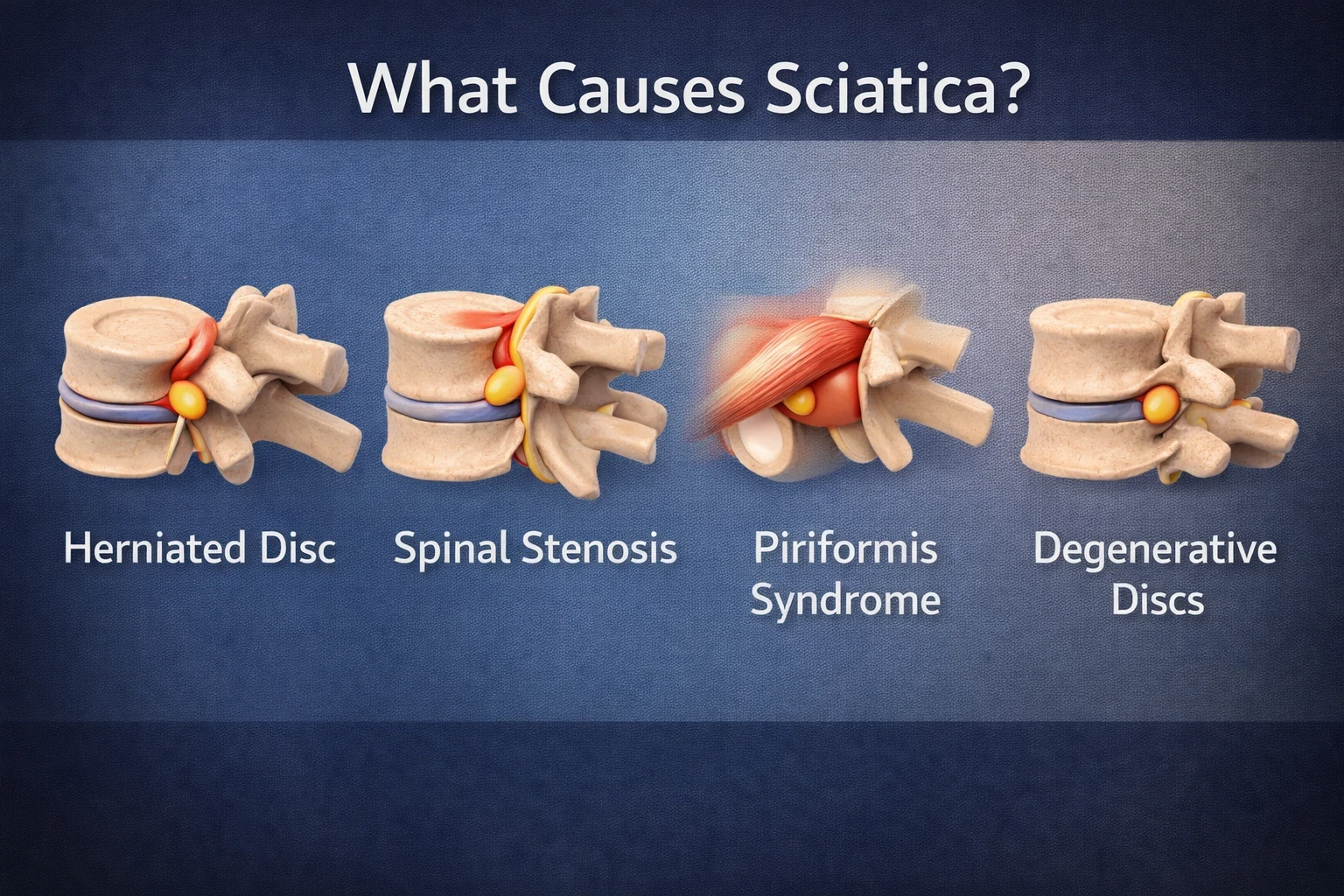
What Causes Sciatica?
Several underlying issues can trigger sciatic nerve irritation.
When looking at sciatica symptoms and causes, these are the most common contributors:
1. Herniated or Bulging Discs
A slipped or bulging disc in the lower spine can press directly on the sciatic nerve.
This is one of the leading causes of sciatica.
2. Spinal Stenosis
Narrowing of the spinal canal can compress nerves, leading to pain and mobility issues.
3. Piriformis Syndrome
The piriformis muscle, located in the buttock, can irritate the sciatic nerve if it becomes tight or inflamed.
4. Degenerative Disc Changes
Age-related wear and tear can reduce cushioning between spinal discs, increasing nerve sensitivity.
5. Poor Movement and Load Management
Sudden increases in activity or long periods of inactivity can stress the spine.
Many people find relief by following structured advice on how to relieve sciatica pain at home using gradual movement and controlled exercises.
How Lifestyle Factors Influence Sciatica
When analysing sciatica symptoms and causes, lifestyle plays a bigger role than many realise.
Long periods of sitting, poor posture, and lack of movement can all contribute to nerve irritation. Stress can also amplify pain perception.
The nervous system becomes more sensitive, making symptoms feel worse even without additional physical damage.
Improving daily habits alongside targeted strategies can significantly reduce flare-ups over time.
When Sciatica Becomes Persistent
Most cases improve within a few weeks, but sometimes symptoms linger.
Persistent cases of sciatica symptoms and causes are often linked to increased nervous system sensitivity rather than ongoing damage.
This means the body becomes more protective, keeping pain signals active even after tissues begin healing.
While this can feel frustrating, it also means recovery is still very possible with the right approach.
Practical Ways to Manage Sciatica
Addressing sciatica symptoms and causes involves a balanced approach rather than relying on a single quick fix.
Helpful strategies include:
Gentle movement and walking to maintain circulation
Gradual stretching of the lower back and hips
Avoiding prolonged sitting where possible
Building core and lower back strength over time
Using heat or cold therapy for temporary relief
Consistency is key.
Small, regular improvements tend to deliver better results than aggressive short-term efforts.

Supportive Tools That May Help
While lifestyle adjustments are essential, supportive tools can complement your recovery when managing sciatica symptoms and causes.
These may include:
Lumbar support cushions
TENS machines for nerve stimulation
Ergonomic seating solutions
If you’re exploring options, this guide to the best sciatica pain relief products highlights tools many people find useful.
A Balanced Perspective on Sciatica
Understanding sciatica symptoms and causes helps remove fear and uncertainty. In most cases, sciatica is not dangerous, even if it feels intense.
The body is adaptable, and with the right combination of movement, education, and patience, most people experience meaningful improvement.
Focusing on gradual progress rather than quick fixes often leads to better long-term outcomes.
FAQ: Sciatica Symptoms and Causes
What are the first signs of sciatica?
Early signs include lower back pain that radiates into the leg, often with tingling or numbness.
Can sciatica go away on its own?
Yes, many cases improve within a few weeks with gentle movement and self-care.
Is walking good for sciatica?
Walking can help reduce stiffness and improve circulation, making it beneficial for many people.
What triggers sciatica pain?
Common triggers include prolonged sitting, heavy lifting, and sudden increases in activity.
When should I seek medical advice?
If symptoms are severe, worsening, or include significant weakness or loss of bladder control, medical attention is important.
Scientific Studies https://pubmed.ncbi.nlm.nih.gov/31937688/ https://pubmed.ncbi.nlm.nih.gov/28192788/