Sleep Hygiene Techniques for Anxiety
Sleep hygiene techniques for anxiety are practical, repeatable habits that calm the nervous system and make sleep feel safer.
When anxiety is elevated, sleep often becomes lighter, more fragmented, or harder to initiate.
The aim is not to force sleep, but to reduce stimulation so the body can naturally settle.
An anxious mind is usually a vigilant mind.
The more predictable your evenings become, the easier it is for your system to shift out of alert mode.
Why Anxiety Interferes With Sleep
Anxiety keeps the nervous system slightly on guard.
Heart rate may stay elevated. Thoughts can loop. Muscles may hold tension without you realising it.
Over time, this alert state makes it harder to drift into deep, restorative sleep.
If you want a deeper understanding of how sensitivity builds in the body, this explanation may help: https://beyond-pain-relief.com/movement-load-and-pain-sensitivity/
When the nervous system feels safer, sleep improves naturally.
Keep a Consistent Sleep-Wake Rhythm
One of the most effective sleep hygiene techniques for anxiety is consistency.
Try to:
- Wake up at roughly the same time daily
- Get natural light within 30 minutes of waking
- Avoid long daytime naps
- Keep weekend schedules close to weekday routines
Morning light anchors your circadian rhythm. A stable wake time is often more important than a strict bedtime.
Regular rhythm reduces unpredictability — and unpredictability fuels anxiety.
Create a Predictable Wind-Down Ritual
An anxious brain responds well to repetition.
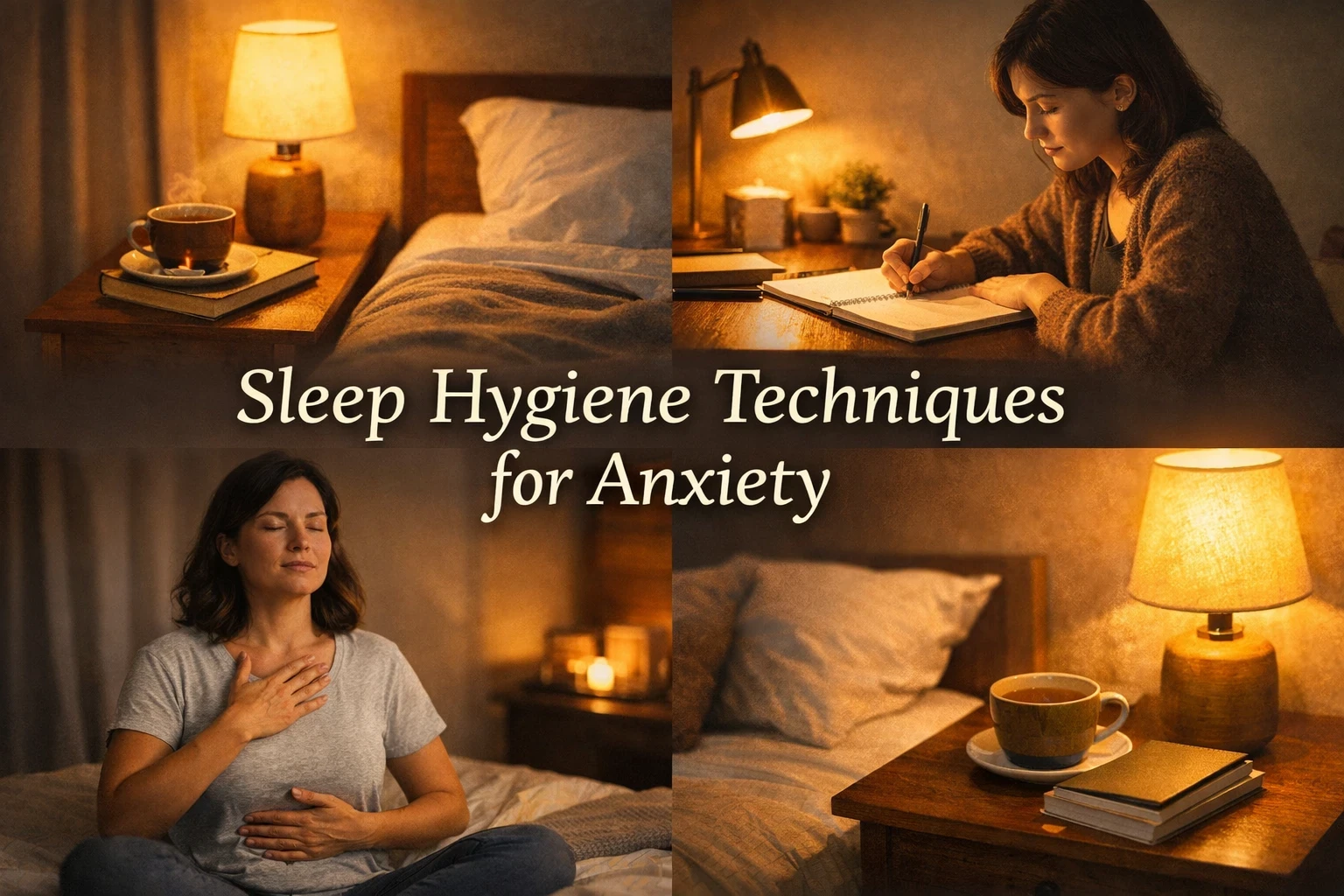
Instead of stimulating evenings, build a simple wind-down sequence that you follow most nights.
For example:
- Dim the lights
- Wash up or shower
- Make herbal tea
- Read something light for 10–15 minutes
It does not need to be elaborate. The power is in the predictability.
When the same sequence happens nightly, your brain begins associating those steps with sleep.
That association reduces resistance.
Sleep hygiene techniques for anxiety work best when they are boring in a good way — steady, familiar, and emotionally neutral.
For additional practical evening habits, you can explore: https://beyond-pain-relief.com/sleep-hygiene-tips-practical-habits-that-improve-sleep-quality/

Create a Worry Buffer Earlier in the Evening
Trying to stop anxious thoughts at bedtime rarely works.
A better approach is to give those thoughts space earlier.
Two to three hours before bed:
- Write down tomorrow’s tasks
- List worries on paper
- Add one small action step beside each
This signals to the brain that concerns are acknowledged.
If anxious thinking also increases physical discomfort, it can help to understand how pain and stress sensitivity interact: https://beyond-pain-relief.com/what-is-chronic-pain-a-clear-human-explanation/
When threat perception drops, both tension and sleep often improve.
Lower Physical Tension Before Bed
Anxiety is not just mental. It is physical.
Gentle techniques can help:
- Slow nasal breathing
- Progressive muscle relaxation
- Light stretching
- A warm shower
A simple breathing rhythm: Inhale for 4
Pause for 2
Exhale for 6
Longer exhales encourage parasympathetic activation — the body’s rest state.
Avoid intense workouts late at night. The goal is gradual downshifting, not stimulation.
Make the Bedroom a Low-Stimulation Space
Your bedroom should feel calm and neutral.
Consider:
- A cool temperature (around 16–19°C)
- Minimal overhead lighting
- Blackout curtains if needed
- White noise if outside sounds trigger alertness
Try not to work or scroll in bed. The brain forms associations quickly. You want the bed linked to rest, not problem-solving.
If you’re awake for more than 20–30 minutes, get up briefly, keep lights low, and return only when sleepy. This protects the sleep association.
Be Mindful With Caffeine and Alcohol
Caffeine can linger for 6–8 hours. If anxiety is high, earlier cut-offs may help.
Alcohol may feel relaxing initially but can fragment sleep and increase early-morning anxiety.
Reducing hidden stimulants is often as important as adding calming strategies.
Supplements — Supportive but Not Primary
Some people find magnesium or calming herbal preparations helpful.
These should be used thoughtfully and ideally with professional guidance.
For example, magnesium has been studied for its potential role in stress regulation and sleep: https://pubmed.ncbi.nlm.nih.gov/23853635/
Supplements can support a routine — but they do not replace one.
Avoid Chasing Perfect Sleep
Trying too hard to sleep can increase performance pressure.
Instead:
- Aim for rest rather than perfection
- Accept occasional poor nights
- Focus on consistency over control
Even lying quietly in low light allows your nervous system to settle.
Sleep hygiene techniques for anxiety are not about rigid rules.
They are about creating safety through repetition.
Start with one or two changes. Let them stabilise before adding more.
Sleep improves when the body feels safe. And safety grows from steady habits practiced over time.