Symptoms Of Low Folic Acid Levels You Should Know About
Symptoms of Low Folic Acid Levels
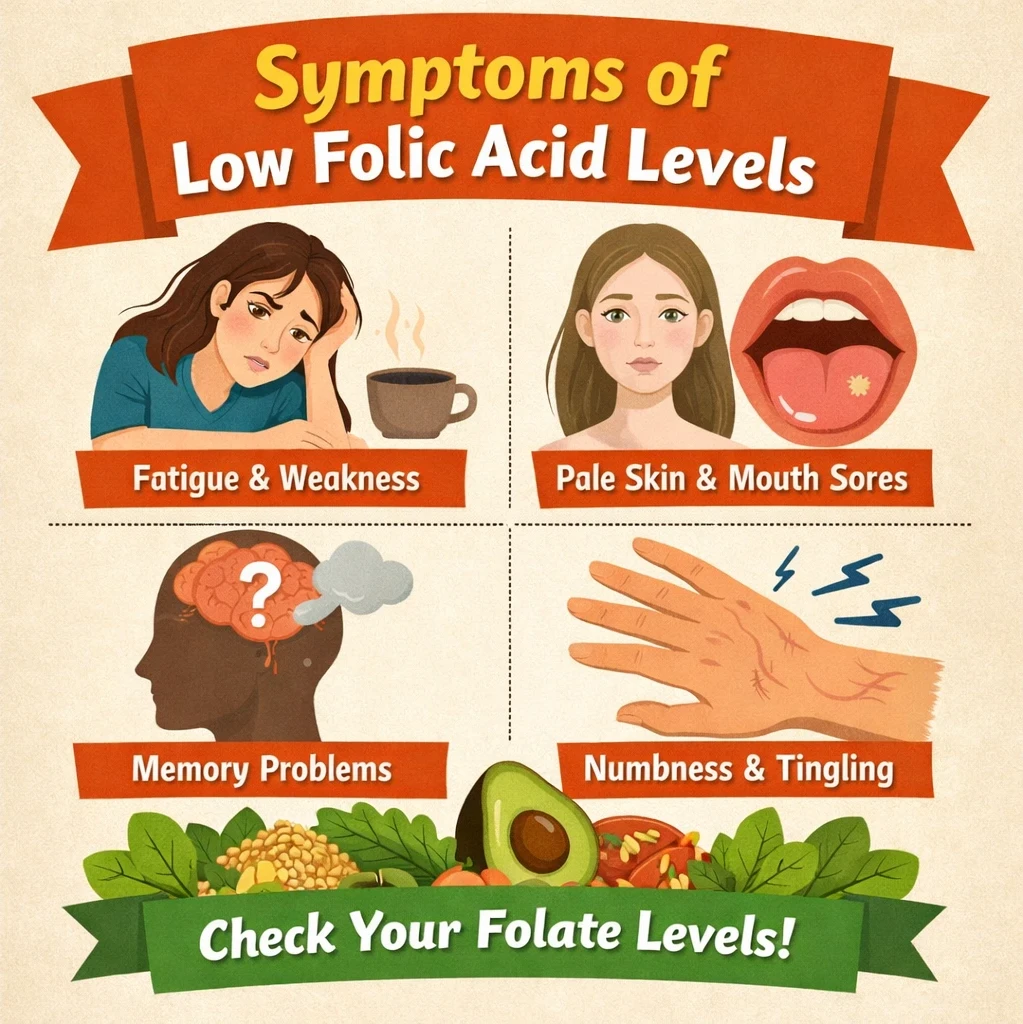
Symptoms of low folic acid levels can creep in quietly. At first, they may look like everyday tiredness, mood shifts, or reduced focus.
Over time, those subtle signs can build into something that affects energy, circulation, and nervous system function.
Folic acid, the synthetic form of vitamin B9, plays a central role in red blood cell production, DNA repair, and methylation.
When intake or absorption drops, the body cannot maintain these systems efficiently.
Recognising early changes helps prevent longer-term complications.
Let’s break this down clearly and practically.
 What is Folic Acid and Why it Matters
Folate is the natural form of vitamin B9 found in leafy greens, beans, citrus fruits, and whole grains. Folic acid is the form often used in fortified foods and supplements.
Inside the body, this nutrient helps:
• Build healthy red blood cells
• Support oxygen delivery
• Maintain nervous system balance
• Assist with DNA synthesis and repair
Without adequate levels, these systems begin to struggle. That’s when symptoms start to appear.
If you want a deeper understanding of how active folate forms support energy production, see 5 MTHF DR for energy.
Early Symptoms of Low Folic Acid Levels
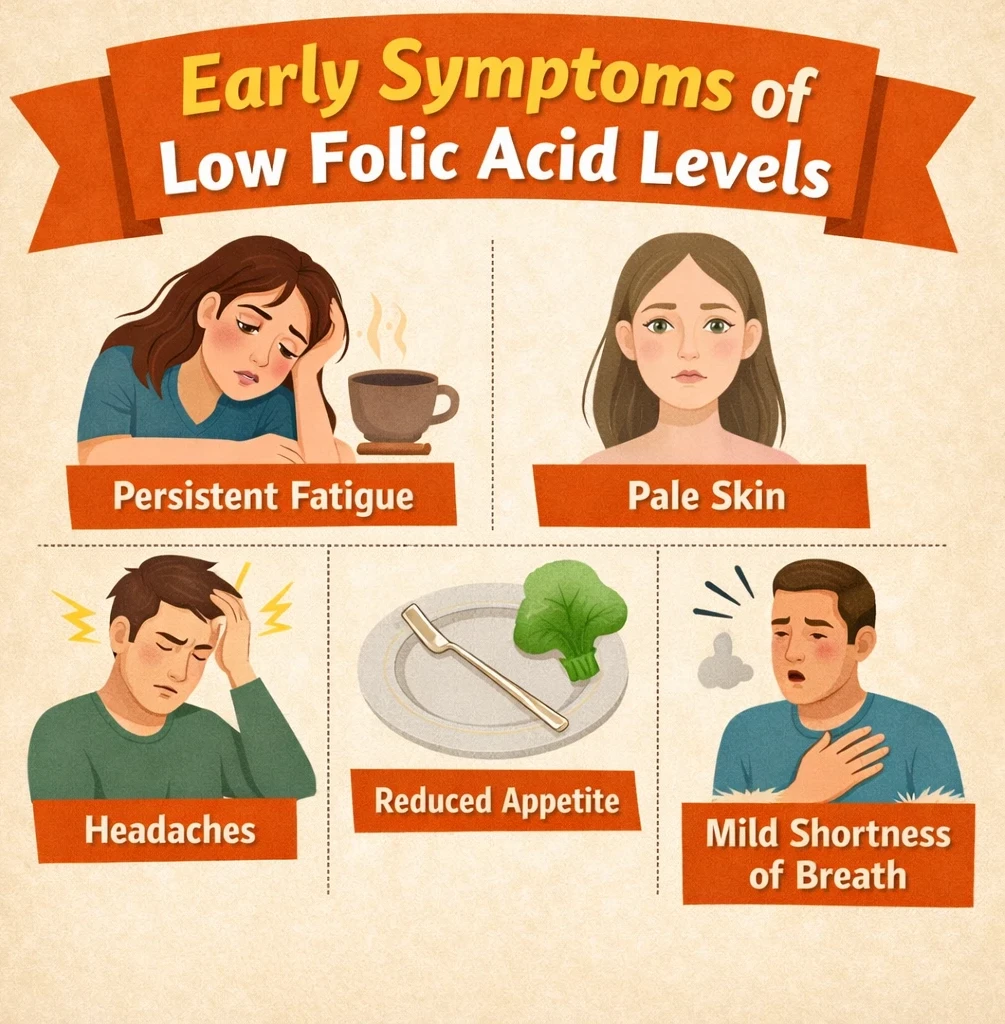
Early symptoms of low folic acid levels are often mild and easy to dismiss.
Common early signs include:
• Persistent fatigue
• Low stamina
• Pale skin
• Headaches
• Mild shortness of breath
Because folate supports red blood cell formation, low levels can reduce oxygen delivery.
Less oxygen means less energy production. Many people simply assume they are run down.
Digestive changes can also appear. Some individuals experience reduced appetite, mild nausea, or unexplained weight shifts.
These early signals are subtle, but they matter.
Moderate Symptoms of Low Folic Acid Levels
When levels continue to decline, the symptoms of low folic acid levels become more noticeable.
You may see:
• Ongoing weakness
• Irritability or mood swings
• Brain fog
• Memory lapses
• Sore tongue or mouth ulcers
Folate is deeply connected to methylation, which influences neurotransmitter production.
That link explains why mood changes can show up alongside physical fatigue.
There is also overlap between folate and B12 deficiency symptoms.
For a simple breakdown of how B12 affects the body, read this Vitamin B12 overview.
Testing is important before supplementing blindly, especially if neurological symptoms are present.

Severe Symptoms of Low Folic Acid Levels
If deficiency continues untreated, more serious symptoms of low folic acid levels may develop.
These can include:
• Megaloblastic anemia
• Significant breathlessness
• Rapid heartbeat
• Numbness or tingling
• Low mood or depressive symptoms
Megaloblastic anemia occurs when red blood cells become abnormally large and inefficient. This reduces their ability to carry oxygen properly.
Neurological changes can appear because folate supports nerve health. Tingling sensations, coordination changes, or persistent mood decline should never be ignored.
Who Is Most at Risk?
Certain groups are more vulnerable to symptoms of low folic acid levels.
Higher-risk groups include:
• Pregnant women
• Older adults
• Individuals with digestive disorders
• People with high alcohol intake
• Those following restrictive diets
Pregnancy significantly increases folate requirements due to rapid cell division. Low levels during this time can increase the risk of neural tube defects.
Digestive conditions such as Crohn’s disease or celiac disease may impair absorption.
Broader nutritional imbalances can also contribute to fatigue patterns that overlap with deficiency. This article on what causes chronic joint pain explains how systemic factors, including nutrient gaps, can influence overall wellbeing.
How Symptoms Develop Over Time
The body stores some folate, but not large amounts. When intake drops, reserves can decline within a few months.
That’s why symptoms of low folic acid levels often develop gradually rather than suddenly.
Stage 1: Subtle tiredness
Stage 2: Reduced concentration
Stage 3: Blood cell changes
Stage 4: Anemia and neurological impact
The slow progression can make deficiency harder to recognise. Many people adapt to feeling “slightly off” without realising a nutritional gap is forming.
How to Confirm Low Folic Acid Levels
Symptoms alone are not enough for diagnosis. Blood testing is the most reliable way to confirm deficiency.
Doctors typically measure:
• Serum folate
• Red blood cell folate
• Complete blood count
Testing also helps rule out B12 deficiency, which can look similar. Treating folate deficiency without identifying low B12 can mask neurological damage, so proper evaluation matters.

How to Support Healthy Levels
If testing confirms deficiency, addressing symptoms of low folic acid levels usually involves both dietary changes and supplementation.
Food sources include:
• Spinach
• Lentils
• Asparagus
• Avocado
• Oranges
Fortified cereals can also contribute.
Supplement options vary. Some people benefit from standard folic acid. Others respond better to methylfolate (5-MTHF), particularly if methylation efficiency is reduced.
Most adults require around 400 micrograms daily, though pregnancy increases this need.
Dosing should always follow medical guidance.
Balanced Perspective
It’s important not to self-diagnose based on general tiredness alone. The symptoms of low folic acid levels overlap with iron deficiency, thyroid imbalance, chronic stress, and poor sleep.
That said, persistent fatigue combined with mood changes or neurological signs deserves attention.
Often, correcting a deficiency leads to gradual improvements in stamina, focus, and resilience.
Small nutrient gaps can create surprisingly wide effects.
The good news is they are usually identifiable and manageable with timely testing and steady support.
Scientific Research Study
https://pubmed.ncbi.nlm.nih.gov/16373990/