TENS Vs Other Pain Relief Methods What’s The Difference?
TENS vs Other Pain Relief Methods
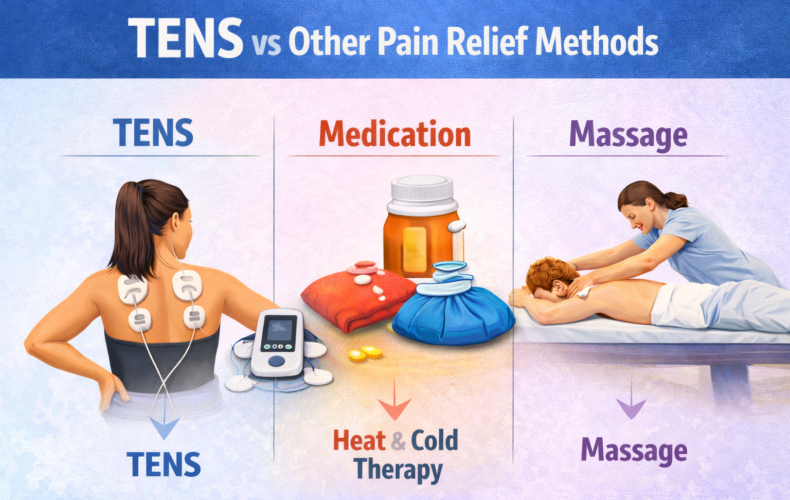
TENS vs other pain relief methods is a topic more people are exploring as they look for safer, more practical ways to manage pain without relying heavily on medication.
The truth is, no single method works for everyone — but understanding where TENS therapy fits can help you make better decisions for long-term relief.
What Is TENS Therapy?
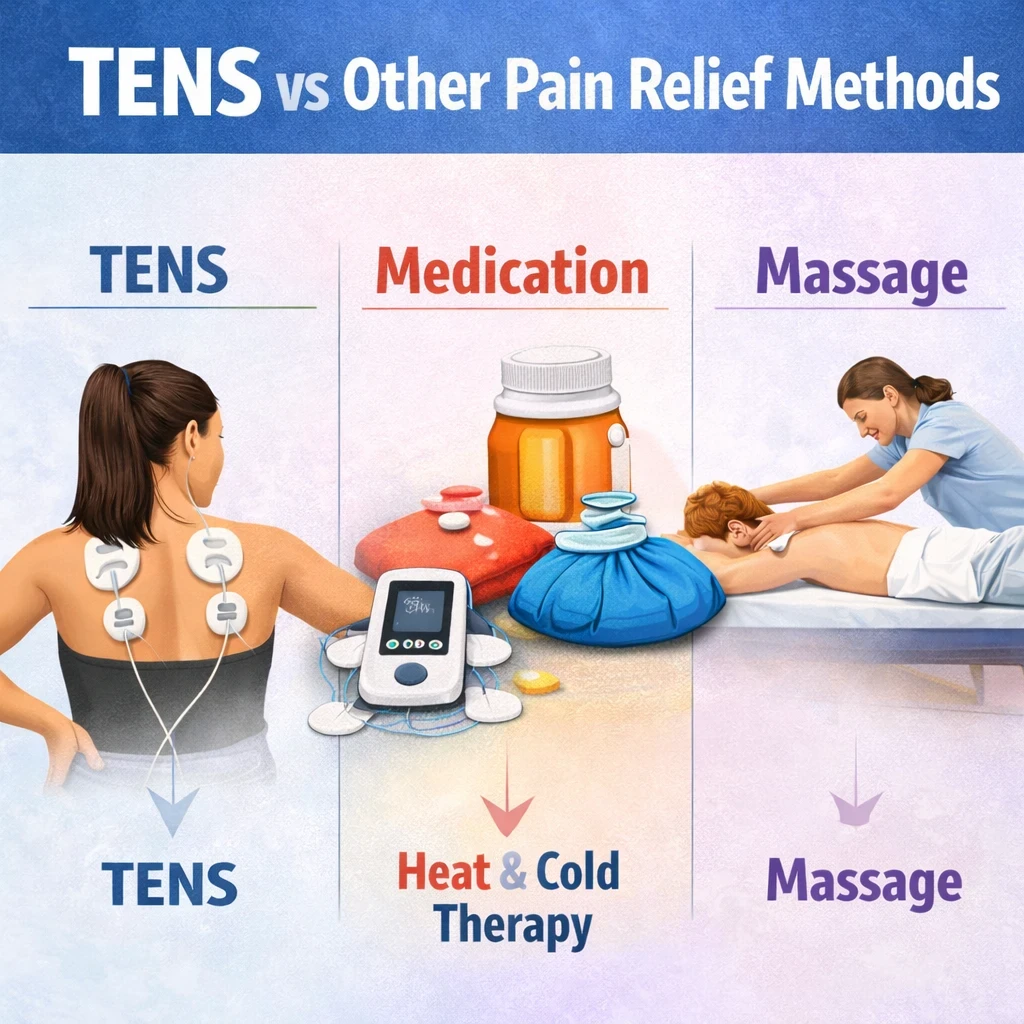
TENS (Transcutaneous Electrical Nerve Stimulation) is a portable device that delivers low-level electrical pulses through pads placed on the skin.
It works by blocking pain signals from reaching the brain and stimulating the release of natural pain-relieving endorphins. This creates a noticeable shift in how pain is experienced.
If you’re new to this approach, here’s a clear guide explaining how TENS therapy works and why it’s widely used for daily pain management.
Common uses include back pain, neck pain, sciatica, arthritis, and muscle soreness.
TENS vs Pain Medication
Pain medication is often the first option people try because it works quickly and is easy to access.
However, it can come with side effects and is not always suitable for long-term daily use.
TENS offers a different approach. It provides drug-free relief, can be used multiple times throughout the day, and carries minimal risk of side effects.
For a deeper look at device options and practical use, see TENS units for pain relief and how they are used in real situations.
Medication works quickly, but TENS is often better suited for ongoing pain management.
TENS vs Physiotherapy and Exercise
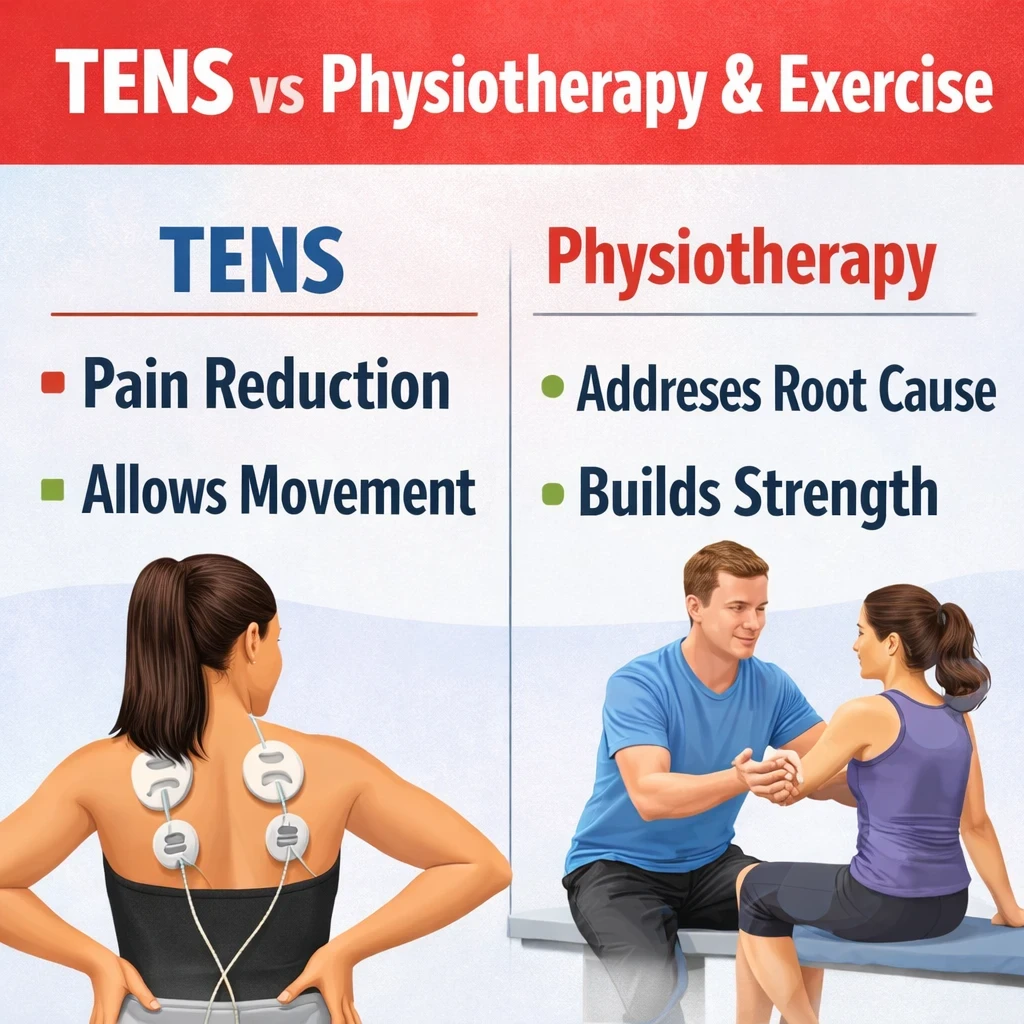
Physiotherapy focuses on addressing the root cause of pain through movement, strength, and improved function.
It is highly effective for long-term recovery but requires time, effort, and consistency.
TENS supports this process by reducing pain enough to allow movement and exercise.
This makes it easier to stay consistent with rehabilitation.
Physio addresses the cause, while TENS helps you stay on track during recovery.
TENS vs Heat and Cold Therapy
Heat and cold therapy are simple tools that can be very effective depending on the situation.
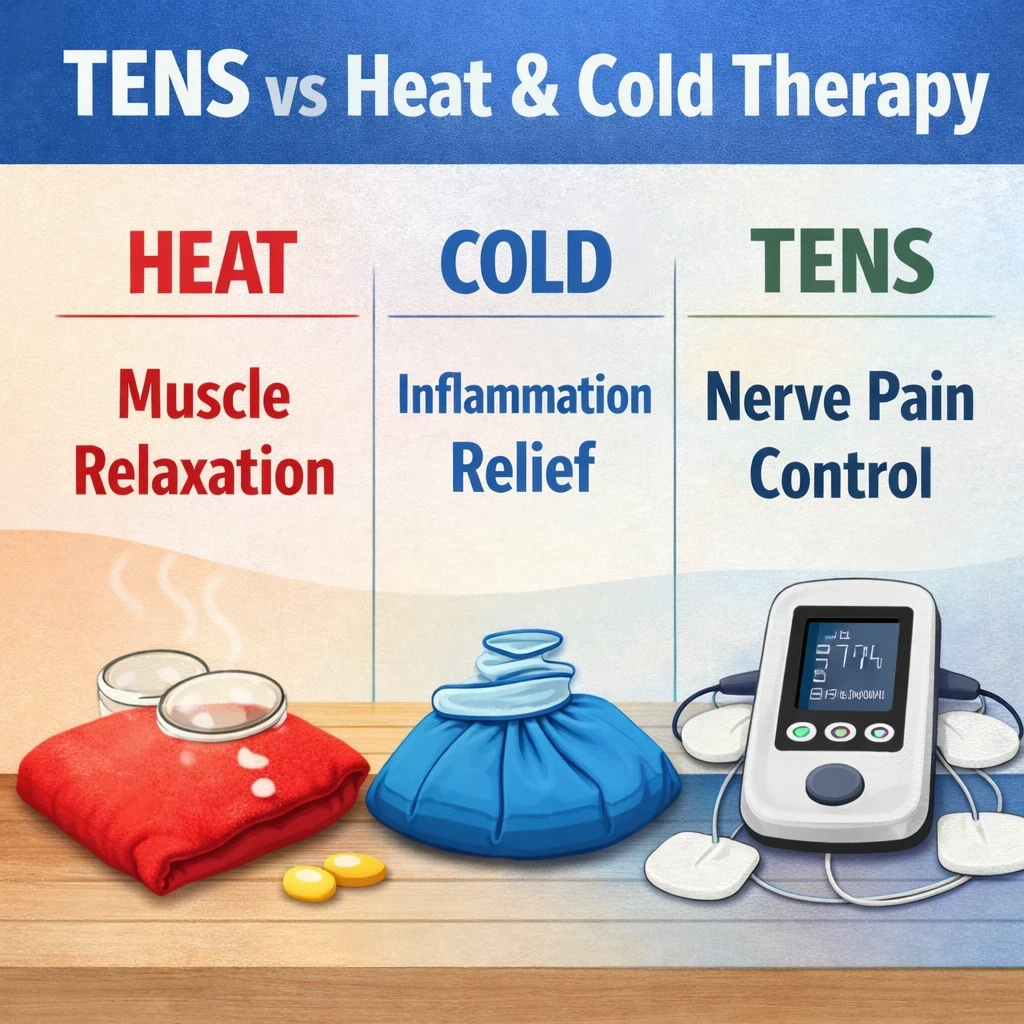
Heat helps relax muscles and improve circulation, while cold reduces inflammation and numbs pain.
TENS works differently by targeting the nervous system.
Heat is best for stiffness, cold is best for swelling, and TENS is best for influencing how pain signals are processed.
Heat and cold are useful basics, but TENS works at a deeper neurological level.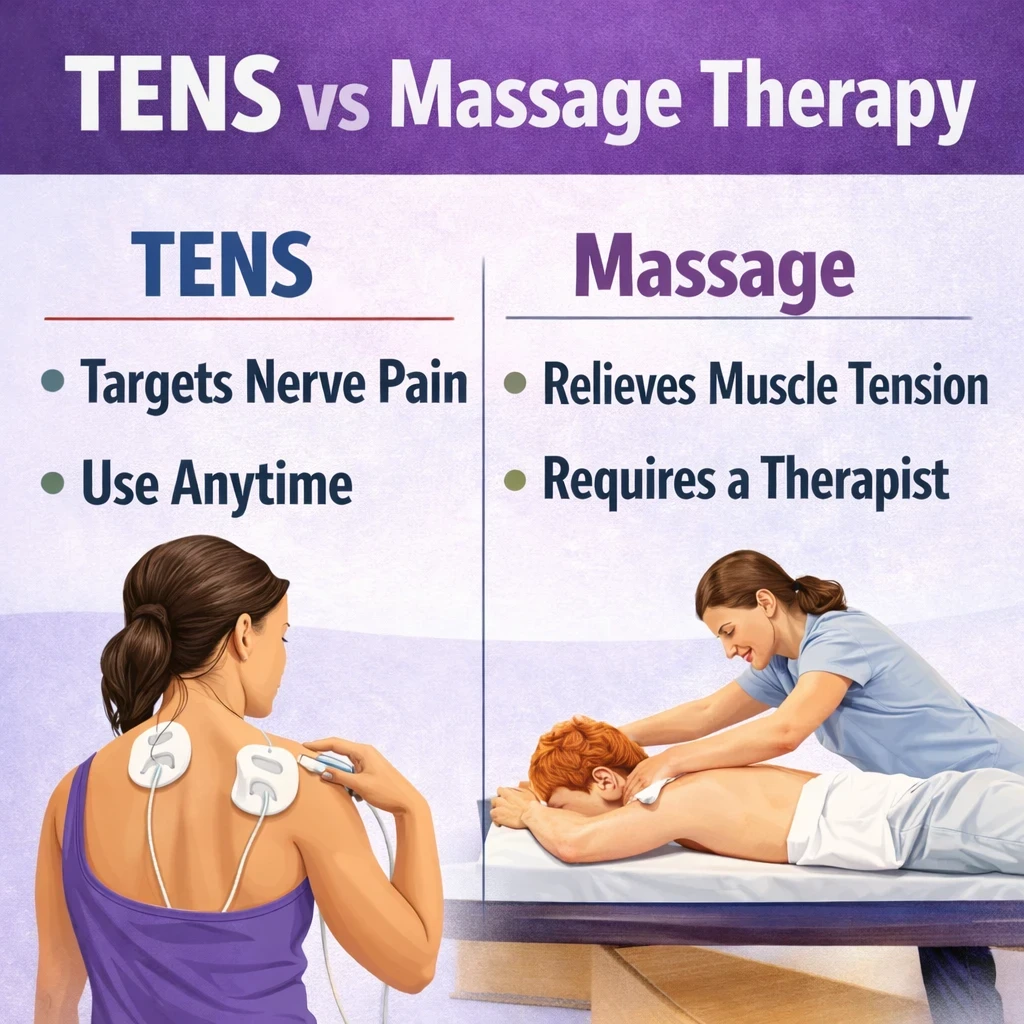
TENS vs Massage and Manual Therapy
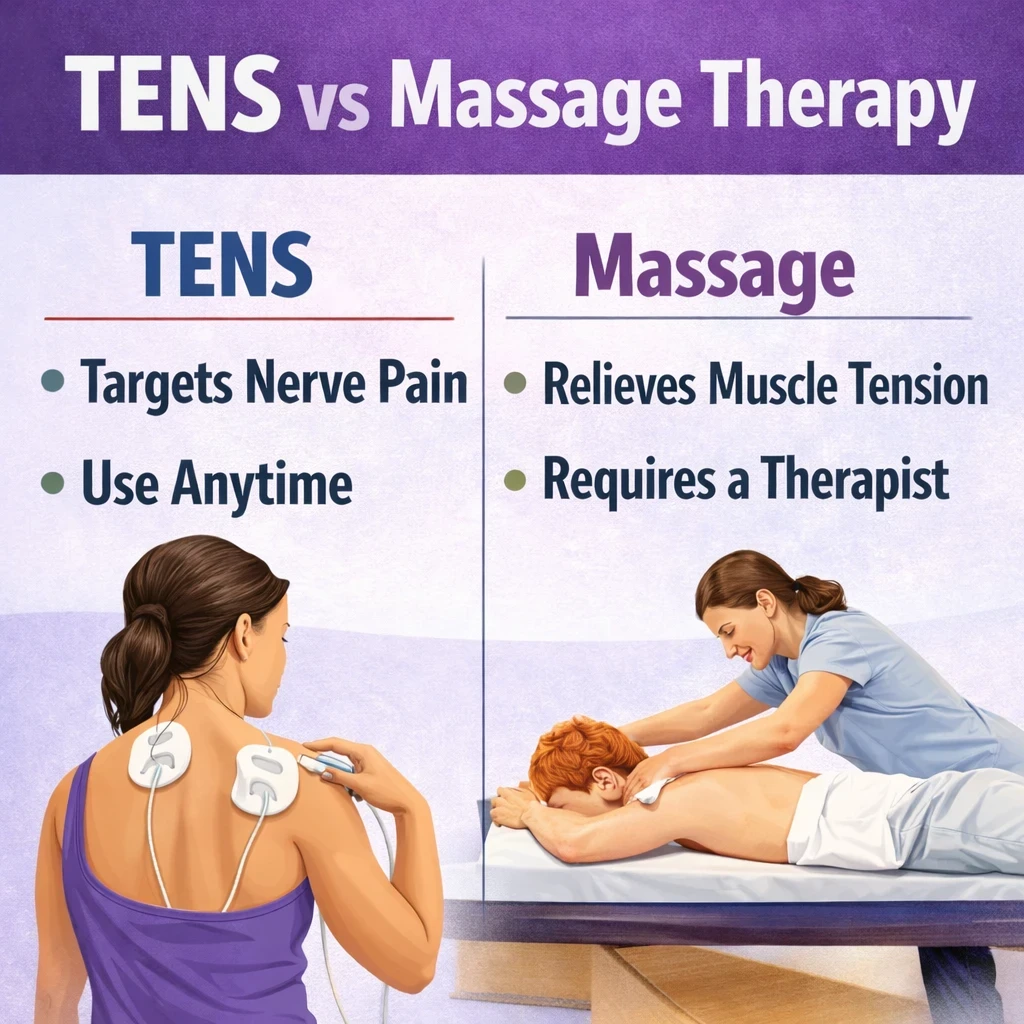
Massage therapy helps reduce muscle tension and improve circulation, providing temporary relief and relaxation.
However, its effects are usually short-lived and often require another person or specific tools.
TENS can be used independently at any time and focuses on altering pain signals rather than just relaxing muscles.
Massage relaxes the tissue, while TENS changes how pain is perceived.
TENS vs Infrared and Light Therapy
Infrared therapy penetrates deeper into tissues and supports healing and circulation over time.
TENS, on the other hand, focuses on immediate pain relief by altering nerve signals.
Infrared supports recovery, while TENS provides fast and controllable relief.
TENS and Muscle Recovery
TENS does not directly repair muscle tissue, but it can support recovery by reducing soreness, improving comfort after activity, and allowing a quicker return to movement.
You can explore this further here: how TENS supports muscle recovery after exercise or strain.
TENS helps you recover functionally by reducing pain rather than rebuilding muscle.
What the Research Says
Research shows that TENS can reduce pain intensity in many users, sometimes within minutes of use, and may help with both acute and chronic conditions.
However, results can vary, and effectiveness depends on proper use and consistency.
Why TENS Works Well for Daily Use
When comparing TENS vs other pain relief methods, one key advantage stands out — it fits easily into everyday life.
TENS provides portable relief, immediate control over pain, no recovery time, and no chemical side effects.
This makes it especially useful for managing chronic pain.
Where TENS Fits Best
TENS works best when pain is ongoing, when you want to reduce reliance on medication, when you need relief while staying active, and when pain involves nerve sensitivity.
It may be less effective when pain is caused by severe structural damage, when inflammation is the main issue, or when expectations are unrealistic.
Using TENS Properly Matters
The effectiveness of TENS depends on correct pad placement, appropriate intensity, suitable settings, and consistent use.
Many people do not use a strong enough intensity, which can reduce results.
Supportive Tools That May Help
If you’re considering TENS therapy, quality matters.
👉 Shop for TENS Therapy Devices Here
Look for adjustable intensity, multiple modes, reliable electrode pads, and ease of use.
The Real Takeaway
When comparing TENS vs other pain relief methods, it’s not about choosing a single solution.
The most effective approach often combines TENS for immediate relief, movement for long-term improvement, heat or cold for symptom control, and occasional medication when needed.
TENS plays a central role by helping you stay functional while managing pain.
Frequently Asked Questions
Is TENS better than medication?
It is safer for long-term use but may not replace medication in all situations.
Can I use TENS every day?
Yes, daily use is common and generally safe.
How quickly does it work?
Some people feel relief within minutes, while others need repeated sessions.
Does TENS fix the root cause of pain?
No, it helps manage symptoms while other methods address the underlying cause.
Scientific Reference
https://pmc.ncbi.nlm.nih.gov/articles/PMC9611192/
