Vitamin B12 Benefits: Why This Essential Nutrient Matters More
Vitamin B12 Benefits
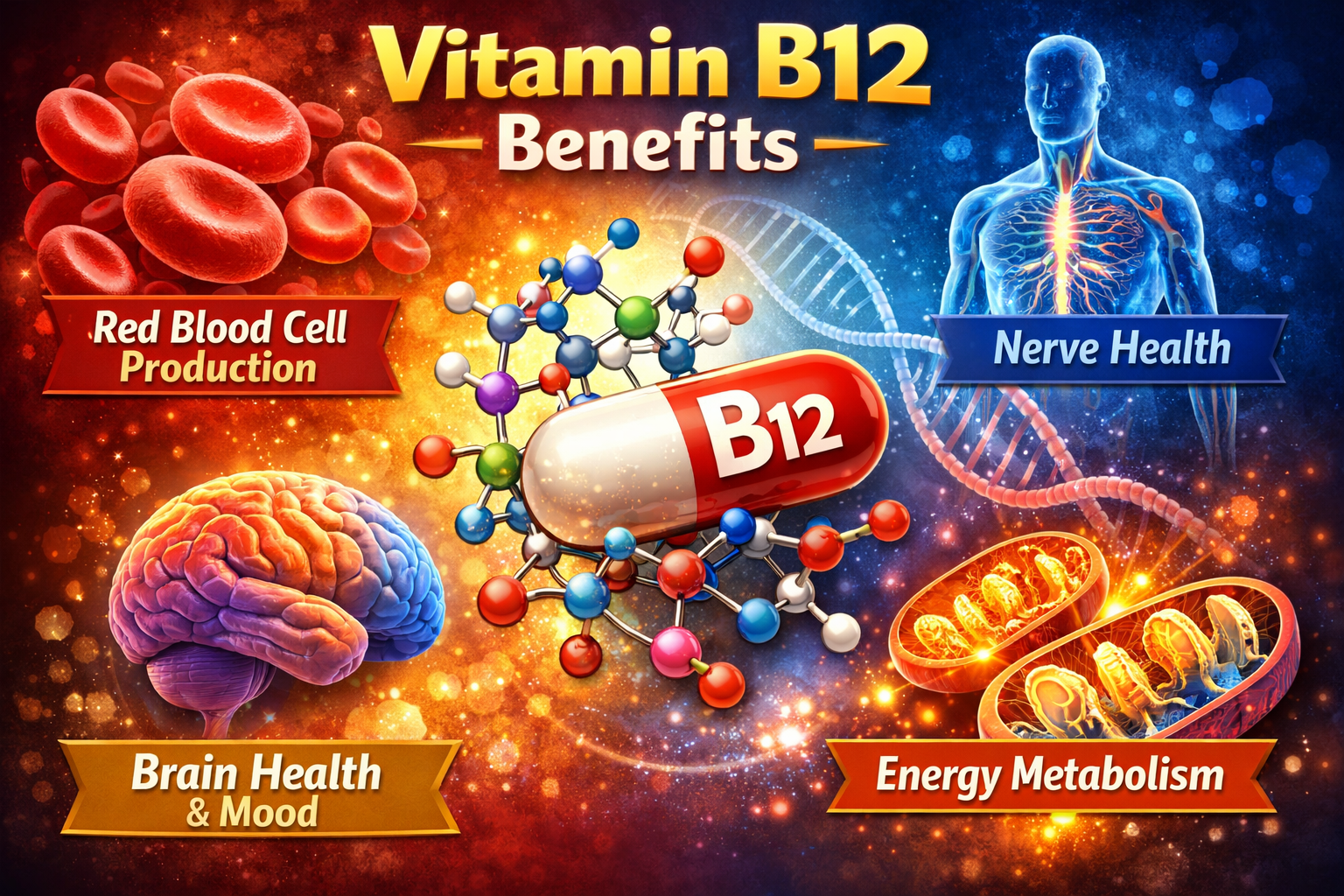
Vitamin B12 benefits influence energy, nerve health, red blood cell production, and cognitive stability, making this nutrient one of the most important foundations of long-term wellbeing.
Although it’s often associated with energy alone, B12 plays a much deeper biological role. When levels are adequate, multiple systems work smoothly together.
However, when levels decline, symptoms can quietly build over time.
Understanding how this vitamin functions allows you to take practical control of your health.
What Is Vitamin B12?
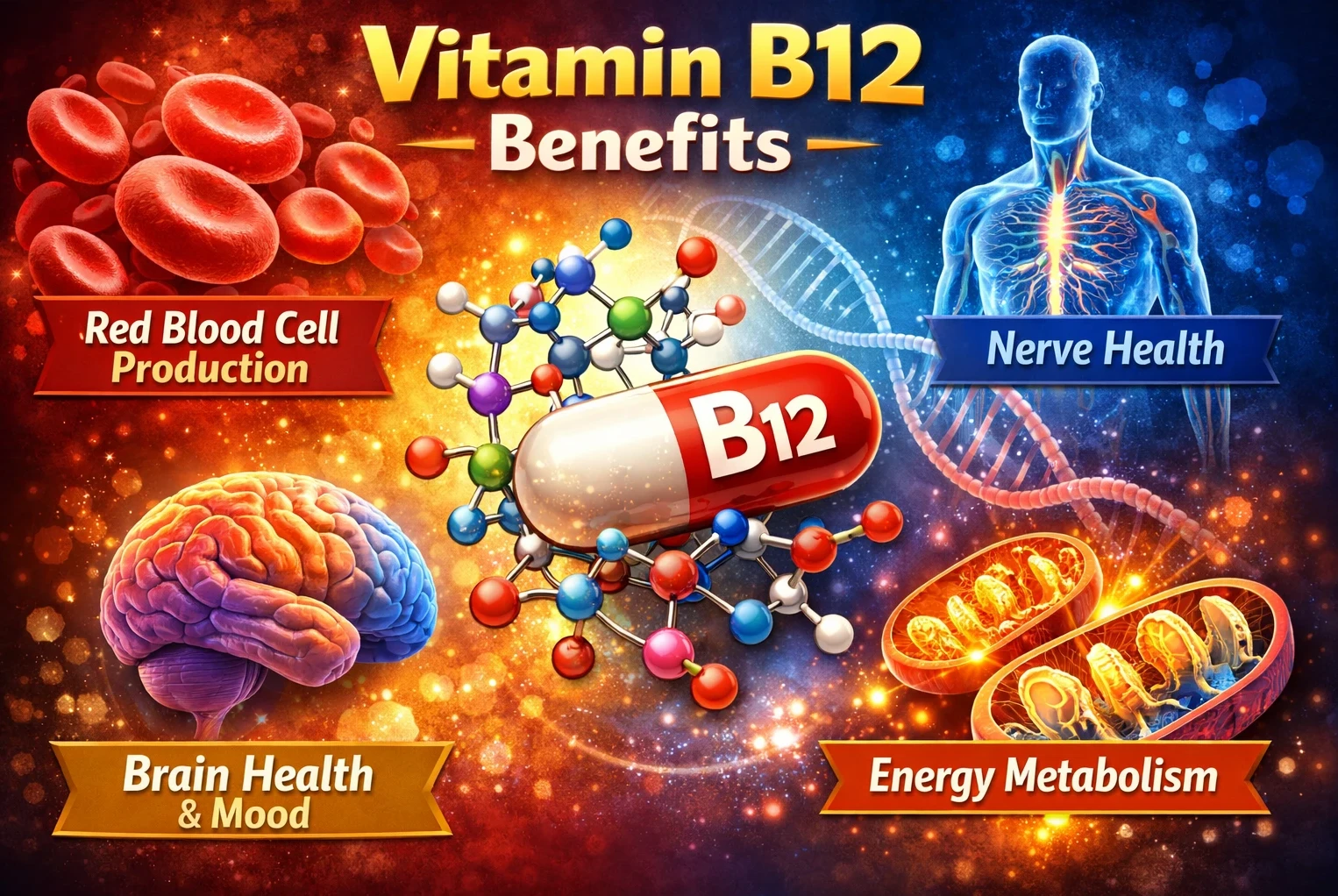
Vitamin B12, also known as cobalamin, is a water-soluble B vitamin required for DNA synthesis and neurological integrity.
Unlike many nutrients, B12 is found almost exclusively in animal-based foods such as meat, fish, eggs, and dairy. Because of this, dietary intake varies widely depending on eating patterns.
Absorption is also complex. The stomach must produce intrinsic factor, which binds to B12 so it can be absorbed in the small intestine.
Therefore, digestive health plays a central role in whether intake actually translates into adequate levels.
Core Vitamin B12 Benefits
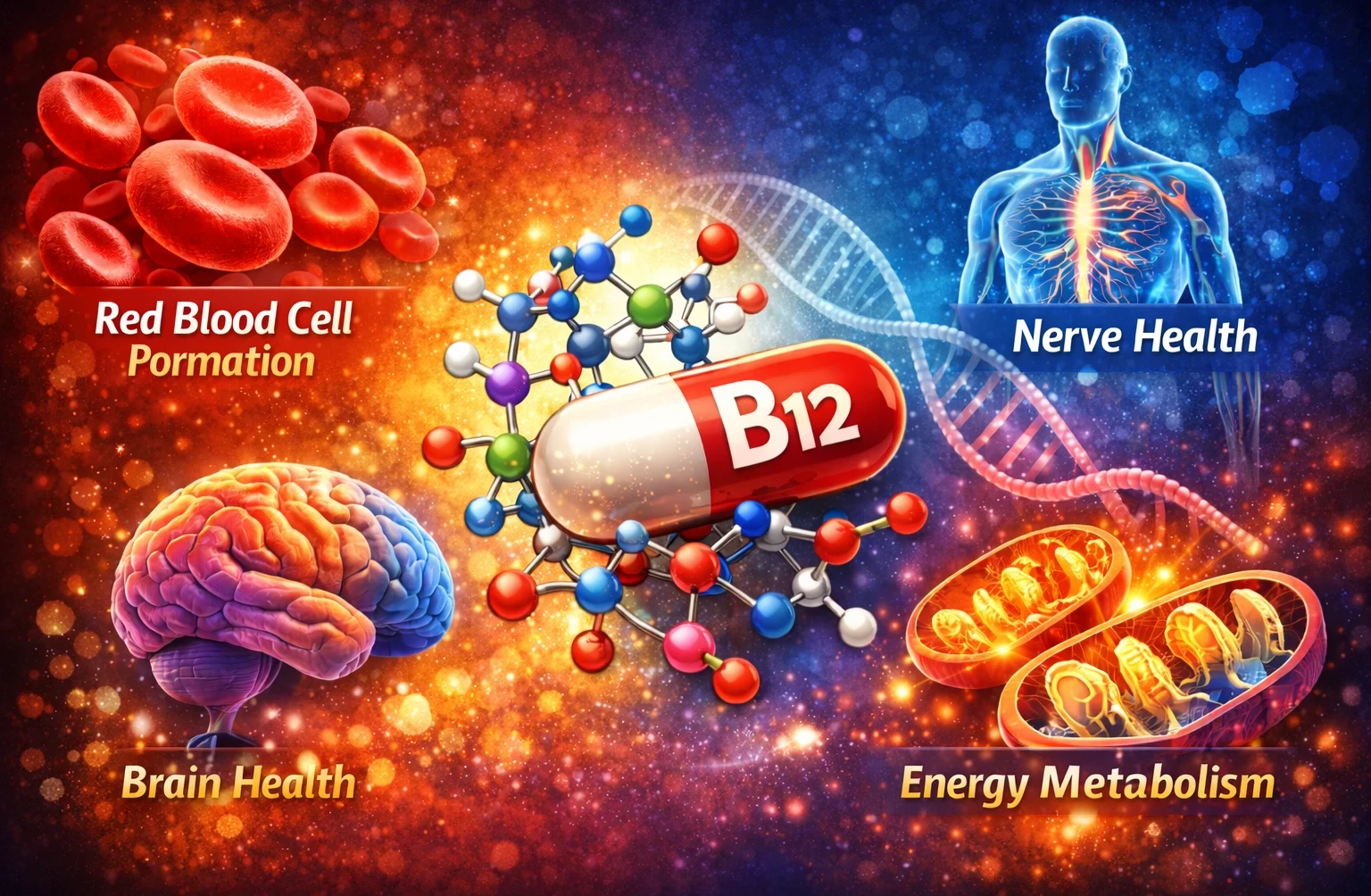
1. Red Blood Cell Formation
One of the primary Vitamin B12 benefits involves supporting healthy red blood cell production.
Without sufficient B12, red blood cells become enlarged and inefficient. This condition, known as megaloblastic anemia, reduces oxygen delivery throughout the body.
As a result, people may experience:
- Fatigue
- Weakness
- Pale skin
- Shortness of breath
Because oxygen transport is foundational to energy production, even mild deficiency can feel significant.
2. Nervous System Protection
Another critical aspect of Vitamin B12 benefits is nerve protection.
B12 helps maintain the myelin sheath — the protective covering that surrounds nerves.
When this protective layer weakens, neurological symptoms may appear.
Common signs include:
- Tingling in hands and feet
- Numbness
- Balance issues
- Reduced coordination
Over time, untreated deficiency can contribute to lasting nerve damage. Early detection is therefore important.
3. Brain Function and Cognitive Stability
Vitamin B12 benefits also extend to brain health.
B12 helps regulate homocysteine levels, which are associated with neurological function. Elevated homocysteine has been studied in relation to cognitive decline.
Adequate levels may support:
- Mental clarity
- Focus
- Emotional balance
- Memory stability
If you’re exploring broader nutrient patterns, you may also find this related guide on
Symptoms of Low Folic Acid Levels helpful, since folate and B12 often interact metabolically.
4. Energy Metabolism Support
Many people search for Vitamin B12 benefits because of fatigue.
B12 helps convert carbohydrates, fats, and proteins into usable cellular energy.
However, it does not function as a stimulant. Instead, it supports the metabolic pathways that generate energy inside cells.
If deficiency is present, correcting it may improve energy. If levels are already sufficient, additional supplementation does not typically create extra energy beyond normal function.
Who Is at Higher Risk of Low B12?
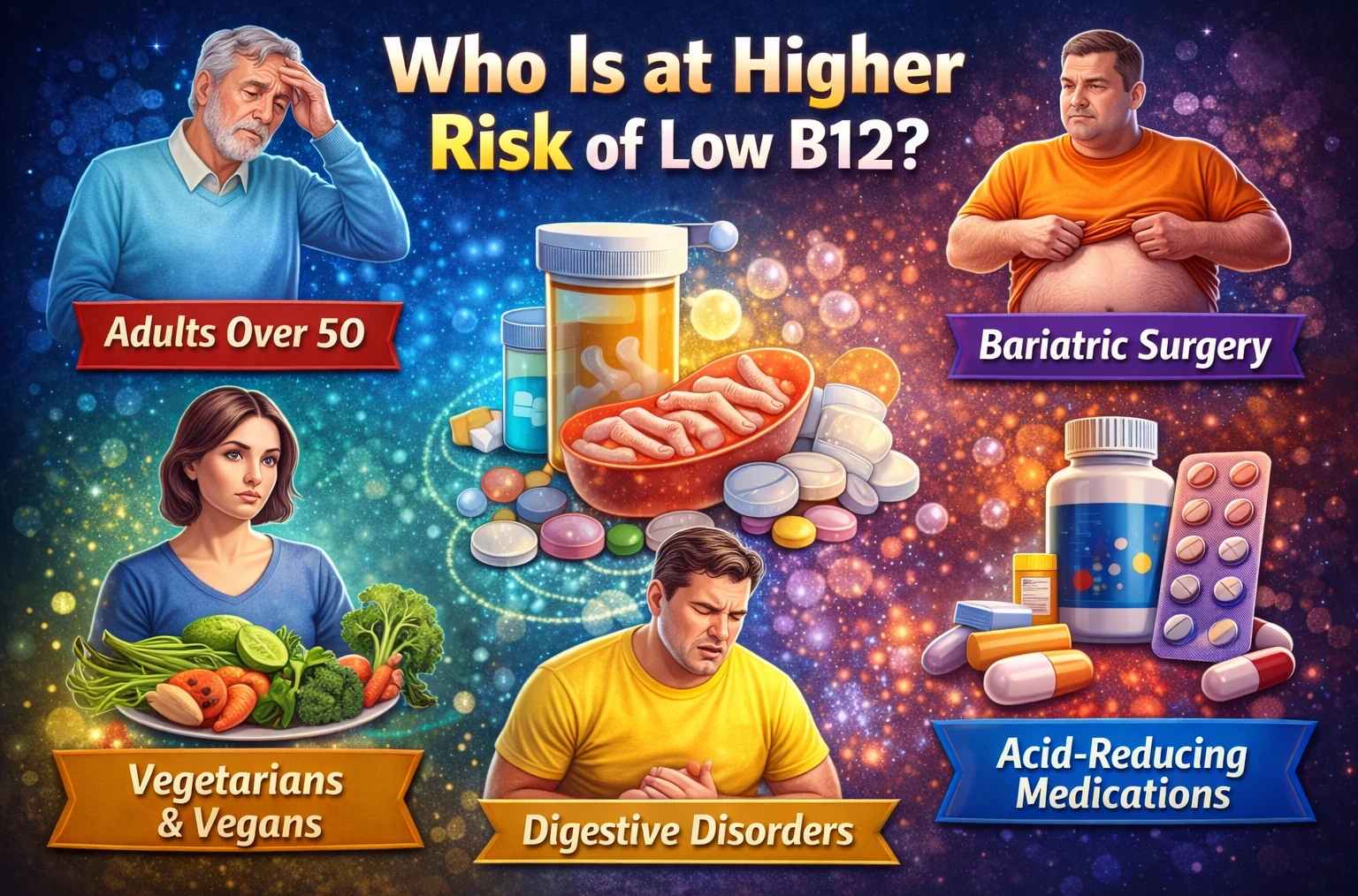
Certain groups are more vulnerable to deficiency.
These include:
- Adults over 50 (reduced stomach acid production)
- Vegetarians and vegans
- Individuals with digestive disorders
- People using acid-reducing medications
- Those who have had bariatric surgery
Digestive health plays a large role. If you’re evaluating absorption issues, this related article on
How to Identify Folic Acid Deficiency may also provide useful context on nutrient testing patterns.
Early Signs of Deficiency
Deficiency often develops gradually.
Early signs may include:
- Persistent fatigue
- Brain fog
- Mild memory lapses
- Irritability
- Tingling sensations
Because these symptoms overlap with many other conditions, testing is essential rather than guessing.
For broader nutrient balance strategies, you might also explore
How to Increase Folic Acid Intake to understand how B-vitamin synergy works.
Food Sources of Vitamin B12 benefits
Natural dietary sources include:
- Beef and lamb
- Salmon and tuna
- Eggs
- Dairy products
- Fortified cereals
Plant foods do not naturally contain B12 unless fortified. Therefore, those following plant-based diets often require supplementation.
If dietary intake is limited, monitoring levels becomes even more important.
Testing and Diagnosis
Doctors typically evaluate:
- Serum B12
- Methylmalonic acid (MMA)
- Homocysteine
MMA is often more sensitive for early detection.
If symptoms persist despite “normal” serum levels, further investigation may be appropriate. Testing removes uncertainty and prevents long-term complications.
For a broader view of nutrient-related fatigue patterns, this guide on
Best Foods to Improve Folic Acid Intake offers additional insights into dietary correction strategies.
Supplement Considerations
When supplementation is necessary, common forms include:
Cyanocobalamin
Methylcobalamin
Hydroxocobalamin
Most individuals absorb oral supplements effectively. However, those with significant absorption problems may require supervised injections.
Because B12 is water-soluble, excess amounts are usually excreted.
Still, supplementation should be guided by testing rather than assumption.
For the best quality assured Vitamin B12 Supplements go to HerbsPro. Here.
A Balanced Perspective
Vitamin B12 benefits are foundational rather than flashy.
They support oxygen transport, neurological stability, DNA synthesis, and metabolic efficiency.
When levels are optimal, the body operates as designed. When levels decline, subtle symptoms often appear before obvious illness develops.
Rather than focusing on megadosing, the goal is steady adequacy.
If you fall into a higher-risk group, periodic testing makes sense. If your diet restricts animal products, proactive monitoring is wise.
And if symptoms such as fatigue or tingling arise, early evaluation can prevent progression.
Small, informed adjustments tend to outperform reactive interventions.
Understanding Vitamin B12 benefits allows you to protect long-term neurological and metabolic health in a structured, practical way.
Scientific Study Links
https://pubmed.ncbi.nlm.nih.gov/19116323/
https://pubmed.ncbi.nlm.nih.gov/21482921/
https://pubmed.ncbi.nlm.nih.gov/30670421/