Why Chronic Pain Occurs
Why chronic pain occurs is often misunderstood. Many people continue to experience pain long after tissues have healed or when scans show no clear damage. This leads to confusion, fear, and frustration. Modern pain science now shows that chronic pain is not a sign of weakness or imagined symptoms, but the result of changes in how the nervous system processes information.
Chronic pain is usually defined as pain lasting longer than three months. Unlike short-term pain, it is not driven by ongoing injury. Instead, it reflects a nervous system that has become overly protective.

Why Chronic Pain Occurs
Pain Is Not a Measure of Damage
Pain is not produced directly by muscles, joints, or discs. Pain is an output created by the brain when it believes the body is under threat. The brain makes this decision by combining many signals, including:
- Sensory input from nerves and tissues
- Past pain or injury experiences
- Beliefs about the body and movement
- Emotional state and stress levels
- Sleep quality and fatigue
- Environmental and social context
In acute injury, this system works well. Pain encourages rest and protection while healing occurs. When healing is complete, pain usually settles. In chronic pain, the alarm system stays switched on.
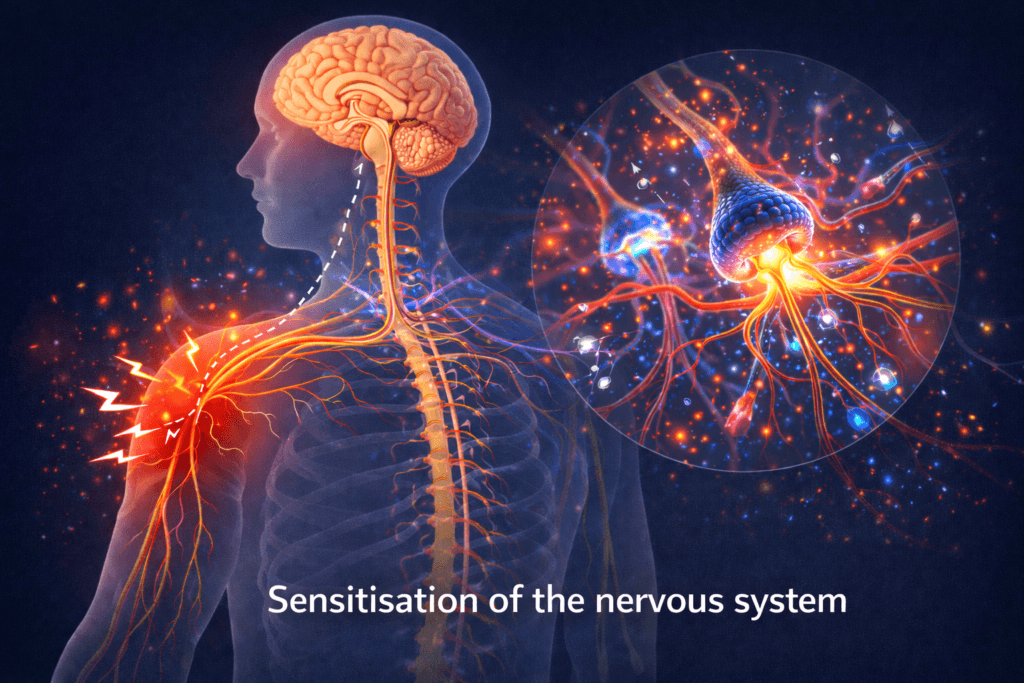
Nervous System Sensitisation
One of the main reasons why chronic pain occurs is nervous system sensitisation. Sensitisation means the nerves, spinal cord, and brain become more responsive than normal.
This can result in:
- Pain occurring with light touch or gentle movement
- Pain spreading beyond the original area
- Pain lasting longer than expected
- Heightened sensitivity to everyday sensations
This is often described as the “volume knob” on pain being turned up. The pain feels intense and real, even though tissues are not being damaged.
Pain Can Persist After Tissues Heal
Muscles, bones, and connective tissues heal within predictable timeframes. When pain continues well beyond these timeframes, it is usually because the nervous system has adapted in an unhelpful way.
Factors that can reinforce pain pathways include:
- Repeated pain episodes
- Fear of movement or re-injury
- Lack of reassurance or clear explanations
- Ongoing stress or uncertainty
Over time, the brain becomes very efficient at producing pain. This does not mean something is being missed on scans. It means the system responsible for protection has learned to stay on high alert.
Stress, Sleep, and Emotional Load
Pain is closely linked to overall nervous system state. Stress, poor sleep, anxiety, and low mood all increase sensitivity.
Common patterns include:
- Pain worsening during stressful periods
- Pain improving when distracted or relaxed
- Flare-ups after poor sleep or exhaustion
These patterns help explain why chronic pain occurs even without physical strain. When the body is under constant internal pressure, the brain is more likely to interpret normal sensations as dangerous.
Movement, Fear, and Avoidance Cycles
Fear of pain can unintentionally maintain pain. When movement is avoided, the brain receives fewer signals that the body is safe and capable.
This can lead to:
- Reduced confidence in movement
- Increased stiffness and sensitivity
- Greater attention to bodily sensations
Over time, even simple movements can trigger pain because the brain has linked them with threat. This cycle is common in chronic pain and does not reflect damage.
Pain Is Personal and Context-Dependent
Two people with similar scans can have very different pain experiences. Pain is influenced by:
- Past injuries or trauma
- Beliefs about pain and the body
- Cultural and social expectations
- Levels of reassurance and support
- Understanding of how pain works
This explains why chronic pain is unpredictable and why reassurance and education matter.
Why Chronic Pain Feels Constant
Chronic pain often feels relentless because the nervous system is involved continuously, not just during movement or activity. Pain may be present at rest or during sleep.
This does not mean the body is broken. It means the protective system has become overactive. Importantly, the nervous system is adaptable. Just as it learned pain, it can learn safety again.
Understanding Changes Pain
Learning how pain actually works can reduce fear, calm the nervous system, and lower pain intensity. When pain is understood as protection rather than damage:
- Fear and catastrophising reduce
- Movement feels safer
- Sensitivity gradually decreases
- Confidence improves
Understanding does not mean ignoring pain. It means giving the brain accurate information so it no longer needs to keep the alarm switched on.
Key Takeaway
Why chronic pain occurs is now well explained. Chronic pain is driven by nervous system sensitivity, not ongoing injury. It is influenced by stress, sleep, emotions, movement, and beliefs. Most importantly, chronic pain is real — and change is possible.
Scientific References
- https://www.ncbi.nlm.nih.gov/books/NBK553030/