How Magnesium Helps With Stress When Used Correctly
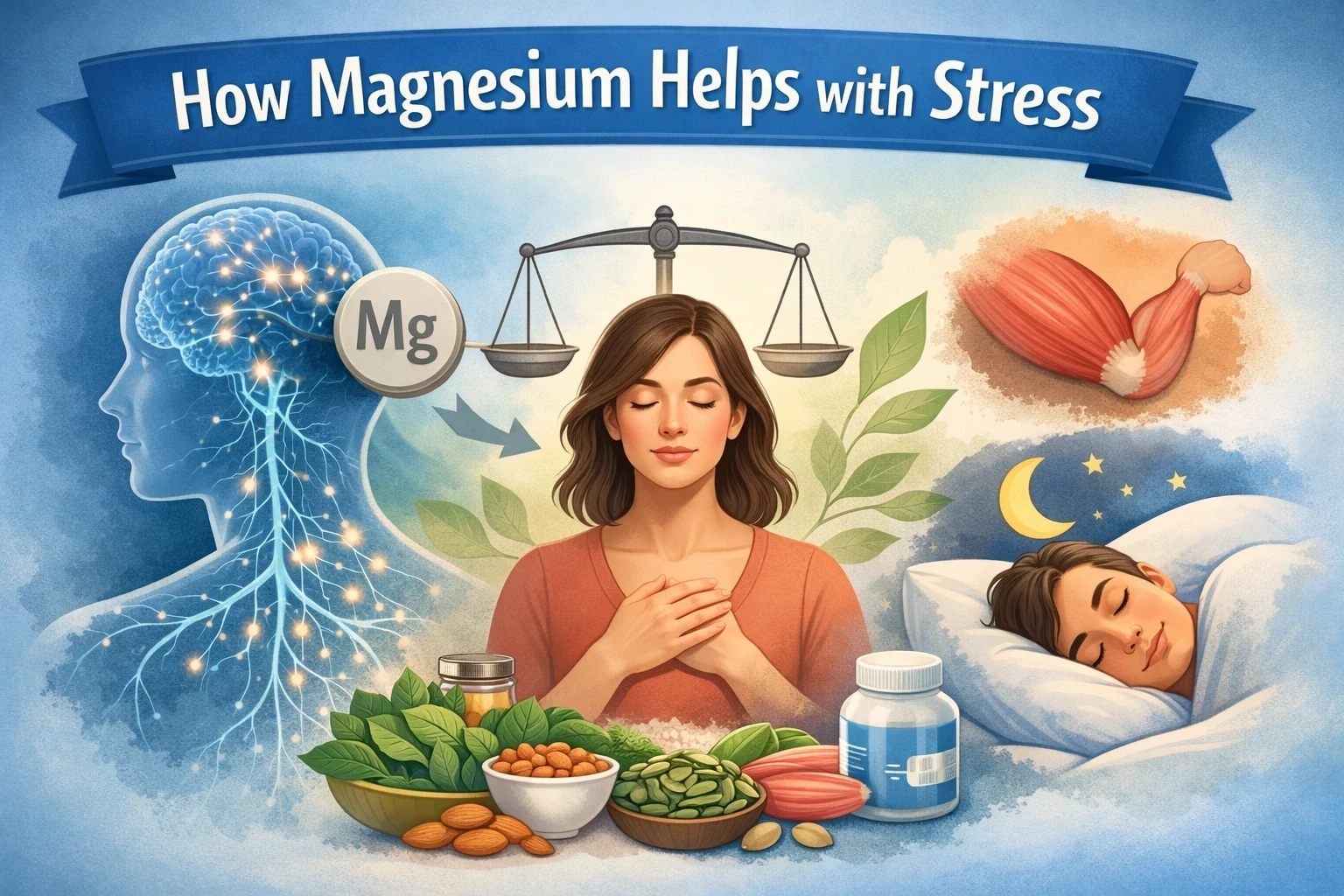
How magnesium helps with stress becomes clearer when you understand how stress affects the nervous system and mineral balance in the body.
During ongoing stress, magnesium is used more quickly, while losses through urine increase.
Over time, this can quietly reduce the body’s ability to regulate tension, sleep, and emotional reactivity.
Magnesium does not remove stress from life. What it does—when appropriate—is support the systems that help the body respond to stress in a steadier, less reactive way.
Why Stress Increases the Need for Magnesium
Stress activates the body’s threat response, releasing cortisol and adrenaline.
These hormones are useful in short bursts, but they also increase magnesium demand.
Magnesium is required for energy metabolism, nerve signaling, and muscle relaxation—all of which work harder during stress.
At the same time, stress accelerates magnesium excretion.
This creates a common pattern: higher need, lower availability.
When this imbalance persists, people may notice increased irritability, muscle tension, poor sleep, or feeling constantly “on edge.”
This is one reason stress can feel more intense the longer it continues.
Magnesium is available in many form, find out more at HerbsPro here.
How Magnesium Supports the Nervous System
One of the core ways how magnesium helps with stress is through nervous system regulation.
Magnesium plays a role in controlling how excitable nerve cells become.
It helps moderate signals that would otherwise overstimulate the brain and spinal cord.
With adequate magnesium availability:
- Nerve firing is less erratic
- The stress response is less easily triggered
- Calm signals are better supported
This does not numb emotions or suppress awareness. Instead, it supports balance—allowing the nervous system to shift out of constant alert mode more easily.
This fits closely with concepts explained in
https://beyond-pain-relief.com/why-nerve-pain-ooccurs/
where nervous system sensitivity plays a key role in how stress and discomfort are experienced.
You can find out more about different types of magnesium here.
Magnesium and Physical Stress Responses
Stress is often felt physically, not just mentally.
Tight shoulders, jaw tension, headaches, and restless muscles are common stress responses.
Magnesium is essential for muscle relaxation because it counterbalances calcium, which triggers muscle contraction.
Magnesium levels can drop and if they do, your muscles could struggle to relax.
This can contribute to ongoing tension and discomfort.
Supporting magnesium intake may help muscles release more efficiently, reducing one layer of physical stress load.
This idea connects well with load and recovery concepts outlined here:
https://beyond-pain-relief.com/movement-load-and-pain-sensitivity/
Sleep, Recovery, and Stress Resilience
Sleep is truly a powerful regulator of stress in the body.
Magnesium supports sleep by helping regulate melatonin and calming nighttime nervous system activity.
Poor sleep increases stress sensitivity, while restorative sleep improves emotional regulation.
By supporting relaxation and sleep quality, magnesium can indirectly improve stress resilience.
This is especially relevant during periods of prolonged stress, disrupted routines, or mental overload.
When Magnesium Supplements May Be Appropriate
Magnesium supplements are not required for everyone.
They are best viewed as a when appropriate support tool rather than a default solution.
Supplementation may be considered when:
- Dietary intake is consistently low
- Stress levels are prolonged or intense
- Sleep quality remains poor despite routine changes
- Muscle tension is persistent
Commonly used forms include magnesium glycinate (often chosen for calm support), magnesium citrate (well absorbed but sometimes laxative), and magnesium malate.
Dietary sources should always be the foundation.
Foods rich in magnesium include leafy greens, nuts, seeds, legumes, and whole grains.
Supplements work best when layered on top of solid nutritional habits, not instead of them.
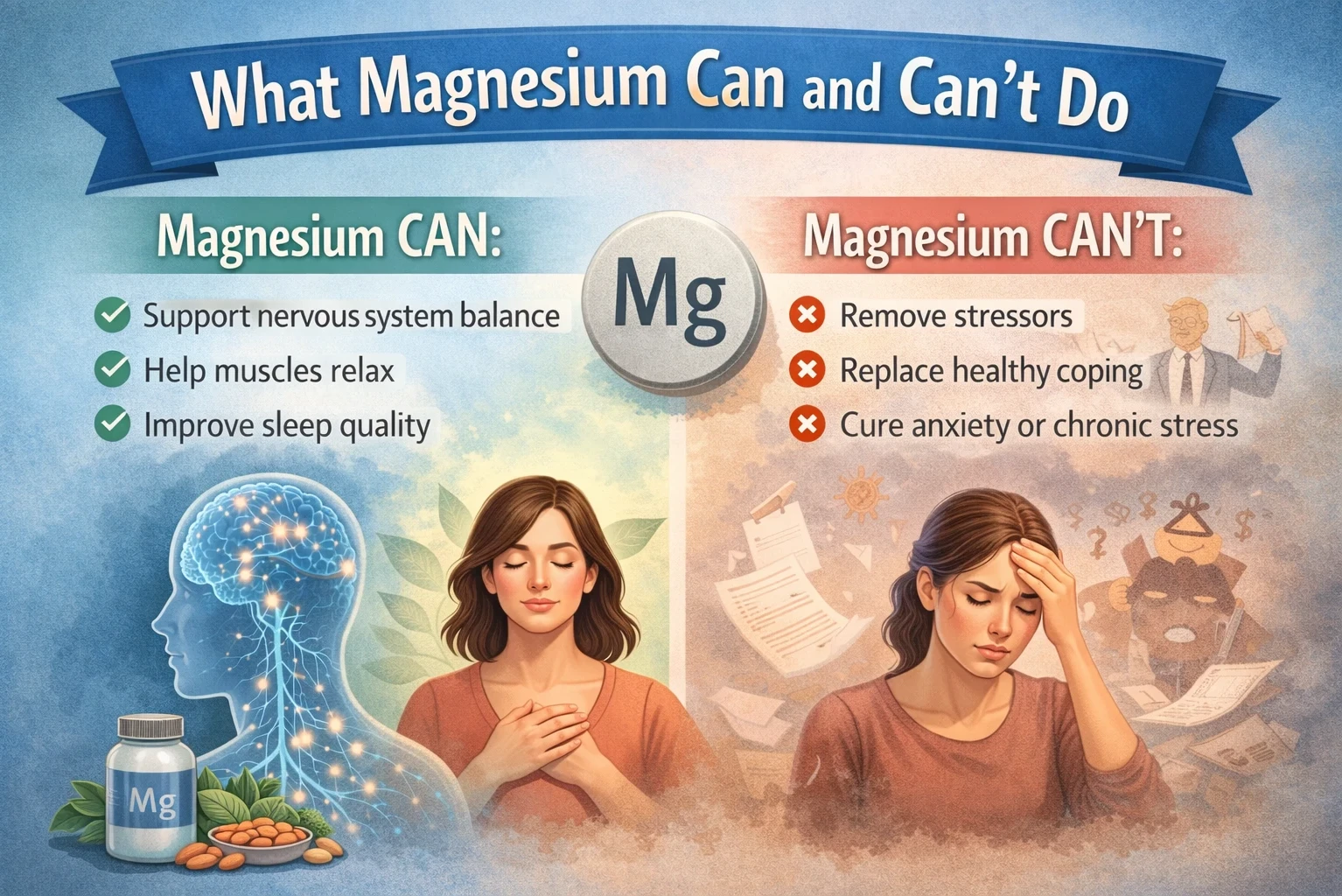
What Magnesium Can and Can’t Do
Setting expectations matters.
Magnesium can:
- Support nervous system balance
- Help muscles relax more effectively
- Support sleep quality and recovery
Magnesium can’t:
- Remove emotional stressors
- Replace pacing, rest, or boundaries
- Act as a cure for anxiety or chronic stress
This distinction mirrors broader pain and stress education discussed in
https://beyond-pain-relief.com/what-is-chronic-pain-a-clear-human-explanation/
How Magnesium Fits Into a Bigger Plan
Magnesium works best as part of a broader stress-support approach.
That includes consistent routines, gentle movement, realistic workloads, sleep hygiene, and nervous system reassurance.
Used appropriately, magnesium can support the body’s baseline calm, making stress feel more manageable rather than overwhelming.
It is one tool among many, not a standalone fix.
Final Thoughts
Understanding how magnesium helps with stress means viewing it as background support rather than a solution that forces calm.
When used thoughtfully and when appropriate, magnesium can help the nervous system, muscles, and sleep systems do their job more efficiently.
Small, steady supports—applied consistently—often matter more than dramatic interventions.
Scientific Research Studies
https://pubmed.ncbi.nlm.nih.gov/16542786/
https://pubmed.ncbi.nlm.nih.gov/23853635/
 Previous Post