Hip Bursitis Stretching Routine Are Often Searched for by people
Hip Bursitis Stretching Routine
Hip bursitis stretching routine strategies are often recommended for people experiencing persistent outer hip discomfort.
Hip bursitis occurs when one of the small fluid-filled sacs called bursae becomes irritated or inflamed around the hip joint.
These bursae normally act as cushions, reducing friction between muscles, tendons, and bone during movement.
However, when irritation develops, tight muscles around the hip can increase pressure on the bursa.
Because of this, a structured hip bursitis stretching routine may help reduce tension, improve mobility, and support long-term recovery.
Stretching should always be performed gently and consistently.
When combined with strengthening and activity modification, it may help calm irritated tissues and improve hip function.
What Is Hip Bursitis
Hip bursitis refers to inflammation of the bursae located near the hip joint.
The most commonly affected area is the outer hip, near the bony structure known as the greater trochanter.
This region experiences significant movement during daily activities such as walking, climbing stairs, or exercising.
Typical symptoms include:
• Pain on the outer hip
• Tenderness when touching the area
• Pain when lying on one side
• Discomfort during walking or running
• Stiffness after sitting for long periods
If symptoms persist, understanding effective treatment options becomes important. The guide on hip bursitis treatment explains several evidence-based approaches used to manage this condition.
Why Stretching Helps Hip Bursitis
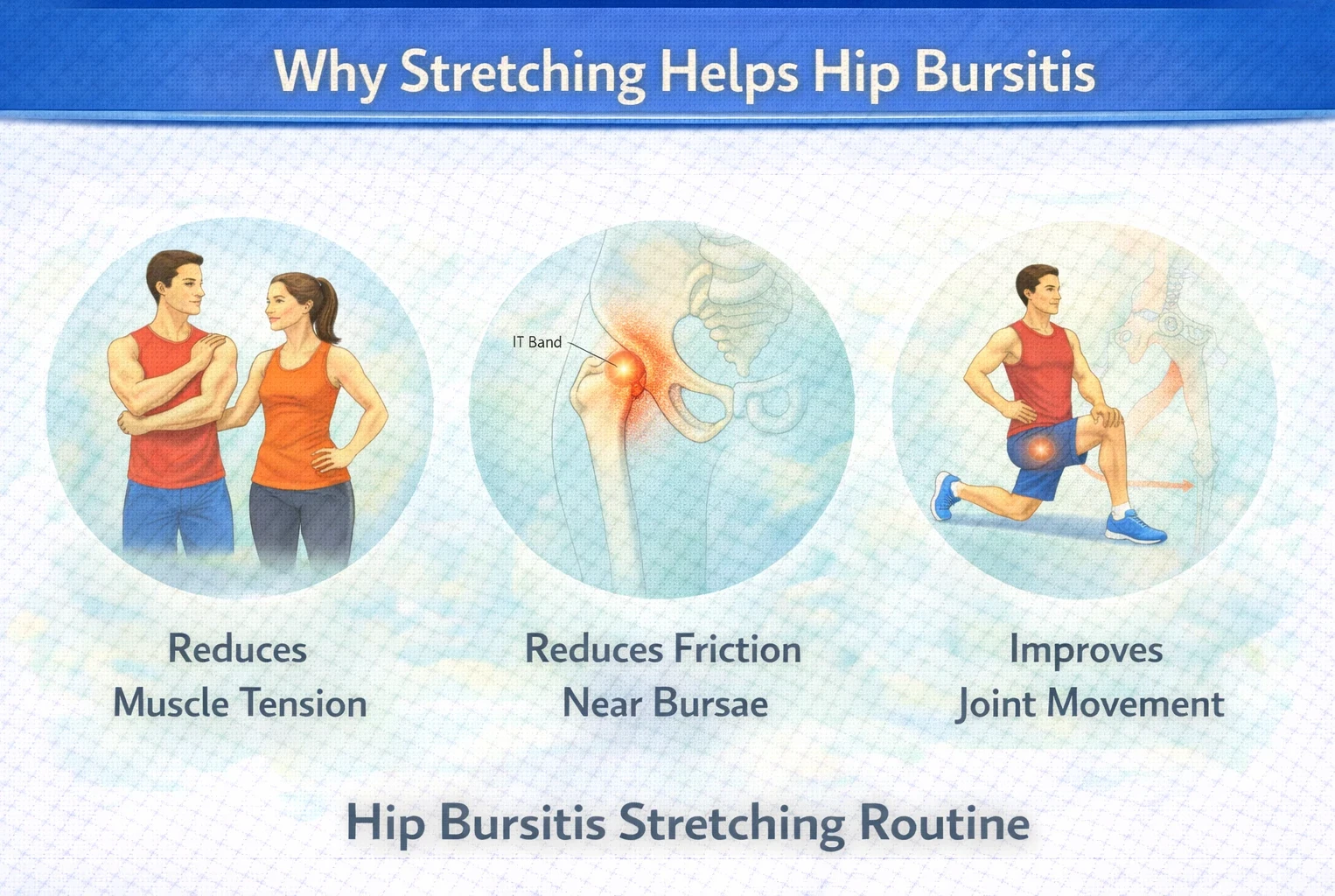
A consistent hip bursitis stretching routine may help reduce muscle tension surrounding the hip joint.
Tight muscles can increase friction near the inflamed bursa.
Stretching may therefore reduce pressure and improve joint movement.
Several muscle groups influence hip bursitis symptoms, including:
• Hip flexors
• Glute muscles
• Iliotibial (IT) band
• Lower back muscles
When these muscles become tight or overactive, they may increase strain on the outer hip.
Stretching these areas may improve flexibility and help restore more balanced movement patterns.
Gentle Stretches Often Used in a Hip Bursitis Stretching Routine
Stretching should remain slow and controlled. Movements should never force the hip into painful positions.
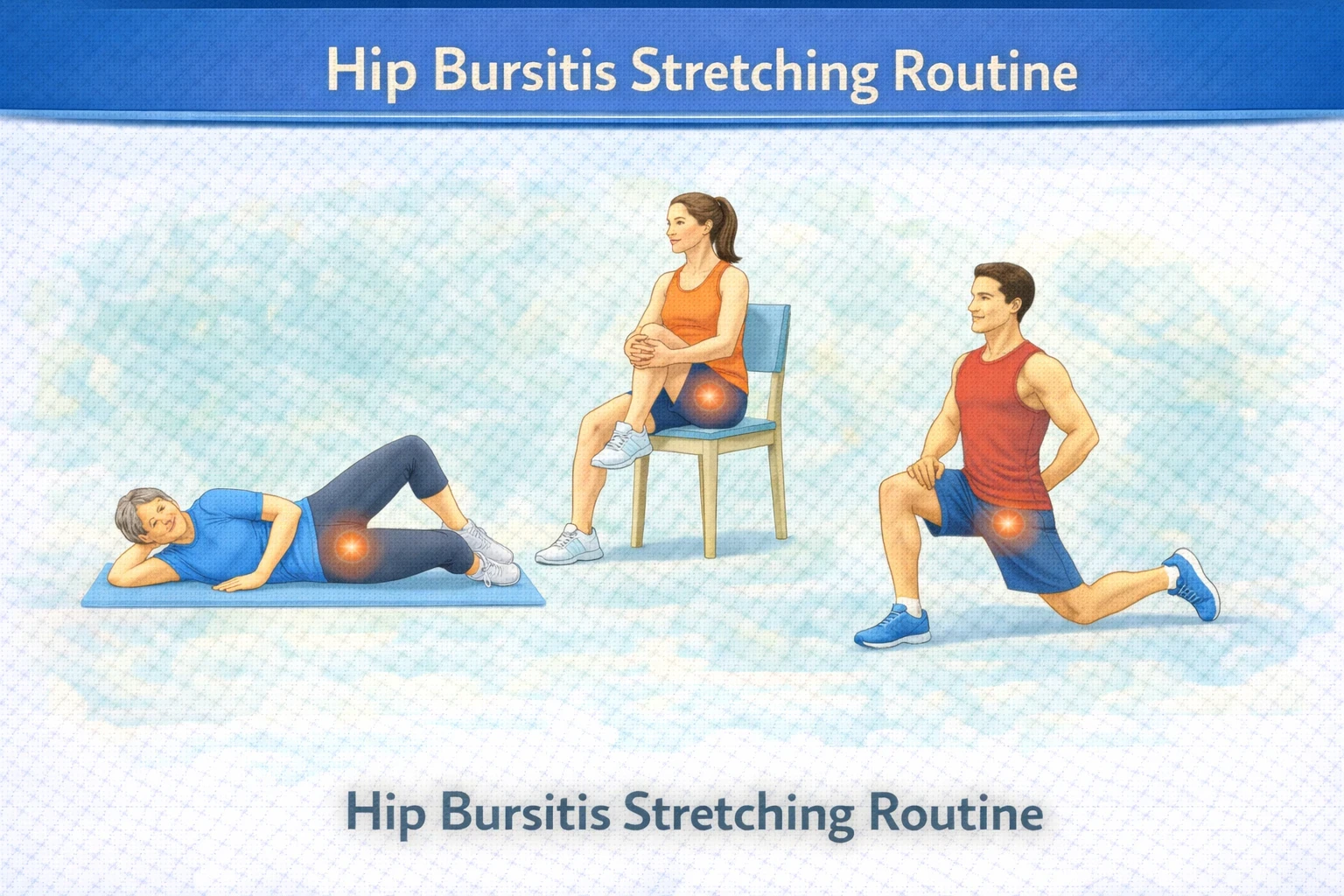
Seated Figure-Four Stretch
This stretch targets the glute muscles.
Steps:
• Sit upright on a chair
• Place one ankle over the opposite knee
• Keep your back straight
• Lean forward slightly
A gentle stretch may be felt in the outer hip.
Hold for about 20–30 seconds and repeat on both sides.
Hip Flexor Stretch
Tight hip flexors can contribute to altered movement patterns.
Steps:
• Kneel on one knee
• Place the opposite foot forward
• Keep your torso upright
• Gently shift the hips forward
This stretch targets the front of the hip.
Hold for 20–30 seconds and repeat several times.
Iliotibial Band Stretch
The IT band runs along the outer thigh and may influence hip bursitis symptoms.
Steps:
• Stand upright
• Cross one leg behind the other
• Lean your torso slightly toward the opposite side
A stretch may be felt along the outer thigh and hip.
This stretch can help reduce tension around the hip joint.

Combining Stretching With Strengthening
Stretching alone may not fully resolve hip bursitis symptoms.
However, combining a hip bursitis stretching routine with strengthening exercises may improve hip stability.
Strong hip muscles help distribute force more evenly during movement.
Exercises that may complement stretching include:
• glute bridges
• clamshell exercises
• standing hip abduction
These exercises strengthen the muscles that stabilize the pelvis and hip.
The article on hip bursitis recovery exercises for athletes explores several strengthening exercises often used in rehabilitation programs.
Supportive Hip Bursitis Management Strategies
Stretching is one part of a broader recovery approach.
Several additional strategies may help reduce irritation around the hip.
Activity Modification
Reducing activities that aggravate symptoms can allow inflamed tissues to calm down.
For example, temporarily limiting running or stair climbing may reduce pressure on the hip.
Cold Therapy
Cold packs may help reduce inflammation during flare-ups.
Applying cold for about 10–15 minutes after activity may help calm irritation.
Gradual Return to Activity
Once symptoms improve, physical activity should increase gradually.
Sudden increases in training intensity may irritate the hip again.
The article on how to manage hip bursitis pain discusses several strategies that may help control symptoms during recovery.
Secondary Benefits of Regular Stretching
Following a consistent hip bursitis stretching routine may provide several additional benefits.
These may include:
• improved hip mobility
• reduced muscle stiffness
• better walking mechanics
• improved exercise tolerance
Over time, improved flexibility may also help reduce the likelihood of recurring hip irritation.
Safety Considerations
Although stretching can be helpful, certain precautions are important.
Stretching should be modified or avoided if:
• sharp pain occurs
• swelling increases
• hip movement becomes severely limited
• symptoms worsen during stretching
In these situations, professional medical advice may be helpful.
A Balanced Perspective
Hip bursitis can be uncomfortable, particularly when it interferes with everyday movement.
However, many people improve with a combination of stretching, strengthening, and activity adjustments.
A gentle and consistent hip bursitis stretching routine may help restore mobility while reducing muscle tension around the hip.
When combined with broader hip bursitis treatment strategies, stretching can play an important role in long-term recovery and prevention.
Scientific Studies
https://pubmed.ncbi.nlm.nih.gov/24662872/
https://pubmed.ncbi.nlm.nih.gov/28765214/