How to Manage Hip Bursitis Pain
How to manage hip bursitis pain is a subject close to my heart, I suffered from hip pain every day for years until I got the diagnosis.
Hip bursitis can make everyday movements—walking, climbing stairs, or even lying on your side—unexpectedly painful.
The condition occurs when one or more bursae (small, fluid-filled sacs that cushion joints) around the hip become irritated or inflamed.
While hip bursitis can feel stubborn, many people successfully manage symptoms using a combination of movement awareness, lifestyle adjustments, and supportive non-drug strategies.
Understanding what aggravates hip bursitis pain is often the first step toward calming it.
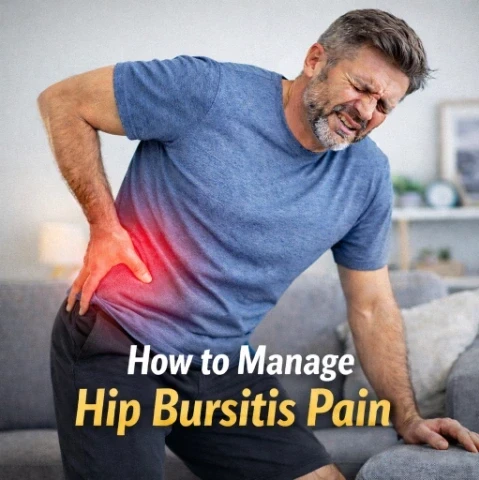
Understanding Hip Bursitis and Why Pain Persists
Its important to learn how to manage hip bursitis pain.
The hip contains several bursae, but pain most commonly involves the trochanteric bursa on the outer side of the hip.
Repetitive strain, prolonged pressure, altered movement patterns, or sudden increases in activity can overload this area.
Over time, the tissues may become more sensitive, meaning even small movements can feel disproportionately painful.
Learning how the body processes discomfort can be helpful.
Education around often reassures people that pain does not always equal damage and that tissues can gradually become less reactive when supported properly.
Read https://beyond-pain-relief.com/why-nerve-pain-ooccurs/
Movement: The Right Kind Matters
Complete rest may seem logical, but avoiding movement altogether can stiffen surrounding muscles and delay recovery. Instead, gentle, controlled activity usually works better.
Low-impact options such as walking on level ground, light cycling, or swimming can maintain circulation without excessive hip compression.
Short, frequent movement breaks during the day often reduce stiffness more effectively than one long exercise session.
Gradual reintroduction of movement is a key part of many options on how to manage hip bursitis pain especially when pain has lingered for weeks or months.
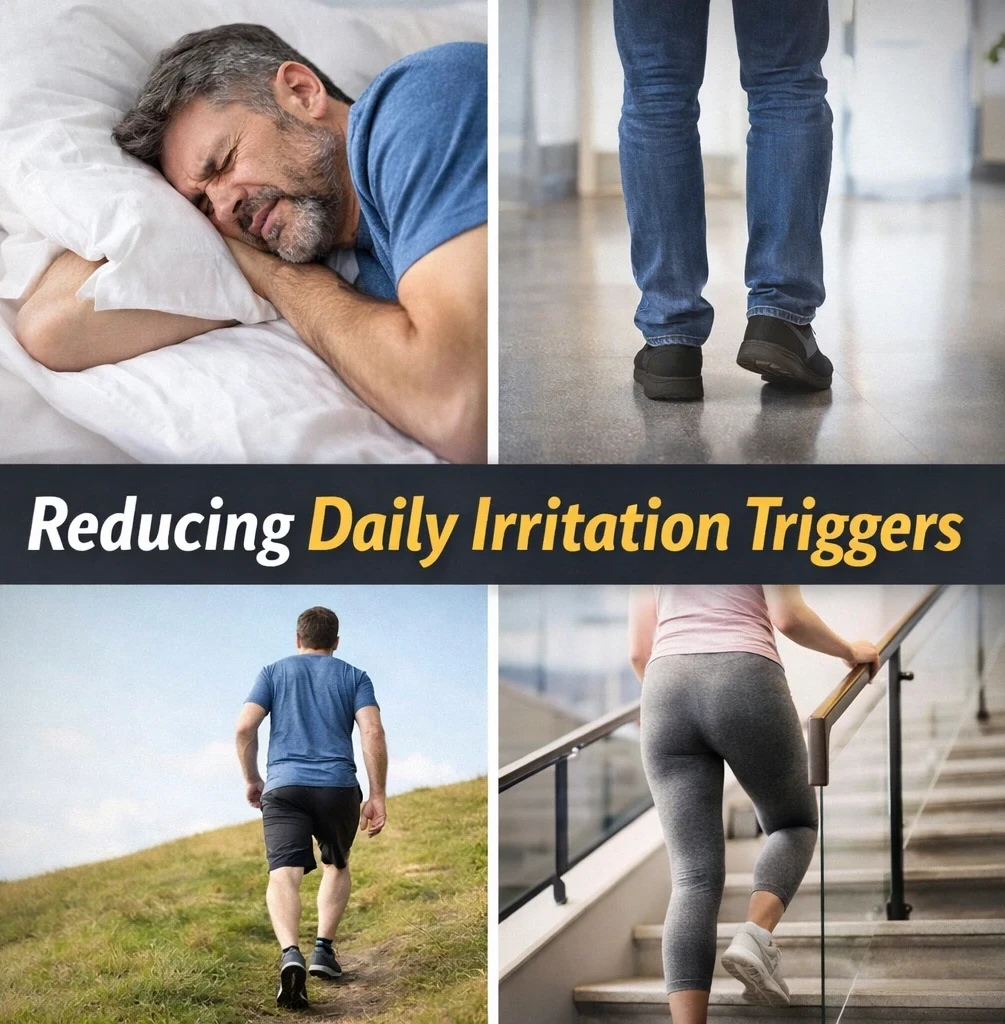
Reducing Daily Irritation Triggers
Small lifestyle changes can significantly reduce ongoing irritation to the hip bursa:
- Avoid sleeping directly on the painful side; placing a pillow between the knees can help
- Limit prolonged standing on hard surfaces
- Be cautious with hills, uneven ground, or excessive stair climbing
- Alternate sitting and standing positions throughout the day
Footwear also plays a role. Supportive shoes can reduce the amount of shock transferred through the hip during walking, particularly for people who spend long hours on their feet.
Personally when I had hip bursitis pain I tried Rose Hip Supplements they worked for me to calm the pain, eventually it went away altogether.
Supporting the Muscles Around the Hip
Muscle tension and weakness around the hip and pelvis can contribute to uneven loading.
Gentle strengthening and relaxation exercises for the gluteal muscles, thighs, and core often improve how forces are distributed during movement.
Slow, pain-free strengthening tends to be more effective than aggressive stretching. Overstretching irritated tissues may worsen symptoms, especially early on.
Many people benefit from education-focused approaches that emphasise helping them build confidence in movement rather than fear of it.
Learning how to manage hip bursitis pain is important.
Topical and Sensory-Based Support
Some individuals find short-term relief using topical supports such as heat packs, cold packs, or soothing creams.
These approaches do not cure bursitis, but they may help calm local sensitivity and make daily activity more manageable.
Sensory-based tools work by influencing how the nervous system interprets signals from the area.
When used alongside movement and load management, they can form part of a broader self-care strategy.
Weight Distribution and Load Awareness
Hip bursitis pain often flares when load is repeatedly placed on one side of the body.
Simple awareness—such as avoiding leaning on one hip while standing or evenly distributing weight when carrying bags—can reduce unnecessary strain.
Breaking tasks into shorter segments and pacing activities throughout the day can also prevent symptom spikes.
When to Seek Professional Guidance
If hip pain persists despite self-management, a qualified healthcare professional can help rule out other causes and guide rehabilitation.
Imaging is not always necessary, but professional assessment may be useful if pain worsens, spreads, or significantly limits mobility.
Recovery from hip bursitis is rarely instant, but steady, consistent support often leads to meaningful improvement over time.
Scientific Studies
https://pubmed.ncbi.nlm.nih.gov/18432153/
https://pubmed.ncbi.nlm.nih.gov/20333215/