
Chronic Pain: A Clear, Practical Guide To Understanding, Managing, And
Chronic Pain
Chronic pain affects millions of people worldwide and can quietly take over daily life if it is not understood properly. Unlike short-term pain, this type of condition often lingers for months or even years, influencing movement, sleep, mood, and overall quality of life.
This guide breaks everything down into simple, clear sections so you can understand persistent pain, why it happens, and what you can realistically do about it.
What Is Chronic Pain?
Chronic pain is typically defined as pain that lasts longer than 12 weeks. While acute pain acts as a warning signal, this long-term condition behaves differently. It can continue even when there is no clear physical damage remaining.
For many people, this becomes a condition in its own right. It can affect muscles, joints, nerves, or even the entire body.
If you want a deeper overview, see what is chronic pain – a clear human explanation.

How Long-term Pain Works in the Body
To properly understand chronic pain, it helps to look beyond the site of discomfort itself. Pain is processed by the brain, not just the body.
Over time, the nervous system can become more sensitive. This means signals that were once harmless may begin to feel painful. This process is often called sensitisation.
In simple terms, the body’s alarm system becomes overactive.
This is explained further in movement, load, and pain sensitivity, which shows why pain does not always mean damage.

Common Causes of Persistent Pain
Persistent pain rarely comes from a single cause. Instead, it develops through a mix of physical and neurological factors.
- Old injuries that never fully settled
- Repetitive strain from daily activities
- Long-term inflammation
- Nerve irritation or damage
- Post-surgical discomfort
- Stress and nervous system overload
Often, the original issue improves, but symptoms continue because the nervous system remains sensitive.

Common Chronic Pain Conditions
Chronic pain can appear in many different forms.
- Lower back pain
- Neck and shoulder pain
- Arthritis
- Sciatica
- Fibromyalgia
- Nerve-related discomfort
Although these conditions differ, they often share similar underlying mechanisms.
Symptoms of Chronic Pain
The symptoms of long-term pain go beyond simple discomfort.
- Persistent aching or stiffness
- Burning or sharp sensations
- Sensitivity to touch
- Muscle tightness
- Fatigue
- Sleep disruption
Symptoms can also fluctuate throughout the day depending on activity, stress, and rest.
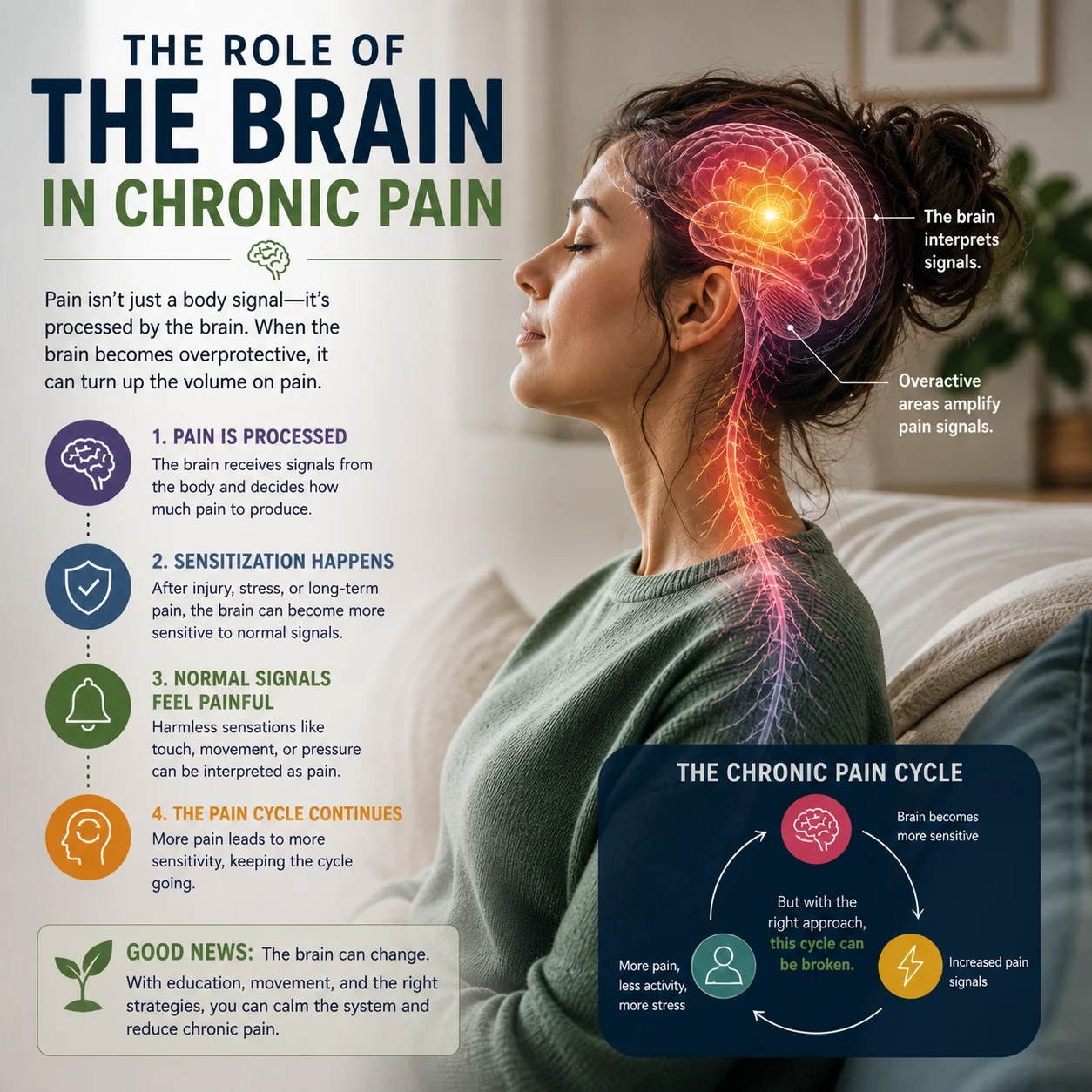
Chronic Pain and the Nervous System
This condition is closely linked to the nervous system. Over time, the brain becomes more efficient at producing pain signals.
This does not mean the experience is imagined. It means the system has become overprotective.
The Role of the Brain
The brain decides how intense sensations feel. When this condition develops, normal signals may be interpreted as threats.
This creates a cycle where discomfort leads to tension, and tension leads to more symptoms.
Why Chronic Pain Persists
Persistent pain often continues because:
- The nervous system remains sensitised
- Movement becomes limited
- Fear reduces activity
- Stress increases sensitivity
This cycle keeps symptoms active over time.
The Emotional Impact of Chronic Pain
Long-term pain affects more than the body. It can impact mood, focus, and motivation.
Feelings like frustration or anxiety are common and understandable.
When to Take Chronic Pain Seriously
- Pain that worsens over time
- Severe sleep disruption
- Unexplained weight loss
- Numbness or weakness
These signs should be checked by a professional.

Early Steps to Manage Pain
- Start gentle daily movement
- Avoid complete rest
- Use heat therapy
- Improve sleep habits
- Reduce stress
These small steps begin to reduce symptoms gradually.
Chronic Pain Treatment Options: What Actually Helps
Managing persistent long-term pain requires a combination of strategies rather than one solution.
Movement and Exercise
Regular movement helps reduce stiffness, improve circulation, and calm the nervous system. Avoiding activity often worsens symptoms.
Start small and stay consistent.
For a deeper understanding, revisit movement, load, and pain sensitivity.
Heat Therapy
Heat therapy relaxes muscles and improves blood flow, helping reduce stiffness and tension.
Learn more in heat therapy benefits for chronic pain.
TENS Therapy
TENS therapy sends small electrical signals to interfere with pain signals in the body.
Explore it here: what is TENS therapy and how does it work.
Medical Treatments
- Pain relief medications
- Anti-inflammatory treatments
- Physical therapy
These are often combined with lifestyle approaches.
Natural Support Options
- Magnesium
- Stretching routines
- Anti-inflammatory nutrition
- Relaxation techniques
These support long-term management.
Daily Routine for Managing Chronic Pain
Morning
- Light stretching
- Short walk
- Heat therapy if needed
Daytime
- Regular movement breaks
- Avoid long sitting periods
Evening
- Gentle movement
- Relaxation
- Consistent sleep routine
Consistency helps reduce symptoms over time.
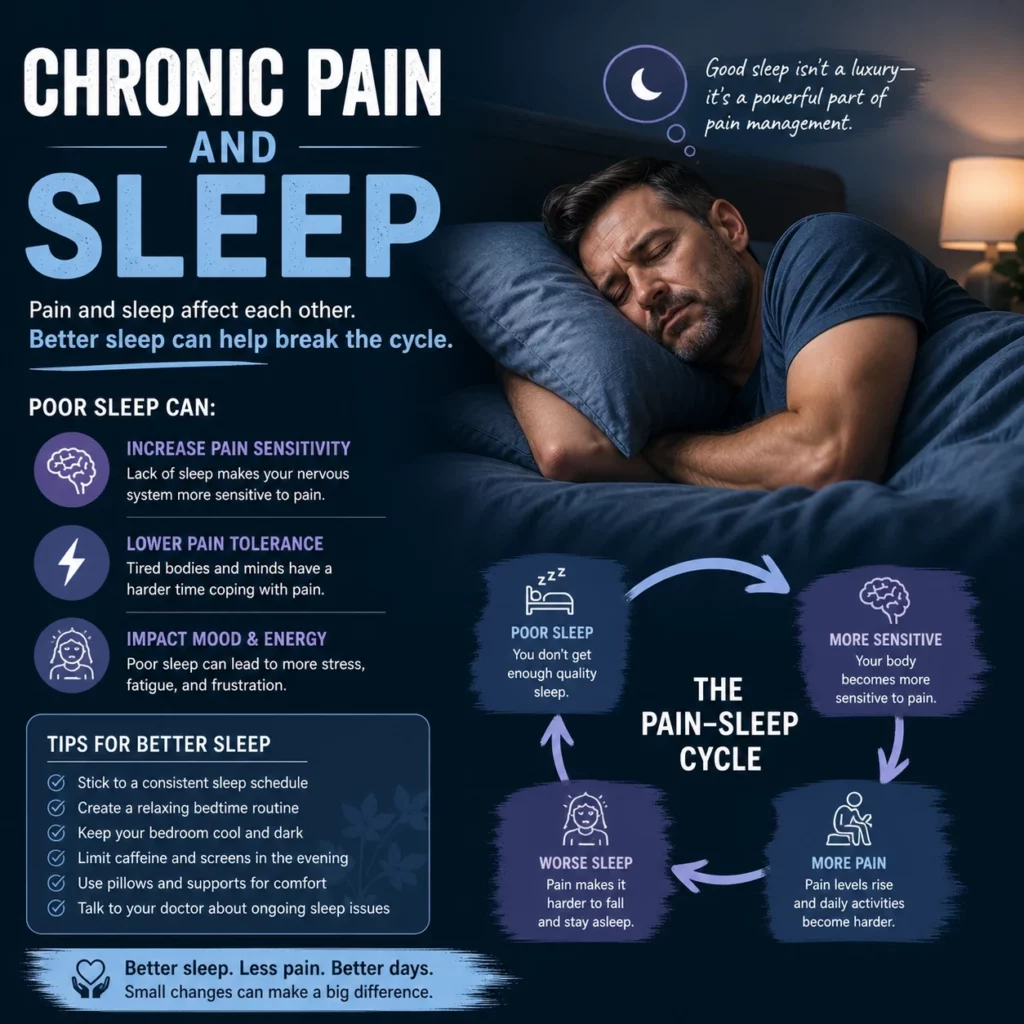
Chronic Pain and Sleep
Poor sleep increases sensitivity.
- Keep a regular schedule
- Reduce screen time
- Create a calm environment
Managing Stress for Chronic Pain Reduction
Stress increases sensitivity by keeping the nervous system active.
- Breathing exercises
- Mindfulness
- Time outdoors
These help calm responses.
Common Mistakes in Management
- Avoiding movement completely
- Expecting quick fixes
- Relying only on passive treatments
This condition requires a long-term approach.
Long-Term Outlook
Persistent or long-standing pain can improve significantly with the right approach.
- Reduce intensity
- Improve function
- Build confidence
- Return to activity
Diagnosis of Chronic Pain
Understanding persistent or long-standing pain often starts with a proper diagnosis. There is no single test, so healthcare professionals use a combination of history, symptoms, and physical assessment.
- Review of past injuries
- Assessment of movement
- Discussion of triggers and patterns
- Imaging if required
Diagnosis is usually based on duration and impact rather than a single cause.

Types of Chronic Pain Explained
Nociceptive Pain
This comes from tissue damage or inflammation and is often described as aching.
Neuropathic Pain
This is caused by nerve irritation and may feel like burning or tingling.
Central Sensitisation
This relates to how the brain processes signals, making the body more sensitive.
Many people experience a mix of these types.
How Long Does Chronic Pain Last?
Persistent or long-standing pain varies from person to person. Some improve within weeks, while others take months.
- Consistency of movement
- Sleep quality
- Stress levels
- Understanding of the condition
Progress is usually gradual but steady.
Can It Be Reversed?
In some cases, chronic pain can be reduced significantly or resolved. In others, it becomes manageable.
When the nervous system becomes less sensitive, symptoms often decrease over time.
Frequently Asked Questions
Can chronic pain go away?
It can improve significantly and sometimes resolve completely.
What helps most?
A combination of movement, education, and supportive therapies.
Does exercise help?
Yes, when done gradually and consistently.
How long does recovery take?
It varies, but steady progress is common over time.
What the Research Says
https://www.ncbi.nlm.nih.gov/books/NBK279133/
https://www.who.int/news-room/fact-sheets/detail/chronic-pain
Final Thoughts
Chronic pain is complex, but it is manageable. With the right understanding and consistent action, it can be reduced over time.
Small daily improvements matter more than quick fixes. Stay consistent, and progress will follow.
Living With Chronic Pain Day to Day
Living with chronic pain requires a practical, steady approach rather than constant trial and error. While symptoms may fluctuate, building simple daily habits creates stability and reduces flare-ups over time.
One of the most effective ways to manage chronic pain is to focus on routine. The body responds well to consistency, especially when the nervous system has become sensitive.
- Wake up at the same time each day
- Introduce gentle movement early
- Keep activity levels steady
- Avoid sudden spikes in effort
These small habits help regulate chronic pain and prevent the cycle of overdoing it followed by setbacks.
Chronic Pain Flare-Ups and How to Handle Them
Flare-ups are a normal part of chronic pain. They can happen even when everything seems to be going well. Understanding how to respond is more important than trying to avoid them completely.
When a flare-up occurs, the goal is not to stop all activity but to adjust it.
- Reduce intensity but keep moving gently
- Use heat therapy to relax tight areas
- Focus on breathing and relaxation
- Avoid panic or overreaction
Most flare-ups settle faster when the body stays calm and supported rather than restricted.
Building Strength Without Increasing Chronic Pain
Strength plays a key role in long-term improvement. Weak or underused muscles can contribute to ongoing discomfort, especially around joints.
The key is gradual progression. Jumping into intense exercise often increases chronic pain, while slow progression builds resilience.
- Start with bodyweight exercises
- Focus on control rather than intensity
- Increase load gradually
- Allow recovery between sessions
Over time, stronger muscles help reduce strain on sensitive areas.
The Role of Posture in Chronic Pain
Posture is often blamed as the main cause of long-term pain, but the reality is more balanced. There is no single perfect posture.
What matters more is movement and variation. Staying in one position for too long, even a “good” posture, can increase stiffness.
- Change positions regularly
- Avoid staying still for long periods
- Support the body when sitting
This approach reduces unnecessary stress on the body.
Nutrition
Nutrition can influence inflammation levels and overall recovery. While it is not a standalone solution, it supports other strategies.
- Focus on whole foods
- Include healthy fats
- Stay hydrated
- Limit highly processed foods
A balanced diet helps support the body while managing chronic pain.
Confidence and Movement With Chronic Pain
One of the biggest barriers to recovery is fear of movement. Many people begin to avoid activity because they expect pain to worsen.
However, avoiding movement often increases sensitivity over time.
Rebuilding confidence is essential:
- Start with safe, simple movements
- Gradually increase difficulty
- Focus on what the body can do
This shift helps reduce long-standing pain by retraining the nervous system.
Returning to Normal Activities
Getting back to normal life is a key goal when managing chronic pain. This includes work, hobbies, and daily routines.
The best approach is gradual exposure.
- Break tasks into smaller steps
- Build tolerance over time
- Avoid all-or-nothing thinking
This method helps prevent setbacks while improving function.
Why Consistency Matters Most
Consistency is more important than intensity when dealing with persistent or long-standing pain. Small actions repeated daily have a greater impact than occasional effort.
Even simple habits like walking, stretching, or improving sleep can create long-term change.
Over time, these consistent actions help calm the system and reduce chronic pain.
A Balanced Approach
There is no single solution that works for everyone. The most effective approach combines multiple strategies.
- Movement and strength
- Relaxation and stress control
- Sleep improvement
- Education and understanding
This balanced approach addresses both the physical and neurological sides of chronic pain.
Final Perspective
Long-term pain can feel unpredictable, but it becomes more manageable when approached in a structured way. Progress may be gradual, but it is achievable.
Focusing on consistency, staying active, and understanding how the body responds are key steps forward.
With the right approach, persistent pain can become something that is controlled rather than something that controls daily life.