Chronic Pain That Moves Around Why And What Causes
Chronic Pain That Moves Around
Chronic pain that moves around is a frustrating experience for many people living with persistent discomfort.
Unlike pain linked to a clear injury or structural problem, chronic pain that moves around may shift from one part of the body to another over time.
One day the pain might be in the lower back, and the next it may appear in the shoulders, hips, or legs.
Understanding why chronic pain that moves around happens can help people feel less confused or worried about their symptoms.
Modern pain science suggests that moving pain is often connected to the nervous system, pain sensitivity, and lifestyle factors rather than a single damaged structure.
Learning about these mechanisms can support better pain management and recovery strategies.

What Is Chronic Pain That Moves Around?
Chronic pain that moves around refers to ongoing discomfort that changes location in the body rather than staying in one specific place.
The pain might appear in muscles, joints, or nerves and can vary in intensity from mild to severe.
In many cases, medical tests such as scans or blood tests may not reveal a clear injury or disease explaining the pain. This can be confusing for people experiencing symptoms.
However, research shows that persistent pain often involves the brain and nervous system becoming more sensitive to signals from the body.
As a result, pain may be felt in different locations over time.
People interested in learning more about how pain develops can explore resources on the understanding pain mechanisms involved in persistent pain conditions.
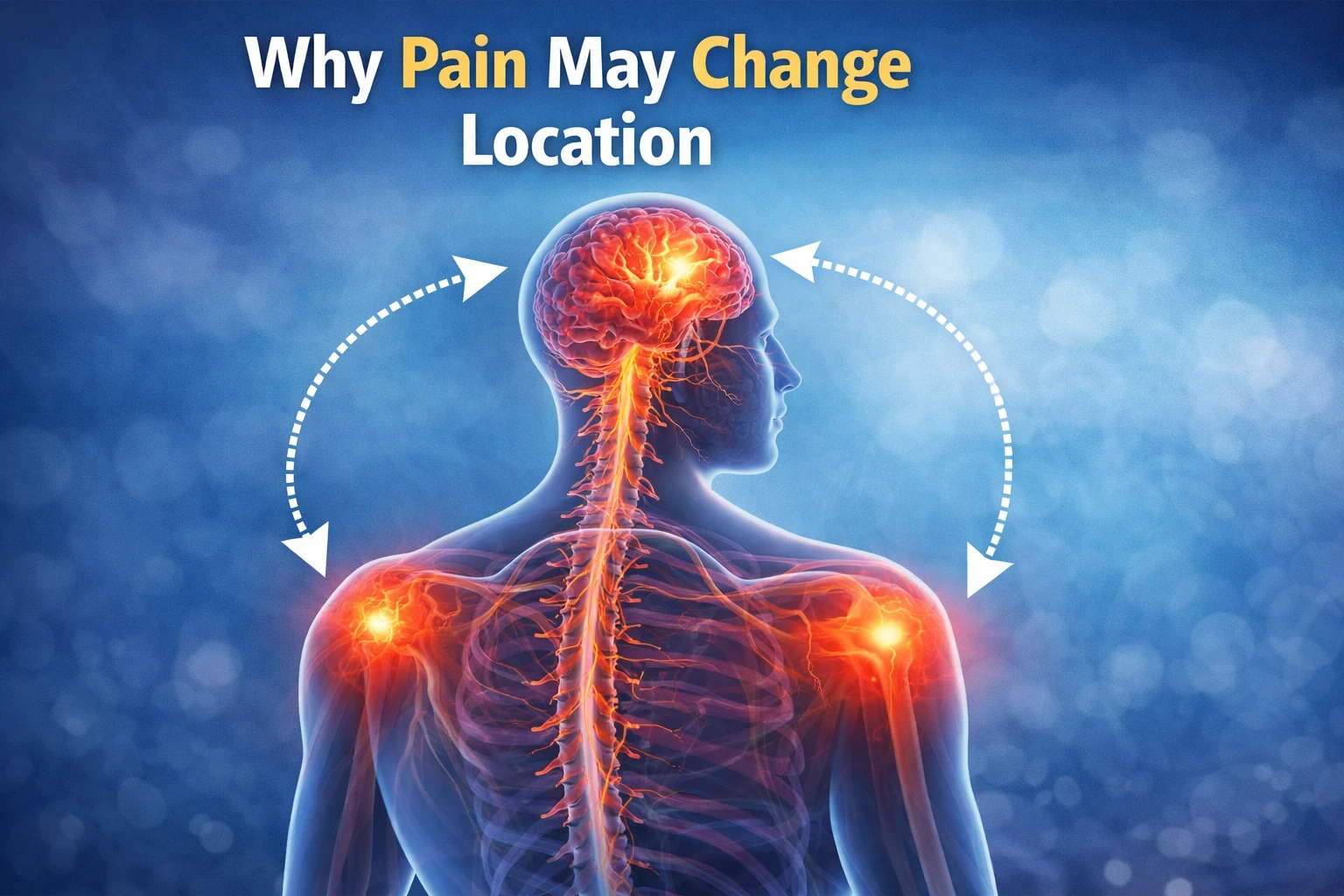
Why Pain May Change Location
One of the most common explanations for chronic pain that moves around is increased sensitivity in the nervous system.
When pain signals are processed repeatedly, the brain and spinal cord can become more responsive to normal body sensations.
This process is often called central sensitization. Instead of pain coming from a single injured tissue, the nervous system begins amplifying signals from different areas of the body.
Because the nervous system communicates with the entire body, pain may shift from one region to another.
For example, someone might experience discomfort in the neck one week and the hips the next.
A deeper explanation of how this process works can be found in this guide about the nervous system processing pain signals.
Conditions Linked to Pain That Moves Around
Several health conditions may involve chronic pain that moves around.
These conditions often involve complex interactions between the nervous system, muscles, and overall health.
Common examples include:
- Fibromyalgia
- Chronic fatigue syndrome
- Some autoimmune conditions
- Persistent post-injury pain
- Myofascial pain syndrome
In fibromyalgia, for instance, pain is widely distributed throughout the body and may shift location frequently.
The condition is thought to involve changes in how the brain processes pain signals.
Even after an injury heals, some individuals continue to experience discomfort that may spread or move to other areas.
This pattern is sometimes explained by changes in pain sensitivity rather than ongoing tissue damage.
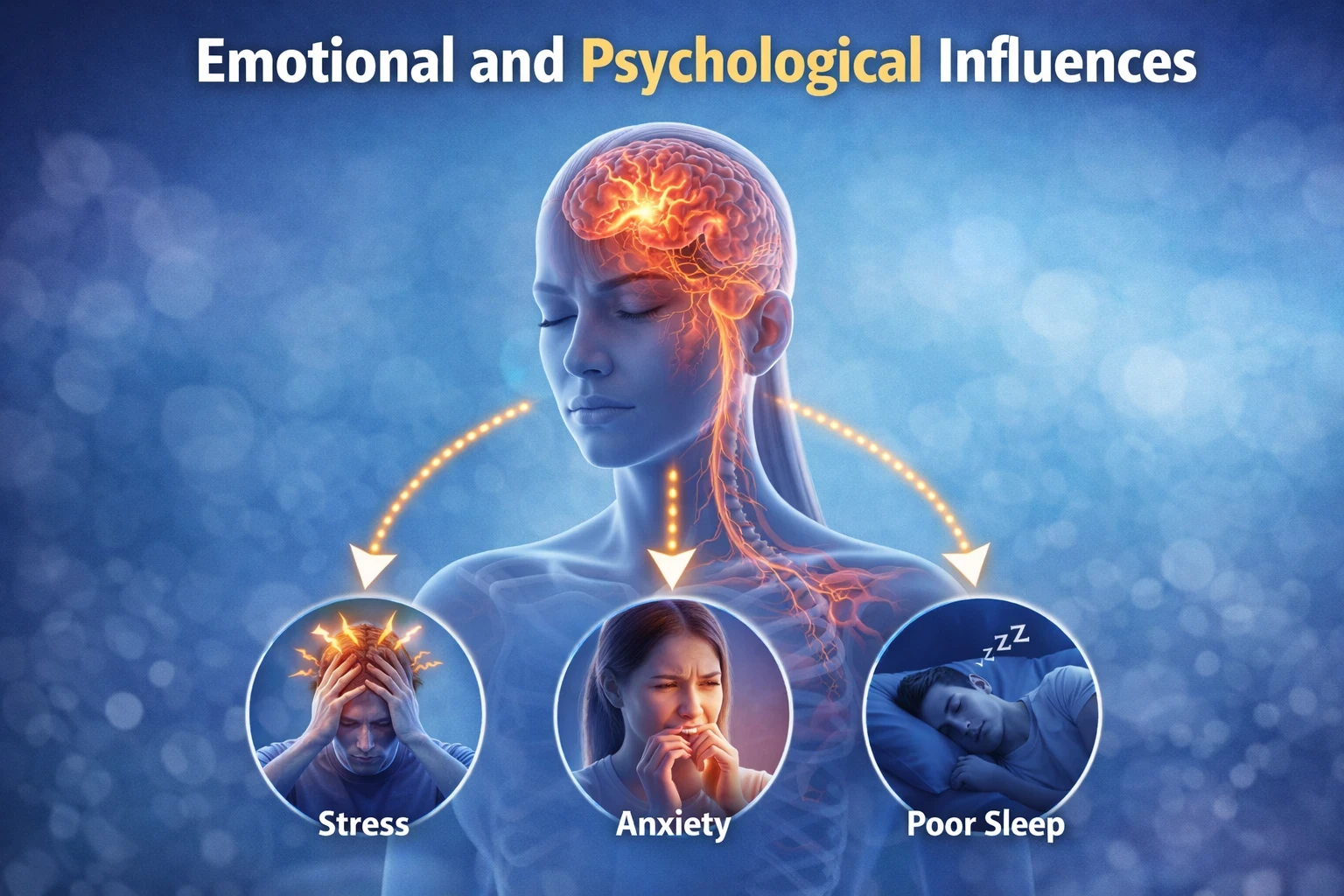
Emotional and Psychological Influences
Pain is not only a physical experience.
The brain plays a central role in how pain signals are interpreted, which means emotional and psychological factors can influence symptoms.
Stress, anxiety, and poor sleep may increase nervous system sensitivity and make chronic pain that moves around more noticeable.
When the body is under stress, muscles may tighten and inflammation may increase.
Over time, this can contribute to fluctuating pain patterns.
Learning how emotions influence pain perception can help people better understand their symptoms. More information is available in this article about the connection between pain and emotional well-being.

Lifestyle Factors That Influence Pain
Daily habits can also influence chronic pain that moves around.
Several lifestyle factors may affect how the body processes pain signals.
Important factors include:
- Physical activity levels
- Sleep quality
- Stress management
- Nutrition
- Posture and movement patterns
When the body becomes less active due to pain, muscles may weaken and joints can become stiff.
This can create new areas of discomfort that seem to move around the body.
Gradually restoring movement and improving overall lifestyle habits can support the nervous system and reduce pain sensitivity.
Many people benefit from understanding how movement affects pain sensitivity, which is discussed in this guide on movement load and pain sensitivity.
Strategies That May Help
Managing chronic pain that moves around often involves a combination of approaches rather than a single treatment.
Because the nervous system plays a central role, strategies that calm and retrain the system may be helpful.
Some commonly recommended approaches include:
- Gentle movement and exercise
- Physical therapy programs
- Stress reduction techniques
- Sleep improvement strategies
- Education about pain science
Pain education itself can be powerful.
When people understand why pain occurs, fear often decreases and confidence in movement improves.
Gradual activity and consistent routines may help the nervous system become less sensitive over time.
When to Seek Medical Advice about chronic pain that moves around
Although chronic pain that moves around is often linked to nervous system sensitivity, it is still important to seek professional medical advice when symptoms first appear.
A healthcare professional can rule out conditions such as inflammatory diseases, nerve disorders, or infections that may require specific treatment.
Medical guidance is especially important if pain is accompanied by symptoms such as:
- Unexplained weight loss
- Persistent fever
- Severe weakness
- Loss of bladder or bowel control
- Sudden neurological changes
Once serious causes are excluded, many people find reassurance in learning about how pain works and focusing on gradual recovery strategies.
Understanding the Bigger Picture of Pain
Chronic pain that moves around can feel unpredictable and worrying, but modern pain science provides helpful explanations for why these patterns occur.
In many cases, the nervous system becomes more sensitive after repeated pain signals or stress.
This sensitivity may cause discomfort to shift across different areas of the body.
By learning about pain mechanisms, improving lifestyle habits, and gradually restoring movement, many individuals are able to reduce symptoms and regain confidence in their bodies.
Understanding the bigger picture of pain can transform how people approach recovery and help them move forward with more clarity and control.
Scientific Study
https://pubmed.ncbi.nlm.nih.gov/30496417/