How to Manage Pain and Emotional Wellbeing
How to manage pain and emotional well-being is a very important aspect of coping with daily life.
Living with persistent pain affects far more than the body alone.
Over time, pain can influence mood, confidence, sleep, relationships, and a person’s sense of safety in their own body.
Many people find that emotional strain and pain become tightly linked, creating a cycle that feels difficult to escape.
Understanding this connection is an important step toward managing both physical discomfort and emotional wellbeing more effectively.
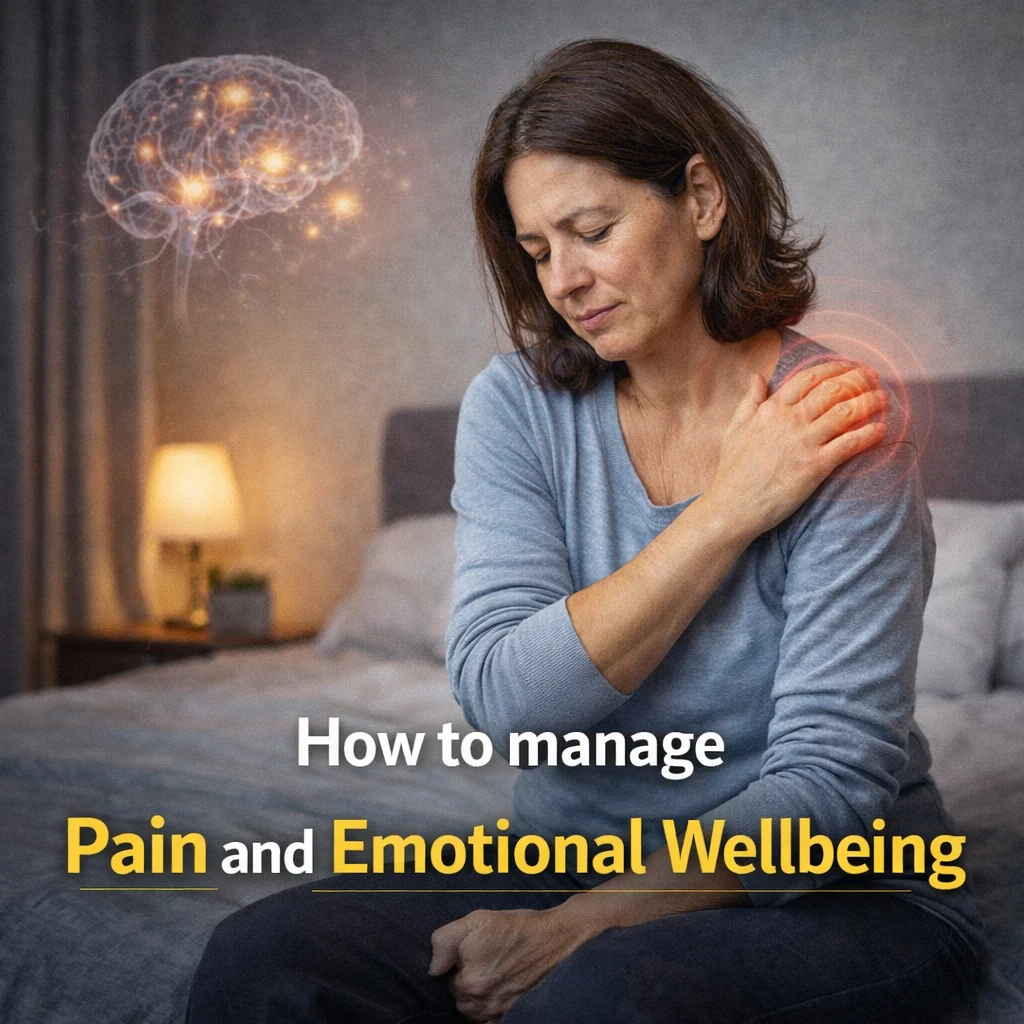
Pain is not processed solely at the site of injury.
It is shaped by signals travelling through the brain and nervous system.
When pain lasts longer than expected, the body can remain in a protective, high-alert state.
This ongoing tension often contributes to anxiety, low mood, irritability, or emotional exhaustion.
How to manage pain and emotional wellbeing is a tricky subject.
The connection between pain and the nervous system
Alongside these is emotional context, stress levels, past experiences, and expectations.
Learning how pain works can reduce fear and self-blame.
Understanding the role of the nervous system helps explain why pain may persist even when scans or tests show little structural damage.
In many cases, the nervous system becomes sensitised, amplifying pain signals as a protective response rather than a sign of harm.
This does not mean pain is imagined. It means the system designed to protect you is working overtime.
Recognising this can be deeply reassuring and often reduces the emotional distress that accompanies ongoing pain.
Emotional responses are normal — not a failure
Living with pain often involves grief for lost abilities, frustration with limitations, and fear about the future.
These emotional reactions are human and understandable, keep reading how to manage pain and emotional wellbeing.
Trying to suppress them or “stay positive” at all costs can actually increase stress and worsen symptoms. Acknowledging difficult emotions without judgement allows the nervous system to settle.
Talking openly with a trusted person, journaling, or simply naming how you feel can reduce emotional load and help restore a sense of control.
Gentle strategies that support both pain and wellbeing
Effective pain management rarely comes from a single solution.
Instead, it often involves small, consistent practices that signal safety to the body and mind.
Helpful approaches may include:
Pacing activities to avoid the boom-and-bust cycle
Gentle movement that feels safe rather than forced
Breathing or grounding exercises to reduce stress responses
Creating regular routines around sleep, meals, and rest.
For your own sake it’s vital to understand how to manage pain and emotional wellbeing.
Exploring pain relief without medications
Exploring pain relief without medications can also empower people to feel less dependent on short-term symptom control and more supported in long-term wellbeing.
The importance of self-compassion
Many people living with pain are incredibly hard on themselves.
Internal pressure to “push through” or guilt about needing rest can increase emotional strain and amplify symptoms.
Self-compassion is not giving up — it is recognising effort, respecting limits, and responding to setbacks with kindness rather than criticism. Research consistently shows that reducing stress and emotional threat can lower pain intensity over time.
Treating yourself with patience and understanding is a practical strategy, not an indulgence.
A realistic and hopeful outlook
Managing pain and emotional wellbeing does not mean eliminating pain entirely or feeling positive every day.
Progress is rarely linear.
There will be better days and harder ones.
What matters is building resilience, flexibility, and confidence in your ability to cope — even when symptoms fluctuate.
With the right information, supportive strategies, and emotional understanding, pain often becomes less overwhelming, and life can feel more manageable again. Scientific Study https://pubmed.ncbi.nlm.nih.gov/25462435/