How to Manage Chronic Pain Without Medication
How to manage chronic pain without medication is a question many people ask after months or years of living with discomfort.
Chronic pain can affect how you move, sleep, think, and feel. It often continues long after an injury has healed, leaving people frustrated and unsure where to turn.
Managing pain without medication does not mean ignoring pain or pretending it is not real. Pain is always real.
What it does mean is learning how pain works and supporting the body and nervous system in safer, more sustainable ways.
For many people, this approach leads to better long-term outcomes than relying on medication alone.
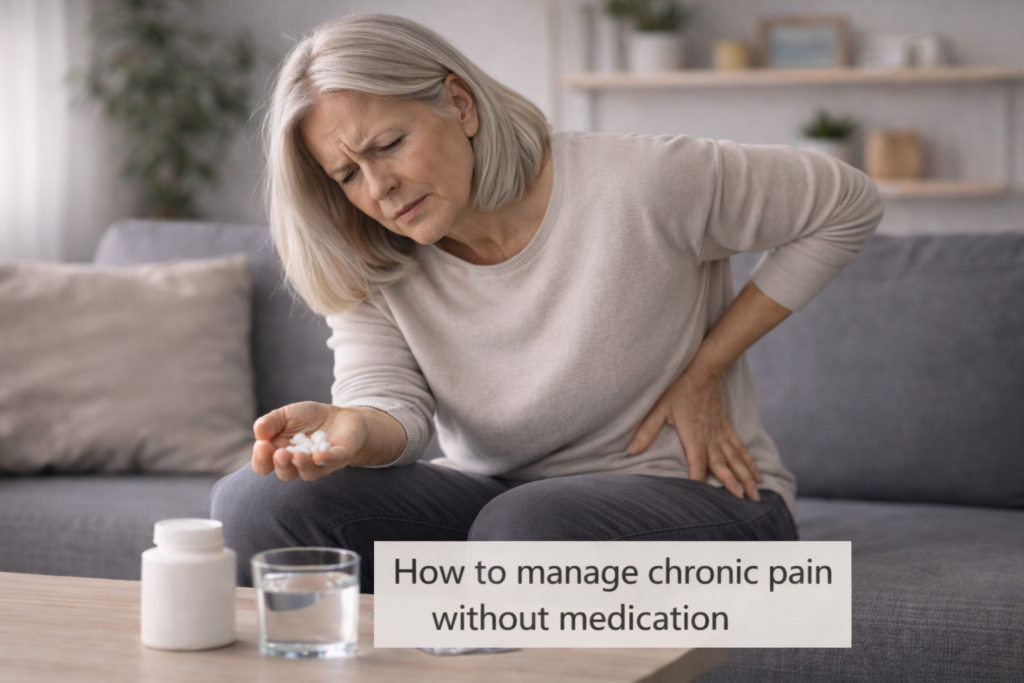
Understand what chronic pain really is
A big step in learning how to manage chronic pain without medication is understanding that pain does not always equal damage.
Pain is produced by the nervous system as a protective signal. When pain becomes chronic, the system can become more sensitive than it needs to be.
This sensitivity can mean pain appears even when tissues are not under threat. Stress, fear, poor sleep, and past pain experiences can all amplify this protective response.
If you want a clear starting point, begin here: Beyond Pain Relief — it explains pain in calm, simple language.
Use gentle movement as a “safety signal”
One of the most reliable answers to how to manage chronic pain without medication is gentle, consistent movement.
Many people avoid movement because they fear making pain worse. The problem is that long-term avoidance can increase stiffness, deconditioning, and fear — which can raise sensitivity.
Movement can work like a safety signal to the nervous system. The goal is not to “push through” pain. The goal is to move in a way that feels safe enough to repeat.
Helpful options often include:
- short walks at a comfortable pace
- light stretching or mobility routines
- simple strength work (very gradual)
- water-based movement if available
A useful way to think about this: consistency matters more than intensity. Small steps done regularly often beat big bursts followed by flare-ups.
Calm the stress–pain loop
Stress can keep the nervous system on alert. When the body feels under threat, pain is more likely to feel louder and more intense.
This is why learning how to manage chronic pain without medication often includes basic nervous system calming skills.
Try simple options such as:
- slow breathing for 2–3 minutes
- short breaks to relax shoulders/jaw
- stepping outside for daylight
- gentle body scanning (not forced mindfulness)
This is not about “positive thinking.” It is about giving your system fewer danger signals.

Make sleep part of the plan
Poor sleep increases pain sensitivity. Pain also disrupts sleep. That cycle can become exhausting. Improving sleep is one of the most underrated ways to learn how to manage chronic pain without medication.
Small, realistic strategies:
- keep wake time consistent most days
- reduce screen intensity late at night
- create a calm wind-down routine
- don’t chase perfect sleep — aim for steadier sleep
Even modest improvements can help the nervous system regulate better.
Pace activity to avoid flare-ups
A common pattern in chronic pain is the boom-and-bust cycle. You have a better day, do too much, and pay for it later. Then you rest for days, and confidence drops.
Pacing means stopping before the spike. It means building capacity slowly and steadily.
This helps the body trust movement again and reduces the feeling that pain is unpredictable.
This is one reason graded activity shows up in many chronic pain self-management approaches.
Build a simple, repeatable toolkit
There is no single “magic” technique. Learning how to manage chronic pain without medication is usually about combining a few supportive tools and repeating them long enough for the nervous system to calm.
A simple toolkit often includes:
- pain understanding (reduces fear)
- gentle movement (builds trust)
- sleep support (improves regulation)
- stress calming (reduces threat)
- pacing (prevents flare-ups)
If you want a broader overview of supportive options and lifestyle-based approaches, this page on your site fits well: Pain Relief for Chronic Conditions: A Science-Led, Self-Directed Approach.
And for a clear “treatment options” style page that still stays education-led, this one is relevant too: Chronic Pain Treatment Options.
A compassionate note
Chronic pain can be draining. Progress is rarely straight-line. Setbacks do not mean you are broken. They usually mean your system is sensitive and needs smaller steps.
When you focus on safety, consistency, and understanding, chronic pain often becomes less dominant over time.
Scientific studies
- Nijs, J., et al. (2020). Treatment of central sensitization in patients with chronic pain. JOSPT
https://www.jospt.org/doi/10.2519/jospt.2020.0610 - Moseley, G. L., & Butler, D. S. (2015). Fifteen years of explaining pain: The past, present, and future. Journal of Pain
https://www.jpain.org/article/S1526-5900(15)00541-1/fulltext