Daily Mindfulness Practices For Anxiety
Daily Mindfulness Practices for Anxiety
Daily mindfulness practices for anxiety help calm an overprotective nervous system, soften racing thoughts, and improve emotional regulation without forcing relaxation.
Instead of trying to eliminate anxiety, mindfulness teaches you how to notice sensations, thoughts, and emotions without reacting to them.
This shift alone often reduces how intense anxiety feels and how long it sticks around.
Mindfulness works best when practiced gently and consistently as part of daily life—not only during moments of distress.
What Mindfulness Really Means (and What It Doesn’t)
Mindfulness is not about clearing your mind or staying calm all the time.
It’s about paying attention to the present moment with openness rather than judgment.
For anxiety, this matters because anxious thinking usually pulls attention into imagined future threats.
Mindfulness brings awareness back to what is happening now, where the body often feels safer than the mind predicts.
If anxiety symptoms feel physical or confusing, understanding how the nervous system amplifies sensations can help.
This is explained clearly in
👉 https://beyond-pain-relief.com/what-is-chronic-pain-a-clear-human-explanation/
Daily Mindfulness Practices for Anxiety That Fit Real Life
Mindfulness does not require long meditation sessions.
Short, repeatable practices are often more effective for anxious systems.
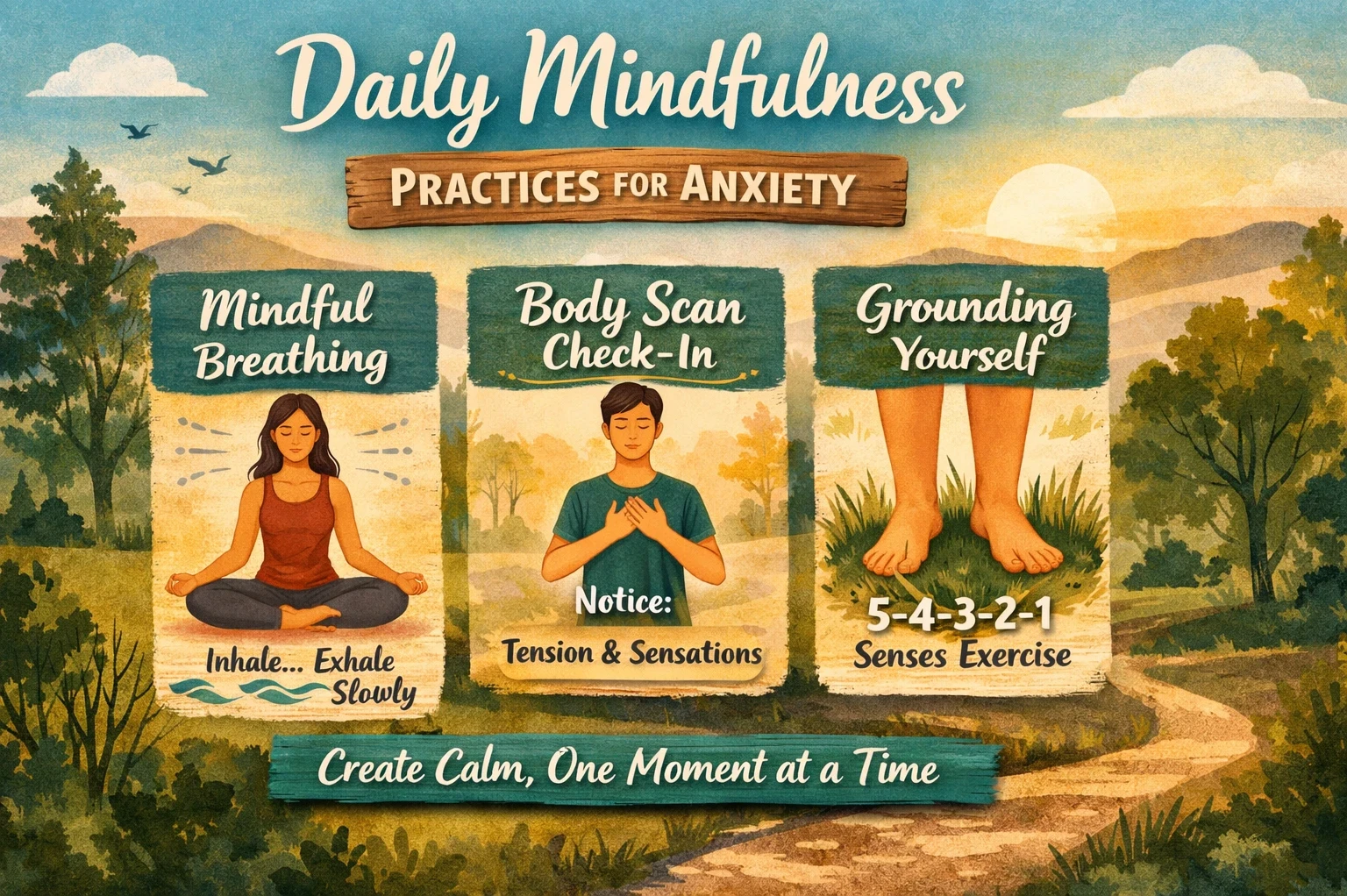
1. Mindful Breathing (2–5 Minutes)
Sit comfortably and notice your breath without trying to change it at first.
Then gently guide it:
Inhale through the nose for 4 seconds
Exhale slowly for 6 seconds
Let the shoulders drop on the exhale
Longer exhalations support nervous system settling and reduce threat signalling.
2. Body Awareness Check-Ins
Once or twice a day, scan through the body:
Notice areas of tension or rest
Label sensations neutrally (tight, warm, heavy)
Avoid fixing or stretching
This approach aligns with how load, stress, and sensitivity interact in the body, as explained here:
👉 https://beyond-pain-relief.com/movement-load-and-pain-sensitivity/
Using Mindfulness When Anxiety Spikes
When anxiety surges, simple grounding practices work best.
The 5-Sense Grounding Exercise
Quietly notice:
- 5 things you can see
- 4 things you can feel
- 3 things you can hear
- 2 things you can smell
- 1 thing you can taste
This shifts attention away from threat-based thinking and back into the body.
Mindful Walking
Walk slowly and notice:
- Foot contact with the ground
- The rhythm of movement
- Natural breathing
Even a few minutes can reduce anxious arousal.
If anxiety involves nerve-related sensations or sharp body signals, this explanation can help reduce fear around them:
👉 https://beyond-pain-relief.com/why-nerve-pain-ooccurs/
How Daily Mindfulness Practices for Anxiety Help Long-Term
Mindfulness does not remove stress from life, but it changes how the nervous system responds to it.
Over time, many people notice:
Reduced fear of bodily sensations
Faster recovery after stress
Improved sleep quality
Greater confidence handling discomfort
Mindful-Based Stress Reduction Clinical programs such as Mindfulness-Based Stress Reduction (MBSR) show meaningful reductions in anxiety by improving emotional regulation and nervous system flexibility.
👉 https://www.ncbi.nlm.nih.gov/pmc/articles/PMC5679245/
Making Mindfulness Sustainable
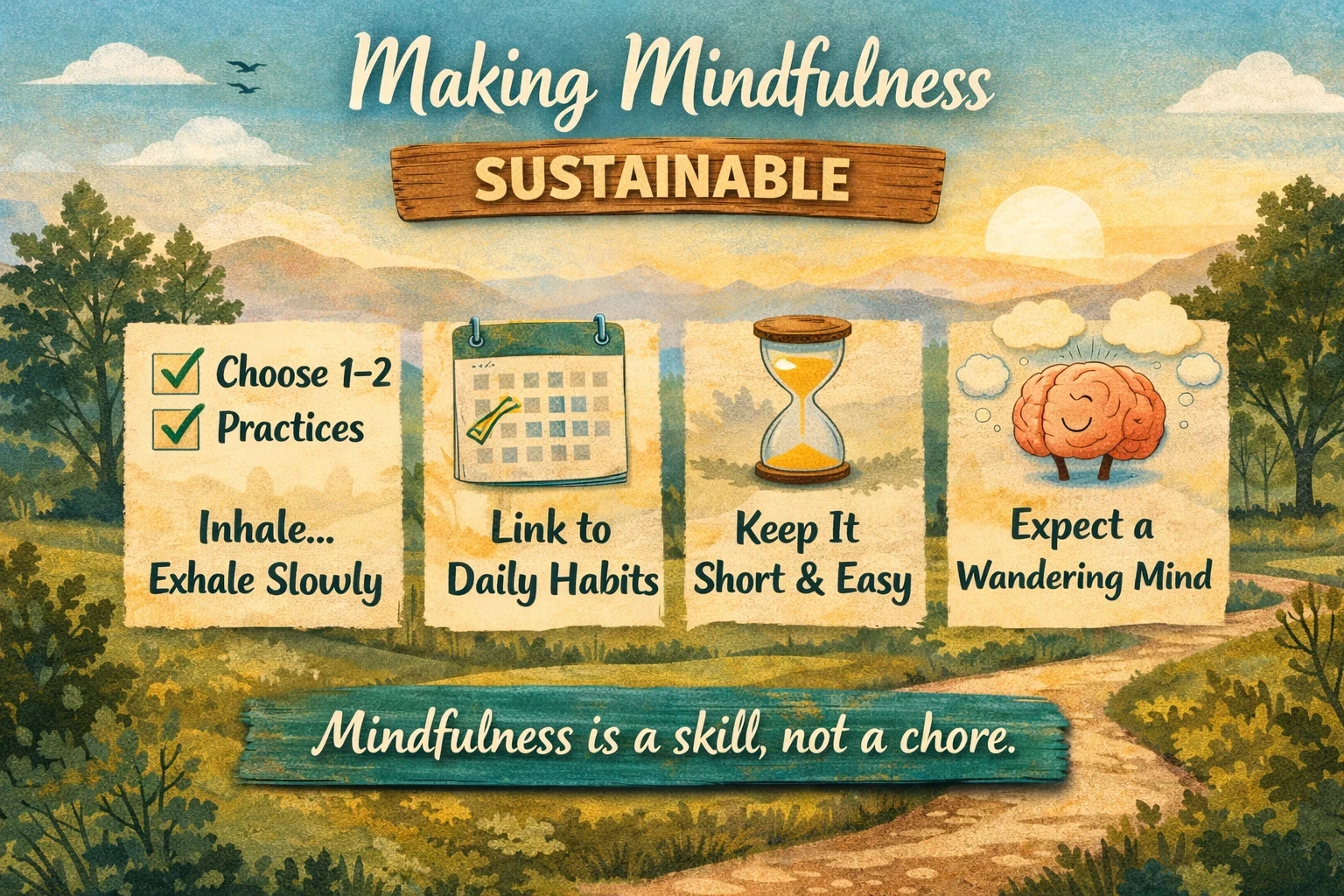
Mindfulness works best when it’s realistic.
Helpful guidelines:
Choose one or two practices only
Attach them to existing habits
Keep sessions short and regular
Expect the mind to wander
Wandering attention is not failure—it is the practice.
Psychological research supports this gentle approach to mindfulness for anxiety management:
👉 https://www.apa.org/monitor/2012/07-08/mindfulness
A Supportive Reframe for Anxious Minds
Anxiety often eases when you stop fighting it and start observing it.
Mindfulness teaches that anxious thoughts are experiences—not instructions or predictions.
Daily mindfulness practices for anxiety help create space between sensation and reaction.
In that space, the nervous system learns safety again—gradually, reliably, and without force.