Hip Bursitis Recovery Exercises For Athletes These Can Help With Faster Recovery
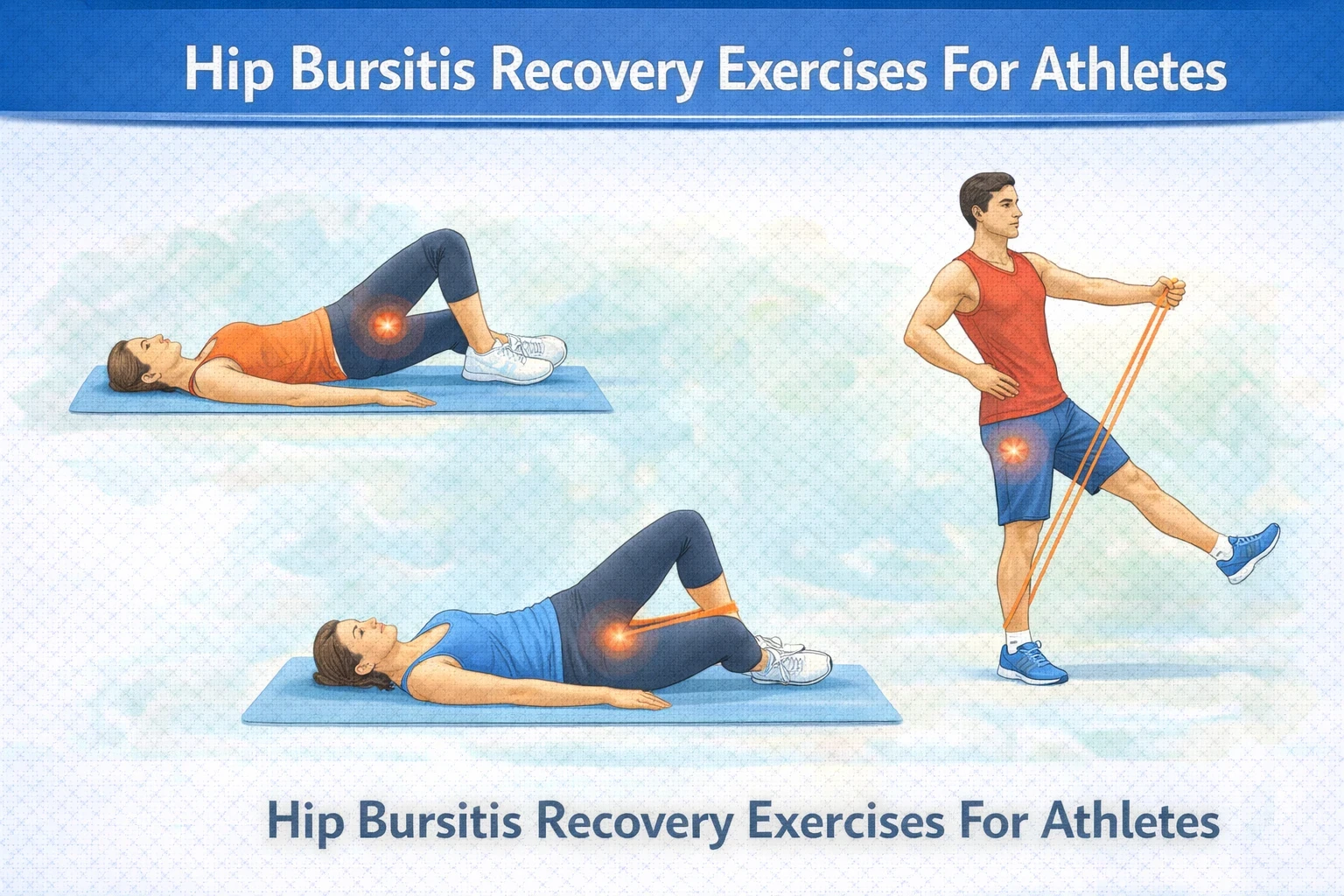
Hip Bursitis Recovery Exercises for Athletes
Hip bursitis recovery exercises for athletes are often recommended when outer hip pain begins to interfere with training, running, or performance.
Hip bursitis occurs when the small cushioning sacs called bursae around the hip joint become irritated or inflamed. These bursae normally reduce friction between muscles, tendons, and bone during movement.
However, when irritation develops, repetitive athletic movements can aggravate the area.
Because of this, many athletes look for structured hip bursitis recovery exercises for athletes that restore mobility while protecting the joint. For a deeper understanding of how persistent pain develops and why symptoms sometimes linger after the initial irritation improves, the guide to chronic pain explained provides helpful background.
What Causes Hip Bursitis in Athletes
Athletes place significant repetitive load on the hip joint.
Over time, this stress can irritate the bursae located around the outer hip. Common causes include:
• Repetitive running or sprinting
• Sudden increases in training volume
• Weak glute muscles
• Tight iliotibial band (IT band)
• Poor running mechanics
• Insufficient recovery between workouts
Because the hip is central to many athletic movements, irritation can develop gradually.
Pain often appears on the outer hip and may worsen during running, stair climbing, or side sleeping.
If you want to explore additional causes of hip discomfort, the article on hip pain causes and treatment explains several related conditions.
Why Recovery Exercises Matter
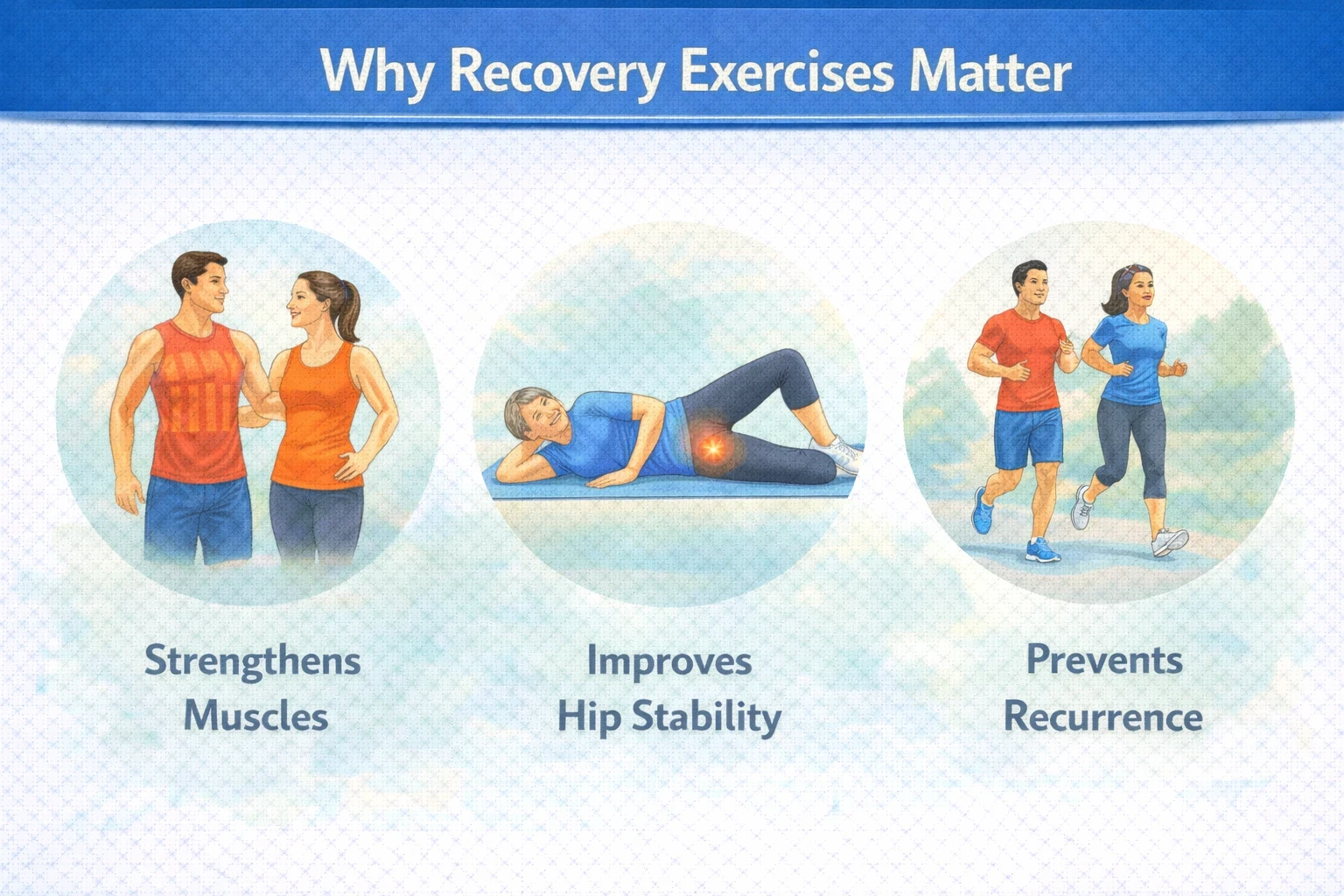
Recovery exercises are an important part of hip bursitis recovery exercises for athletes because they help restore strength and movement around the hip joint.
Firstly, strengthening surrounding muscles improves joint stability.
Secondly, improved mobility reduces friction around the irritated bursa.
Finally, balanced muscle activation allows athletes to return to sport with lower risk of recurrence.
When training loads increase too quickly, the nervous system may also heighten pain sensitivity.
The article on movement load and pain sensitivity explains how load and movement patterns influence pain signals.
Therefore, recovery exercises should be introduced gradually.
Early Phase Recovery Exercises
During the early phase of recovery, exercises should focus on gentle activation rather than high intensity.
These hip bursitis recovery exercises for athletes help maintain mobility without aggravating symptoms.
Glute Activation
Glute muscles stabilize the hip during running and jumping. A simple activation exercise is the glute bridge.
Steps:
• Lie on your back with knees bent
• Place feet flat on the floor
• Lift the hips slowly
• Hold for a few seconds
• Lower with control
This movement activates the glutes while minimizing stress on the irritated bursa.
Side-Lying Leg Raises
This exercise strengthens hip stabilizers.
Steps:
• Lie on the unaffected side
• Keep legs straight
• Lift the top leg slowly
• Pause briefly
• Lower with control
Performing controlled repetitions may improve hip stability over time.
Gentle Hip Mobility
Mobility exercises help prevent stiffness during recovery.
Examples include:
• Hip circles
• Gentle hip flexor stretches
• Controlled pelvic tilts
These movements should remain comfortable and pain free.
Progressive Strengthening Exercises
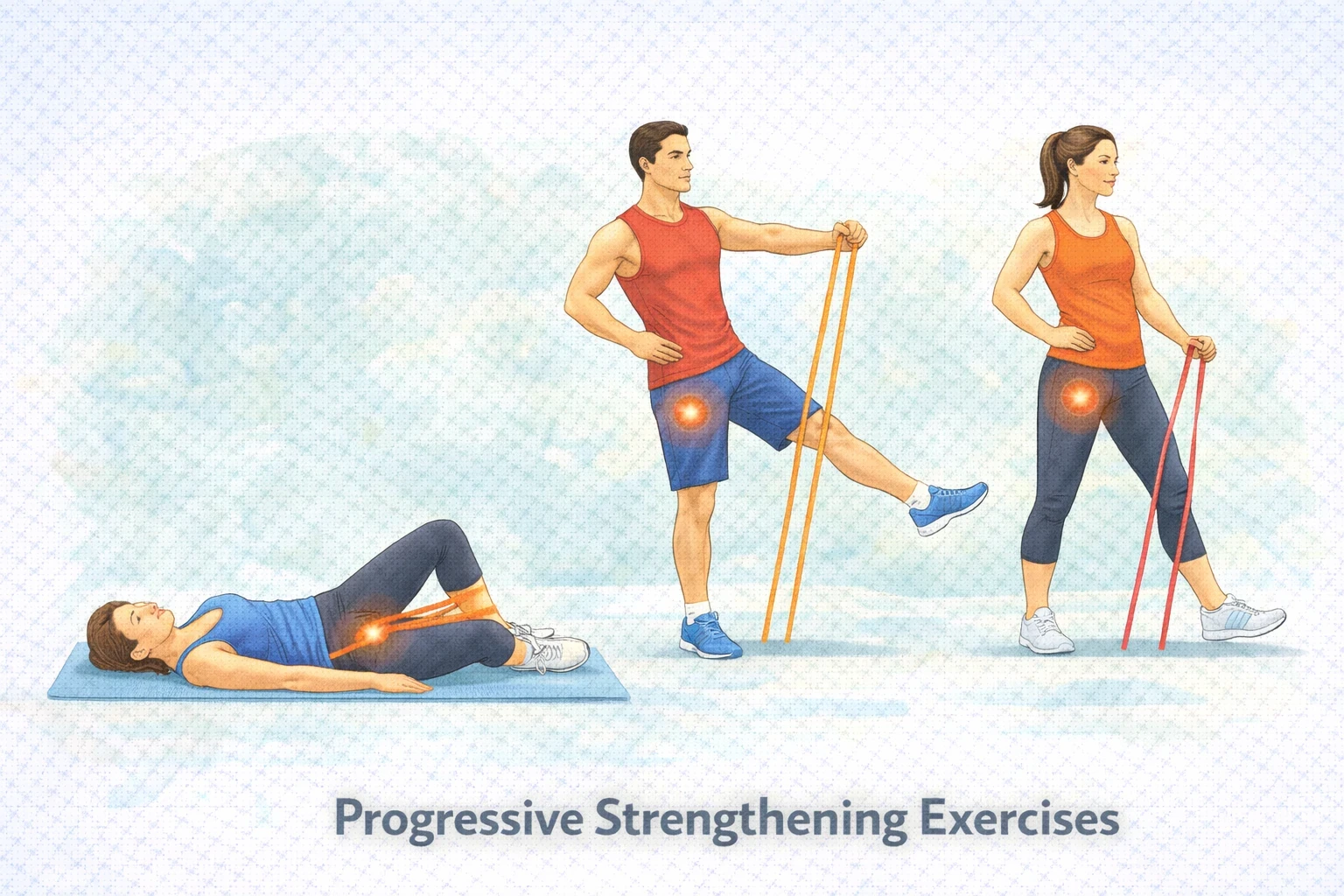
Once pain begins to settle, more advanced hip bursitis recovery exercises for athletes can be introduced.
The goal is to strengthen muscles that stabilize the hip during athletic movements.
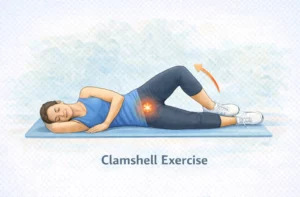
Clamshell Exercise
The clamshell strengthens the gluteus medius.
Steps:
• Lie on one side with knees bent
• Keep feet together
• Lift the top knee slowly
• Hold briefly
• Return to the starting position
This exercise improves lateral hip stability.
Standing Hip Abduction
Standing exercises help prepare the hip for sport. Steps:
• Stand upright with support if needed
• Lift one leg out to the side
• Keep the torso stable
• Lower slowly
Controlled movements help reinforce proper muscle activation.
Resistance Band Walks
Resistance bands provide progressive strengthening. Steps:
• Place a band around the ankles or knees
• Maintain a slight squat position
• Step sideways slowly
• Keep tension in the band
This movement strengthens glute muscles used during running and cutting.
Supportive Recovery
Strategies Exercise is only one part of recovery. Several supportive strategies may also help athletes return to training safely.
Load Management
Reducing high impact activity during recovery allows irritated tissues to calm down.
Athletes often benefit from temporarily replacing running with lower impact activities such as:
• Swimming
• Cycling
• Elliptical training
Gradual reintroduction of training can help prevent recurrence.
Cold Therapy
Cold packs may help reduce irritation after exercise. Short sessions of 10–15 minutes can help calm inflammation during flare-ups.

Anti-Inflammatory Nutritional Support
Some athletes explore nutritional strategies that support recovery. Common examples include:
• Omega-3 fatty acids
• Turmeric extracts
• Magnesium support
• Rosehip supplements
Because inflammation contributes to many pain conditions, the guide on natural pain relief supplements discusses several supportive options.
Quality Assured herbal inflammation relief supplements go to HerbsPro.
Secondary Benefits of Hip Strengthening
When athletes consistently perform hip bursitis recovery exercises for athletes, several additional benefits may occur. For example:
• Improved running mechanics
• Greater hip stability
• Reduced knee strain
• Lower risk of future injuries
Stronger hip muscles help distribute force more evenly during movement.
Safety Considerations
Although recovery exercises are beneficial, athletes should progress carefully. Training should be modified if:
• Sharp pain occurs
• Swelling increases
• Pain persists after exercise • Hip movement becomes restricted
In these cases, professional assessment may help guide rehabilitation.
Limitations and Individual Differences
Recovery timelines vary widely among athletes. Several factors influence progress including:
• Severity of inflammation
• Training intensity
• Muscle strength
• Recovery habits
Therefore, hip bursitis recovery exercises for athletes should be adapted to each individual.
A Balanced Perspective
Hip bursitis can temporarily interrupt training, especially for athletes who rely heavily on running or explosive movement.
However, structured rehabilitation often leads to steady improvement. Combining strengthening exercises, mobility work, and load management can support recovery.
With patience and gradual progression, many athletes return to full activity after implementing consistent hip bursitis recovery exercises for athletes.
Scientific Studies https://pubmed.ncbi.nlm.nih.gov/24662872/ https://pubmed.ncbi.nlm.nih.gov/25985244/ https://pubmed.ncbi.nlm.nih.gov/28765214/