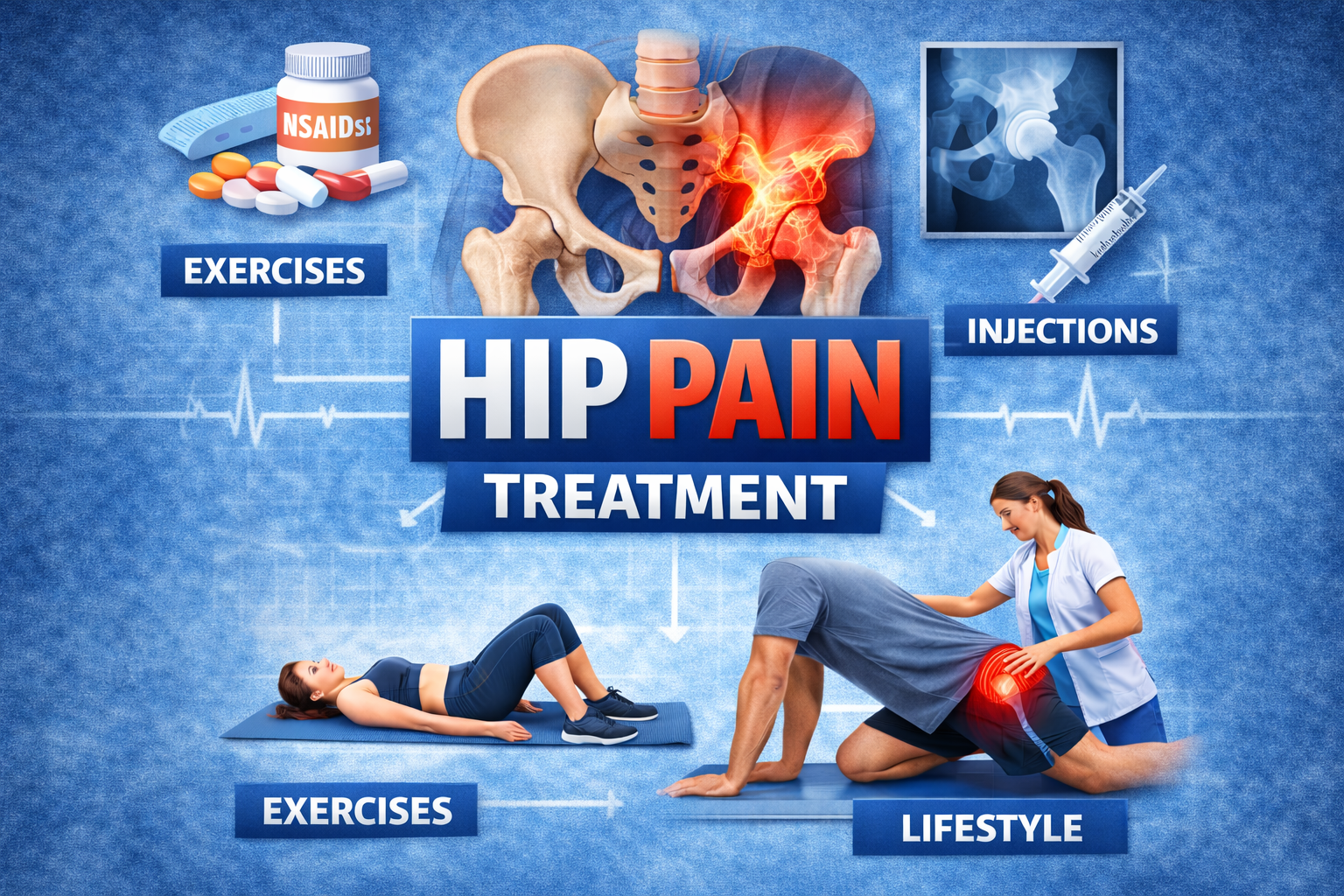
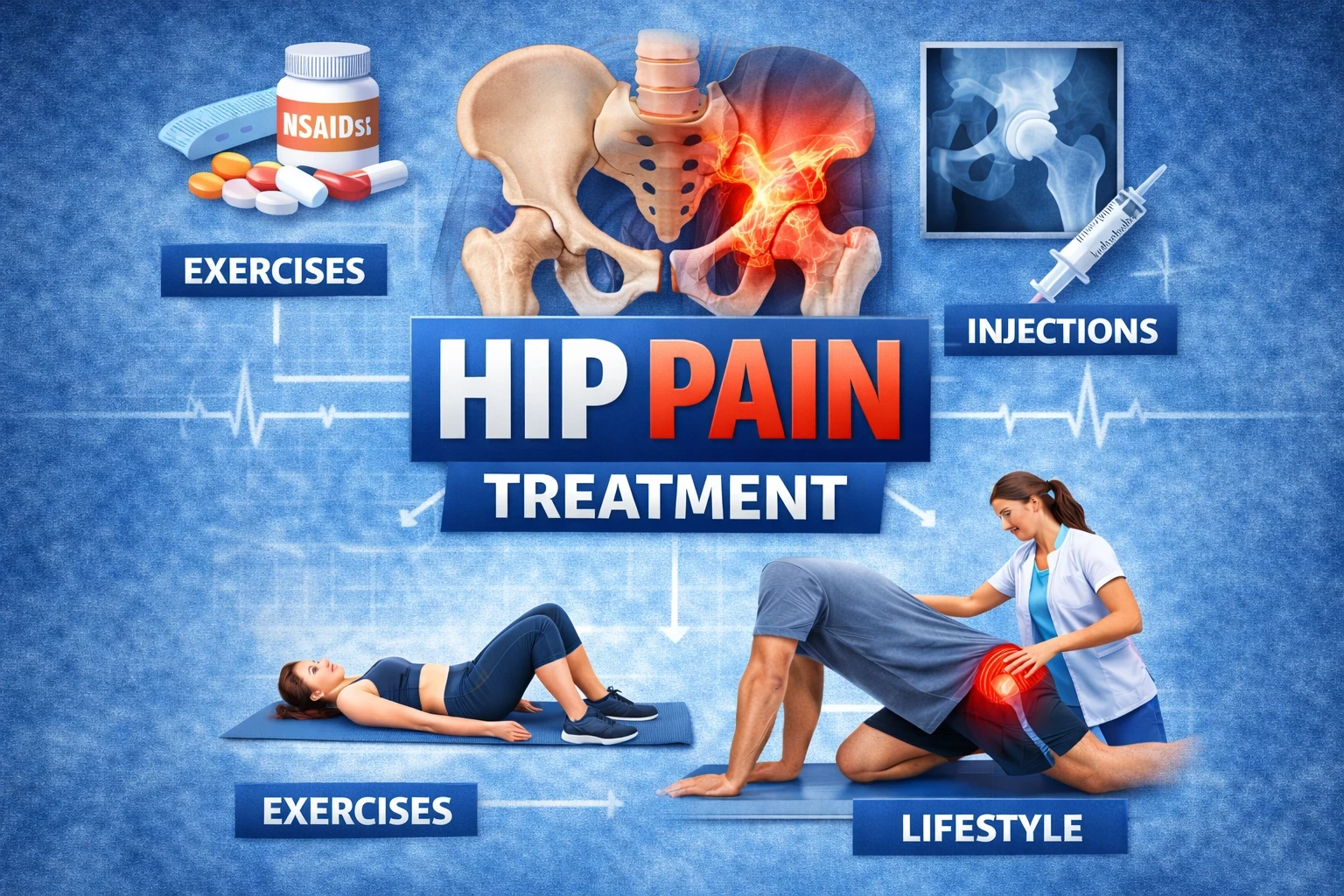
Hip Pain Treatment Science Based
Hip Pain Treatment
Hip pain treatment often depends on identifying the underlying cause of the discomfort and choosing strategies that reduce irritation, improve joint stability, and restore normal movement.
The hip is one of the body’s most important weight-bearing joints, so when pain develops it can interfere with walking, sitting, sleeping, and even basic daily activities.
For some people the pain begins gradually from overuse or muscle imbalance.
For others it may appear suddenly after an injury, strain, or inflammation of nearby tissues such as tendons or bursae. Understanding the possible causes and the range of available options helps people choose the most effective hip pain treatment strategies for their situation.
What Is Hip Pain?
Hip pain usually refers to discomfort felt around the hip joint, groin, outer thigh, or buttock region.
Because several structures work together to stabilize the hip — muscles, tendons, ligaments, cartilage, and bursae — pain may come from multiple sources.
Common causes include:
• Muscle strains
• Tendon irritation
• Hip bursitis
• Arthritis
• Overuse injuries
• Nerve irritation
• Poor movement mechanics
Many people experiencing persistent discomfort find that exploring hip bursitis treatment can help identify whether inflammation of the bursa is contributing to symptoms.
Because hip pain can arise from several conditions, proper evaluation is often the first step in choosing the right hip pain treatment approach.
Why Hip Pain Develops
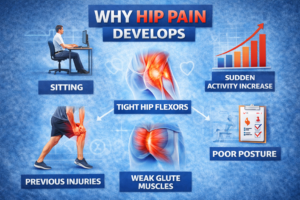
Several lifestyle and biomechanical factors contribute to hip pain.
Sitting for long periods, reduced physical activity, and muscle weakness can all place extra stress on the joint.
In addition, repetitive movement patterns — especially in sports — may irritate the surrounding tissues.
Common contributing factors include:
• Tight hip flexor muscles
• Weak glute muscles
• Poor posture
• Repetitive training loads
• Sudden increases in activity
• Previous injuries
Research into pain science also highlights the role of nervous system sensitivity.
The body sometimes becomes more reactive to movement or pressure when tissues are irritated.
Understanding how movement load and pain sensitivity interact can help explain why some movements feel painful even when structural damage is minimal.
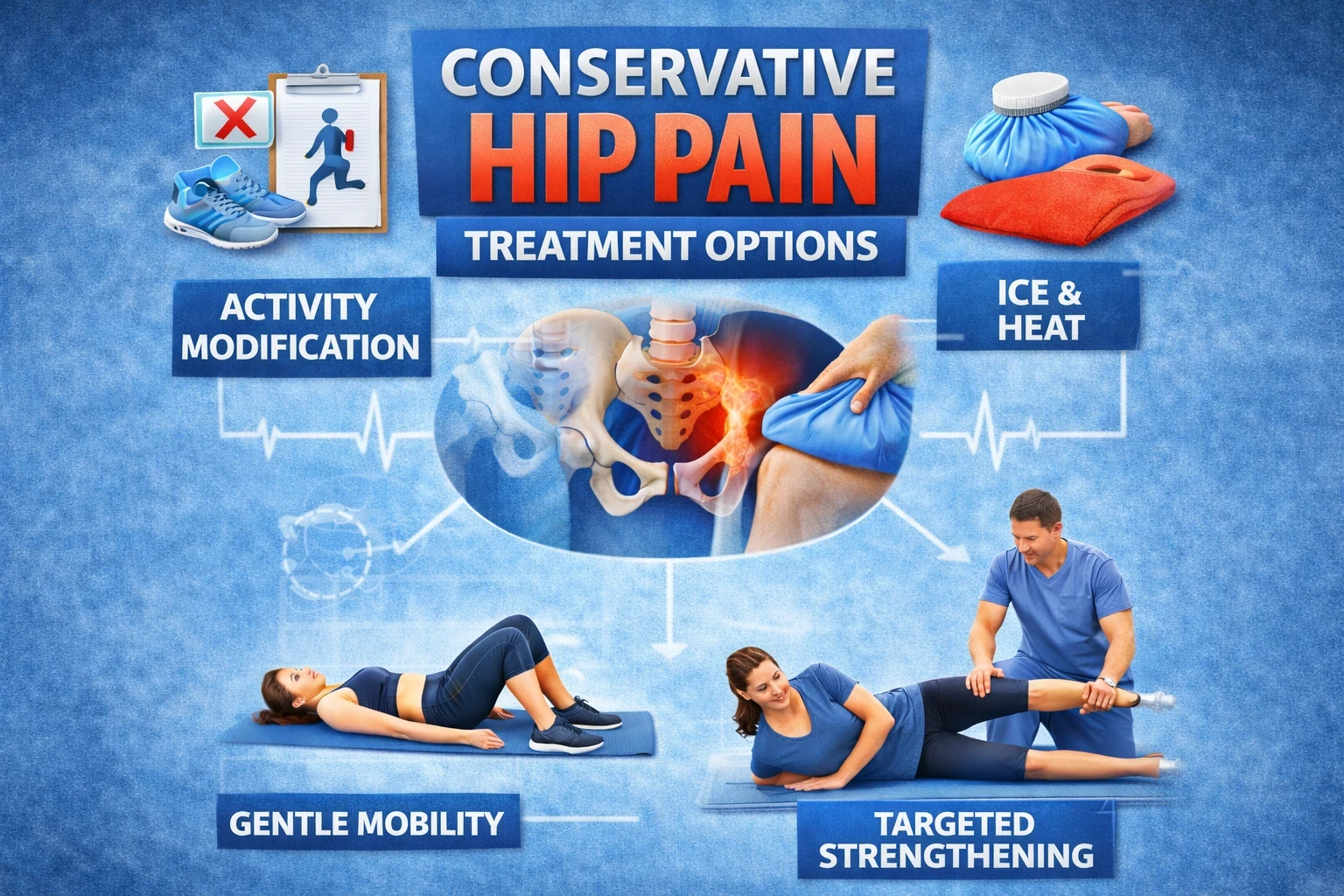
Conservative Hip Pain Treatment Options
Most hip pain treatment plans begin with conservative approaches designed to reduce irritation while restoring strength and mobility.
Activity Modification
Reducing movements that aggravate symptoms can allow irritated tissues to settle.
This does not mean complete rest. Instead, it means temporarily adjusting activity levels while maintaining gentle movement.
Walking, swimming, and light stretching often help maintain mobility without overloading the joint.
Ice and Heat Therapy
Ice is commonly used during the early stages of inflammation to reduce swelling and pain.
Heat therapy may help relax tight muscles once acute inflammation settles.
Many people alternate both methods depending on how the joint responds.
Gentle Mobility Exercises
Restoring range of motion is an important part of hip pain treatment.
Gentle stretching of the hip flexors, glutes, and hamstrings can improve joint mechanics and reduce strain.
These exercises should be performed slowly and without pushing into sharp pain.
Targeted Strengthening
Weak muscles around the hip often contribute to joint stress. Strengthening exercises help stabilize the pelvis and improve movement patterns.
Common exercises include:
• Glute bridges
• Clamshells
• Side leg raises
• Hip abduction movements
These exercises gradually rebuild support around the hip joint.
Anti-Inflammatory Lifestyle Strategies
Inflammation can amplify joint pain and stiffness. Several lifestyle strategies may support recovery as part of a comprehensive hip pain treatment plan.
Nutrition
Certain nutrients support tissue repair and healthy inflammatory balance. Many people explore natural pain relief supplements as part of a broader wellness strategy.
Examples sometimes discussed in research include:
• Omega-3 fatty acids
• Curcumin
• Magnesium
• Rosehip extract
While supplements may provide supportive benefits, they work best when combined with exercise and movement-based therapies.
Sleep and Recovery
Sleep plays a key role in tissue repair and nervous system regulation.
Poor sleep can increase pain sensitivity and slow recovery.
Using supportive pillows or adjusting sleeping positions may reduce pressure on the affected hip.
Stress Regulation
The nervous system strongly influences how pain signals are interpreted.
Stress management techniques such as breathing exercises, meditation, or light walking may help reduce muscle tension around the hip.
Understanding the how to manage the connection between pain and emotional well-being can help explain why emotional stress sometimes increases physical pain.
Physical Therapy and Movement Rehabilitation
When symptoms persist, structured rehabilitation often becomes an important part of hip pain treatment.
Physical therapists assess:
• Movement patterns
• Muscle strength
• Joint mobility
• Posture and gait
Based on these assessments they design targeted programs to restore balanced movement.
Rehabilitation often progresses through phases:
Phase 1 – Pain Reduction
Focus on gentle mobility exercises and reducing inflammation.
Phase 2 – Stability Building
Strengthening the glutes, core, and surrounding muscles to support the joint.
Phase 3 – Functional Movement
Gradually reintroducing more complex movements such as squatting, lunging, or sport-specific actions.
This progressive approach allows tissues to adapt safely.
Medical Hip Pain Treatment Options
If conservative treatments are not enough, medical interventions may be considered.
Anti-Inflammatory Medication
Non-steroidal anti-inflammatory drugs (NSAIDs) may reduce inflammation and discomfort in the short term.
These medications should be used cautiously and under medical guidance.
Corticosteroid Injections
For conditions such as bursitis or severe inflammation, doctors sometimes use corticosteroid injections to calm irritated tissues.
These injections may provide temporary relief but are usually combined with rehabilitation exercises to address underlying causes.
Imaging and Diagnosis
When pain persists or worsens, imaging techniques such as ultrasound or MRI may be used to identify structural problems such as tendon tears or joint degeneration.
Accurate diagnosis ensures that hip pain treatment strategies target the correct issue.
When Surgery May Be Considered
Most cases of hip pain improve with conservative treatment. However, surgery may be recommended when significant structural damage exists.
Examples include:
• Severe hip arthritis
• Labral tears
• Hip impingement
• Advanced joint degeneration
Surgical procedures aim to repair damaged tissues or restore joint mechanics. Recovery typically involves structured rehabilitation to rebuild strength and mobility.
Secondary Benefits of Treating Hip Pain
Effective hip pain treatment often produces improvements beyond the joint itself.
Many people notice:
• Better walking comfort
• Improved posture
• Increased physical activity
• Better sleep quality
• Reduced back or knee pain
Because the hip is central to movement, restoring function often improves overall body mechanics.
Quality and Safety Considerations
When exploring hip pain treatment strategies, safety and quality should always come first.
Important considerations include:
• Gradual progression of exercise intensity
• Avoiding movements that cause sharp pain
• Consulting healthcare professionals for persistent symptoms
• Choosing evidence-informed therapies
Combining multiple strategies — exercise, lifestyle changes, and supportive treatments — usually produces the best outcomes.
Limitations and Realistic Expectations
Hip pain rarely disappears overnight. Recovery often takes time, especially when symptoms developed gradually over months or years.
Progress typically occurs in stages:
- Reducing irritation
- Restoring mobility
- Rebuilding strength
- Returning to normal activity
Consistency is more important than intensity when following any hip pain treatment plan.
A Balanced Perspective on Hip Pain Treatment
Hip pain can be frustrating, but many cases respond well to conservative management. Gentle movement, targeted strengthening, lifestyle adjustments, and medical guidance can all play a role in recovery.
The most effective hip pain treatment strategies usually combine several approaches rather than relying on a single solution.
Understanding the causes of pain, restoring healthy movement patterns, and supporting the body’s natural recovery processes can help many people return to comfortable, active lifestyles.
Scientific Study Links
https://pubmed.ncbi.nlm.nih.gov/28617606/
https://pubmed.ncbi.nlm.nih.gov/31228951/
https://pubmed.ncbi.nlm.nih.gov/30407227/