How to Calm an Irritated Nerve
How to calm an irritated nerve is a common question for people experiencing symptoms such as burning pain, tingling, numbness, or sharp shooting sensations.
When a nerve becomes irritated, compressed, or inflamed, the signals sent to the brain can become distorted, leading to uncomfortable or persistent nerve pain.
Nerve irritation can occur in many areas of the body, including the neck, back, arms, and legs.
Although nerve pain can feel alarming, many cases improve with the right combination of movement, lifestyle adjustments, and appropriate nerve pain treatment strategies.
Understanding the biological causes of nerve irritation is an important starting point.
The guide on why nerve pain occurs explains how inflammation, compression, and nerve sensitivity can disrupt normal nerve signaling.
Why Nerves Become Irritated
Nerves may become irritated when surrounding tissues place pressure on them or when inflammation develops near nerve pathways.
Because nerves carry signals between the brain and body, even mild irritation can produce strong sensations.
Common causes of irritated nerves include:
• nerve compression from discs or joints
• repetitive movements
• muscle tension around nerves
• inflammation in surrounding tissues
• injuries or trauma
Understanding how pain signals travel through the nervous system can help explain these symptoms.
The article on understanding pain mechanisms describes how the brain processes signals from irritated nerves.
Common Symptoms of an Irritated Nerve
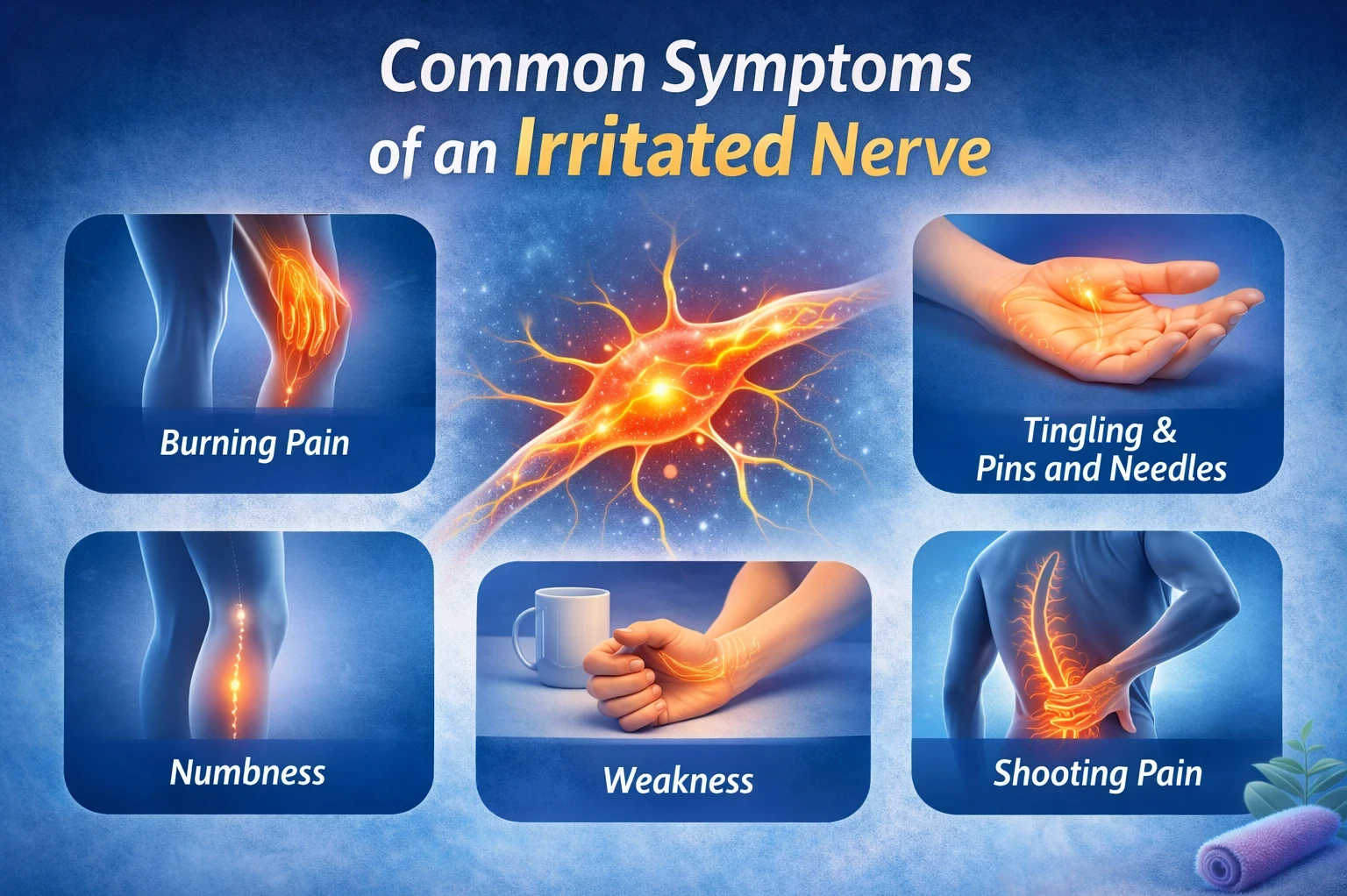
When a nerve becomes irritated, several symptoms may appear.
These may include:
• burning sensations
• tingling or pins and needles
• numbness
• sharp shooting pain
• weakness in nearby muscles
• hypersensitivity to touch
Because nerves follow specific pathways in the body, the pain may travel along the nerve rather than remaining in one spot.
Recognizing these symptoms can help guide appropriate treatment strategies.
Rest and Activity Modification
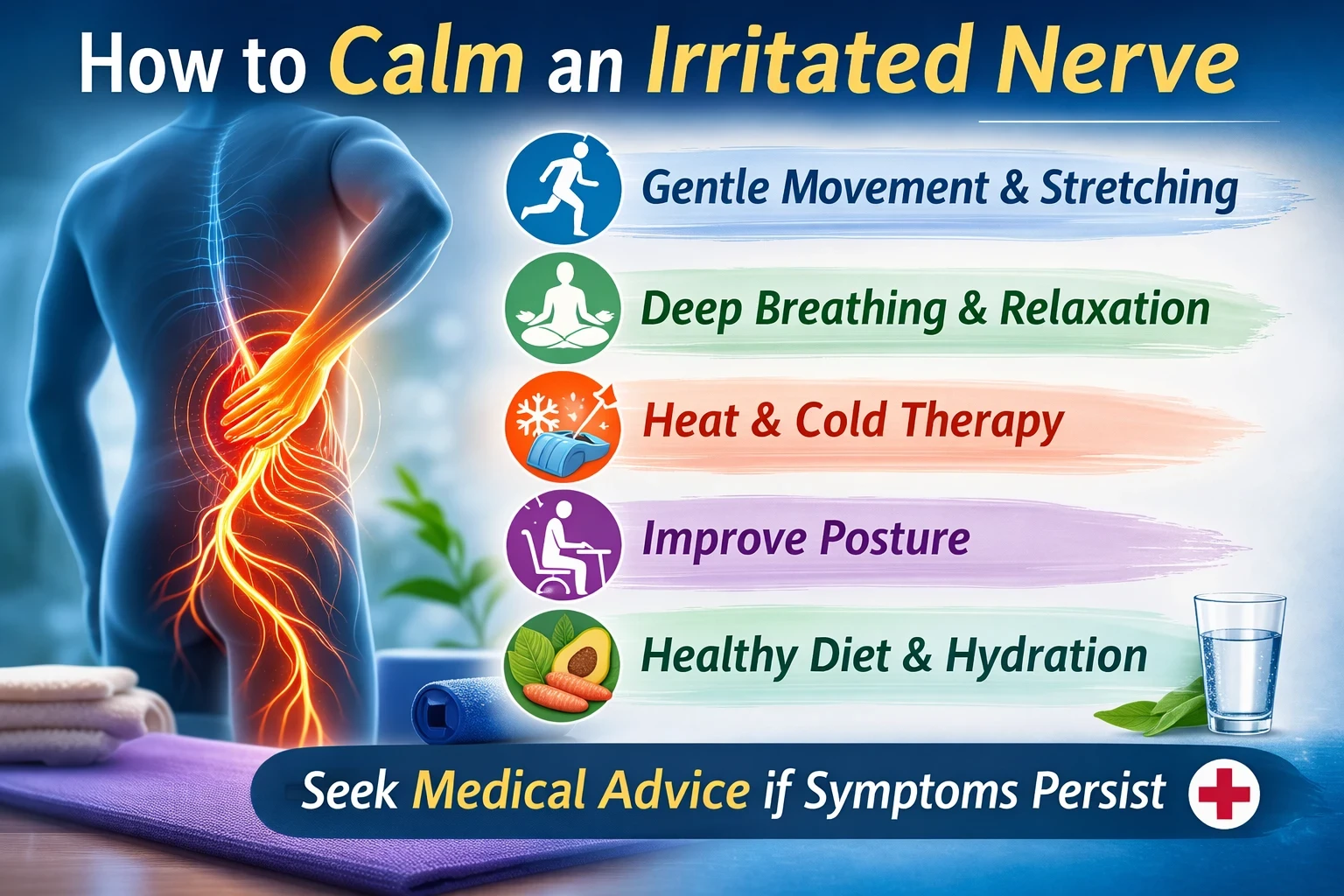
One of the first steps in learning how to calm an irritated nerve is reducing activities that worsen symptoms.
If repetitive movements or poor posture are contributing to nerve irritation, temporarily modifying these activities may allow inflammation to settle.
However, long periods of complete rest are usually not recommended because movement helps maintain circulation and tissue flexibility.
Gentle Movement
Gentle movement may help reduce nerve irritation by improving circulation and preventing stiffness in surrounding tissues.
Low-impact activities such as walking, stretching, or mobility exercises may support recovery.
Movement also helps the nervous system become less sensitive to pain signals over time.
Understanding the brain’s role in pain perception is explained further in pain education and how pain works in the human body.
Posture Improvements
Poor posture can increase pressure on nerves, especially in the neck and lower back.
Improving posture while sitting, standing, or working at a desk may reduce strain on nerve pathways.
Small adjustments, such as using supportive seating or adjusting screen height, can sometimes significantly reduce nerve irritation.
Heat and Cold Therapy
Heat and cold therapy may provide temporary relief for irritated nerves.
Cold packs may help reduce inflammation during the early stages of nerve irritation.
Heat therapy may relax muscles surrounding the nerve and improve circulation.
Alternating between heat and cold therapy may help some individuals manage symptoms.
Go to Nature Creation for natural cold and heat therapy products.
Stress Reduction
Stress can increase nervous system sensitivity and amplify pain signals.
Relaxation techniques may help calm the nervous system.
Examples include:
• deep breathing exercises
• meditation
• gentle yoga
• mindfulness practices
These strategies may reduce tension and improve the body’s ability to regulate pain signals.
Nutrition and Nerve Health
Nutrition may also influence nerve health.
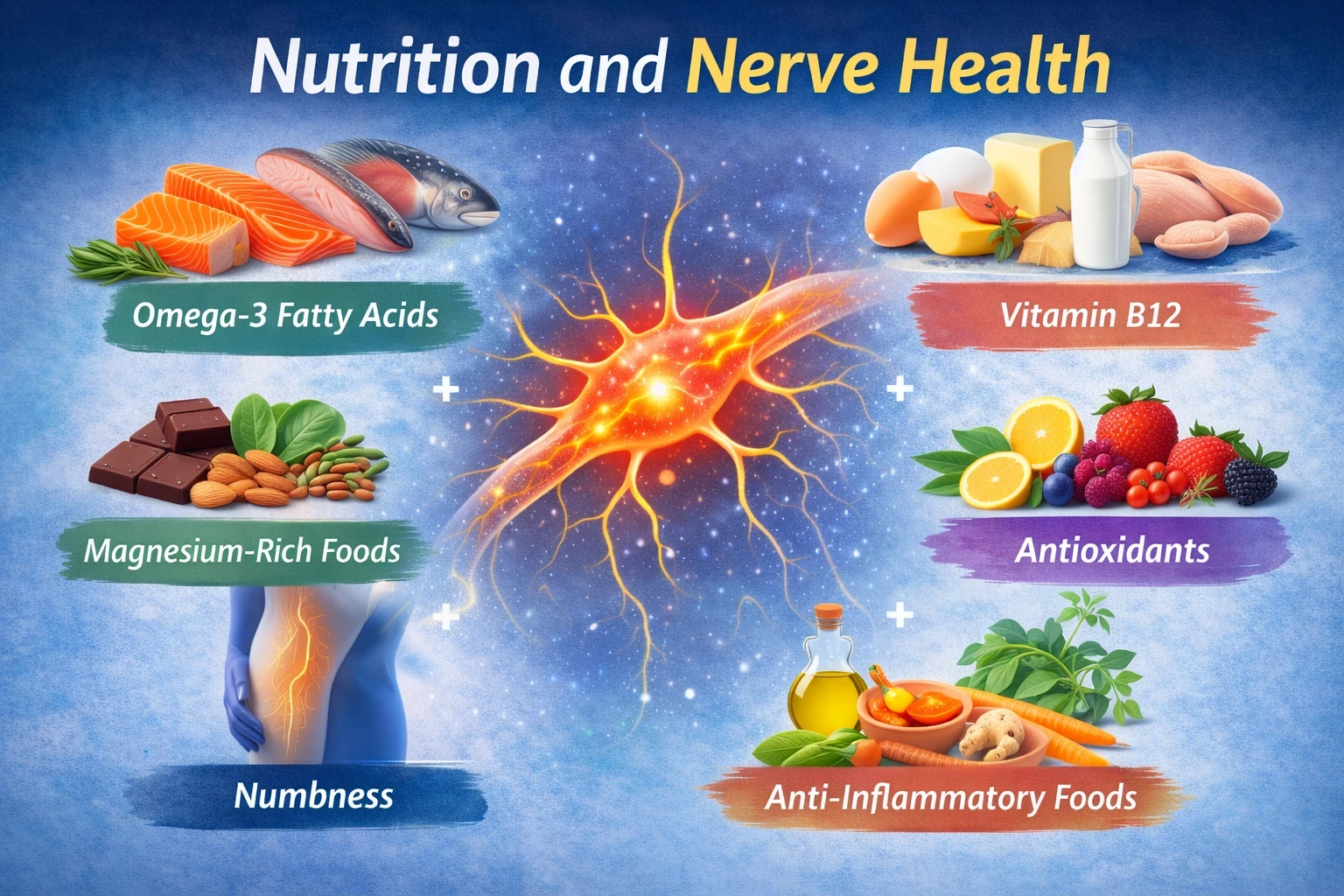
Certain nutrients support nerve repair and healthy nerve signaling.
Examples include:
• vitamin B12
• magnesium
• omega-3 fatty acids
• antioxidant-rich foods
Go to HerbsPro for quality assured nutrients.
Maintaining a balanced diet may support the body’s natural healing processes.
Physical Therapy
Physical therapy can be an important part of managing irritated nerves.
Therapists may recommend exercises that improve posture, strengthen supporting muscles, and restore mobility.
Nerve gliding exercises may also help reduce pressure on irritated nerves.
These approaches are commonly used within comprehensive nerve pain treatment plans.
When to Seek Medical Advice
Although many cases of nerve irritation improve with conservative care, medical evaluation may be necessary if symptoms include:
• persistent numbness
• muscle weakness
• worsening pain
• loss of coordination
• bowel or bladder changes
These symptoms may indicate significant nerve compression or nerve damage.
Early diagnosis may help prevent long-term complications.
A Balanced Perspective
Learning how to calm an irritated nerve often involves addressing multiple factors, including inflammation, movement patterns, and nervous system sensitivity.
Gentle activity, posture improvements, stress reduction, and proper nutrition may all play a role in reducing nerve irritation.
Combining these strategies with appropriate medical guidance often provides the most effective long-term approach for managing nerve pain and supporting nerve recovery.
Understanding how nerves function and how pain signals are interpreted can help individuals make informed decisions about managing symptoms and improving overall nerve health.
Scientific Studies
https://pubmed.ncbi.nlm.nih.gov/20345238/
https://pubmed.ncbi.nlm.nih.gov/24789306/
https://pubmed.ncbi.nlm.nih.gov/30888504/