How To Relieve Pain Without Prescription Medication
How to relieve pain without prescription medication
Knowing how to relieve pain without prescription medication would help people.
Living with pain can be exhausting — especially when you’re trying to stay hopeful, keep up with daily life, and avoid relying on prescription medication.
If you’re here because you want gentle, practical options that feel realistic, you’re not alone.
This guide shares supportive, evidence-based ways to reduce pain sensitivity and improve day-to-day comfort — without pretending there’s a “magic fix.” (This is general information, not medical advice.)
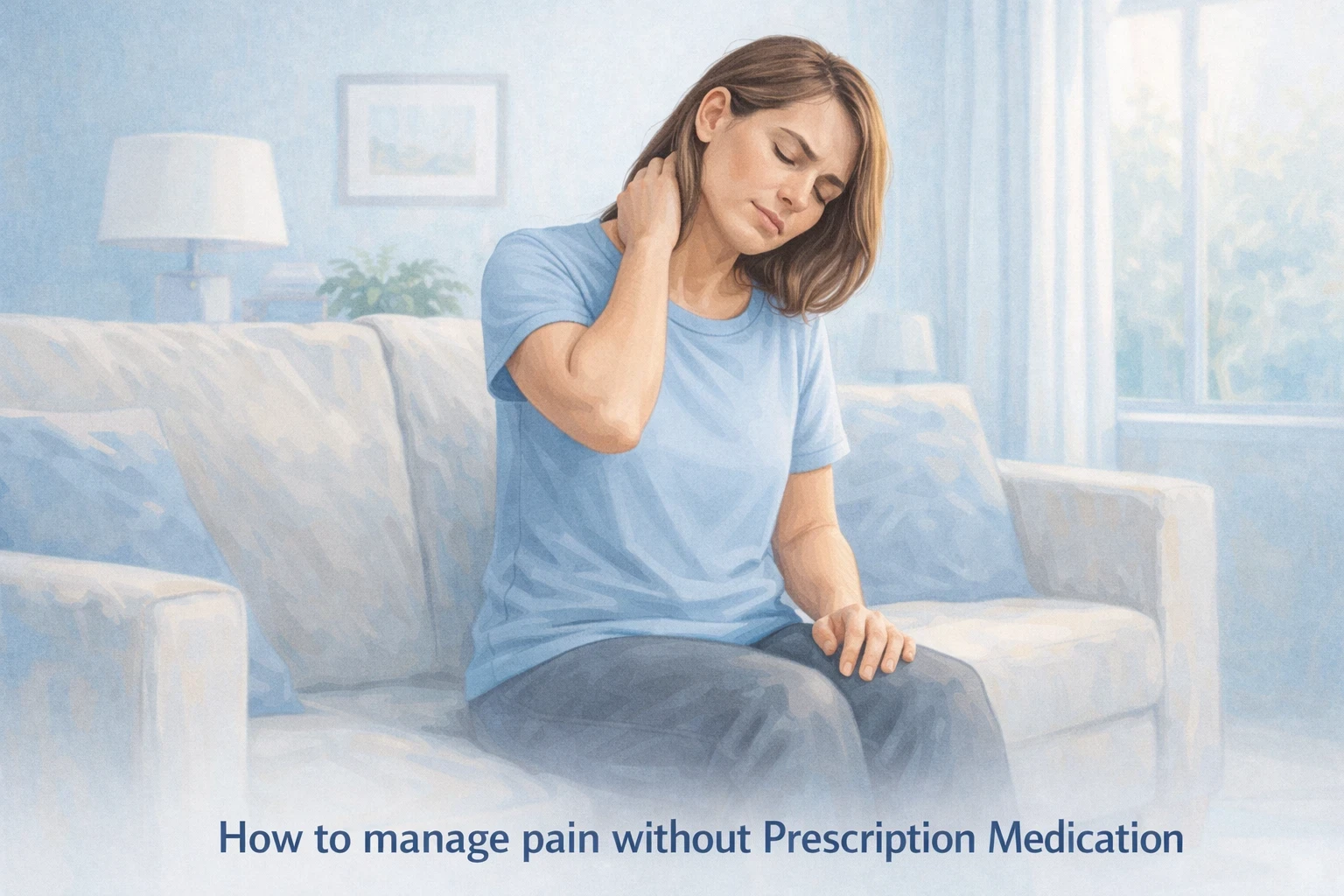
Start with a calmer explanation of what pain is
Pain is real — but it is not always a direct measure of damage. For many people, pain can continue (or return easily) because your nervous system becomes more protective over time. When your system is on “high alert,” normal sensations can feel sharper, louder, and more threatening.
A helpful mindset shift is this: your body isn’t betraying you — it’s trying to protect you. The goal is to help your system feel safer and less reactive.
When pain makes sense, fear often reduces — and when fear reduces, pain sensitivity often reduces too. You’re not “making it up.” You’re learning what your body has been doing, and how to guide it back toward calm.
Use movement as a pain-calming signal
One of the most reliable non-prescription approaches is gentle, consistent movement. This does not mean pushing through flare-ups. It means rebuilding trust gradually so the body learns that movement can be safe again.
Helpful movement usually looks like:
- Small and repeatable (5–10 minutes is enough to start)
- Low threat (walking, light mobility, easy cycling, gentle strengthening)
- Progressive (increase slowly — minutes or reps, not big jumps)
- Paced (stop before you crash into a flare-up)
If you’ve been stuck in a boom–bust cycle (overdo it, crash, recover, repeat), pacing is often the missing piece.
Support sleep (because poor sleep turns pain up)
If your sleep is disrupted, pain almost always feels worse. Even one poor night can increase sensitivity, irritability, and muscle tension the next day. This is not weakness — it’s nervous system biology.
Small sleep supports that often help include:
- Keeping wake time consistent (even after a bad night)
- Reducing screens and bright light before bed
- Using a simple, repeatable wind-down routine
- Focusing on resting the body rather than forcing sleep
Sleep may not fix everything, but it can lower the overall “volume” of pain.
Calm the nervous system without “making it psychological”
Stress, fear, frustration, and constant vigilance can keep the body in a protective state.
This does not mean pain is imagined. It means the system is doing exactly what it evolved to do when it senses threat.
Helpful calming strategies include:
- Slow breathing with a longer exhale
- Gentle stretching done comfortably
- Short mindfulness or body-scan practices
- Heat for comfort and muscle relaxation
- Staying connected rather than isolating
You’re not trying to think pain away. You’re helping the body feel safe again.
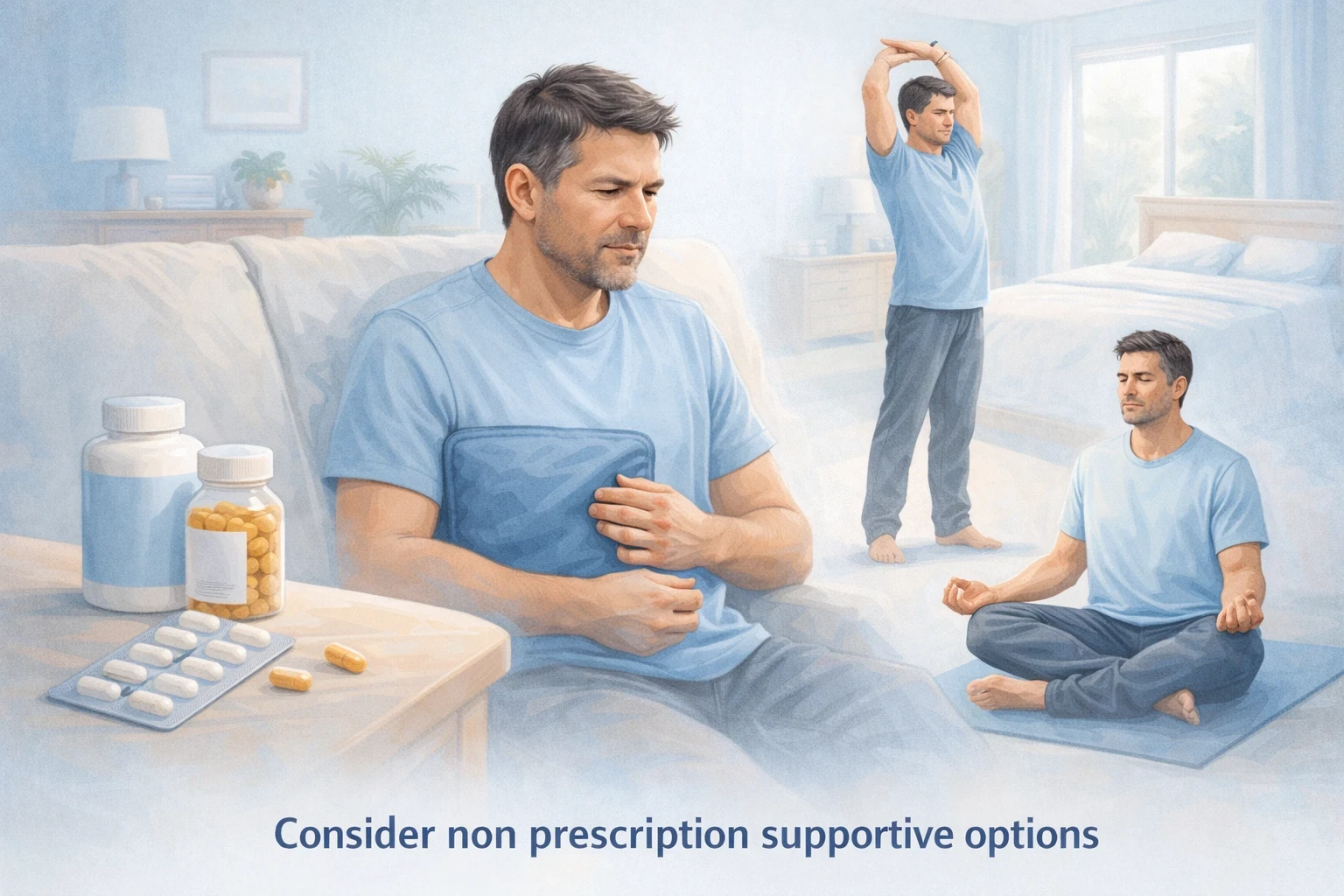
Consider non-prescription supportive options carefully
Some people also explore supportive, non-prescription options.
These are not cures, but they may reduce symptoms enough to help with movement, sleep, and daily functioning.
Examples include:
- Heat or cold used appropriately
- Gentle self-massage or topical products
- Supportive sleep or relaxation tools
- Education-led or rehabilitation-based approaches
Always use products as directed and check with a pharmacist or clinician if you take other medications or have underlying health conditions.
Build a simple weekly plan
When pain is unpredictable, many people end up reacting day by day. A light structure reduces stress and helps you notice progress without pressure.
A gentle example:
- Daily: 5–15 minutes of easy movement
- Three times per week: very light strengthening
- Nightly: a consistent wind-down routine
- Weekly: review flare-ups and adjust pacing without self-blame
Progress is often subtle at first: fewer spikes, quicker recovery, improved confidence. These are meaningful wins.
Scientific studies
 Previous Post
 Next Post