Joint Pain Exercises for Seniors
Joint pain exercises for seniors can play a powerful role in maintaining mobility, balance, and independence later in life.
While discomfort can feel discouraging, gentle and consistent movement often helps reduce stiffness and improve daily function.
The key is choosing safe, low-impact activities that support the joints rather than overload them.
Many older adults reduce activity because they worry about worsening pain.
In reality, properly structured movement often improves joint nutrition, circulation, and muscular support.
When done consistently, it becomes one of the most reliable long-term strategies for maintaining freedom of movement.

Why Movement Matters More With Age
As we age, cartilage may thin, muscles gradually weaken, and connective tissues lose elasticity.
Stiffness becomes more noticeable, especially in the morning or after long periods of sitting.
Thoughtfully designed joint pain exercises for seniors can:
- Improve circulation around joints
- Maintain muscle strength
- Support joint alignment
- Improve balance and coordination
- Reduce fear of movement
If you want to understand why joints become sensitive over time, this guide on what causes chronic joint pain explains the bigger picture clearly.

Gentle Range of Motion Exercises for Seniors
Range of motion work keeps joints moving comfortably without heavy load.
These are often the safest starting point for joint pain exercises for seniors.
Simple examples include:
- Shoulder rolls
- Ankle circles
- Slow neck rotations
- Wrist bends
- Seated knee extensions
Move slowly. Stay within a comfortable range.
A mild stretching sensation is fine. Sharp pain is not.
Even five to ten minutes daily can noticeably reduce stiffness over time.
If you have an injury there are a range of supports available on Ober here.
Low-Impact Aerobic Activity
Aerobic exercise benefits joints indirectly by supporting cardiovascular health and weight management.
Extra weight increases mechanical stress on hips and knees.
Effective joint pain exercises for seniors in this category include:
- Walking on even surfaces
- Stationary cycling
- Swimming
- Water aerobics
- Light elliptical training
Water exercise is especially useful because buoyancy reduces joint load while allowing full movement.
Start small. Ten minutes is enough at first.
Gradually build duration as confidence improves.
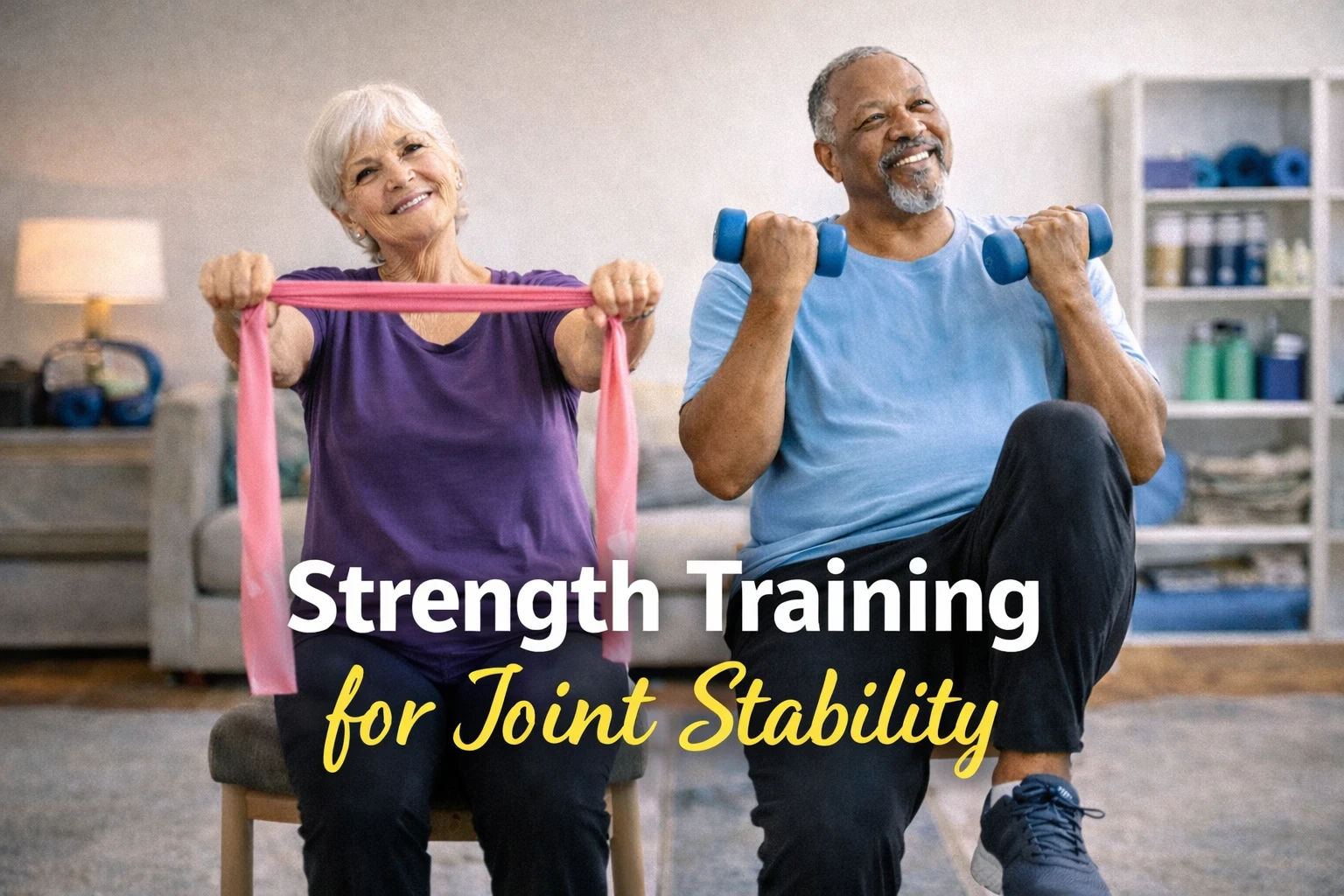
Strength Training for Joint Stability
Muscle weakness is one of the most common contributors to joint discomfort.
Strength training supports stability and reduces stress on the joint itself.
Safe strengthening movements include:
- Chair squats
- Wall push-ups
- Resistance band rows
- Seated leg lifts
- Heel raises
These joint pain exercises for seniors should be controlled and steady.
Focus on posture and breathing rather than speed.
Two sessions per week can maintain strength effectively.
If you are in pain on a regular basis go to Carex for the full range of pain relief products.
Balance and Coordination
As we age our balance isn’t quite what is used to be so balance training helps by reducing the risk of a fall.
Balance training is an often overlooked part of joint pain exercises for seniors, yet it plays a crucial protective role.
Try:
- Standing on one foot while holding a chair
- Heel-to-toe walking
- Gentle Tai Chi movements
- Beginner yoga flows
Balance work strengthens small stabilizing muscles that protect joints during daily activities.
For a broader structured approach, this article on best therapies for chronic pain outlines layered strategies that combine movement with other supportive habits.
Managing Flare-Ups
Joint symptoms can fluctuate.
On higher pain days, adjust intensity rather than stopping completely.
During flare-ups:
- Shorten exercise duration
- Focus on mobility rather than strength
- Reduce resistance
- Use gentle heat before activity
The goal of joint pain exercises for seniors is consistency, not intensity.
Avoid the “all or nothing” mindset. Small efforts still help maintain joint lubrication and muscle activation.
Lifestyle Factors That Support Joint Pain Exercises For Seniors
Exercise works best when combined with supportive daily habits:
- Prioritizing sleep
- Eating balanced, anti-inflammatory meals
- Managing stress
- Maintaining a healthy body weight
Movement is a really important part of the bigger picture.
If you’re interested in a whole-body approach, holistic pain management solutions provides additional guidance.

Setting Realistic Expectations
Results build gradually. Most people notice subtle improvements in stiffness within a few weeks.
Strength gains may take longer.
Mild muscle soreness is normal when beginning something new.
Increasing joint pain that lasts several days signals the need to reduce intensity.
When practiced regularly, joint pain exercises for seniors can:
- Improve mobility
- Reduce stiffness
- Support independence
- Boost mood and confidence
The key principle is simple: gentle movement performed consistently is more powerful than occasional intense effort.
The key is daily consistency, each day do as much as you can. The changes will be meaningful.
That steady approach makes joint pain exercises for seniors one of the most practical and sustainable tools available for long-term joint comfort.
Scientific Study
A systematic review examining exercise interventions in older adults with osteoarthritis found significant improvements in pain and physical function:
https://pubmed.ncbi.nlm.nih.gov/24196694/
4 Comments
Thank you for this wonderful list of exercises! At 66, I’ve started to realize that “motion is lotion,” but some mornings my knees and hips seem to disagree. It’s so encouraging to see such practical, low-impact movements that I can actually do right in my living room without needing a fancy gym membership.
Hi Leah,
You’re very welcome thanks for your comment. All the best, Fintan
My senior mom often complains about joint pain, and it’s been tough watching her feel discouraged when even simple movements seem uncomfortable. I appreciate how you emphasized that gentle, consistent exercise can actually help reduce stiffness and support independence. It gives me hope that small daily habits could make a meaningful difference for her.
I’m especially interested in the balance and coordination exercises you mentioned, since preventing falls is one of my biggest concerns. From your experience, which type of exercise tends to give seniors the quickest sense of relief or confidence: range of motion, low-impact aerobics, or strength training?
Hi Alice,
For most seniors, range of motion exercises tend to give the quickest sense of relief and confidence.
They’re gentle, low-risk, and often reduce stiffness almost immediately, which helps people feel better and more in control right away.
Range of motion → fastest relief (looser joints, less stiffness)
Low-impact aerobics → mood boost within a session
Strength training → biggest long-term confidence, but slower to feel initially
If someone is just starting or a bit unsure, range of motion is usually the easiest “win” early on.