Neck Pain Relief For Heavy Lifting: Gym, Work, And Daily Activities
Neck Pain Relief for Heavy Lifting: Gym, Work, and Daily Strain Solutions
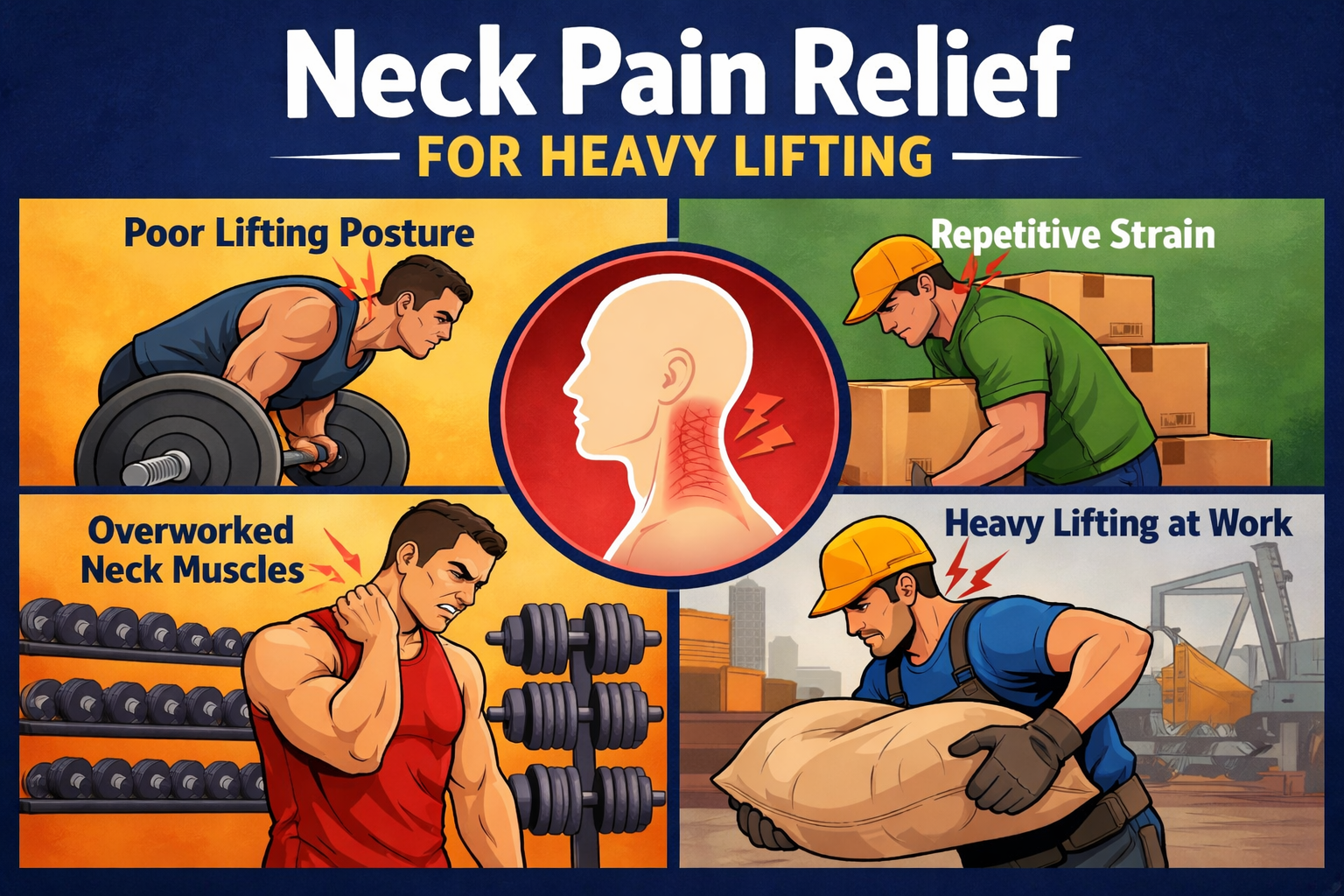
Neck pain relief for heavy lifting is something many people search for once discomfort starts affecting daily life.
Whether you’re lifting weights in the gym or handling physical tasks at work, repeated strain on the neck can build up quickly.
This guide covers both sides—training and occupational lifting—so you can understand what’s causing the issue, how to ease it, and what may help you stay active without ongoing discomfort.
What Causes Neck Pain During Heavy Lifting?
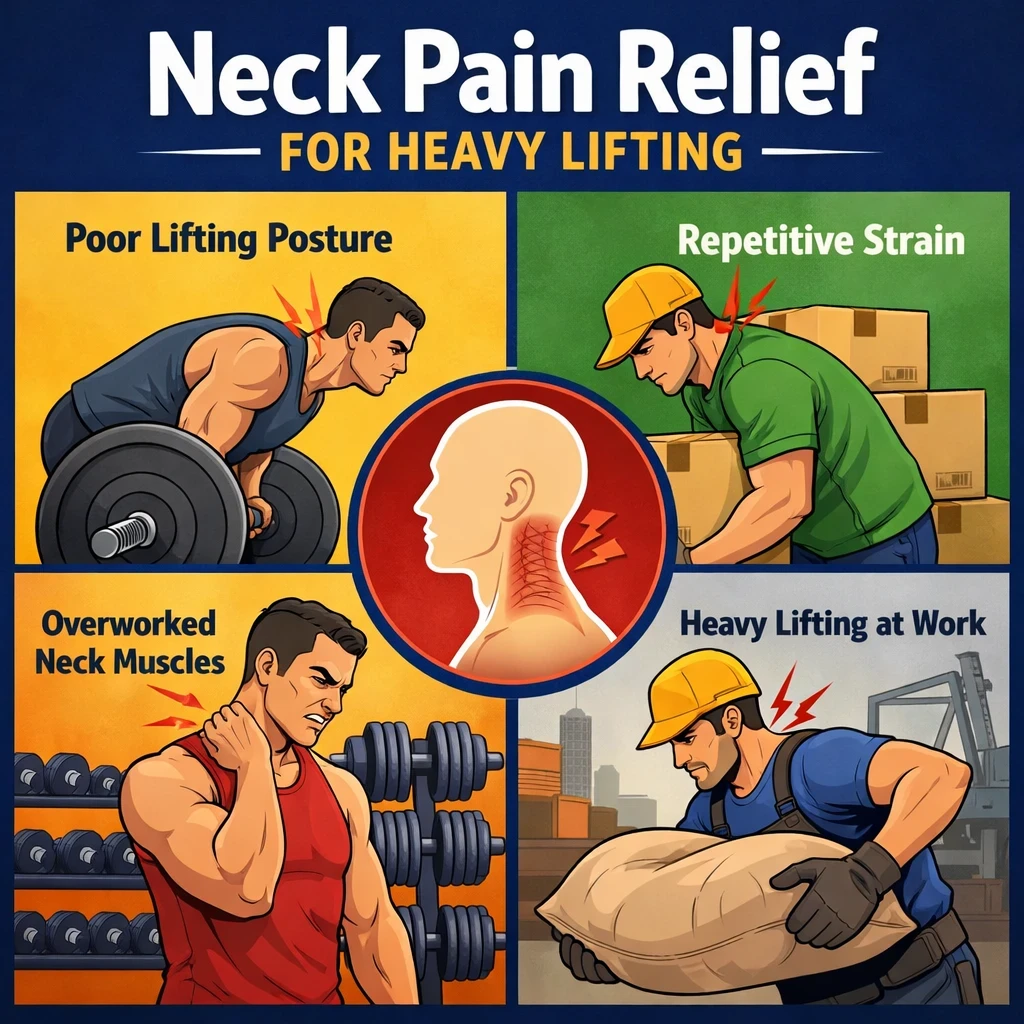
Understanding the cause is the first step toward effective neck pain relief for heavy lifting. The neck is not designed to carry load directly, yet it often compensates when other areas are not working efficiently.
- Poor posture during lifting
- Overuse of upper trap and neck muscles
- Looking up or twisting under load
- Weak core or upper back support
- Repetitive strain without recovery
These issues apply whether you’re in the gym or lifting repeatedly at work.
Neck Pain from Heavy Lifting at Work
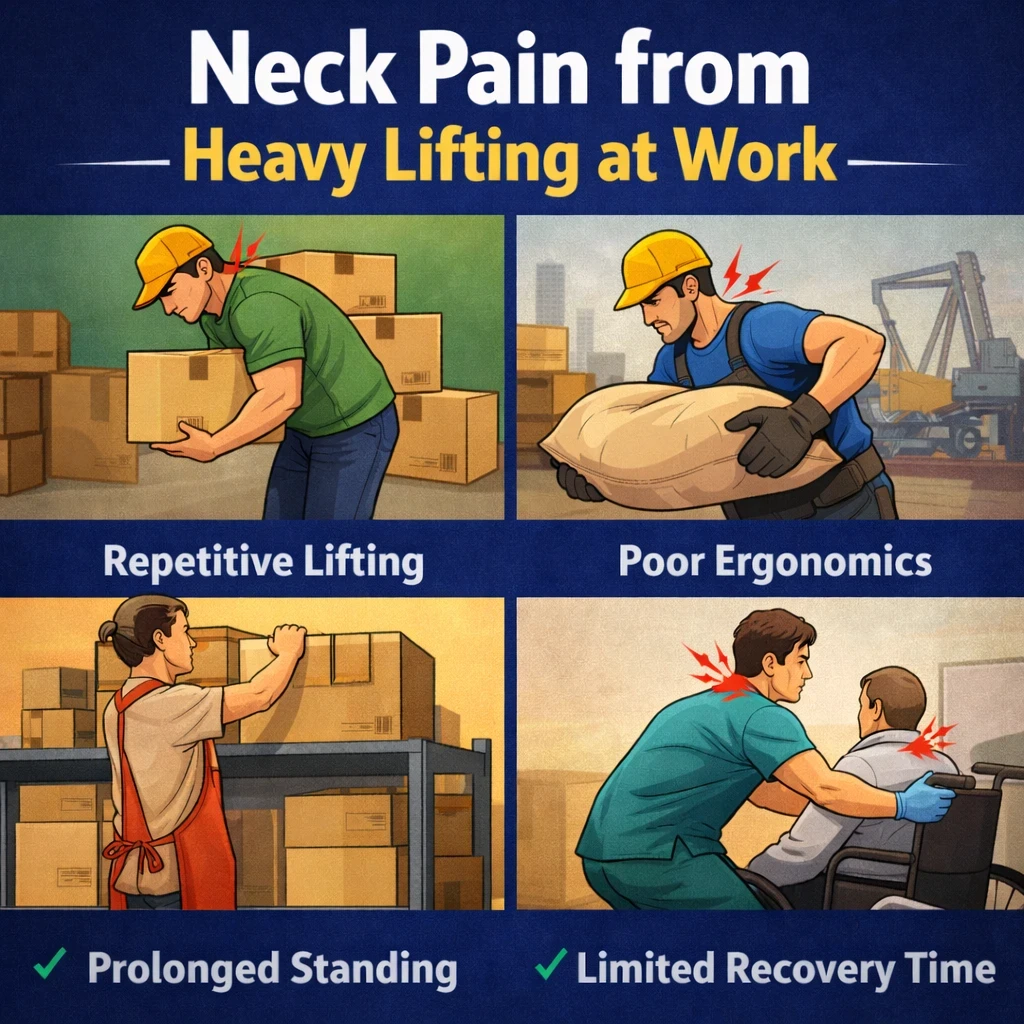
For many people, neck pain relief for heavy lifting is not about the gym at all—it’s about long workdays involving repeated lifting, carrying, or awkward positioning.
Common situations include:
- Lifting boxes in warehouses or retail settings
- Manual labour such as construction or landscaping
- Healthcare roles involving patient handling
- Jobs requiring overhead lifting or prolonged standing
Unlike gym training, work-related lifting often involves repetition, fatigue, and limited recovery time.
This increases the chance of muscle tension building up in the neck and shoulders.
Simple adjustments can help:
- Keep loads close to your body
- Avoid twisting while carrying weight
- Take short posture resets during shifts
- Use proper lifting mechanics whenever possible
How Neck Strain Builds Over Time
Neck discomfort rarely appears instantly. Instead, it builds gradually as aches and tension accumulates. When the body is under load, the neck often tightens to stabilise movement.
Over time, this leads to stiffness, reduced mobility, and lingering soreness. That’s why consistent neck pain relief for heavy lifting strategies are important—not just quick fixes.
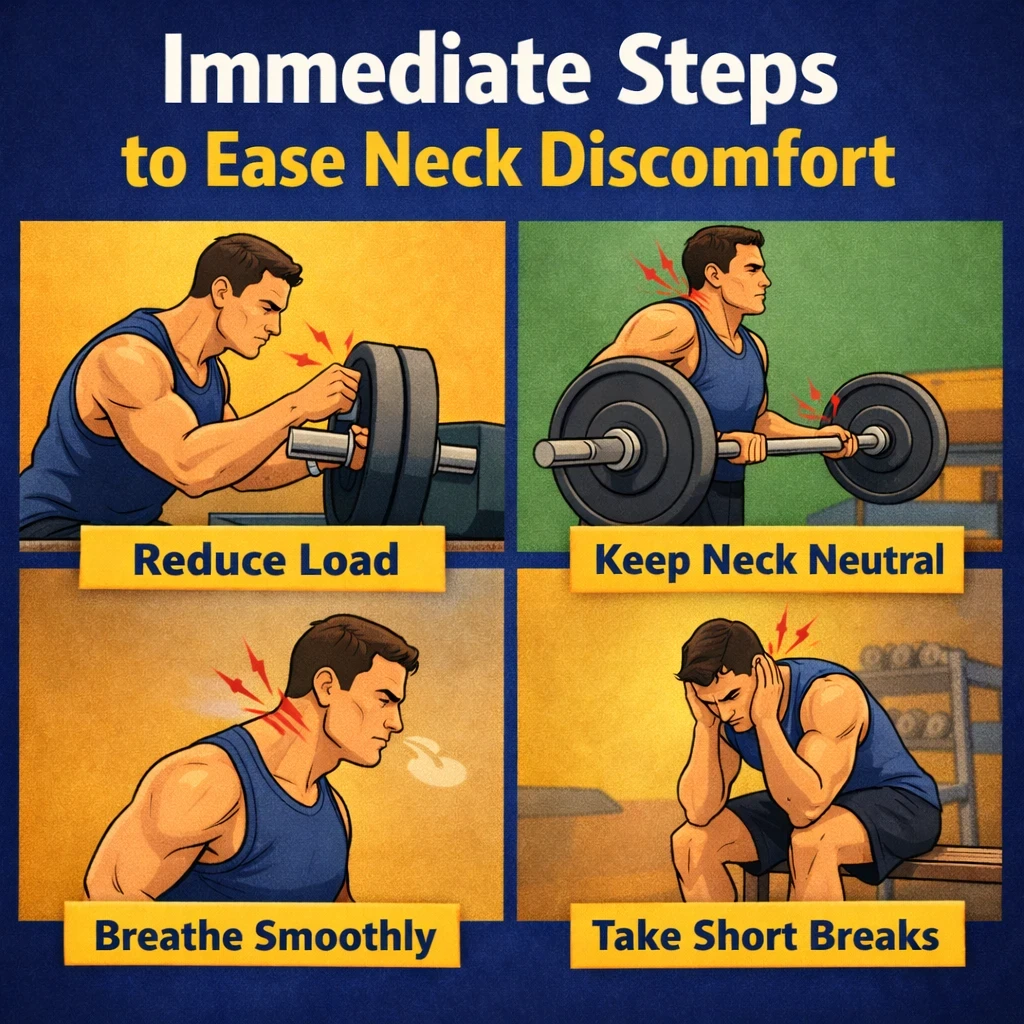
Immediate Steps to Ease Neck Discomfort
If you’re already feeling strain, these steps may help reduce tension:
- Reduce load or intensity temporarily
- Keep your neck in a neutral position
- Avoid shrugging your shoulders during lifting
- Use controlled breathing to stay relaxed
- Pause between efforts to reset posture
These small changes can support early neck pain relief for heavy lifting and prevent symptoms from worsening.
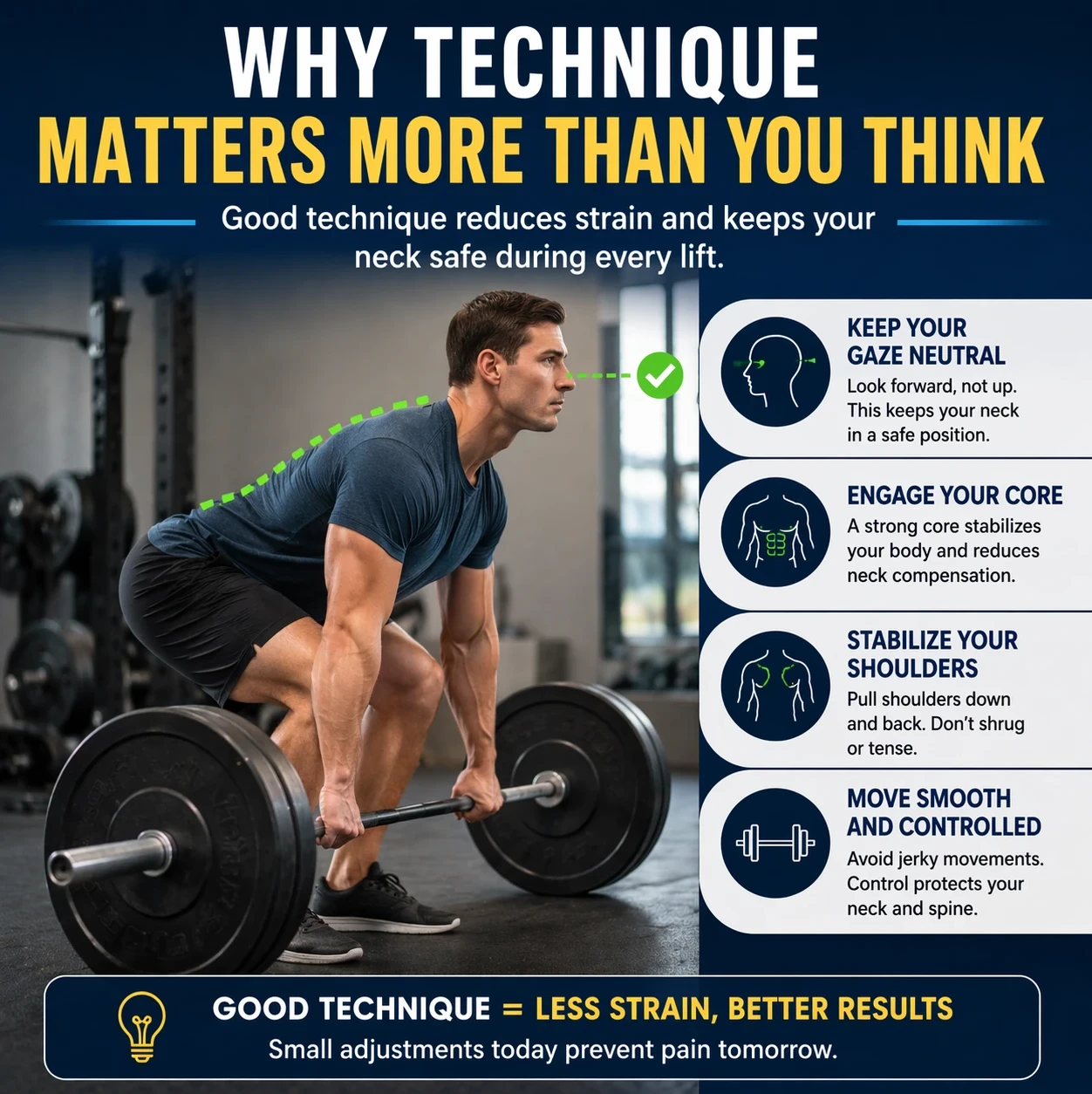
Why Technique Matters More Than You Think
Technique is often overlooked. Many people unintentionally place extra strain on the neck without realising it.
Focus on:
- Keeping your gaze neutral
- Engaging your core before lifting
- Stabilising shoulders instead of tensing them
- Using smooth, controlled movement
Improving technique reduces unnecessary tension and supports long-term neck pain relief for heavy lifting.
Mobility and Stretching for Neck Support
Mobility exercises can help release tight muscles and improve movement. Gentle options include:
- Side-to-side neck tilts
- Slow neck rotations
- Upper trap stretches
- Thoracic mobility work
Regular practice supports ongoing neck pain relief for heavy lifting and helps prevent stiffness.
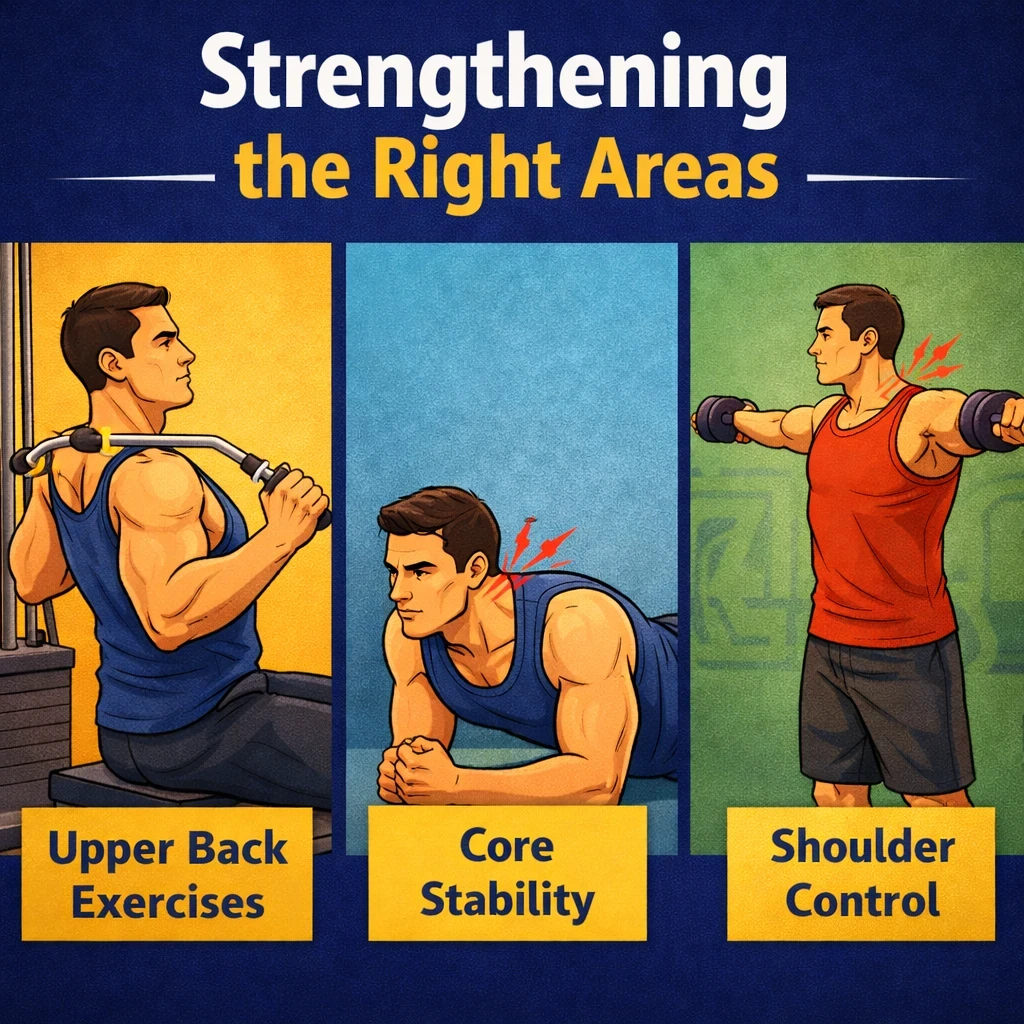
Strengthening the Right Areas
When supporting muscles are stronger, the neck doesn’t need to compensate as much. Focus on:
- Upper back exercises like rows
- Core stability work
- Shoulder control exercises
This balanced approach improves overall movement and reduces strain during lifting tasks.
Supportive Tools That May Help
Some people use additional tools to support recovery and comfort. These can complement a broader neck pain relief for heavy lifting approach.
Infrared and Heat Therapy
Heat-based support may help relax tight muscles and improve circulation after activity.
Shop Quality Assured Infrared Therapy Devices Here
Supportive Neck Relief Products
Occasional use of supportive products may help reduce strain during recovery periods.
Explore Neck Support Products Here
Natural Recovery Options
Some individuals explore natural products as part of their recovery routine to support relaxation.
Shop Natural Recovery Support Products Here
When to Rest and When to Adjust
Not all discomfort means stopping completely. Mild symptoms may improve with adjustments, but persistent pain should not be ignored.
- Reduce intensity if pain increases
- Rest if movement becomes limited
- Seek advice if symptoms continue
Listening to your body is key for effective neck pain relief for heavy lifting.
Long-Term Prevention Strategies
Preventing neck pain is often easier than treating it. Consider:
- Warming up before lifting
- Gradually increasing load
- Balancing different types of movement
- Allowing proper recovery time
These habits support consistent performance without unnecessary strain.
What Neck Pain Relief Can and Can’t Do
Finding relief from neck pain can help reduce discomfort and support recovery, but it has limits.
It can:
- Ease muscle tension
- Improve comfort during activity
- Support recovery routines
It cannot:
- Correct poor technique on its own
- Replace proper strength training
- Prevent strain without good habits
FAQ: Neck Pain Relief for Heavy Lifting
Is neck pain from lifting common?
Yes, especially when technique, posture, or workload are not well balanced.
Can work-related lifting cause the same issues as gym training?
Yes. Repetitive lifting at work can lead to similar strain, often with less recovery time.
Should I stop lifting completely?
Not always. Adjusting load and technique may allow you to continue safely.
Do recovery tools make a difference?
They may support comfort and relaxation, but they work best alongside proper movement and habits.
Scientific Reference
https://pubmed.ncbi.nlm.nih.gov/31006111/