Nerve Pain: Causes, Symptoms, and Effective Ways to Manage It
Nerve pain can feel sharp, burning, or electric, and it often behaves very differently from other types of discomfort. Unlike muscle soreness, nerve pain is linked to how signals travel through the nervous system. When these signals become disrupted, symptoms can appear suddenly, linger longer, and feel more intense than expected. Understanding how this condition works is the first step toward managing it effectively and improving daily life.

Understanding Nerve Pain
This condition develops when nerves become irritated, damaged, or overly sensitive. Instead of sending accurate messages, the nervous system begins to misfire. This creates sensations that may not match what is physically happening in the body. As a result, the experience can feel severe even without a clear injury.
The nervous system is responsible for carrying information between the brain and the body. When functioning normally, it allows you to respond to touch, temperature, and movement. However, when disruption occurs, this communication system becomes less reliable. Signals can become exaggerated, repeated, or distorted.
One reason symptoms feel so intense is because the system that processes sensation becomes part of the problem. Even small triggers such as light touch or minor movement can produce strong reactions. Over time, repeated signals can make the brain more sensitive, which allows symptoms to continue even after the original issue improves.
Many people also notice that discomfort changes throughout the day. It may become more noticeable at night or during rest. This is often linked to reduced distraction and increased awareness of the body. Stress and fatigue can further increase sensitivity, making symptoms feel more persistent.
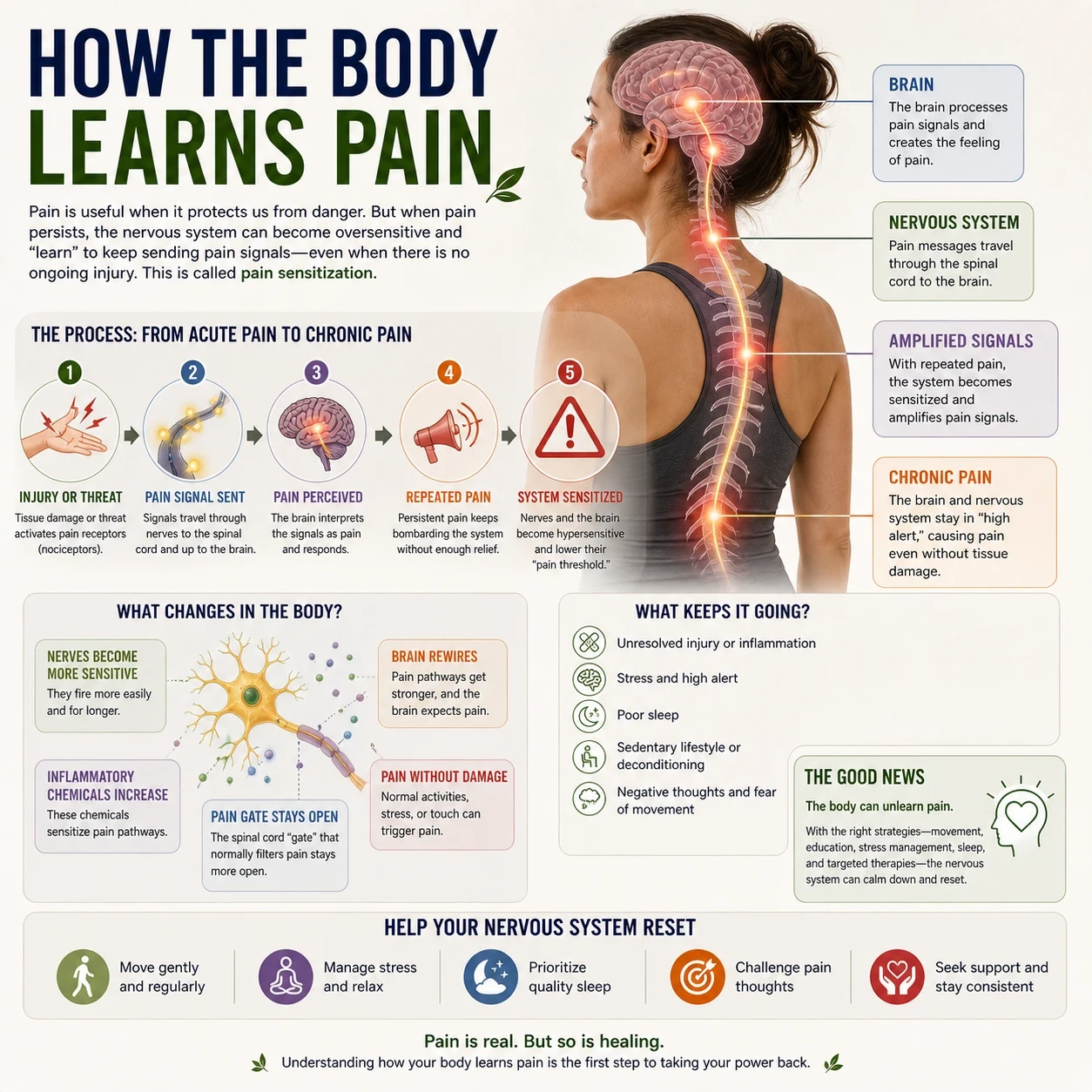
Another important factor is how the body learns pain. When signals are repeated frequently, the nervous system can begin to expect them. This expectation can reinforce the experience, making symptoms feel more consistent. This does not mean the pain is imagined. It means the system has adapted in a way that keeps the cycle going.
Environmental factors also play a role. Sitting for long periods, poor posture, and limited movement can increase pressure on nerves. Over time, this can worsen symptoms and make them harder to settle. Small adjustments in daily habits can reduce these triggers significantly.
It is also important to understand that symptoms can fluctuate depending on overall health. Factors such as hydration, nutrition, and activity levels can influence how sensitive the nervous system becomes. Supporting general wellbeing can therefore play a role in reducing discomfort.
Although it may seem unpredictable, patterns often exist. Learning to recognise these patterns can help you take a more structured approach to managing symptoms and reducing their impact.

Common Causes of Nerve Pain
There are many underlying causes that contribute to this condition. Sometimes the cause is clear, while in other cases it builds gradually over time. Identifying contributing factors is an important step toward long-term improvement.
Compression is one of the most common causes. This occurs when a nerve is pressed or trapped by surrounding structures, such as a disc in the spine or tight muscles. Continued pressure can irritate the nerve and lead to abnormal signalling.
Injuries are another major factor. Trauma from accidents, repetitive strain, or overuse can damage nerve pathways. Even after the initial injury heals, symptoms may remain due to ongoing sensitivity within the nervous system.
Certain medical conditions also contribute. Diabetes is a leading example, as it can gradually affect nerve health. Vitamin deficiencies, particularly in B vitamins, can also interfere with normal function and increase symptoms.
Infections such as shingles or fibromyalgia are known to directly affect nerves, leading to intense discomfort. Autoimmune conditions may also play a role by causing the body to attack its own nerve tissue.
Lifestyle factors should not be overlooked. Poor posture, prolonged sitting, and repetitive movements can place continuous stress on nerves. Over time, these small pressures can build up and lead to persistent symptoms.
Exposure to toxins, including certain chemicals or medications, can also contribute to nerve damage. These effects may develop slowly and become noticeable only after prolonged exposure. Reducing these risks can help protect long-term health.
Reduced circulation is another factor. When blood flow to nerves is limited, it can affect their ability to function properly. This may increase the likelihood of developing ongoing issues.
In many cases, this condition develops from a combination of factors rather than a single cause. Understanding these influences allows for a more targeted and effective approach to management.

Symptoms and Types of Nerve Pain
Symptoms are often described in ways that make this condition easier to distinguish from other types of discomfort. Recognising these signs early can help guide the right approach to treatment.
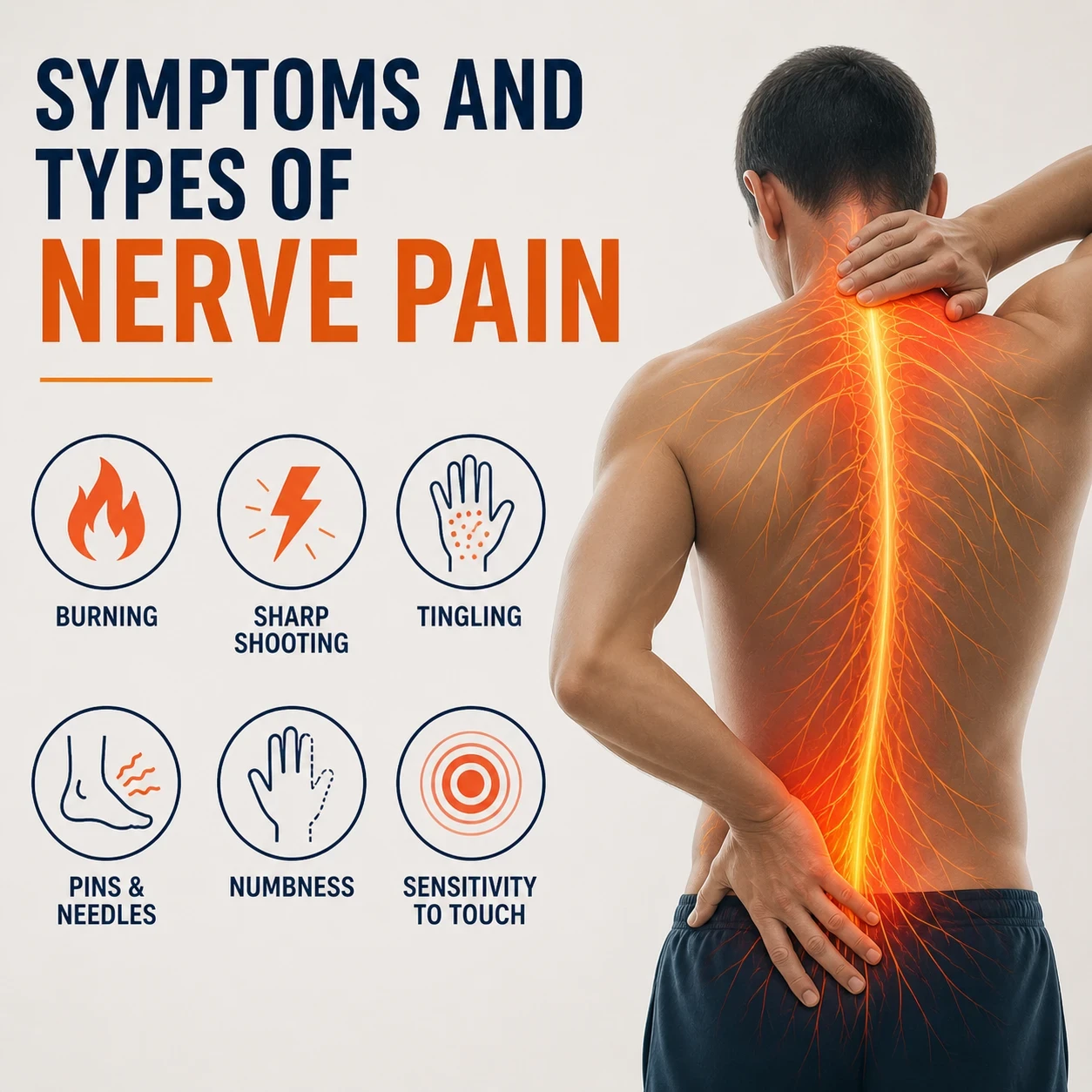
Common sensations include burning, tingling, or sharp shooting feelings. Some people describe the experience as an electric shock that travels along a specific path in the body. These patterns often follow the route of the affected nerve.
Numbness is another key symptom. In some cases, discomfort is combined with reduced sensation, which can make it harder to detect pressure or temperature changes. This can affect balance and coordination, especially in the feet.
Increased sensitivity is also common. Light touch or minor contact may trigger discomfort, even when there is no visible cause. This reflects how the nervous system becomes more reactive over time.
There are different types depending on where the issue originates. Peripheral involvement affects the nerves outside the brain and spinal cord, often in the hands and feet. Radicular patterns begin in the spine and travel along nerve pathways.
Central involvement affects the brain or spinal cord and can be more complex. While less common, it highlights how symptoms can arise from different parts of the nervous system.
Symptoms may also vary in intensity. Some people experience mild tingling, while others feel sharp, persistent discomfort. These variations depend on how sensitive the system has become and how long the condition has been present.
Another feature is how symptoms can spread. What begins in one area may gradually extend along a pathway. Recognising these patterns is essential for choosing effective strategies.
Flare-ups can also occur. These episodes may be triggered by activity, stress, or environmental changes. Understanding triggers can help reduce their frequency and intensity.

Effective Ways to Manage Nerve Pain
Managing this condition requires a consistent and balanced approach. Because it involves the nervous system, long-term strategies are more effective than quick fixes.
Movement plays an important role. Gentle activity helps maintain circulation and reduces pressure on nerves. Avoiding long periods in one position can prevent symptoms from becoming more intense. Over time, regular movement supports better function and comfort.
Physical therapy can provide structured support. Targeted exercises improve strength, flexibility, and movement patterns. This helps reduce strain on nerves and can lower symptom intensity.
Heat therapy is commonly used to relax muscles and improve blood flow. This can ease tension around affected areas and reduce discomfort. Cold therapy may also be helpful during flare-ups to calm irritation.
Some have reported benefits from CBD products.

TENS therapy is another option. It uses low-level electrical signals to interrupt pain messages, making symptoms feel less intense. Many people use it alongside other treatments as part of a wider plan.
Stress management is essential. The nervous system becomes more sensitive under stress, which can increase symptoms. Simple techniques such as breathing exercises or relaxation practices can help calm this response.

Sleep quality has a strong influence on symptoms. Poor sleep can increase sensitivity, while good sleep supports recovery. Creating a consistent routine and a comfortable environment can help reduce symptoms over time.
Read more on the best nerve pain products.
Nutrition also plays a role. A balanced diet supports nerve health and overall wellbeing. Staying hydrated helps maintain circulation and supports normal function within the system.
Pacing activity is another useful approach. Gradually increasing movement levels can prevent overload and reduce flare-ups. This allows the body to adapt without unnecessary strain.
Consistency is the key to progress. While symptoms may not disappear immediately, steady daily habits can reduce their impact and improve quality of life.

Long-Term Outlook for Nerve Pain
This condition can feel overwhelming, but it is manageable with the right approach. Understanding how it develops and how the nervous system responds allows for better decision-making.
Many people find that symptoms become easier to manage over time when they focus on consistent strategies. Addressing underlying causes, improving movement, and supporting overall health all contribute to better outcomes.
Rather than searching for a single solution, combining different approaches often leads to the best results. This balanced method allows the nervous system to stabilise and reduces symptom intensity.
Setting realistic expectations is also important. Progress is often gradual rather than immediate. Tracking small improvements can help maintain motivation and consistency.
Support from healthcare professionals can provide additional guidance when needed. Tailored advice helps ensure that strategies are appropriate and effective for individual circumstances.
Building confidence in movement is another key factor. As fear of triggering symptoms decreases, activity levels often improve. This can lead to better overall function and reduced sensitivity.
Long-term success often comes from staying consistent rather than seeking quick fixes. With patience and the right approach, meaningful progress is possible.

Additional Strategies for Daily Support
Beyond core treatments, there are additional strategies that can support long-term management. These approaches focus on improving overall resilience and reducing the likelihood of flare-ups.
Creating a structured daily routine can help stabilise the nervous system. Regular sleep, consistent meal times, and planned activity levels all contribute to better regulation. This predictability can reduce sensitivity and improve overall comfort.
Ergonomic adjustments can also make a difference. Ensuring that workspaces support proper posture reduces unnecessary strain on nerves. Small changes such as adjusting chair height or screen position can have a noticeable impact over time.
Footwear and support devices may also be useful, particularly when symptoms affect the lower body. Proper support helps distribute pressure more evenly and reduces irritation during movement.
Mind-body approaches such as mindfulness or relaxation techniques can improve how the brain responds to signals. These practices do not remove symptoms directly but can reduce how strongly Staying consistent with these strategies can gradually reduce nerve pain sensitivity and improve overall function. Over time, combining these habits with core treatments can make nerve pain far more manageable in daily life.
When Nerve Pain Becomes Chronic
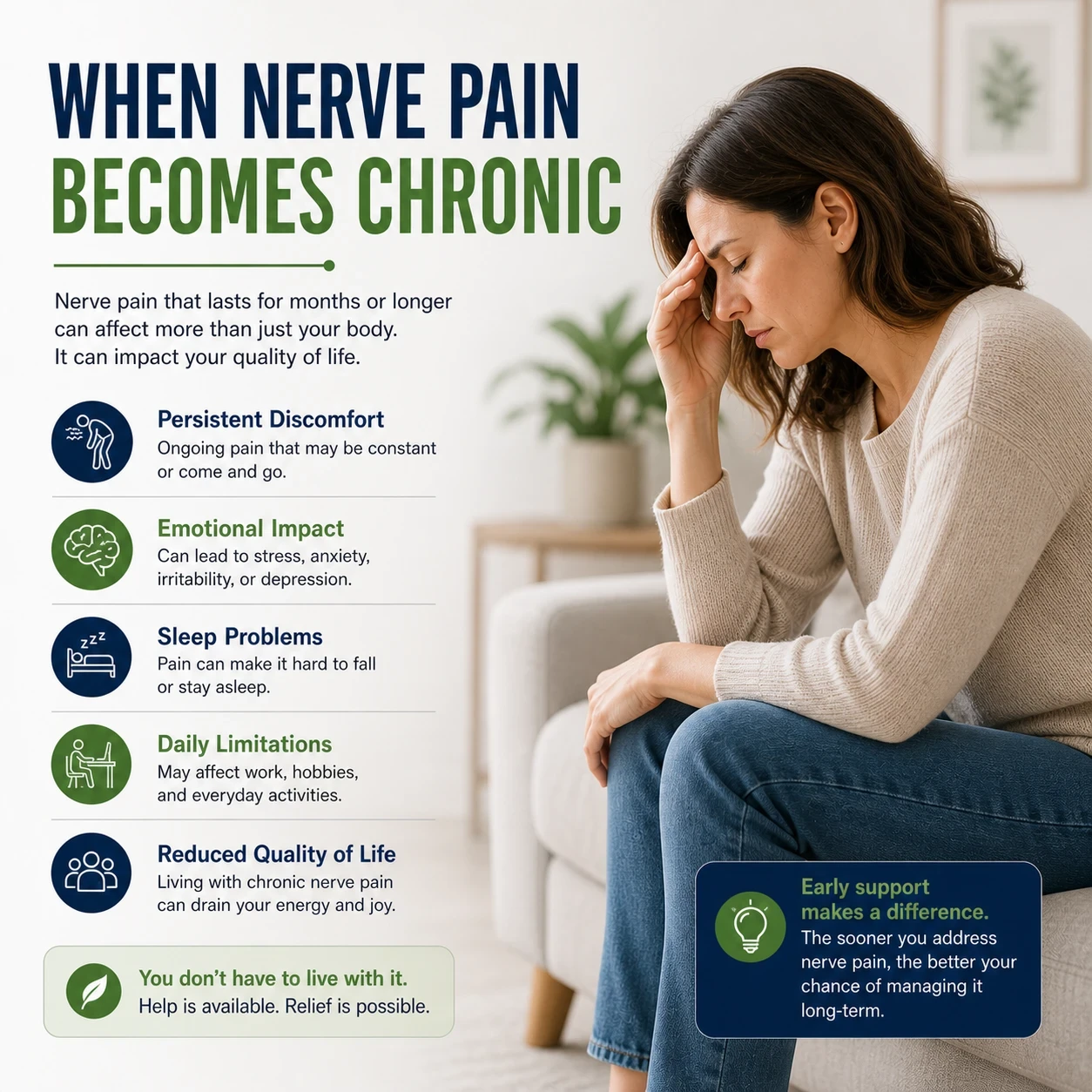
In some cases, nerve pain can shift from a short-term issue into a long-term condition. This usually happens when the nervous system stays in a heightened state of sensitivity for extended periods. Instead of settling after the original cause improves, nerve pain continues because the system has adapted to ongoing signalling.
Chronic nerve pain often follows a pattern of flare-ups and quieter periods. During flare-ups, symptoms may feel stronger and more persistent. These phases can be triggered by stress, reduced sleep, or changes in activity levels. Understanding these triggers can help reduce their impact over time.
One of the challenges with chronic nerve pain is that it can influence behaviour. People may begin to avoid movement or activity out of concern that symptoms will worsen. While this is understandable, avoiding movement can actually increase sensitivity and make nerve pain more difficult to manage.
Building confidence through gradual, controlled activity is an important part of recovery. Small increases in movement allow the nervous system to adapt without becoming overwhelmed. Over time, this can help reduce the intensity and frequency of nerve pain episodes.
Consistency is especially important when symptoms become long-term. Rather than relying on occasional treatments, daily habits such as movement, sleep, and stress management play a larger role. These factors help stabilise the system and reduce how strongly nerve pain is experienced.
While chronic nerve pain can feel frustrating, it is still manageable. Many people see steady improvement when they focus on long-term strategies rather than quick fixes. With patience and the right approach, symptoms can become more predictable and less disruptive.
Conclusion
Nerve pain is complex, but it is not beyond control. By understanding its causes, recognising its patterns, and applying consistent daily strategies, it is possible to reduce discomfort and improve daily life.
A structured approach that includes movement, recovery, and support for the nervous system can make a meaningful difference. While symptoms may feel unpredictable at times, the right steps can lead to steady progress and greater confidence in managing nerve pain.
Scientific References
https://www.medicalindependent.ie/societies/isr/managing-neuropathic-pain-advances-and-challenges/
https://painreliefireland.ie/blog/neuropathic-pain-painful-nerve-fibers
https://journals.physiology.org/doi/full/10.1152/physrev.00045.2019
https://www.mayo.edu/research/clinical-trials/diseases-conditions/peripheral-neuropathy