Nerve Pain Symptoms And Warning Signs Look Out For These
Nerve Pain Symptoms and Warning Signs
Nerve pain symptoms and warning signs can vary widely depending on which nerve is affected and what is causing the irritation.
Unlike muscle soreness or joint discomfort, nerve pain often produces unusual sensations such as burning, tingling, numbness, or sharp shooting pain.
Recognizing early nerve pain symptoms and warning signs is important because timely treatment may help prevent the condition from becoming more severe.
Nerve-related symptoms sometimes develop gradually, making them easy to overlook at first.
Understanding why nerve irritation occurs can help explain many of these symptoms. The article on why nerve pain occurs explains how inflammation, compression, and nerve sensitivity can disrupt normal nerve signaling.
What Is Nerve Pain?
Nerve pain, often called neuropathic pain, occurs when a nerve becomes irritated, compressed, or damaged.
Because nerves transmit signals between the brain and the body, problems in these pathways may cause unusual sensations.
Unlike muscle pain, which typically feels dull or aching, nerve pain often produces more intense and distinctive sensations.
The article on understanding pain mechanisms explains how the nervous system processes these signals and why nerve pain may persist even after the original injury heals.
Recognizing nerve pain symptoms and warning signs can help guide appropriate nerve pain treatment strategies.
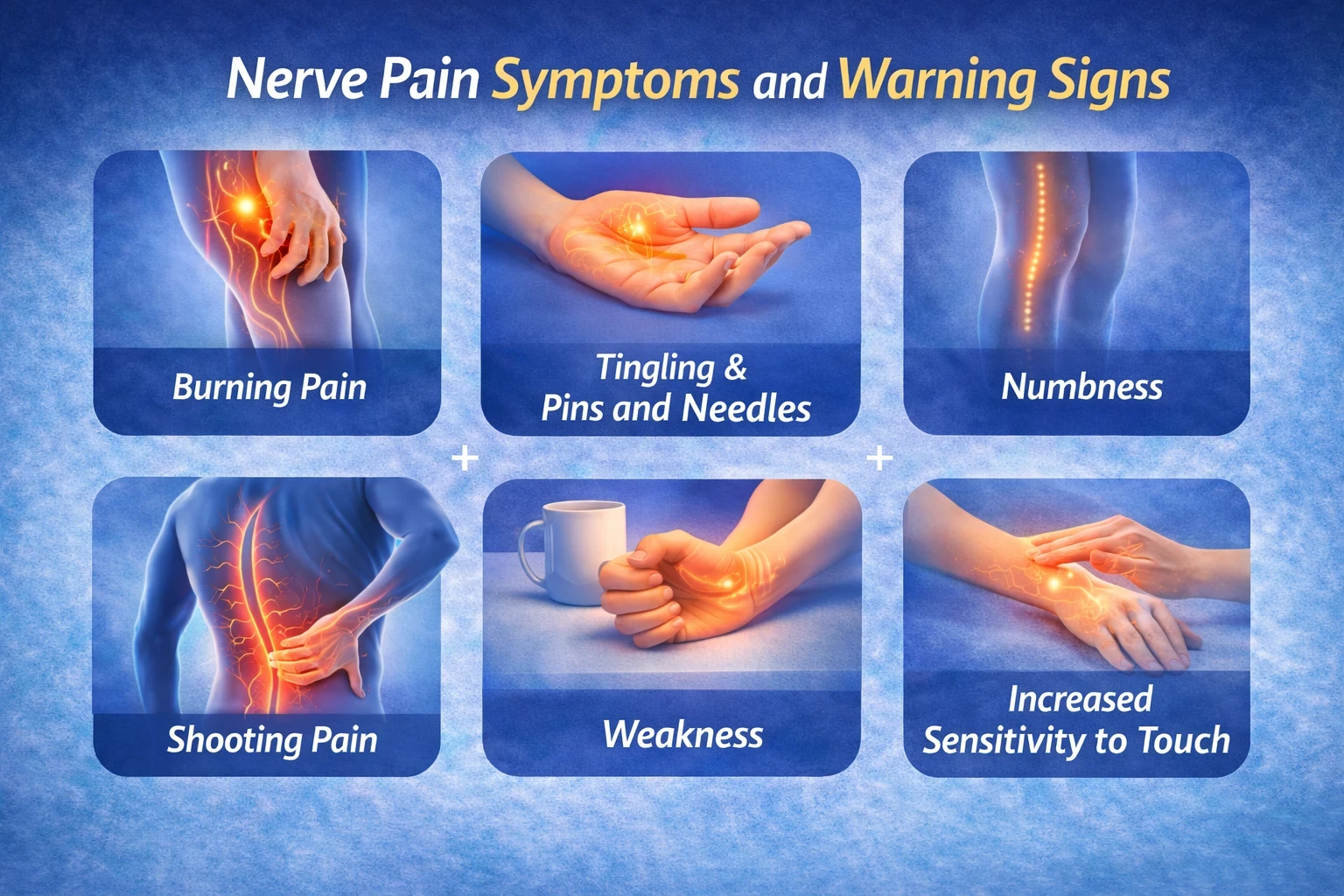
Common Nerve Pain Symptoms
Several symptoms are commonly associated with nerve irritation.
Burning Sensations
A burning feeling is one of the most common nerve pain symptoms.
Many people describe this sensation as heat or intense warmth beneath the skin.
Burning nerve pain may occur continuously or appear in waves.
Tingling or Pins and Needles
Tingling sensations often feel similar to the feeling that occurs when a limb “falls asleep.”
This sensation usually indicates temporary disruption of nerve signaling.
Electric Shock-Like Pain
Some people experience sudden sharp pain that feels similar to an electric shock.
This type of pain often travels along the pathway of a nerve.
Numbness
Numbness occurs when nerves lose the ability to transmit normal sensation signals.
Affected areas may feel dull or lack normal sensitivity to touch.
Shooting or Radiating Pain
Nerve pain often travels along a nerve pathway.
For example, irritation of a spinal nerve in the lower back may produce pain that travels down the leg.
This pattern is commonly associated with sciatica.
Warning Signs That Should Not Be Ignored
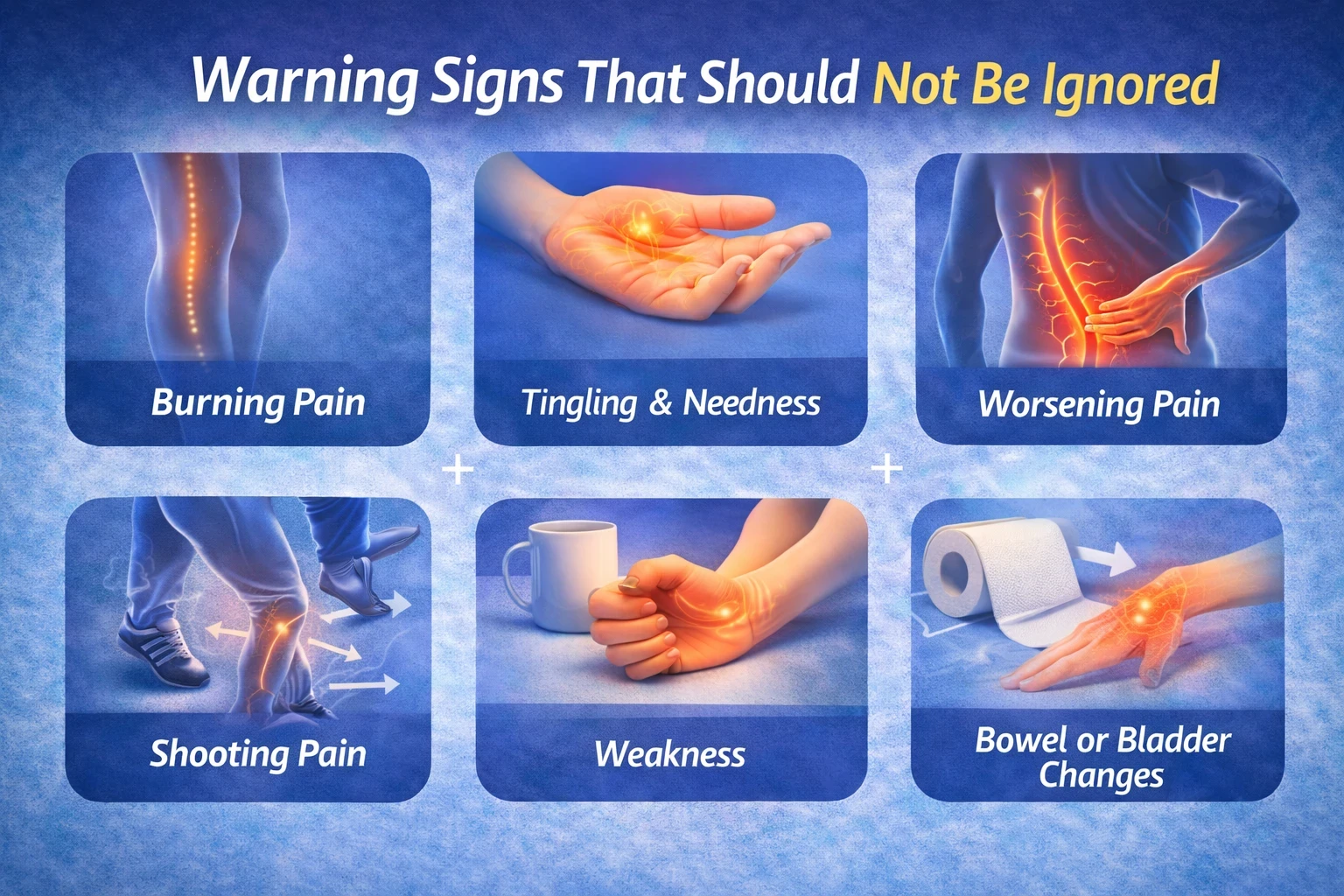
Certain nerve pain symptoms and warning signs may indicate more serious nerve involvement.
Persistent Numbness
Ongoing numbness may indicate nerve compression or nerve damage.
If sensation does not return, medical evaluation may be recommended.
Muscle Weakness
If a nerve that controls muscle movement becomes affected, weakness may develop in the affected muscles.
This may make it difficult to grip objects, walk, or lift items.
Loss of Coordination
Damage to certain nerves may affect balance and coordination.
This may increase the risk of falls.
Increased Sensitivity to Touch
In some cases, even light contact with clothing or skin may cause discomfort.
This heightened sensitivity is sometimes associated with nerve irritation.
Learning how the brain interprets these signals is explained in pain education and how pain works in the human body.
Understanding these mechanisms can help explain why the body sometimes produces intense pain even when visible tissue damage appears minimal.
Conditions That May Cause Nerve Pain Symptoms
Several conditions may cause nerve pain symptoms and warning signs.
Common examples include:
• herniated spinal discs
• carpal tunnel syndrome
• diabetic neuropathy
• nerve compression injuries
• viral infections such as shingles
These conditions affect nerve tissues directly or place pressure on nerve pathways.
When Nerve Symptoms Become Chronic
In some cases, nerve pain symptoms may persist for months or even years.
This can occur when the nervous system becomes overly sensitive to pain signals.
Repeated nerve irritation may cause the brain to amplify pain responses.
Learning how the nervous system processes pain can help individuals adopt strategies that calm the nervous system and support recovery.
When to Seek Medical Advice
While mild nerve irritation may improve on its own, medical evaluation may be recommended if symptoms include:
• persistent numbness
• muscle weakness
• worsening pain
• loss of coordination
• changes in bladder or bowel control
These symptoms may indicate significant nerve compression or damage that requires professional care.
Early diagnosis may help prevent long-term complications.
A Balanced Perspective
Recognizing nerve pain symptoms and warning signs can help people respond early and seek appropriate care when necessary. Nerve pain often presents with unique sensations such as burning, tingling, or electric shock-like discomfort.
Understanding how nerve signals travel through the body and how the brain interprets these signals can help individuals better manage symptoms and choose effective treatment strategies.
Combining pain education, lifestyle adjustments, and appropriate nerve pain treatment approaches may help improve long-term outcomes for individuals experiencing nerve-related symptoms.
Scientific Studies
https://pubmed.ncbi.nlm.nih.gov/20345238/
https://pubmed.ncbi.nlm.nih.gov/24789306/
https://pubmed.ncbi.nlm.nih.gov/30888504/