Pain Medication Alternatives 2026 You Must Know
Pain Medication Alternatives 2026
Pain medication alternatives 2026 are no longer fringe ideas — they’re becoming part of mainstream chronic pain conversations.
As more people question long-term reliance on prescription drugs, especially opioids and high-dose NSAIDs, interest in safer, sustainable strategies continues to grow.
If you’re living with persistent discomfort, you may be wondering:
What actually works beyond medication?
The answer in 2026 isn’t a single miracle solution. It’s a layered, practical approach that respects how pain really works — biologically, neurologically, and psychologically.
Let’s walk through the most effective options on offer.
Why People Are Seeking Pain Medication Alternatives in 2026
There are a few clear drivers behind the shift:
• Concern about dependency
• Long-term side effects
• Diminishing effectiveness over time
• Desire for sustainable, body-supportive care
We now understand pain as more than just tissue damage.
Modern pain science shows that nervous system sensitivity, stress load, sleep disruption, inflammation, and fear-based avoidance all play a role.
That’s why pain medication alternatives 2026 strategies focus on calming the system — not just masking symptoms.
For a deeper explanation of how chronic pain develops, see:
https://beyond-pain-relief.com/what-is-chronic-pain-a-clear-human-explanation/
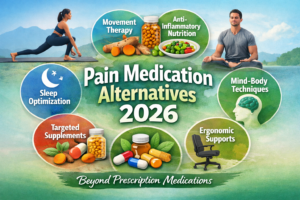
1. Targeted Movement Instead of Complete Rest
One of the biggest changes in chronic pain care over the last decade has been the shift away from strict rest.
In 2026, gentle, progressive movement is considered foundational.
Why? Because:
• Movement improves circulation
• It reduces inflammatory stagnation
• It retrains pain pathways
• It rebuilds confidence
Options include:
• Structured physiotherapy
• Mobility routines
• Low-load strength training
• Walking programs
• Aquatic therapy
The key is dosage. Too much, too fast can flare symptoms. But avoiding movement entirely often increases stiffness and nervous system sensitivity.
Understanding how load influences pain perception is essential:
https://beyond-pain-relief.com/movement-load-and-pain-sensitivity/
Pain medication 2026 strategies nearly always include some form of graded movement.
2. Nervous System Regulation
Chronic pain is often linked to an overprotective nervous system.
When the body stays in a stress response, pain signals amplify.
That’s why nervous system regulation is now considered one of the most important pain medication alternatives 2026 approaches.
Effective tools include:
• Slow nasal breathing
• Extended exhale breathing
• Body scan meditation
• Gentle vagus nerve stimulation
• Mindfulness practices
Even 5–10 minutes daily can reduce physiological arousal. Over time, this can lower baseline pain intensity.
For practical anxiety and nervous system tools:
https://beyond-pain-relief.com/best-techniques-for-managing-anxiety/
Pain medication alternatives 2026 are increasingly centered around calming, not suppressing.

3. Anti-Inflammatory Nutrition
Nutrition plays a larger role in chronic pain management than previously recognized.
While food isn’t a cure, dietary patterns can influence systemic inflammation levels.
Pain medication alternatives 2026 approaches frequently include:
• Omega-3 rich foods
• Turmeric and curcumin
• Leafy greens
• Berries
• Magnesium-rich foods
• Reduced ultra-processed foods
Magnesium in particular has growing attention for its role in muscle relaxation and nervous system balance.
If you want a deeper look at magnesium’s broader effects:
https://beyond-pain-relief.com/benefits-of-magnesium/
Pain medication alternatives 2026 strategies are rarely about extreme diets — they focus on steady, realistic shifts.
4. Evidence-Informed Supplements
Supplements are not replacements for medical care, but when used thoughtfully, they can support the broader plan.
Commonly discussed options in pain medication alternatives 2026 conversations include:
• Magnesium glycinate
• Curcumin extracts
• Omega-3 supplements
• Boswellia
• Collagen (for joint support)
The emphasis in 2026 is quality, correct dosing, and realistic expectations.
Supplements may reduce symptom intensity modestly — especially when paired with movement and stress regulation.
They are supportive tools, not standalone cures.
For top quality science based supplements for pain medication alternatives go to the Universal Herbs website here.
5. Cognitive and Perception Strategies
One of the most powerful pain medication alternatives 2026 developments involves understanding pain perception itself.
Catastrophic thinking, hypervigilance, and fear of movement can amplify pain signals.
Cognitive down-regulation techniques help reduce this amplification:
• Reframing pain thoughts
• Gradual exposure to feared movement
• Journaling symptom patterns
• Education about pain science
Pain is real — but interpretation changes intensity.
Modern pain care integrates psychology and physiology, rather than separating them.
6. Sleep Restoration
Sleep disruption is both a cause and consequence of chronic pain.
In 2026, sleep optimization is considered non-negotiable in pain medication alternatives planning.
Focus areas include:
• Consistent sleep schedule
• Reduced late-night screen exposure
• Dark, cool bedroom environment
• Relaxation before bed
• Magnesium support when appropriate
Improved sleep reduces inflammatory markers and pain sensitivity over time.
7. Supportive Tools and Ergonomics
Sometimes pain medication alternatives 2026 solutions are practical rather than complex.
Examples:
• Ergonomic chairs
• Lumbar supports
• Knee braces
• Compression sleeves
• Adjustable desks
• Heating pads for stiffness
These don’t “fix” chronic pain — but they reduce strain and allow movement practice without flare-ups.
The goal is strategic support, not dependency.
Ober Health have a large range of practical alternative supports for pain relief.
8. When Medication Still Has a Role
Pain medication alternatives 2026 discussions are not about demonizing prescriptions.
For some people, medication remains appropriate — especially during acute flares or severe inflammatory episodes.
The shift in 2026 is toward:
• Lower doses
• Shorter duration
• Combination with non-drug strategies
• Careful monitoring
A balanced plan often works best.
What Pain Medication Alternatives 2026 Can and Can’t Do
It’s important to be realistic.
Pain medication approaches can:
• Reduce overall pain sensitivity
• Improve function
• Lower flare frequency
• Improve mood and resilience
They cannot:
• Instantly eliminate chronic pain
• Replace medical evaluation
• Reverse advanced structural damage overnight
What they offer is something different — stability and long-term sustainability.
The 2026 Model: Layered, Not Linear
The strongest pain medication alternatives 2026 plans use a layered model:
Movement
Nutrition
Nervous system regulation
Sleep optimization
Targeted supplements
Strategic supports
Each layer contributes 5–15%. Together, they can create meaningful change.
That’s the difference between chasing quick fixes and building resilience.
If you’re exploring pain medication options, think integration — not substitution.
Chronic pain is complex. Your strategy should be too — but in a calm, structured, manageable way.
And that’s where real progress tends to begin.
Scientific Studies
https://www.sciencedaily.com/releases/2026/01/260105165817.htm

 Previous Post
 Next Post