Pain Relief Techniques
Pain relief techniques are rarely about one magic fix.
Most people discover that comfort improves when they combine simple, repeatable strategies that calm the nervous system, support tissue health, and restore confident movement.
If pain has been lingering, the goal is not just short-term relief but steady progress you can maintain.
This guide walks through realistic plan using a layered approach you can actually stick to.
What Are Pain Relief Techniques?
These techniques are structured actions designed to reduce discomfort, improve function, and lower pain sensitivity.
They can be physical (movement, heat), psychological (breathing, reframing), nutritional (anti-inflammatory foods), or device-based (supports, light therapy).
Pain is not just a signal from injured tissue. It is a protective output shaped by stress, sleep, beliefs, and past experiences.
When you understand that, these techniques start to make more sense — you’re calming a system, not just fixing a body part.
If you want a deeper explanation of how pain sensitivity develops, read movement, load, and pain sensitivity.
How Pain Relief Techniques Work
Most successful techniques work through one or more of these mechanisms:
- Reducing local inflammation
- Improving circulation
- Calming nervous system threat responses
- Restoring joint mobility and muscle balance
- Improving sleep and recovery
Changing how the brain interprets signals
Layering small inputs across these areas often works better than chasing one dramatic intervention. —
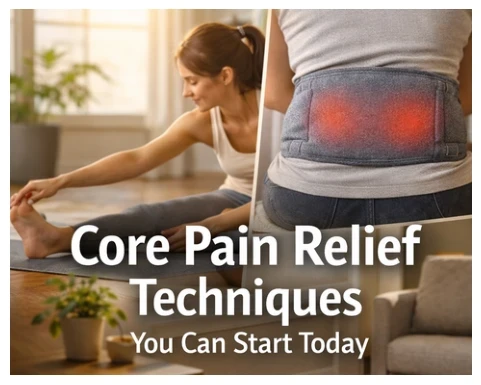
Core Pain Relief Techniques You Can Start Today
1. Gentle, Consistent Movement Complete rest can increase stiffness and sensitivity. Instead, aim for controlled movement within tolerable ranges.
Examples:
Short walks
Mobility drills
Light resistance work
Stretching tight but not painful areas
The key is consistency.
Think steady exposure, not punishment.
If chronic joint issues are part of your picture, this guide on what causes chronic joint pain can help you understand common triggers. —
2. Heat and Circulation Support
Heat therapy is one of the simplest pain relief techniques available.
It helps relax muscle tone and increase blood flow. Options include:
Heating pads
Warm showers Infrared or red light devices
Used consistently, heat can lower protective muscle guarding and improve mobility before exercise.
Go to Carex Pain Management Solutions Here to find out more. —
3. Breathwork and Nervous System Down-Regulation
Pain intensity often rises when stress rises.
One overlooked category of pain relief techniques is breath control.
Try:
Slow nasal breathing 4–6 second inhale, 6–8 second exhale 3–5 minutes, twice daily
Over time, this can reduce baseline tension and lower the body’s threat response. —
4. Sleep Optimization
Poor sleep increases pain sensitivity. Improving sleep may be one of the most powerful pain relief techniques available.
Focus on:
Consistent sleep schedule Dark, cool room
Reducing late-night screen exposure
For deeper sleep strategies, see sleep hygiene tips that improve sleep quality. —
5. Targeted Supplements (When Appropriate)
Some people explore supplements as supportive pain relief techniques. Common examples: Magnesium for muscle relaxation
Omega-3 fatty acids for inflammatory balance
Curcumin for joint support
Supplements should complement, not replace, movement and recovery habits. —
Get more information on Magnesium, Omega-3 fatty acids and Curcumin at HerbsPro here.
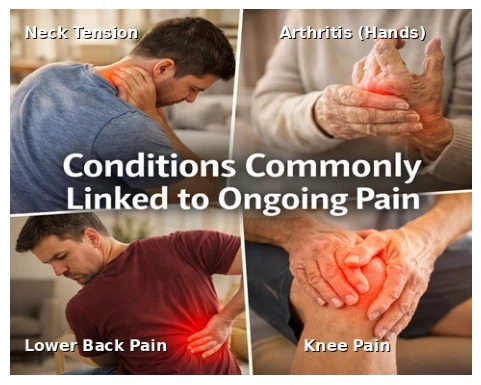
Conditions Commonly Linked to Ongoing Pain Pain relief techniques are often applied to:
Chronic back pain Neck and shoulder tension
Arthritis Tendinopathy Fibromyalgia
Repetitive strain injuries
While causes differ, many respond to similar layered strategies that calm sensitivity and improve load tolerance.
Use This Strategy
Don’t try to change everything at once.
When people first explore this subject, they often overhaul their entire routine in a single week — new exercises, new supplements, new devices, new sleep habits.
It feels productive… until it becomes overwhelming. Instead, simplify.
Pick: One movement habit
One recovery habit
One nervous system habit
Stick with those for 2–3 weeks.
Notice what changes:
Is stiffness slightly lower?
Is pain intensity more predictable?
Is recovery faster after activity?
If things are stable or improving, then layer in one more small adjustment.
Pain relief techniques work best when they’re introduced gradually.
The nervous system adapts better to steady exposure than sudden overload.
Slow and consistent usually beats intense and short-lived. —
Research Snapshot
Modern pain science emphasizes graded exposure, education, and nervous system regulation as part of effective pain relief techniques. https://pubmed.ncbi.nlm.nih.gov/28961164/ —
Secondary Benefits Beyond Pain
When applied consistently, pain relief techniques often improve:
Energy
Mood
Confidence in movement Sleep depth
Daily productivity Pain reduction becomes one part of a broader quality-of-life shift. —
Safety and Quality Considerations
Avoid aggressive stretching into sharp pain
Progress gradually with resistance training
Consult a professional if symptoms worsen
Seek medical evaluation for red flags (unexplained weight loss, neurological symptoms, trauma)
Techniques to relieve pain are supportive strategies — not a substitute for appropriate diagnosis when needed. —
Balanced Perspective
Not every strategy works for every person.
Pain is individual.
What helps one person’s back pain may not help someone else’s knee pain.
The goal is not perfection — it’s steady improvement.
When you think of pain relief techniques as experiments rather than promises, you reduce frustration and increase adaptability.
4 Comments
This is a very interesting article. Pain is definitely a personal and “individual” issue. Understanding the certain pain and reducing fear and stress about the pain is very important. Of course, consultation with a medical professional is a must. But what if one has insurance hurdles to face? What to do then? Thank you for a great article.
Best wishes,
Kent
Hi Kent,
Thank you for your comments on pain relief techniques, a lot if the techniques mentioned in the article are self help. In other words they don’t cost any money. So insurance isn’t really an issue.
All the best,
Fintan
This was an interesting read. The part about pain being influenced not only by physical injury but also by things like stress, sleep, and our overall mindset really caught my attention. Many people (myself included sometimes) tend to think pain is purely physical, so that perspective was helpful. I also liked that you mentioned several practical techniques—movement, heat, breathing, and others—because it makes the topic feel more manageable. In your experience, do people usually find the physical techniques most helpful first, or do approaches like breathing and relaxation sometimes make the bigger difference?
Hi Irana,
Thank you for your comments, usually a mix of both breathing, movement, physical exercise, heat combined help together to relieve pain.
All the best
Fintan