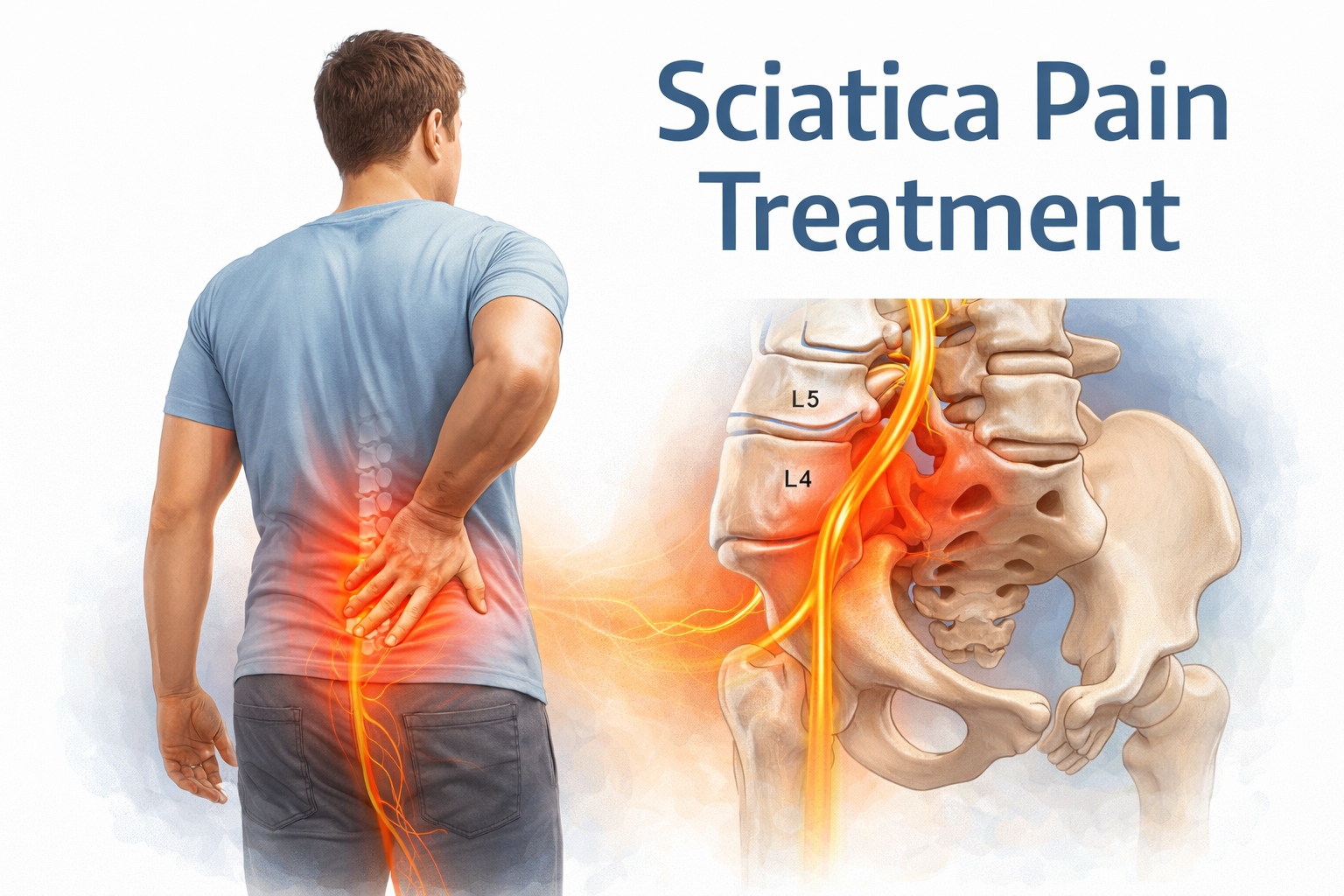
Sciatica Pain Treatment Complete Guide To Relief, Recovery, And Long-Term Management
Sciatica Pain Treatment
Sciatica pain treatment is one of the most searched topics for people dealing with sharp, radiating discomfort from the lower back into the leg.
This type of nerve pain can feel intense, unpredictable, and limiting, but the good news is that effective sciatica pain treatment strategies can significantly reduce symptoms and improve quality of life.
This complete guide explores everything you need to know—from causes and symptoms to proven recovery strategies, supportive tools, and long-term prevention.
What Is Sciatica and Why It Happens
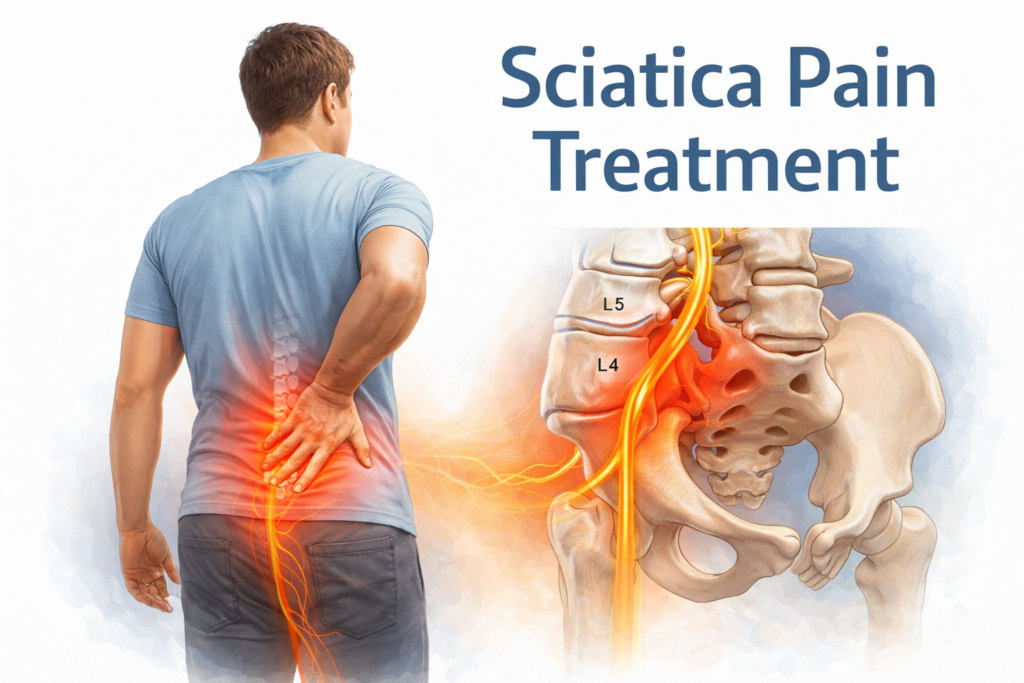
Sciatica describes pain that follows the sciatic nerve, the longest nerve in the body. It runs from the lower spine through the hips and down each leg.
Rather than being a condition itself, sciatica is usually a symptom of an underlying issue such as:
- Herniated or bulging disc
- Spinal stenosis
- Piriformis syndrome
- Degenerative disc disease
- Poor posture and prolonged sitting
Understanding how pain signals are generated (https://beyond-pain-relief.com/how-pain-signals-are-generated/) can help explain why pain can feel severe even when scans show minimal structural changes.
How Sciatica Pain Develops
Sciatica is often misunderstood as purely mechanical, but pain is influenced by both physical and neurological factors.
Key drivers include:
- Direct pressure on the nerve
- Inflammation around nerve tissue
- Reduced mobility and stiffness
- Muscle guarding and tension
- Increased sensitivity within the nervous system sensitisation process
This is why effective sciatica pain treatment rarely relies on one method alone. A combination of movement, strength, and nervous system regulation is usually needed.
Common Symptoms of Sciatica
Symptoms can vary widely depending on the cause and severity.
Typical signs include:
- Sharp, shooting pain down one leg
- Burning or electric sensations
- Tingling or pins and needles
- Numbness in the foot or calf
- Weakness in the leg
- Pain that worsens with sitting
Some people experience constant discomfort, while others notice flare-ups triggered by specific movements.
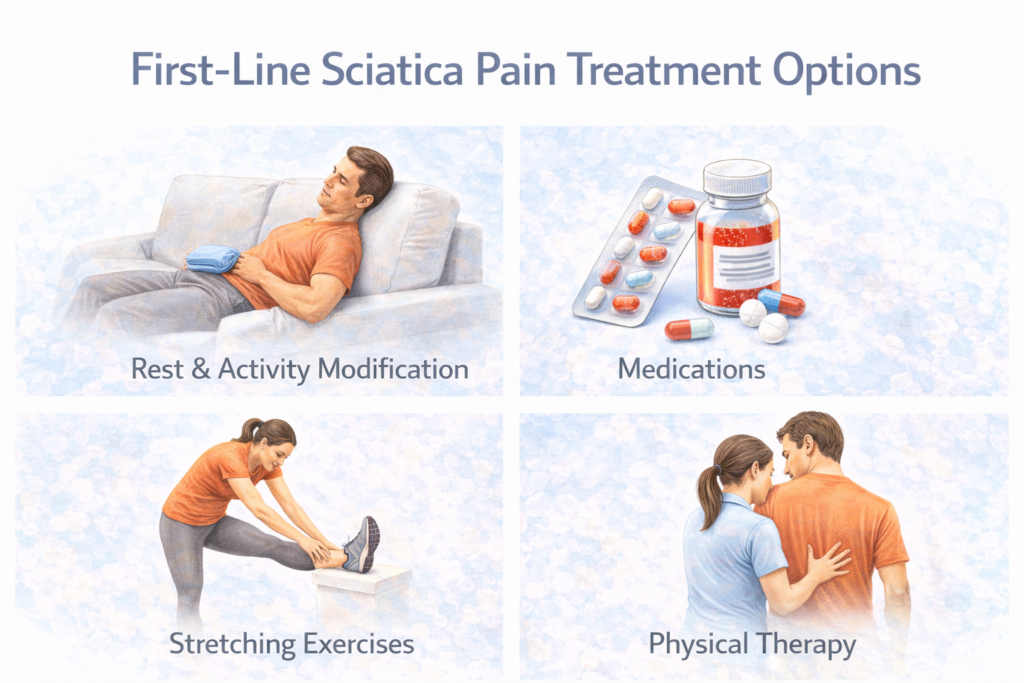
First-Line Sciatica Pain Treatment Options
Gentle Movement and Activity
One of the biggest myths is that rest is the best solution. In reality, too much rest can slow recovery.
Helpful approaches:
- Short walks throughout the day
- Avoiding prolonged sitting
- Light daily movement
Movement helps reduce stiffness, improve circulation, and calm the nervous system.
Targeted Stretching
Stretching can relieve pressure around the sciatic nerve.
Focus on:
- Hamstrings
- Piriformis muscle
- Hip flexors
Stretch gently and consistently rather than pushing into pain.
Heat and Cold Therapy
Both heat and cold therapy can be useful depending on the stage of symptoms.
- Ice helps reduce inflammation in early stages
- Heat relaxes tight muscles and improves blood flow
Many people benefit from alternating both.
Go to Carex for product information
Exercise-Based Sciatica Pain Treatment
Exercise is one of the most effective long-term solutions.
Core Strengthening
A strong core supports the spine and reduces strain on the lower back.
Examples include:
- Pelvic tilts
- Bird-dog exercises
- Modified planks
Nerve Gliding Exercises
These exercises help the sciatic nerve move more freely.
Benefits:
- Reduced nerve irritation
- Improved flexibility
- Better tolerance to movement
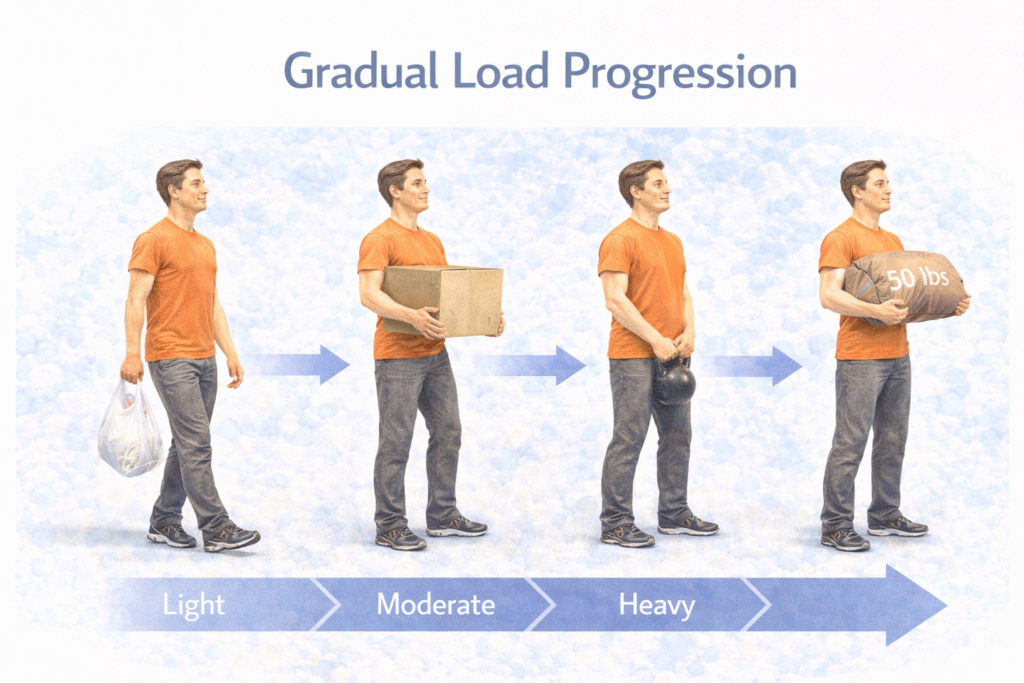
Gradual Load Progression
Increasing activity levels over time helps retrain the body.
This connects closely with movement and pain sensitivity (https://beyond-pain-relief.com/movement-load-and-pain-sensitivity/), where the body adapts to load when introduced gradually.
Understanding the Root Cause of Sciatic Pain
Not all sciatica is the same, and identifying the cause can guide treatment.
Disc-Related Sciatica
A herniated disc can press on the nerve.
Symptoms often include:
- Pain when bending forward
- Increased discomfort when sitting
Spinal Stenosis
Narrowing of the spinal canal can compress nerves.
Symptoms may worsen with walking and improve with rest.
Piriformis Syndrome
The piriformis muscle in the hip can irritate the sciatic nerve.
Pain is often felt deep in the buttock.
Understanding these differences helps tailor the right sciatica pain treatment approach.
Medical Sciatica Pain Treatment Options
Pain Relief Medications
Short-term relief may include:
- Anti-inflammatory drugs
- Muscle relaxants
- Nerve pain medications
Physical Therapy
A structured programme often includes:
- Movement retraining
- Strength building
- Postural correction
Injections
Corticosteroid injections may reduce inflammation around the nerve.
Surgery
Surgery is considered when:
- Severe weakness develops
- Pain persists despite treatment
- There are serious neurological symptoms
Most cases improve without surgery.
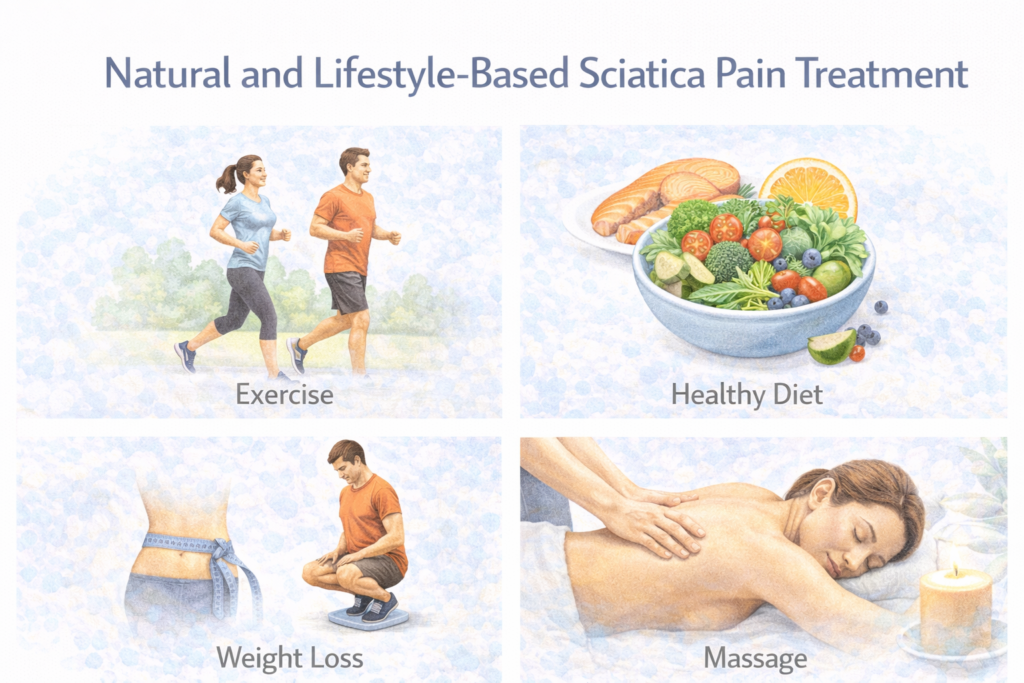
Natural and Lifestyle-Based Sciatica Pain Treatment
Anti-Inflammatory Diet
Nutrition can influence inflammation and recovery.
Helpful foods include:
- Fatty fish
- Leafy greens
- Nuts and seeds
- Turmeric and ginger
Supplements
Common options:
- Magnesium
- Vitamin B complex
- Omega-3 fatty acids
These supplements may support nerve health and muscle relaxation.
Go to HerbsPro for more information.
Mind-Body Techniques
Pain is influenced by stress and emotional state.
Helpful strategies:
- Deep breathing
- Meditation
- Gentle yoga
The mental health and pain connection (https://beyond-pain-relief.com/mental-health-and-pain-management/) is a key factor in long-term recovery.
Lifestyle Factors That Affect Sciatica
Sitting and Posture
Prolonged sitting increases pressure on the lower spine.
Tips:
- Use lumbar support
- Stand regularly
- Avoid slouching
Sleep Position
Better sleep improves recovery.
Recommended positions:
- Side sleeping with pillow support
- Back sleeping with knees elevated
Movement Confidence
Fear of movement can prolong symptoms. Gradual exposure builds confidence and reduces pain.

Supportive Tools That May Help
Supportive tools can enhance recovery when used alongside active treatment.
Options include:
- Ergonomic chairs
- Lumbar cushions
- Heat therapy wraps
- Massage tools
- Compression supports
These tools are most effective when combined with movement and strengthening.
CBD medicine
CBD medicine is centuries old and takes a different approach to sciatica pain relief.
Sciatica Pain Treatment for Chronic Cases
Nervous System Desensitisation
Chronic pain often involves increased sensitivity.
Approaches include:
- Gradual exposure to movement
- Consistent daily activity
- Education about pain
Addressing Fear and Avoidance
Avoiding activity can worsen symptoms. Reintroducing movement gradually is essential.
Long-Term Strength and Conditioning
Focus areas:
- Core stability
- Hip strength
- Functional movement
This helps prevent recurrence.
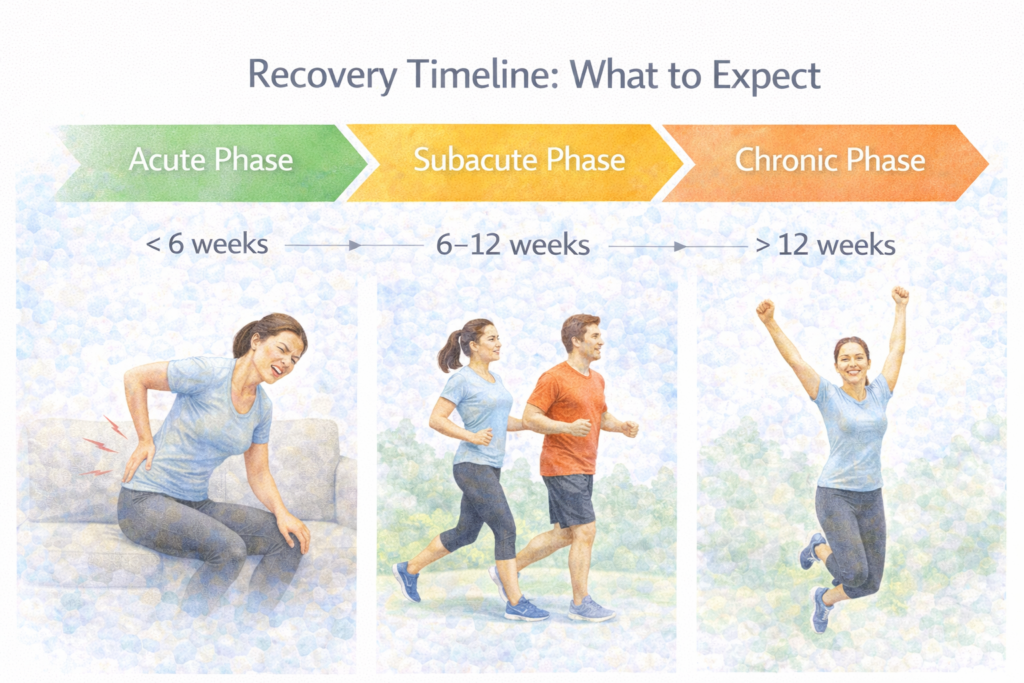
Recovery Timeline: What to Expect
Recovery varies depending on the cause and severity.
- Mild cases: a few weeks
- Moderate cases: 6–12 weeks
- Chronic cases: several months
Consistency is the key factor in successful sciatica pain treatment.
Common Mistakes to Avoid
- Too much rest
- Avoiding movement completely
- Overstretching aggressively
- Relying only on passive treatments
- Ignoring long-term strengthening
Avoiding these mistakes improves outcomes.
A Balanced Perspective on Sciatica Recovery
There is no single quick fix.
Most people improve through:
- Movement and exercise
- Gradual strength building
- Lifestyle adjustments
- Education and confidence
The goal is long-term resilience, not just temporary relief.
FAQs
How long does sciatica take to heal?
Most cases improve within weeks to months depending on severity.
Is walking good for sciatica?
Yes, walking helps reduce stiffness and improve circulation.
Can sitting make sciatica worse?
Yes, prolonged sitting increases pressure on the spine.
What triggers sciatica flare-ups?
Common triggers include prolonged sitting, poor posture, and sudden movements.
Can sciatica return after recovery?
Yes, but proper strength and movement habits reduce recurrence risk.
Scientific Studies
https://pubmed.ncbi.nlm.nih.gov/28002347/
https://pubmed.ncbi.nlm.nih.gov/29204958/