Rib Cage Pain Best Home Remedies
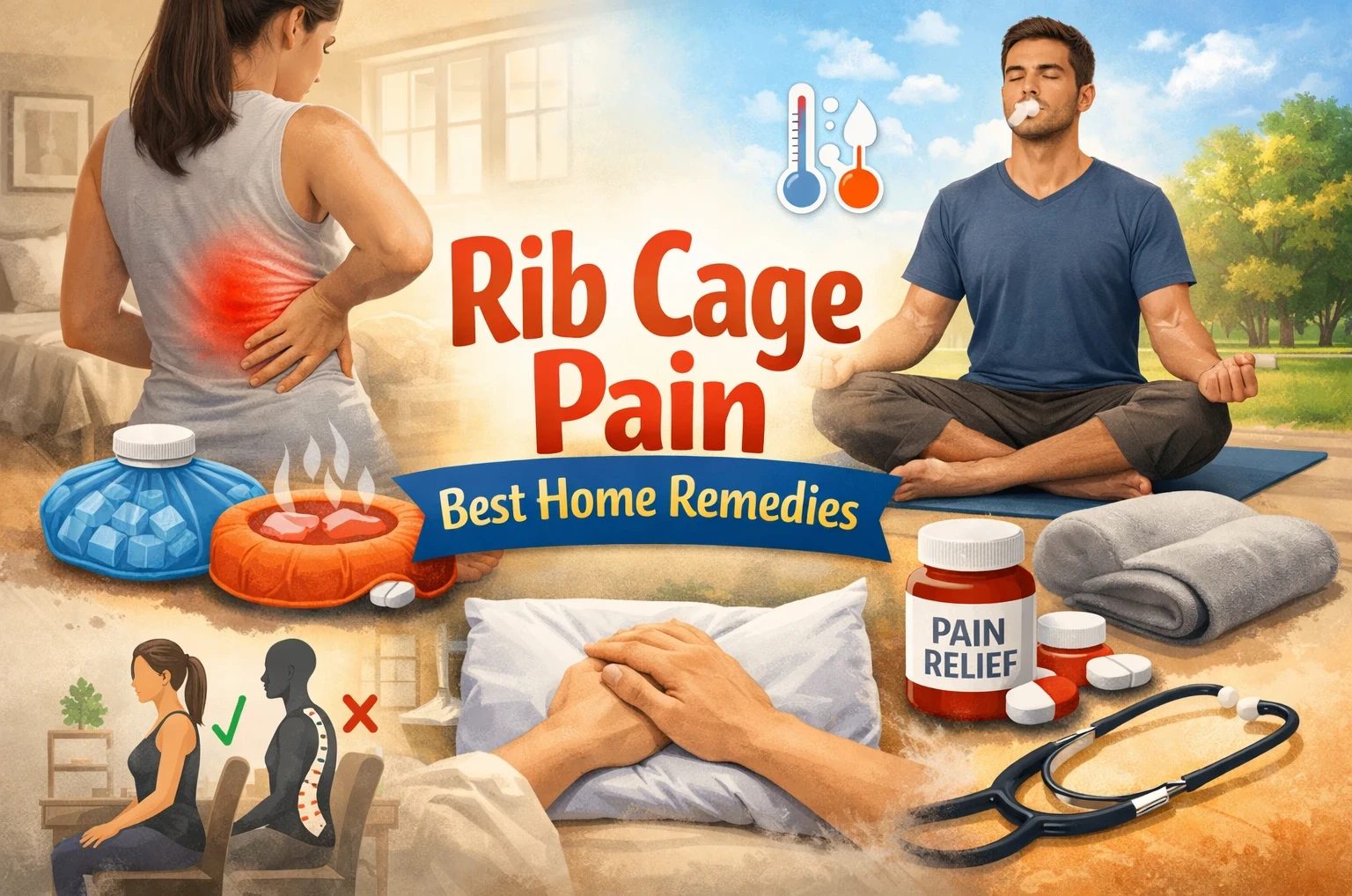
Rib cage pain best home remedies are often the first step people explore when discomfort appears suddenly or lingers after activity.
While rib pain can feel alarming, many cases are linked to muscle strain, posture issues, or minor inflammation that can improve with simple home strategies.
Understanding how to manage symptoms safely at home can reduce discomfort, support recovery, and help you stay active without unnecessary worry.
What Causes Rib Cage Pain?
Before using any approach, it helps to understand what might be triggering the discomfort.
Common causes include:
- Muscle strain from lifting or twisting
- Poor posture during sitting or sleeping
- Inflammation in the rib joints (costochondritis)
- Minor injuries from exercise or repetitive movement
- Stress-related muscle tension
In many of these situations, rib cage pain best home remedies can play a valuable role in easing symptoms naturally.
There are options to relieve rib cage pain.
Rest and Gentle Activity Balance
One of the most effective starting points is finding the right balance between rest and movement.
Short periods of rest may help reduce irritation, especially after strain.
However, staying completely inactive for too long can lead to stiffness and delayed recovery.
Instead, aim for:
- Light daily movement such as walking
- Avoiding heavy lifting or sudden twisting
- Gradually returning to normal activity
This balanced approach allows tissues to recover while maintaining mobility.
Apply Heat or Cold Therapy
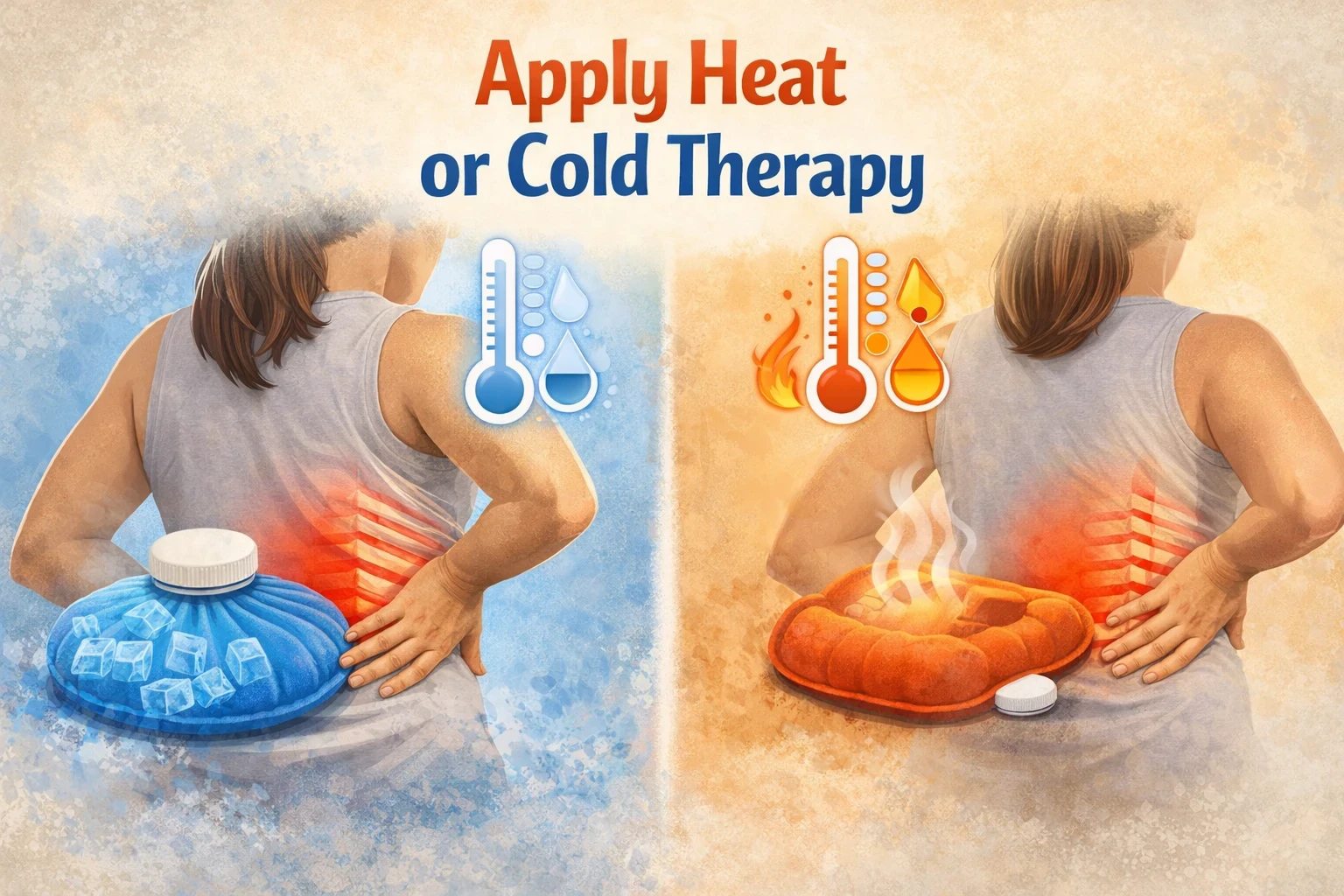
Temperature therapy is a simple but powerful tool.
Cold packs may help during the early stages of pain, especially if swelling or irritation is present.
Apply for 10–15 minutes at a time.
Heat therapy is often more useful after the initial phase. It helps relax muscles and improve blood flow.
Use heat when:
- Muscles feel tight or stiff
- Pain is lingering rather than sharp
- You want to relax the surrounding area
Many people find that alternating between heat and cold provides additional relief.
Natural heat and cold packs for pain relief from this family owned company. GO HERE.
Improve Posture Throughout the Day
Posture plays a surprisingly large role in rib discomfort.
Slouching or sitting for long periods can place extra stress on the rib cage and surrounding muscles.
Simple posture improvements include:
- Sitting with your back supported
- Keeping shoulders relaxed, not rounded forward
- Taking regular breaks from sitting
Improving posture is one of the most overlooked rib cage pain best home remedies, yet it can make a noticeable difference over time.
Gentle Stretching and Breathing Exercises
Controlled movement helps reduce stiffness and supports healing.
Try gentle stretches that open the chest and improve flexibility. Avoid any movement that causes sharp pain.
Deep breathing exercises are particularly helpful because the rib cage expands and contracts with each breath.
A simple exercise:
- Sit upright
- Inhale slowly through your nose
- Allow your rib cage to expand
- Exhale slowly and relax
Research shows that stretching exercises can significantly reduce chest wall pain in conditions like costochondritis.
Over-the-Counter Pain Relief Options
For short-term relief, non-prescription medications may help reduce discomfort and inflammation.
Common options include:
- Anti-inflammatory medications
- Mild pain relievers
These should be used as directed and only when necessary.
Clinical guidance supports NSAIDs as a common first-line approach for rib-related inflammation.
Sleep Position Adjustments
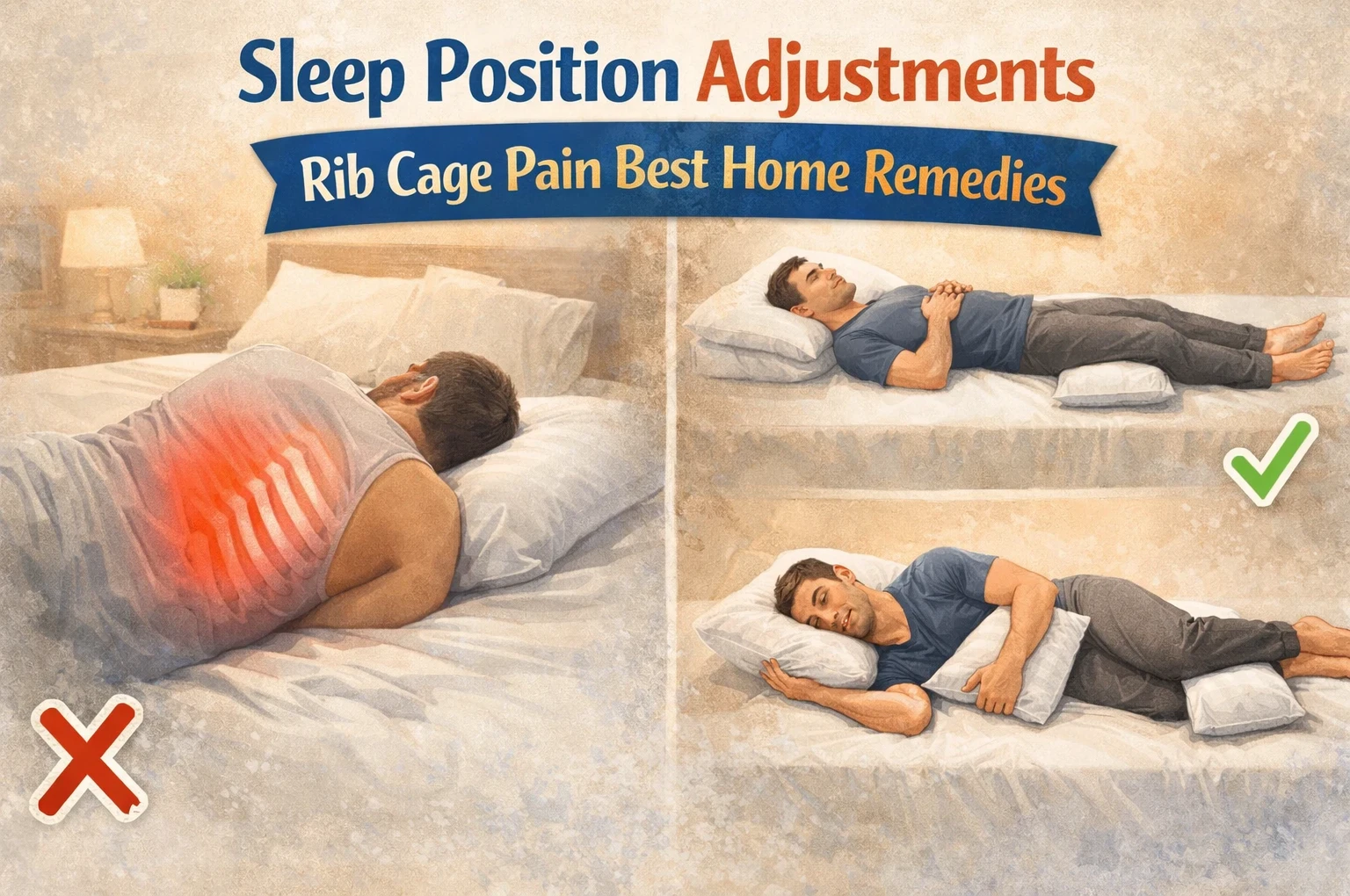
Pain can often feel worse at night due to pressure or poor positioning.
To improve comfort:
- Sleep on your back or on the non-painful side
- Use supportive pillows to keep your body aligned
- Avoid positions that compress the rib cage
Small adjustments in sleep posture can significantly reduce overnight discomfort.
Reduce Stress and Muscle Tension
Stress can contribute to muscle tightness, especially around the chest and ribs.
Simple relaxation strategies include:
- Deep breathing exercises
- Gentle stretching
- Short walks outdoors
- Mindfulness or relaxation techniques
Addressing tension is an important part of managing symptoms and complements other rib cage pain best home remedies.
Supportive Tools That May Help
Some people benefit from additional support during recovery.
Helpful tools may include:
- Posture support braces
- Heat wraps or pads
- Supportive cushions for sitting
These tools are not always necessary, but they can provide comfort and help reinforce good habits.
To find out more, GO HERE.
When to Seek Medical Advice
While many cases improve with home care, certain symptoms should not be ignored.
Seek medical advice if you experience:
- Severe or worsening pain
- Difficulty breathing
- Pain after a significant injury
- Symptoms that do not improve over time
A Balanced Approach to Recovery
Using rib cage pain best home remedies effectively means combining several strategies rather than relying on just one.
The most successful approach typically includes:
- Gentle movement
- Posture awareness
- Temperature therapy
- Stress management
- Gradual return to activity
Recovery takes time, but consistent small actions can lead to steady improvement.
Conclusion
Rib cage pain best home remedies offer practical, accessible ways to manage discomfort and support healing at home.
By focusing on movement, posture, relaxation, and simple therapies, many people can reduce pain and regain normal function without complicated treatments.
Scientific Studies
Stretching exercises for costochondritis (PubMed)
Costochondritis: Diagnosis and treatment (PubMed)