Fibromyalgia Symptoms Explained
Fibromyalgia Symptoms Explained
Fibromyalgia symptoms explained is something many people search for after months or years of unexplained pain, exhaustion, and frustration.
The symptoms of fibromyalgia are real, wide-ranging, and often misunderstood because they don’t always show up on scans or blood tests.
This can leave people feeling dismissed or unsure of what is happening in their body.
Understanding fibromyalgia symptoms is not about labelling yourself as “ill.”
It is about recognising a pattern that helps explain why pain, fatigue, and sensitivity behave the way they do—and how to respond to them more effectively.
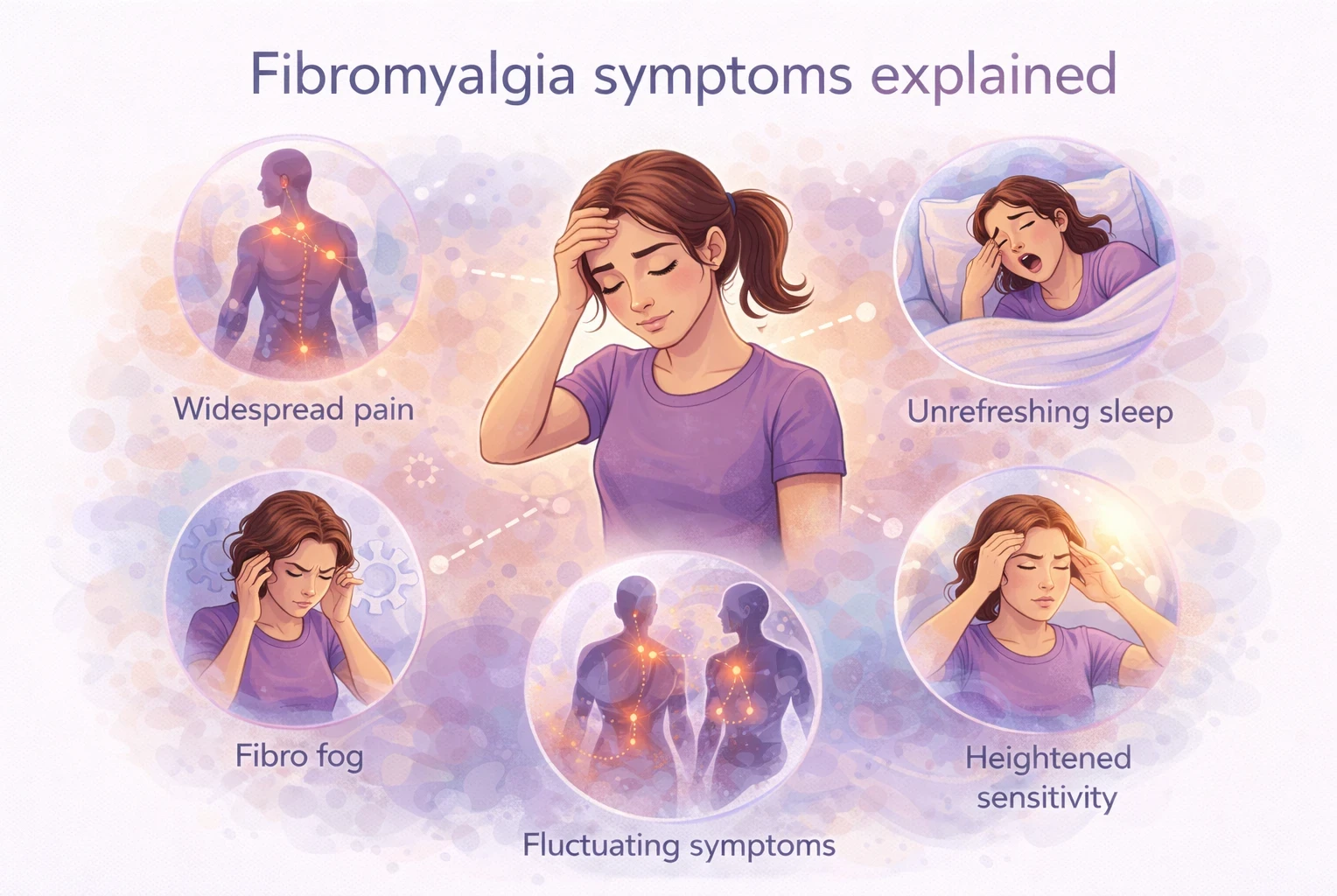
Fibromyalgia symptoms explained
Widespread pain is the most recognised fibromyalgia symptom. Unlike pain from an injury, fibromyalgia pain is not limited to one area.
It commonly affects both sides of the body and may be felt above and below the waist.
People describe this pain in many ways:
- Deep aching
- Burning or throbbing
- Sharp or stabbing sensations
- A heavy, sore, bruised feeling
The location of pain can change from day to day.
One day it may be focused in the shoulders and neck, while another day it may settle into the hips, back, or legs.
Importantly, this pain does not mean the tissues are damaged.
Fibromyalgia pain is strongly linked to how the nervous system processes and amplifies signals.
A full explanation of the condition can be found here:
https://beyond-pain-relief.com/what-is-fibromyalgia/
Fatigue that doesn’t match effort
Fatigue in fibromyalgia is not ordinary tiredness.
Many people feel exhausted after activities that previously felt manageable.
Even small tasks can require significant recovery time.
This fatigue may feel:
- Heavy and draining
- Disproportionate to effort
- Worse in the morning
- Unrelieved by rest
The fatigue associated with fibromyalgia is closely connected to poor sleep quality and nervous system overload.
It is not a lack of motivation or fitness.
Unrefreshing sleep
Sleep problems are one of the most underestimated fibromyalgia symptoms.
Many people:
- Sleep for long hours but wake unrefreshed
- Wake frequently during the night
- Feel worse in the morning than at bedtime
- Experience restless or shallow sleep
Because sleep plays a key role in regulating pain sensitivity, poor sleep can significantly amplify pain and fatigue the following day.
Even one or two poor nights can trigger symptom flare-ups.
Fibro fog and cognitive symptoms
“Fibro fog” refers to the cognitive symptoms often experienced with fibromyalgia.
These symptoms can be distressing and are frequently misunderstood.
Common experiences include:
- Difficulty concentrating
- Forgetting words or names
- Slower thinking
- Mental overwhelm in busy environments
Fibro fog often worsens during periods of stress, flare-ups, or poor sleep.
It reflects nervous system overload rather than brain damage or decline.

Morning stiffness and body heaviness
Many people with fibromyalgia report feeling stiff, slow, or heavy when they wake up.
This stiffness can last from minutes to hours.
Unlike inflammatory arthritis, this stiffness often:
- Improves with gentle movement
- Feels more muscular than joint-based
- Is worse after poor sleep or inactivity
This is one reason complete rest often worsens symptoms rather than improving them.
Heightened sensitivity
Fibromyalgia often involves increased sensitivity to sensory input. This can include:
- Pain from light touch or pressure
- Sensitivity to temperature changes
- Discomfort with noise or bright light
- Feeling overwhelmed in busy environments
This sensitivity reflects a nervous system that is stuck in a protective, high-alert state.
It does not mean the body is fragile.
Fibromyalgia symptoms can change day to day
Symptoms fluctuate from day to day
One of the defining features of fibromyalgia is symptom variability.
Good days and bad days are common, and symptoms can change without an obvious cause.
This fluctuation is influenced by:
- Sleep quality
- Stress levels
- Physical and mental load
- Illness or recovery demands
Understanding that symptoms fluctuate helps reduce fear and prevents the boom-and-bust cycle where people overdo activity on good days and crash afterward.
Headaches and associated symptoms
Headaches are common in fibromyalgia and may include tension-type headaches or migraines.
These often overlap with:
- Neck and shoulder tension
- Poor sleep
- Stress or sensory overload
Other symptoms that may occur alongside fibromyalgia include digestive discomfort, jaw pain, pelvic pain, or restless legs.
These are not separate problems but part of a broader sensitivity pattern.
Symptoms are real even when tests are normal
One of the most frustrating aspects of fibromyalgia is being told that tests are “normal.”
Normal results do not mean symptoms are imagined.
Fibromyalgia involves changes in pain processing rather than visible tissue damage.
Learning how chronic pain works can be reassuring and empowering:
https://beyond-pain-relief.com/how-to-manage-chronic-pain-without-medication/
Why understanding symptoms matters
When symptoms are misunderstood, people often:
- Avoid movement out of fear
- Push too hard on good days
- Feel anxious or hopeless
- Lose confidence in their body
When symptoms are understood:
- Fear decreases
- Activity becomes safer and more predictable
- Flare-ups shorten
- Long-term improvement becomes possible
Understanding fibromyalgia symptoms is the foundation for effective management strategies.
Scientific research
https://pubmed.ncbi.nlm.nih.gov/27916278/
https://pubmed.ncbi.nlm.nih.gov/27377815/
 Previous Post
 Next Post