What is Fibromyalgia
What is fibromyalgia is a question that usually comes up after months (or years) of feeling sore, wiped out, and “off” in ways that don’t match a simple injury.
Fibromyalgia is a chronic pain condition where your nervous system becomes extra sensitive, so normal sensations (movement, touch, stress, poor sleep) can feel amplified.
It’s real, it’s common, and it can be deeply frustrating—especially when tests come back “normal” and you still feel awful.

What fibromyalgia feels like (common symptoms)
Fibromyalgia is more than “aches.” Most people experience a cluster of symptoms that travel together:
- Widespread pain (both sides of the body, above and below the waist is common)
- Deep fatigue that doesn’t match your effort
- Unrefreshing sleep (you sleep, but don’t feel restored)
- Morning stiffness and a “heavy body” feeling
- Brain fog (fibro fog): forgetfulness, slower thinking, trouble focusing
- Headaches or migraine tendencies
- Heightened sensitivity to pressure, temperature, noise, light, or stress
- Flare-ups where symptoms spike for days or weeks
It can overlap with other issues like irritable bowel symptoms, jaw tension, pelvic pain, restless legs, or anxiety—without any of these being “the” cause.
What causes fibromyalgia?
There isn’t one single cause. Think of fibromyalgia more like a pattern your body gets stuck in.
Many researchers describe it as a “central sensitization” style problem—meaning the brain and spinal cord are turned up too high on the volume dial for pain and threat signals.
This can happen after:
- A viral illness or infection
- A physical injury or repeated strain
- Surgery
- A long period of stress, burnout, grief, or trauma
- Poor sleep over time
- Living with persistent pain for months/years
Genetics can also play a role. Some people seem more “wired” for sensitivity, then life events push them over a threshold.
What fibromyalgia is not
This matters because misinformation is everywhere.
Fibromyalgia is not:
- “All in your head”
- Automatically caused by inflammation on blood tests
- A sign you’re damaging your joints by moving
- A condition that can be fixed by a single supplement, detox, or strict diet
It is a nervous system + sleep + stress-load condition where symptoms are real, changeable, and worth treating from multiple angles.
How fibromyalgia is diagnosed
There’s no single blood test that “confirms” fibromyalgia. Diagnosis is usually based on:
- Widespread pain patterns
- Key symptoms (fatigue, sleep problems, cognitive symptoms)
- Duration (typically 3+ months)
- Ruling out other explanations when needed (thyroid issues, inflammatory arthritis, anemia, etc.)
A good clinician doesn’t use diagnosis to dismiss you. They use it to name the pattern and build a plan.
If you want a practical foundation for day-to-day coping, pacing, and flare control, this page helps: How to manage chronic pain without medication.
Why flares happen (and how to spot your triggers)
Fibromyalgia symptoms often rise and fall. Common flare triggers include:
- Poor sleep (even one bad night)
- Doing “too much too soon” after a better day
- Long static postures (desk work, driving)
- Emotional stress, deadlines, conflict
- Weather changes (some people notice this strongly)
- Overtraining or all-or-nothing exercise cycles
- Skipping meals, dehydration, or excess alcohol
A useful approach is to track flares like a stress budget: sleep + workload + movement + mood + illness all add up. When the total load gets too high, symptoms spike.
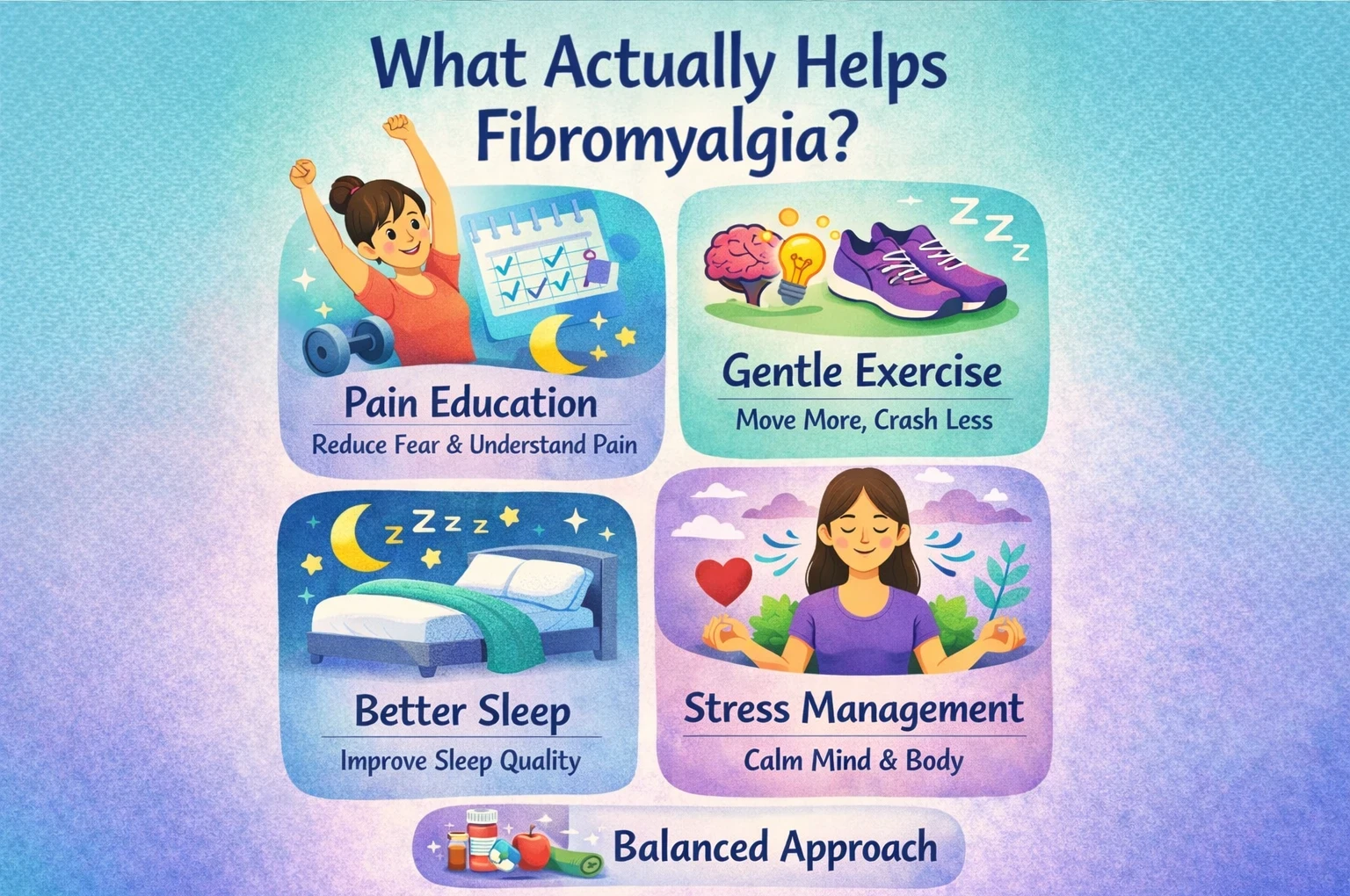
What actually helps (a realistic, non-magic plan)
Fibromyalgia usually responds best to a layered plan. Not extreme. Not perfect. Just consistent.
1) Pain education (reduces fear, lowers the “alarm”)
The goal isn’t to “think your way out” of symptoms. It’s to reduce the danger signal your system is stuck in, so movement and daily life feel less threatening.
2) Gentle movement that builds capacity
The goal isn’t “no pain.” The goal is more tolerance with fewer crashes.
Good options:
- Walking in short, repeatable doses
- Light strength training (slow progressions)
- Swimming or warm-water movement
- Mobility routines that feel “safe” and easy
A solid rule: finish sessions thinking “I could have done a bit more.” That’s how you avoid boom-bust cycles.
3) Sleep support (because sleep is a symptom amplifier)
Fibromyalgia and sleep are tightly linked. Helpful basics:
- Same wake time most days
- Dim screens/light at night
- Protein + fiber earlier in the day
- Wind-down routine that signals safety (warm shower, breathwork, reading)
4) Stress regulation (not “positive vibes,” actual nervous system care)
This can be:
- paced breathing (a few minutes, 1–2x daily)
- mindfulness or body scan
- counselling/CBT-style tools
- gentle social connection and reduced isolation
5) Medication can help, but usually modestly
Some people get benefit from certain prescriptions, but meds work best as a support for sleep, mood, and function—not a standalone fix. A clinician can guide this based on your health profile.
For more articles and resources across the site, you can also link readers back to the homepage here: Beyond Pain Relief.
When to talk to a clinician urgently
Fibromyalgia is common, but you should still get medical review if you have:
- unexplained weight loss, fever, night sweats
- new neurological symptoms (weakness, loss of coordination)
- progressive joint swelling/redness
- severe sleep apnea symptoms
- symptoms that rapidly worsen without a clear reason
Scientific research (external links)
https://pubmed.ncbi.nlm.nih.gov/27916278/
https://pubmed.ncbi.nlm.nih.gov/27377815/