Tietze Syndrome Symptoms What They Feel Like
Tietze Syndrome Symptoms
Tietze syndrome symptoms often cause concern because they involve chest pain that can feel sharp, deep, or pressure-like.
When chest discomfort appears suddenly, it’s natural to worry about the heart or lungs.
Understanding what’s happening in the chest wall helps reduce fear and prevents unnecessary stress while the area settles.
Tietze syndrome is a rare inflammatory condition affecting the cartilage that connects the upper ribs to the breastbone (sternum).
This inflammation explains both the pain and the visible swelling that many people notice during a flare.
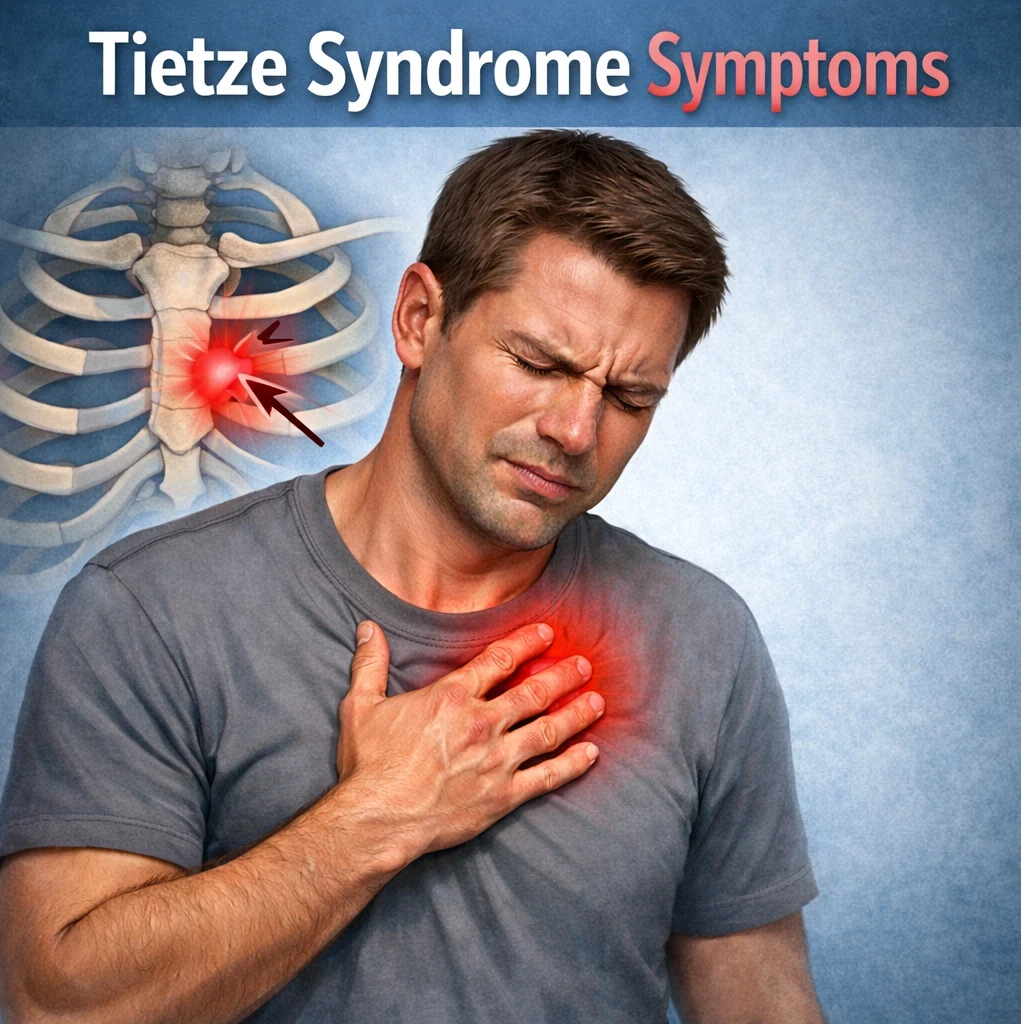
Common Signs of Tietze Syndrome
Most people experience discomfort on one side of the upper chest that is easy to pinpoint with a finger.
Common features include:
- Localised chest pain near the breastbone
- Visible swelling over one rib joint (often ribs 2 or 3)
- Tenderness when pressing the affected area
- Pain with coughing, sneezing, or deep breathing
- Discomfort when lifting the arms or twisting
The presence of swelling is an important clue and helps distinguish this condition from many other types of chest wall pain.
How the Pain Is Often Described
People experiencing tietze syndrome symptoms often use strong language to describe the sensation.
Pain may feel:
- Sharp or stabbing
- Deep and aching
- Bruised or sore to touch
- Constant or fluctuating
- Worse during upper-body activity
Discomfort can sometimes radiate into the shoulder, neck, or upper arm, even though the inflammation remains local to the rib cartilage.
Why These Symptoms Are Often Misunderstood
Chest pain naturally triggers alarm.
Because the discomfort occurs close to the heart and lungs, many people fear serious medical emergencies before receiving reassurance.
Tietze syndrome is not dangerous, but the pain can feel intense.
Early medical evaluation is important to rule out cardiac or lung causes.
Once those are excluded, understanding the inflammatory nature of tietze syndrome symptoms often brings significant relief.
For a broader explanation of non-drug approaches commonly discussed online, this related article may help:
👉 https://beyond-pain-relief.com/natural-tietze-syndrome-cure/
How Symptoms Change Over Time
Tietze syndrome symptoms do not follow a strict pattern. Some people experience a sudden onset that gradually settles.
Others notice flare-ups triggered by physical strain, prolonged posture, or repeated upper-body movements.
Symptoms may:
- Ease over weeks or months
- Flare during stress or overuse
- Improve with reduced irritation
- Become less intense as sensitivity calms
Understanding this variability helps reduce frustration during recovery.
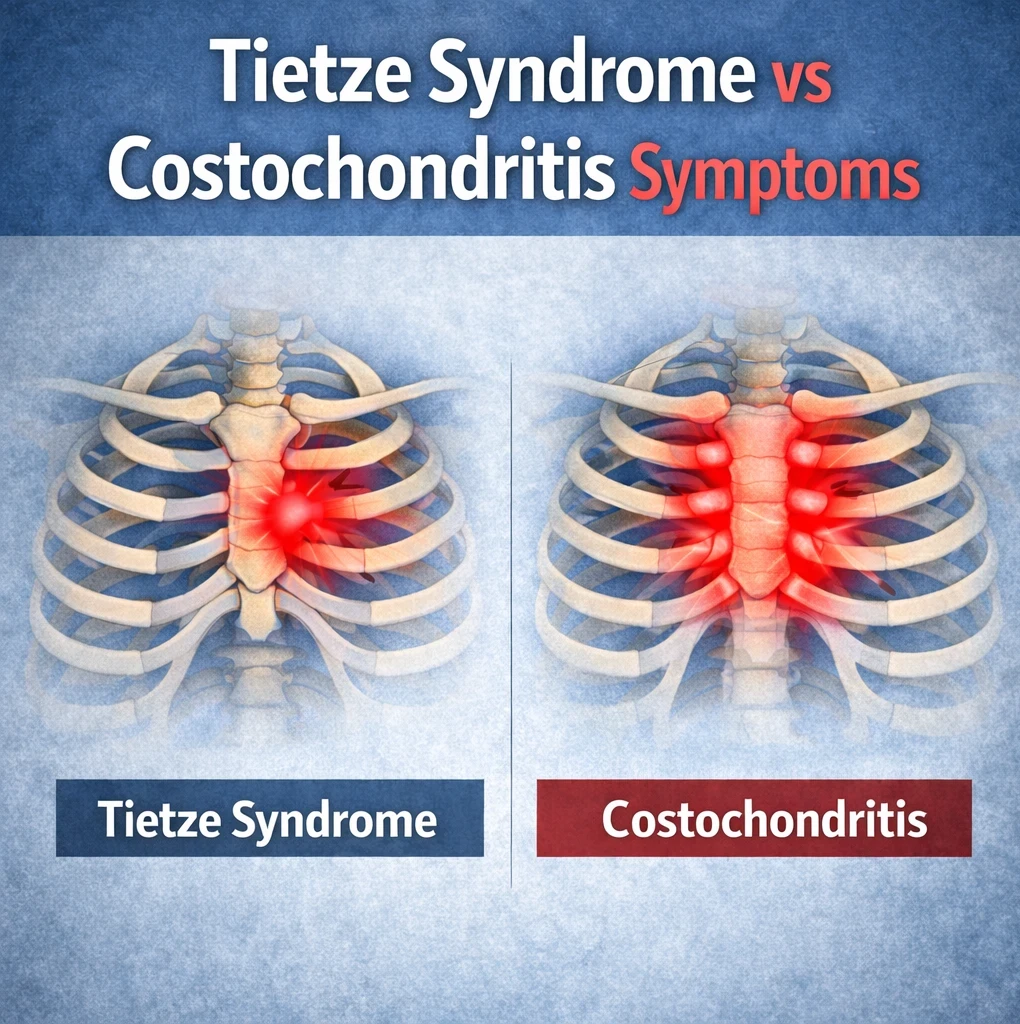
Tietze Syndrome vs Costochondritis Symptoms
Chest wall pain is often labelled as costochondritis, but there are important differences.
- Tietze syndrome usually includes visible swelling
- Costochondritis typically affects multiple rib joints
- Tietze syndrome is rarer but more localised
Recognising these distinctions prevents unnecessary worry and repeated testing.
For a pain-education perspective on why chest wall pain can feel severe even when tissues are safe, this article offers helpful context:
👉 https://beyond-pain-relief.com/what-is-chronic-pain/
Supportive Tools That May Help
Supportive tools do not cure the condition, but they may help calm irritation while tietze syndrome symptoms settle.
Heat
- Gentle heat may relax surrounding muscles
- Use short sessions rather than prolonged heat
- Avoid aggressive or very hot applications
Posture awareness
- Slouched sitting or rounded shoulders can increase chest wall strain
- Gentle adjustments reduce constant rib loading
- Supportive seating may help during longer sitting periods
Gentle movement
- Light shoulder rolls and relaxed arm movements maintain mobility
- Avoid bracing or guarding the chest excessively
- Movement should feel reassuring, not painful
These approaches aim to reduce ongoing irritation rather than “push through” discomfort.
When Symptoms Should Be Rechecked
Always seek medical review if chest pain is new, worsening, or accompanied by shortness of breath, dizziness, or fever.
Once tietze syndrome symptoms are confirmed, reassurance and education often reduce the fear that amplifies discomfort.
The Takeaway
Tietze syndrome symptoms are inflammatory, localised, and very real — but they are not life-threatening.
Understanding why swelling occurs, how symptoms behave over time, and what supports comfort can make the experience far less frightening.
Scientific reference
https://pubmed.ncbi.nlm.nih.gov/29493914/