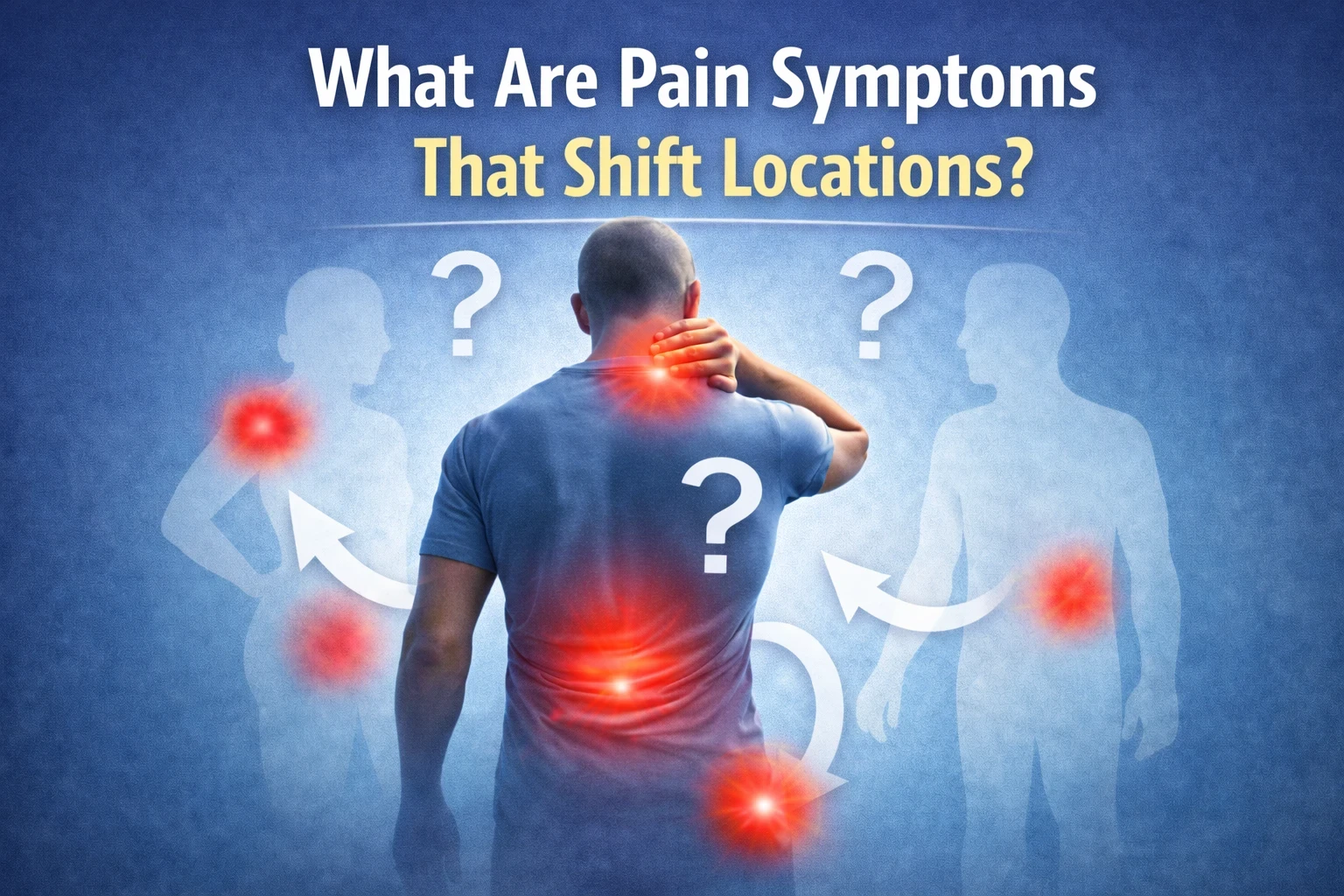
Pain Symptoms That Shift Locations Why and What are the Causes
Pain Symptoms That Shift Locations
Pain symptoms that shift locations can feel confusing and sometimes worrying.
One day the discomfort may appear in the lower back, and the next day it might show up in the shoulder, neck, or legs.
Many people experience pain symptoms that shift locations during periods of stress, recovery from injury, or when the nervous system becomes more sensitive.
Understanding why pain symptoms that shift locations occur can help reduce fear and support a more confident recovery process.
What Are Pain Symptoms That Shift Locations?
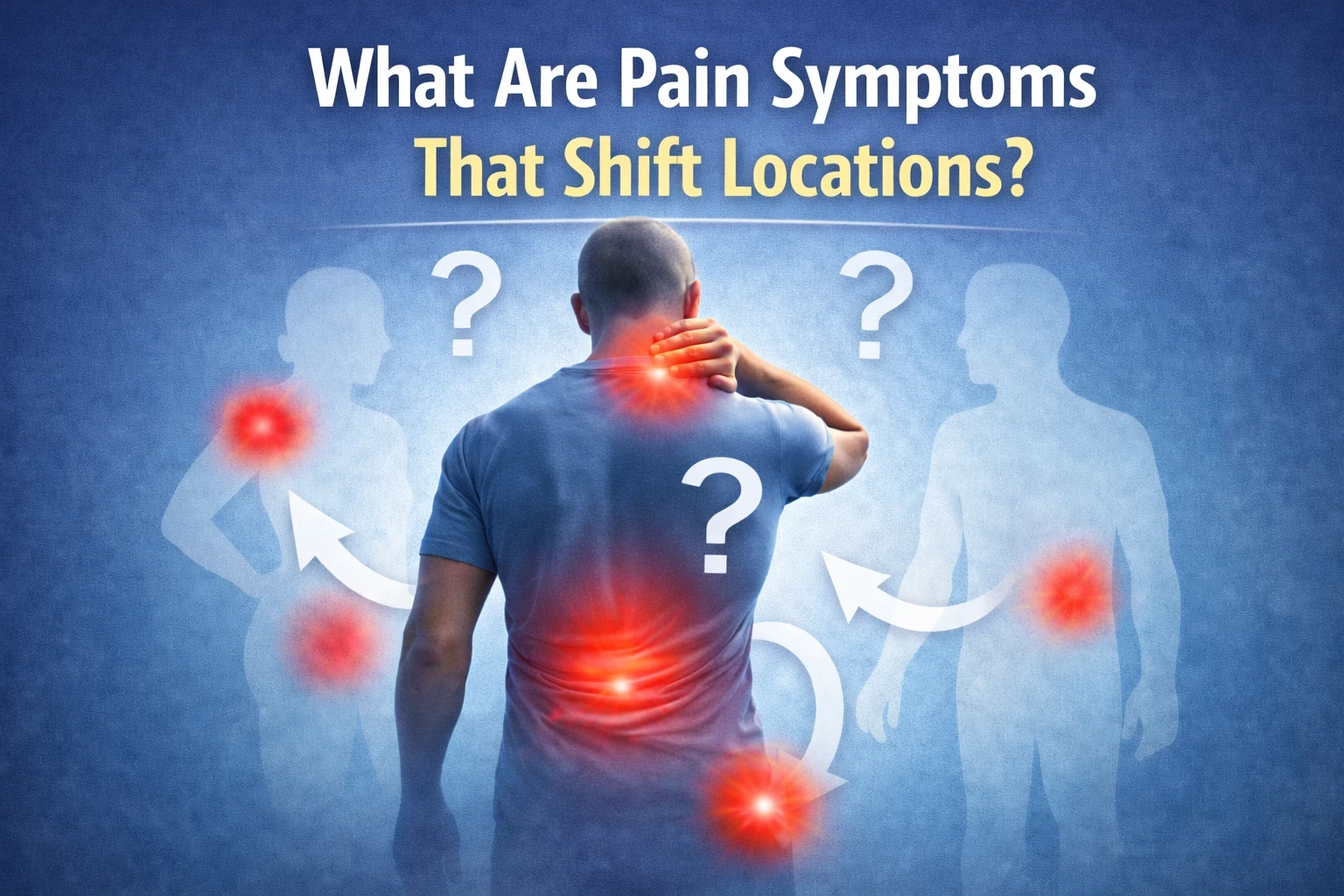
Pain symptoms that shift locations refer to discomfort that appears in different areas of the body rather than staying in one consistent place.
For example, someone might experience shoulder pain one day, neck tightness the next day, and lower back soreness later in the week.
Although this can feel alarming, shifting pain does not always mean that multiple injuries are present.
In many cases, the body’s pain processing system plays an important role.
Understanding how the brain and nervous system interpret pain signals is explained in this guide to pain education and how pain works.
Why Pain Can Move Around the Body
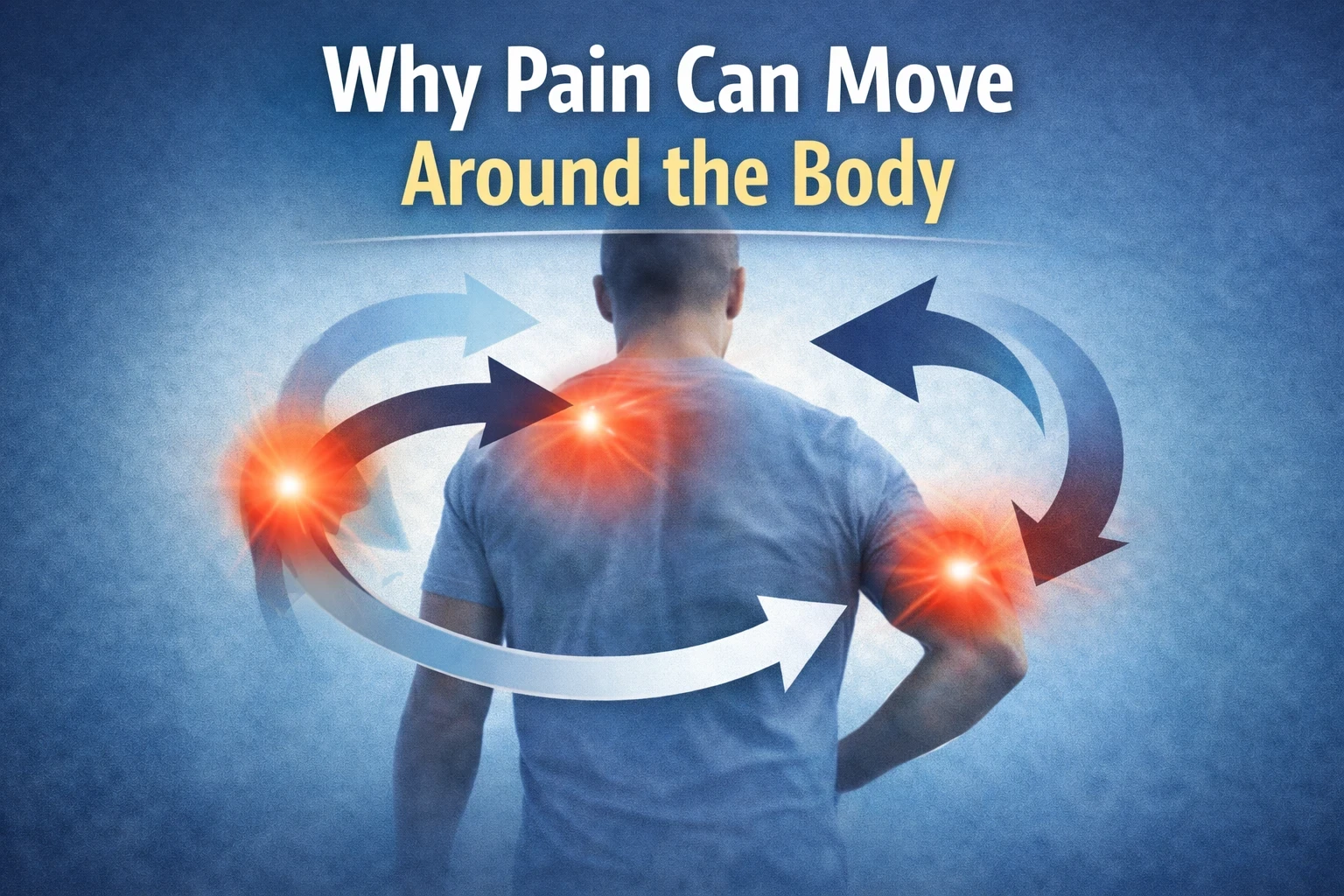
Pain symptoms that shift locations are often linked to how the brain and nervous system interpret signals from muscles, joints, and tissues.
Pain is not produced only at the site of injury. Instead, it is created by the brain after evaluating many different signals.
These signals may include:
• Tissue irritation
• Muscle tension
• Stress or fatigue
• Previous injuries
• Nervous system sensitivity
Because the nervous system connects the entire body, pain signals can sometimes be felt in different areas over time.
This is one reason pain symptoms that shift locations are commonly reported during recovery from injury or long-term pain conditions.
Nervous System Sensitisation
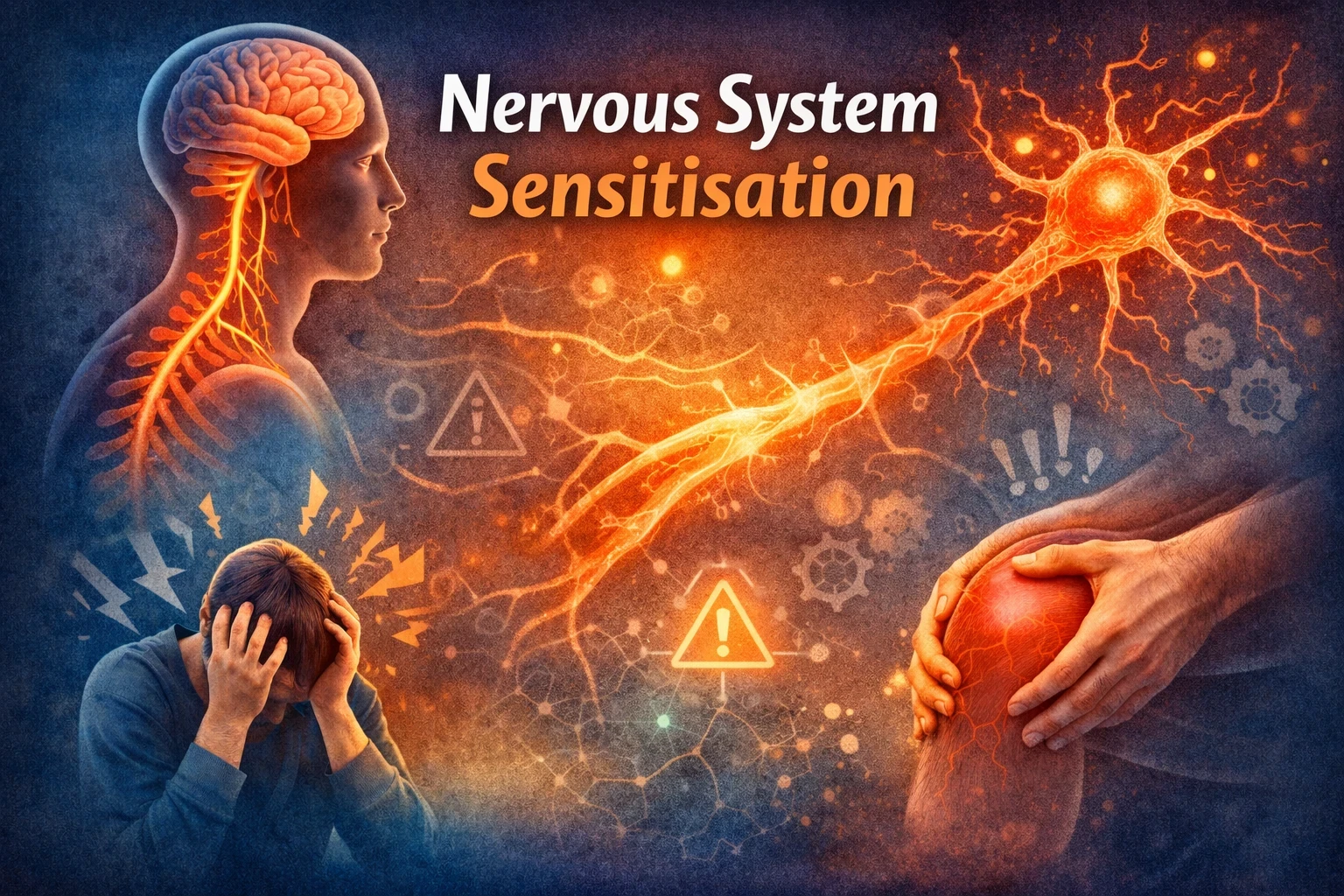
One of the most common explanations for pain symptoms that shift locations is nervous system sensitisation.
When the nervous system becomes more sensitive, it can amplify normal signals coming from muscles and joints.
This means small amounts of strain may feel painful, and symptoms may appear in different areas of the body.
The nervous system is designed to protect the body. However, sometimes it can become overly protective.
You can learn more about this process in the article why pain persists even when nothing is wrong.
Muscle Tension and Movement Patterns
Muscle tension can also contribute to pain symptoms that shift locations.
When one area of the body becomes sore, people often change how they move without realising it.
For example, protecting a sore lower back may place extra strain on the hips or shoulders.
Over time, these movement changes can cause discomfort to appear in other areas.
Reduced movement can also cause stiffness in muscles and joints.
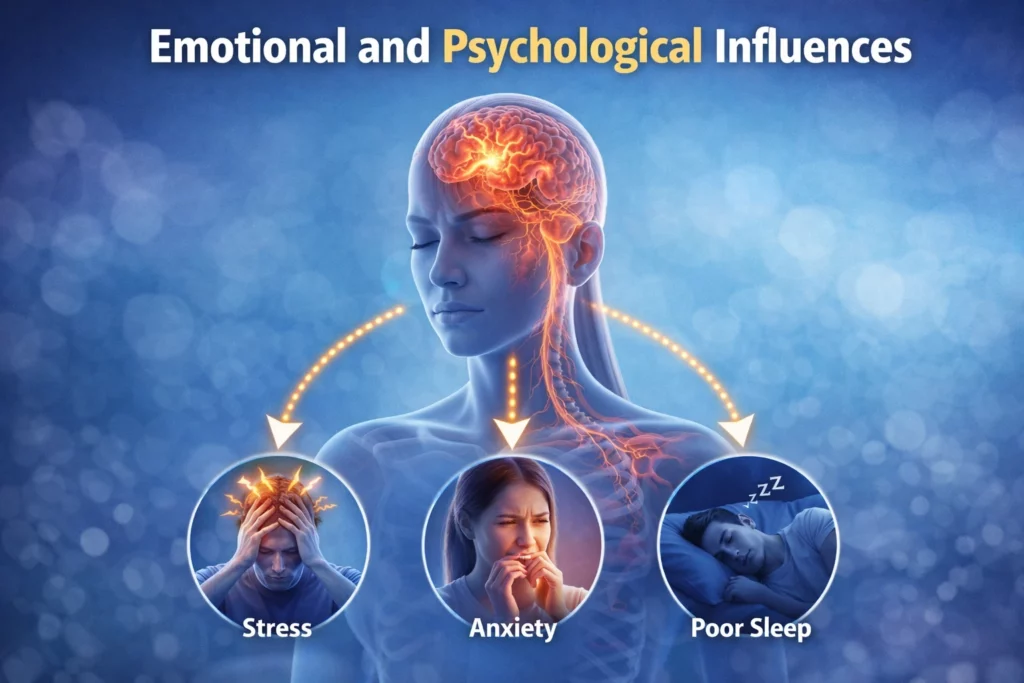
Emotional and Psychological Influences
Pain symptoms that shift locations can also be influenced by emotional and psychological factors.
Stress and anxiety can increase muscle tension and raise the sensitivity of the nervous system.
During stressful periods people often report headaches, neck tension, shoulder pain, or general body aches.
These symptoms may move between different areas depending on muscle tension patterns.
The connection between emotional stress and physical pain is well recognised in pain science.
When Shifting Pain May Be Part of Recovery
Pain symptoms sometimes appear during recovery.
As the body becomes more active again and movement improves, different muscles and joints may temporarily feel sore.
This can happen when previously unused muscles begin working again or when movement patterns change.
Although shifting discomfort can feel worrying, it often settles as the body adapts.
Gradual movement and gentle exercise can help restore normal movement patterns.
For broader recovery support, you can explore back pain relief solutions.
When Pain That Moves Should Be Checked
While pain symptoms that shift locations are often harmless, some situations should be evaluated by a healthcare professional.
Seek medical advice if pain is accompanied by:
• Severe unexplained weakness
• Numbness spreading down the arms or legs
• Fever or illness
• Sudden severe pain after injury
• Loss of bladder or bowel control
These symptoms are uncommon but may indicate conditions requiring medical attention.
Strategies That May Help
Several simple strategies may help when pain symptoms that shift locations occur.
Gentle Movement
Regular gentle movement helps prevent stiffness and supports healthy muscle function.
Stress Management
Relaxation techniques such as breathing exercises or mindfulness may help calm the nervous system.
Sleep and Recovery
Good sleep allows the body and nervous system to recover and repair.
Gradual Activity
Slowly increasing activity levels can help the body rebuild strength and confidence in movement.
For broader recovery guidance, this guide to back pain treatment explains evidence-based approaches that support long-term recovery.
Supportive Tools That May Help
Some people find additional support from tools that help reduce strain on painful areas.
Supportive braces, heat therapy, and ergonomic supports may provide temporary relief while the body recovers.
Best quality supportive tools for pain relief available at Carex here.
Balanced Perspective
Pain symptoms can feel confusing, but they are often related to how the nervous system processes pain signals.
The brain constantly evaluates signals from the body, and changes in movement, stress levels, or sensitivity can cause pain to appear in different areas.
In many cases, improving movement, reducing stress, and supporting overall health can help the nervous system gradually settle.
Understanding how pain works is often one of the most reassuring steps toward recovery.
Scientific Studies