Hand Osteoarthritis Vs Rheumatoid Arthritis Know The Difference
Hand Osteoarthritis vs Rheumatoid Arthritis
Hand osteoarthritis vs rheumatoid arthritis is a common comparison because both conditions can cause pain, stiffness, swelling, and reduced movement in the hands. Even though the symptoms may sometimes feel similar, the causes, joint changes, and treatment approaches can be very different.
Understanding the difference between these two forms of arthritis may help people recognise symptoms earlier and explore the right support options for daily comfort and hand function.

What Is Hand Osteoarthritis?
Hand osteoarthritis is usually linked to gradual wear and tear inside the joints. Over time, the protective cartilage between bones can slowly break down. This may lead to stiffness, aching, swelling, and changes in finger shape.
Hand osteoarthritis often develops slowly and becomes more common with age. Many people notice symptoms in the:
- Finger joints closest to the nails
- Middle finger joints
- Base of the thumb
Some people experience symptoms in only one hand, while others notice problems in both hands over time.
What Is Rheumatoid Arthritis?
Rheumatoid arthritis is an autoimmune condition. Instead of normal wear and tear, the immune system mistakenly attacks the lining of the joints. This inflammation may damage joints if it continues for long periods.
Rheumatoid arthritis often affects smaller joints first, especially in the hands and wrists. Unlike osteoarthritis, rheumatoid arthritis may also cause:
- Fatigue
- Low energy
- Morning stiffness lasting over an hour
- Warm swollen joints
- Symptoms on both sides of the body
The condition can appear at different ages and sometimes develops more quickly than osteoarthritis.
Hand Osteoarthritis vs Rheumatoid Arthritis Symptoms
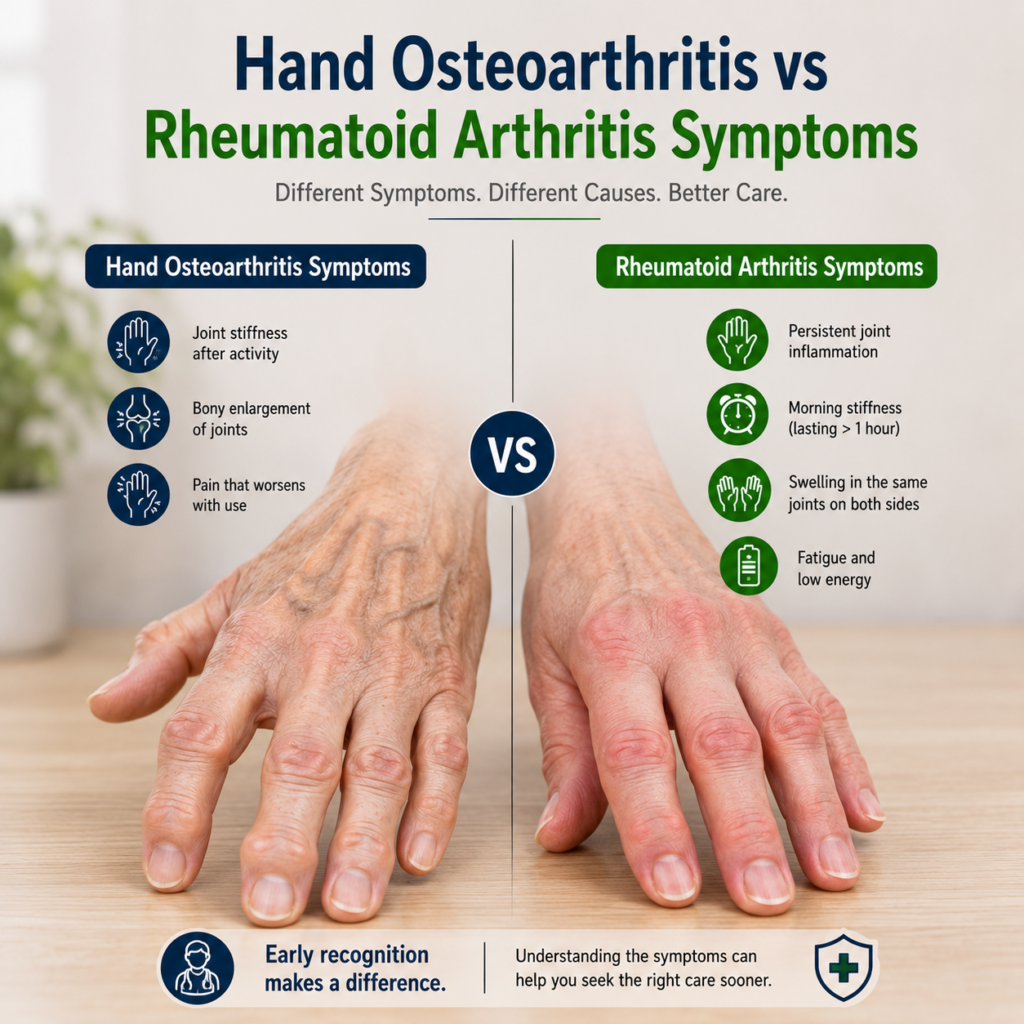
One of the biggest differences in hand osteoarthritis vs rheumatoid arthritis is the type of symptoms people experience.
Hand Osteoarthritis Symptoms
- Stiffness after activity
- Crunching or grinding sensations
- Joint enlargement over time
- Pain that worsens with use
- Reduced grip strength
- Thumb base pain
Rheumatoid Arthritis Symptoms
- Persistent inflammation
- Morning stiffness
- Warm tender joints
- Symmetrical swelling
- Fatigue and tiredness
- Flare-ups that come and go
In many cases, rheumatoid arthritis symptoms may feel more inflammatory, while osteoarthritis symptoms are often linked to movement and joint wear.
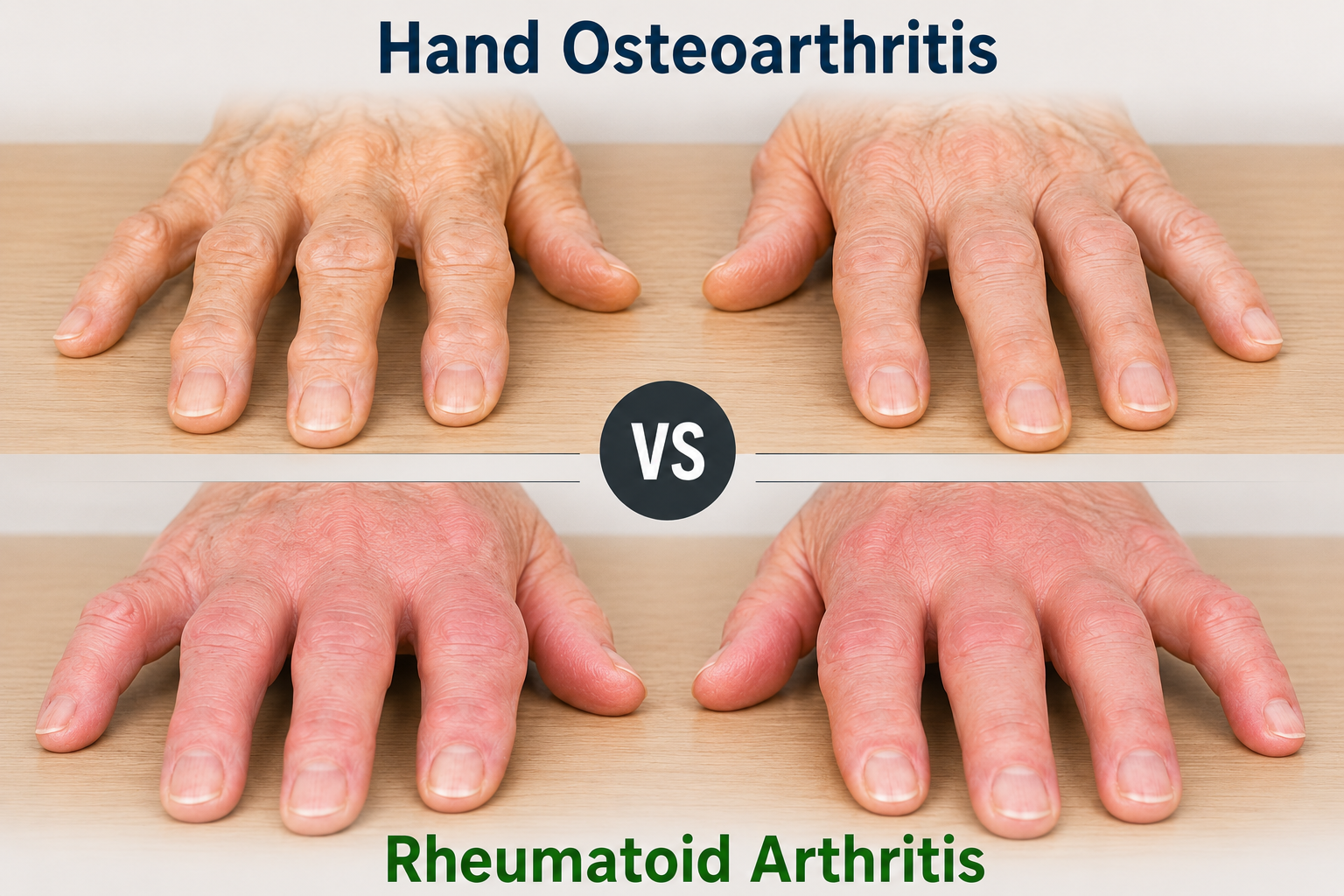
How the Hands May Look Different
Another important part of hand osteoarthritis vs rheumatoid arthritis is how the joints may physically change.
Hand osteoarthritis may create bony enlargements around finger joints. These can become more noticeable over time and may slightly change finger shape.
Rheumatoid arthritis may cause softer swelling and inflammation around the joints. In more advanced cases, finger alignment can change due to long-term joint damage.
Not every person develops visible deformities, especially when symptoms are managed early.
Causes and Risk Factors
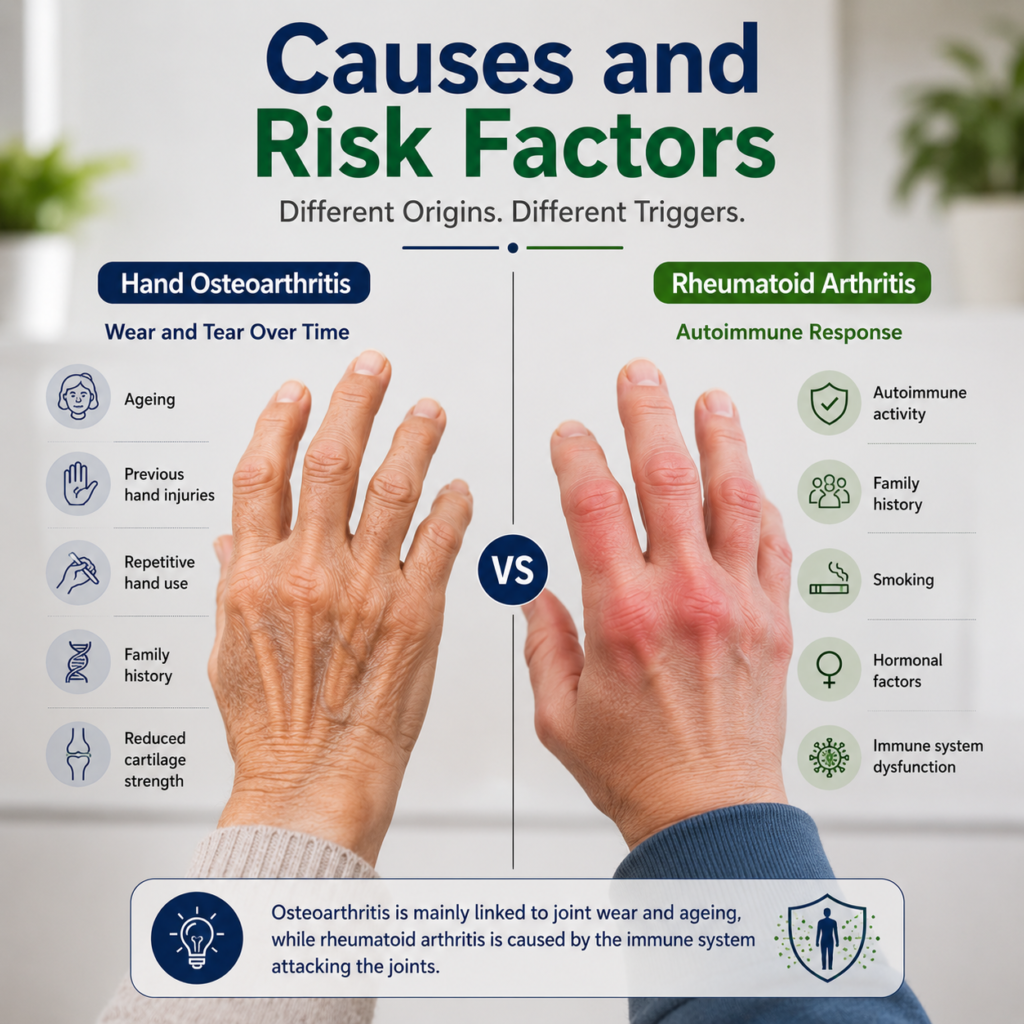
Hand Osteoarthritis Risk Factors
- Ageing
- Previous hand injuries
- Repetitive hand use
- Family history
- Reduced cartilage strength
Rheumatoid Arthritis Risk Factors
- Autoimmune activity
- Family history
- Smoking
- Hormonal factors
- Immune system dysfunction
Although both conditions affect joints, the underlying causes are very different.

How Doctors Diagnose the Difference
Diagnosing hand osteoarthritis vs rheumatoid arthritis usually involves a combination of physical examination, medical history, imaging, and blood tests.
A doctor may look for:
- Joint swelling patterns
- Finger joint location
- Morning stiffness duration
- X-ray changes
- Inflammatory markers in blood tests
Rheumatoid arthritis may show specific inflammatory markers in blood tests, while osteoarthritis usually does not.
Daily Challenges With Hand Arthritis
Both conditions may make simple daily tasks harder. People often notice difficulties with:
- Opening jars
- Buttoning clothes
- Using keys
- Typing
- Writing
- Cooking
Hand stiffness and reduced grip strength can affect independence and confidence during normal daily activities.
Some people find that pacing activities and taking short movement breaks may help reduce strain on painful joints.
Supportive Approaches for Hand Comfort
There is no single solution for everyone, but many people explore supportive strategies to help manage discomfort and improve hand function.
Gentle Hand Exercises
Simple stretching and mobility exercises may help maintain movement and reduce stiffness. Gentle movement is often encouraged rather than complete inactivity.
Heat Therapy
Warm compresses, heated gloves, or heat therapy products may help loosen stiff hand joints and improve comfort during colder weather.
You can also explore supportive approaches discussed in our heat therapy for arthritis guide.

Supportive Hand Tools
Some people use ergonomic kitchen tools, jar openers, or grip supports to reduce pressure on painful finger joints.
TENS Therapy
Some individuals explore TENS therapy for arthritis pain relief to help manage discomfort around the hands and wrists.
Anti-Inflammatory Lifestyle Habits
Healthy sleep, stress reduction, balanced nutrition, and gentle activity may help support overall joint health and wellbeing.
You may also find useful information in our guide to natural remedies for joint pain and arthritis.
Can Someone Have Both Conditions?
Yes. Some people may develop osteoarthritis and rheumatoid arthritis at the same time. This can sometimes make diagnosis more complicated because symptoms may overlap.
Doctors usually look carefully at swelling patterns, imaging, and blood tests to understand which condition is contributing most to symptoms.
When to Seek Medical Advice
It may be important to seek medical advice if hand pain is persistent, worsening, or affecting daily life.
Earlier assessment may help protect joint function and improve long-term management options, especially in rheumatoid arthritis where inflammation can continue damaging joints.
Final Thoughts on Hand Osteoarthritis vs Rheumatoid Arthritis
Hand osteoarthritis vs rheumatoid arthritis comparisons show that both conditions can affect comfort, movement, and quality of life, but they develop for very different reasons.
Hand osteoarthritis is more connected to cartilage wear and long-term joint changes, while rheumatoid arthritis is driven by immune system inflammation.
Understanding the differences may help people recognise symptoms earlier, ask better questions, and explore supportive treatment options that fit their individual needs.
Research Study:
Rheumatoid Arthritis Overview – NIAMS
Research Study:
Osteoarthritis Information – CDC