
Tennis Elbow Symptoms And Causes What you can do is
Tennis Elbow Symptoms and Causes
Tennis elbow symptoms and causes are usually linked to repeated strain on the tendons around the outside of the elbow. Although the name sounds sports-related, tennis elbow does not only affect tennis players.
It can happen to office workers, builders, painters, mechanics, gardeners, gym users, hairdressers, tennis players and anyone who repeatedly uses the wrist, hand, and forearm.
Tennis elbow is also called lateral epicondylitis. It often develops slowly rather than suddenly. At first, the pain may feel mild and easy to ignore. Over time, simple tasks like lifting a kettle, turning a door handle, typing, opening a jar, or carrying shopping bags can become uncomfortable.
Understanding Tennis elbow symptoms and causes may help people recognize the condition earlier and reduce strain before the pain becomes more difficult to manage.
What Is Tennis Elbow?
Tennis elbow is a tendon-related condition that affects the outer part of the elbow. The tendons involved connect the forearm muscles to the elbow bone. These muscles help with gripping, lifting, twisting, and extending the wrist.
When these tendons are used too often without enough recovery time, tiny areas of irritation can develop. This may lead to tenderness, stiffness, weakness, and pain around the elbow and forearm.
The condition often affects the dominant arm because that arm is usually used more during work, exercise, and daily activity. However, tennis elbow can affect either arm depending on a person’s routine, job, hobbies, or training habits.
Common Tennis Elbow Symptoms
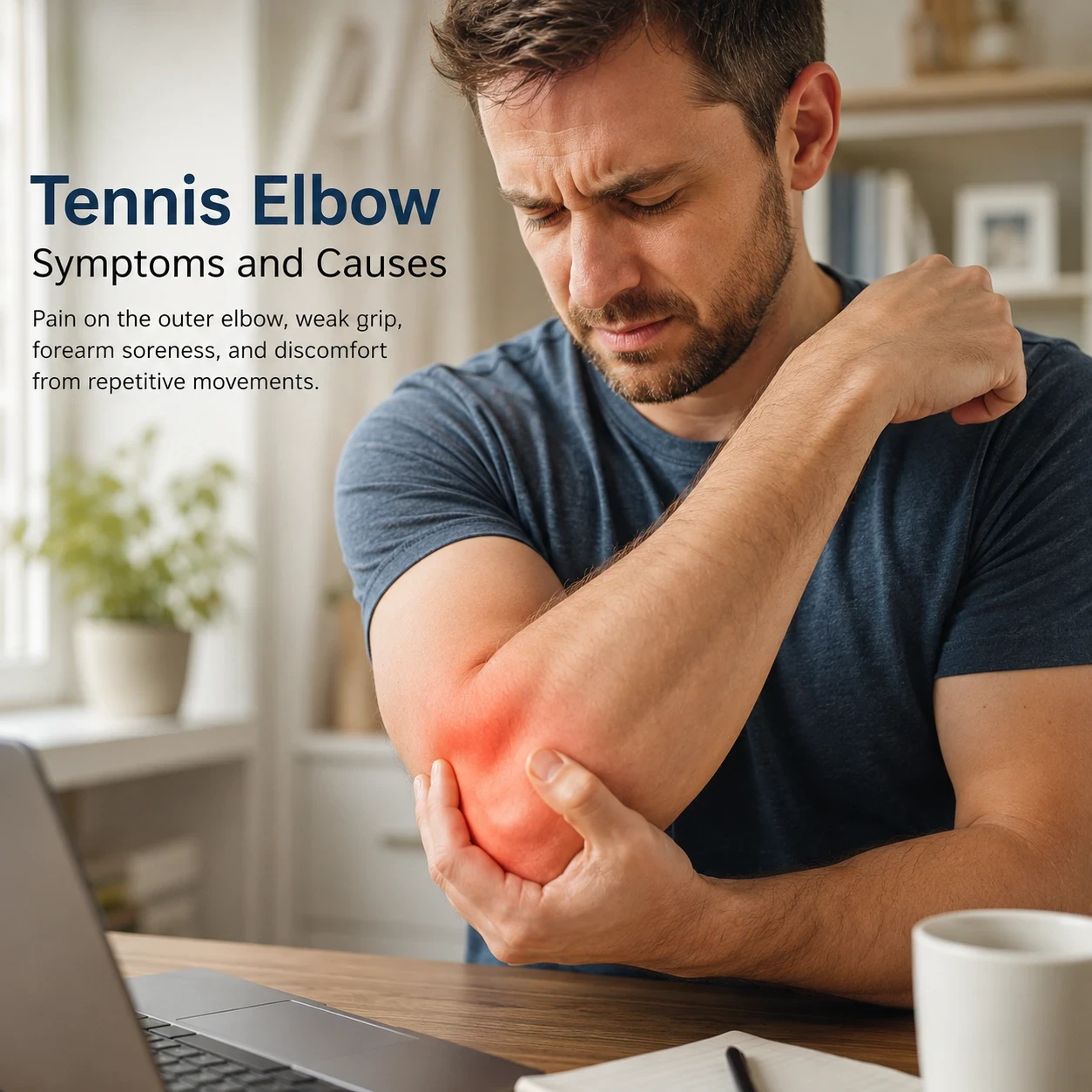
The most common symptom is pain on the outside of the elbow. This pain may stay in one place or travel down the forearm toward the wrist. Some people describe it as aching, burning, sharp, tender, or sore.
Common symptoms include:
- Pain on the outer side of the elbow
- Forearm tightness or soreness
- Weak grip strength
- Pain when lifting objects
- Discomfort when twisting the wrist
- Pain when opening jars or bottles
- Difficulty shaking hands
- Tenderness when touching the elbow
- Pain during typing or mouse use
- Discomfort after sports, DIY, or manual work
Many people notice symptoms becoming worse after repetitive activity. The elbow may feel stiff in the morning, sore after work, or painful after using tools, sports equipment, or a computer mouse for long periods.

Main Tennis Elbow Causes
Most Tennis elbow symptoms and causes are connected to overuse. Repeating the same hand, wrist, or forearm movement can place stress on the tendons. If the tendons do not get enough time to recover, irritation may build gradually.
Common causes include:
- Playing tennis or racquet sports
- Using hand tools repeatedly
- Painting, decorating, or sanding
- Gardening and pruning
- Heavy computer mouse use
- Manual lifting at work
- Gym exercises with poor form
- Repetitive gripping or squeezing
- Using vibrating tools
- Carrying heavy bags regularly
Poor technique can also contribute. For example, gripping too tightly, lifting with the wrist in an awkward position, using tools for too long, or exercising with poor form may increase tendon strain.
Who Is More Likely To Get Tennis Elbow?
Tennis elbow is most common in adults between 30 and 60, but younger adults can also develop it. Anyone who repeatedly uses the wrist and forearm can experience symptoms.
People at higher risk include builders, plumbers, electricians, painters, mechanics, office workers, warehouse workers, hairdressers, gardeners, golfers, tennis players, and gym users.
The risk may increase when repetitive movements are combined with poor rest, weak forearm muscles, heavy lifting, sudden increases in activity, or poor equipment setup.
How Tennis Elbow Affects Daily Life
Tennis elbow can make ordinary tasks surprisingly frustrating. Activities that require gripping, lifting, or twisting often become harder. A person may struggle to lift a cup, pour from a kettle, hold a phone, use a screwdriver, open a door, or carry shopping bags.
For office workers, long periods of typing or mouse use may worsen symptoms. For tradespeople, repeated tool use can keep irritating the tendon. For sports players, gripping a racket, club, or weight may become painful.
This is why early changes matter. Reducing repeated strain may help prevent mild symptoms from becoming persistent.

Supportive Treatment Options
Supportive care usually focuses on reducing irritation, easing discomfort, and helping the tendon recover gradually. Rest does not always mean avoiding all movement. It usually means reducing the movements that trigger pain while keeping the arm gently active.
Helpful options may include:
- Taking short breaks from repetitive tasks
- Using an elbow support brace
- Applying cold therapy after activity
- Using gentle heat for stiffness
- Improving desk or tool setup
- Stretching the wrist and forearm gently
- Adding strengthening exercises when pain allows
- Getting physiotherapy if symptoms continue
Some people also explore temporary pain support through TENS therapy for pain relief. If stiffness is part of the problem, heat therapy for arthritis may offer useful general guidance on heat-based comfort.
For tennis elbow pain treatment , visit here.
When To Seek Medical Advice
Medical advice may be needed if elbow pain becomes severe, lasts for several weeks, or affects normal daily function. It is also important to seek help if there is swelling, numbness, sudden weakness, loss of movement, or pain after an injury.
A healthcare professional can check whether the symptoms are caused by tennis elbow or another issue, such as nerve irritation, arthritis, neck-related pain, or another tendon problem.
Final Thoughts
Tennis elbow symptoms and causes are usually connected to repeated strain on the elbow and forearm tendons. Pain on the outside of the elbow, weak grip, forearm tightness, and discomfort during lifting or twisting are common signs.
Although tennis elbow can be frustrating, many people improve with activity changes, supportive care, and gradual recovery. Spotting the symptoms early may help reduce long-term irritation and make daily tasks easier again.
External Research:
Cleveland Clinic – Tennis Elbow Overview
