Aches, Tension, & Soreness: Why They Happen And What You
Aches, Tension, & Soreness: Why
Aches, tension, & soreness are some of the most common physical complaints people experience.
They show up after long workdays, intense workouts, stressful weeks, or sometimes for no obvious reason at all.
While they’re often dismissed as “just part of life,” recurring aches, tension, & soreness are signals from your body that something needs attention. The good news? Most everyday discomfort can be improved with a layered, practical approach.
Let’s break it down clearly.

What Are Aches, Tension, & Soreness?
Aches, tension, & soreness usually fall into three broad categories:
Muscle overuse soreness (after activity or new movement)
Stress-related muscular tension (neck, shoulders, jaw, back)
Low-grade inflammatory discomfort (joints or connective tissue) Unlike acute injuries, these sensations tend to build gradually.
They may feel dull, tight, stiff, or heavy rather than sharp and alarming.
If you’ve ever woken up feeling stiff without knowing why, or noticed your shoulders creeping up toward your ears during a stressful day, you’ve felt this pattern.
Why Do Aches, Tension, & Soreness Happen?
Several mechanisms can overlap.
1. Movement Imbalance Too little movement and too much repetitive movement can both trigger aches, tension, & soreness. Sitting for long periods reduces circulation and stiffens tissues.
On the other hand, sudden increases in activity can overload muscles that aren’t conditioned for it. If you want a deeper explanation of how load influences discomfort, this guide on movement, load, and pain sensitivity explains the relationship clearly.
2. Nervous System Stress Mental stress often expresses itself physically. When stress rises, muscles subtly contract. The neck tightens. The jaw clenches. Breathing becomes shallow.
Over time, this creates persistent aches, tension, & soreness even without physical strain. This doesn’t mean the pain is “in your head.” It means your nervous system is involved — which is actually empowering, because it gives you more ways to influence it.
3. Low-Grade Inflammation Nutrition, sleep quality, and recovery habits influence tissue sensitivity.
If sleep is inconsistent, inflammation can rise and recovery slows.
This article on sleep hygiene tips that improve sleep quality outlines simple changes that can reduce next-day stiffness.
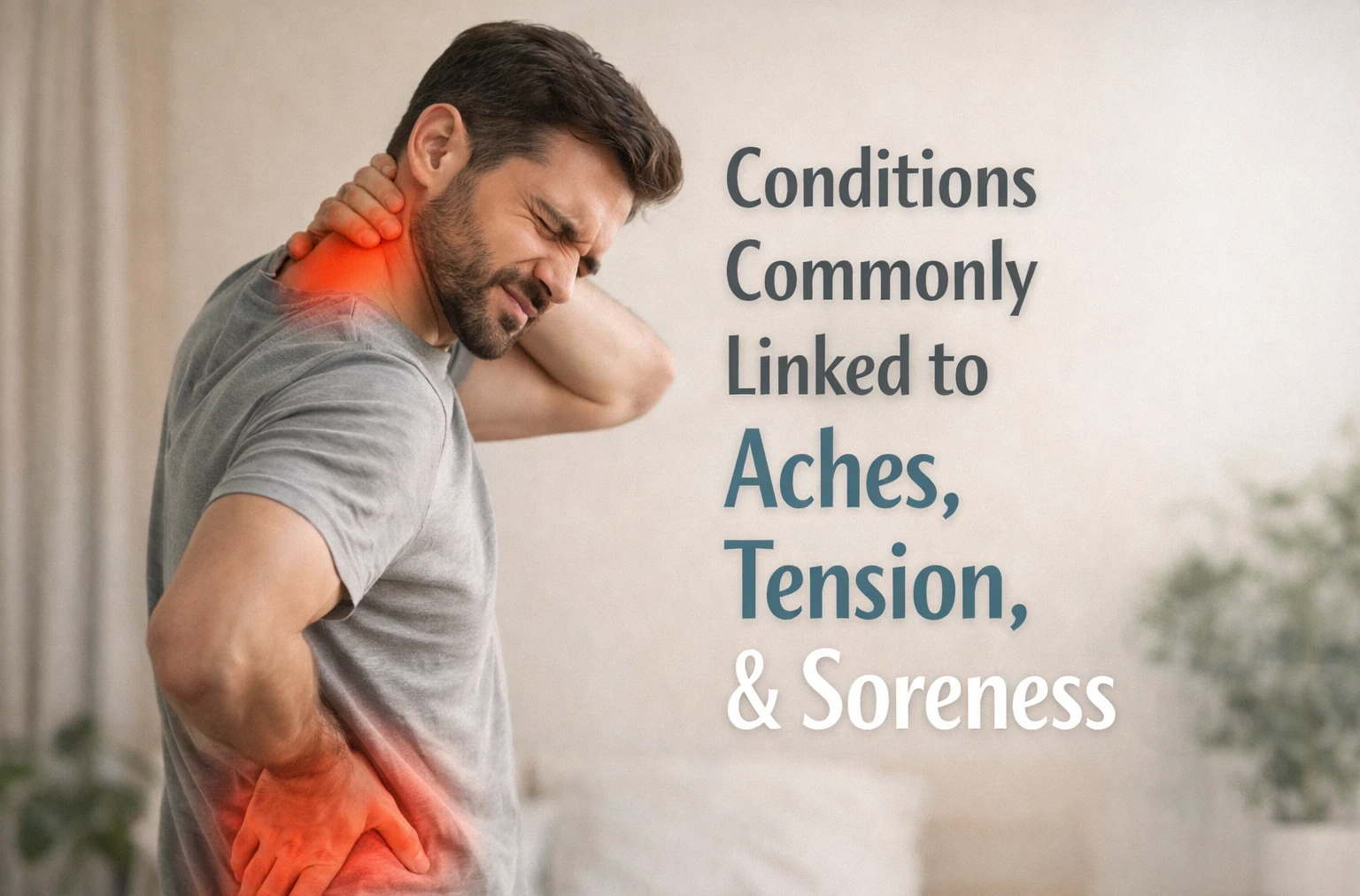
Conditions Commonly Linked to Aches, Tension, & Soreness
While mild discomfort is normal, recurring patterns may relate to:
Chronic joint irritation Postural strain Anxiety-related muscle guarding
Early inflammatory changes If joint stiffness is part of the picture, this overview of what causes chronic joint pain provides helpful context. Understanding the underlying driver matters more than chasing temporary relief.
What Research Says
Scientific research shows that musculoskeletal discomfort often reflects a combination of mechanical load, nervous system sensitivity, and lifestyle factors.
Studies suggest that regular low-impact movement improves circulation, reduces stiffness, and lowers pain sensitivity over time.
Gentle mobility work has been shown to decrease perceived soreness and improve function in both active and sedentary adults.
Consistent sleep, stress regulation, and progressive strengthening also reduce chronic muscle tension patterns.
In other words: small, steady habits outperform quick fixes.
 Practical Strategies That Actually Help Here’s where things get useful.
1. Gentle Daily Movement You don’t need extreme workouts.
Light walking, stretching, or mobility drills improve blood flow and reduce stiffness.
Five to ten minutes done consistently is often more effective than occasional intense sessions. Consistency beats intensity.
2. Down-Regulate Tension
If stress is driving your aches, tension, & soreness, calming the nervous system helps.
Try: Slow nasal breathing (4–6 breaths per minute) Progressive muscle relaxation Brief body scans to release jaw and shoulder tension
You may be surprised how much discomfort eases when the body feels safe.
3. Support Recovery Through Sleep
Sleep is when tissue repair happens.
Prioritise:
Consistent bedtimes
Reduced screen exposure at night
A cool, dark room
Even modest improvements in sleep can noticeably reduce morning stiffness.
4. Nutrition That Supports Comfort
Whole-food nutrition rich in omega-3 fats, magnesium, and polyphenols may support inflammatory balance.
Hydration matters too. Dehydrated tissues fatigue faster and feel tighter.
5. Progressive Strengthening If soreness keeps returning in the same area, that tissue may need gradual strengthening — not just stretching.
Muscles that are strong and well-conditioned are less reactive to everyday load.

Supplement Options (When Appropriate)
Some people explore:
Magnesium for muscle relaxation
Omega-3 fatty acids for inflammatory balance
Supplements are not magic solutions, but they may complement movement and lifestyle strategies.
Always check quality and speak to a professional if unsure.
Safety and Red Flags
While most aches, tension, & soreness are harmless, seek medical evaluation if you notice:
- Sudden severe pain
- Swelling with warmth and redness
- Persistent pain lasting months without improvement
- Neurological symptoms (numbness, weakness)
Persistent symptoms deserve clarity, not guesswork.
The Balanced Perspective
It’s easy to chase quick relief. But lasting improvement usually comes from layering simple habits:
Move a little daily
Reduce nervous system stress
Sleep consistently
Strengthen gradually
Support recovery nutritionally
Aches, tension, & soreness are often less about damage and more about sensitivity.
When you support your body consistently, that sensitivity tends to settle.
Be patient with it.
Change compounds over weeks, not overnight. — Scientific Study https://pubmed.ncbi.nlm.nih.gov/30521608/

 Previous Post
 Next Post