Bio Kinesiology
Bio Kinesiology Explained: A Gentle, Whole-Body Approach
Bio kinesiology is a holistic health approach that explores how the body responds to physical, emotional, and neurological stress.
It is based on the idea that the body works as one integrated system rather than separate parts. When balance is disrupted in one area, it can influence movement, comfort, energy levels, and overall wellbeing.
Rather than focusing only on symptoms, bio kinesiology looks at how the nervous system, muscles, and stress responses interact. This makes it particularly relevant for people who experience ongoing discomfort, tension, or stress-related symptoms without clear answers.
Understanding the Foundations of Bio Kinesiology
At the centre of bio kinesiology is the relationship between muscles and the nervous system.
Muscles respond to signals from the brain, and subtle changes in muscle tone can reflect how the nervous system is coping with stress.
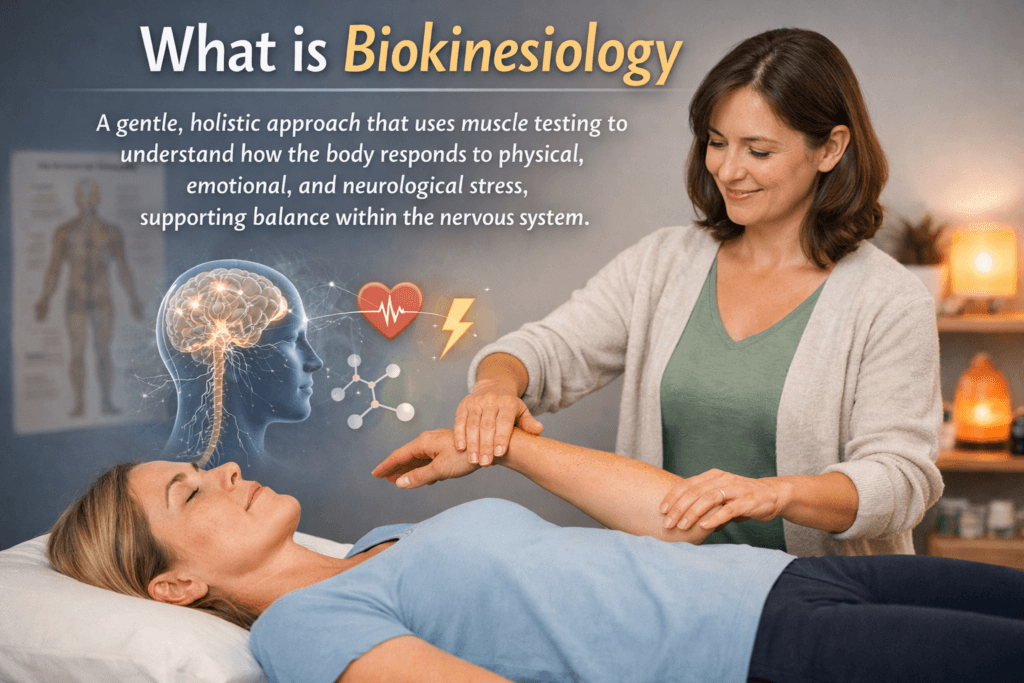
Practitioners use gentle muscle testing as a communication tool to observe these responses.
This approach does not measure strength. Instead, it looks at how smoothly a muscle responds when light pressure is applied. Changes in response may highlight areas where the body is under strain or struggling to adapt.
The Role of the Nervous System
Modern pain science shows that pain and tension are not always caused by tissue damage.
The nervous system plays a central role in how the body interprets signals and decides when protection is needed. When the system becomes over-protective, everyday movements or sensations can feel uncomfortable.
This perspective aligns closely with educational content found in Comprehensive Information on Pain, where pain is explained as a dynamic process rather than a simple injury response.
Bio kinesiology aims to reduce unnecessary nervous system alertness by supporting regulation and balance.
Mind, Stress, and Physical Response
Emotional stress, unresolved experiences, and mental overload can influence posture, breathing, and muscle coordination.
Bio kinesiology recognises that stress is stored not just mentally, but physically as well.
This mind-body interaction is also explored in Pain Relief Strategies Beyond Medication, where nervous system calming and awareness-based strategies are highlighted as supportive tools.
By addressing emotional and neurological stress alongside physical factors, bio kinesiology encourages a more complete form of support.
What Happens During a Session
A typical session begins with a conversation about current concerns, lifestyle factors, and goals. Muscle testing is then used to identify patterns of stress or imbalance. Sessions are calm, collaborative, and non-forceful.
Supportive techniques may include gentle movement, breathing guidance, light touch, or simple awareness-based exercises. These approaches are consistent with principles discussed in Pain Management Strategies for Conditions, where long-term regulation is prioritised over short-term fixes.
Who May Explore Bio Kinesiology?
People often explore bio kinesiology when they experience:
- Persistent muscle tension or stiffness
- Stress-related physical symptoms
- Fatigue or low resilience
- Difficulty recovering from injury
- Heightened sensitivity to movement or touch
It is commonly used as a complementary approach alongside medical or physiotherapy care rather than as a replacement.
Supporting Long-Term Balance
The goal of bio kinesiology is not to “fix” the body, but to help it adapt more effectively. When the nervous system feels safer and more regulated, movement becomes easier, recovery improves, and the body’s natural healing processes are better supported.
This approach reflects modern thinking found throughout Beyond Pain Relief, where education, movement, and awareness are central themes.
A Modern Perspective on Health
While scientific research into kinesiology-based therapies is still evolving, many of its core ideas align with current neuroscience, particularly around pain perception, stress regulation, and adaptability. Bio kinesiology fits within a growing shift toward understanding health as an ongoing process rather than a static state.
References
https://biokinesiology.ie/what-is-biokinesiology/
 Previous Post
 Next Post