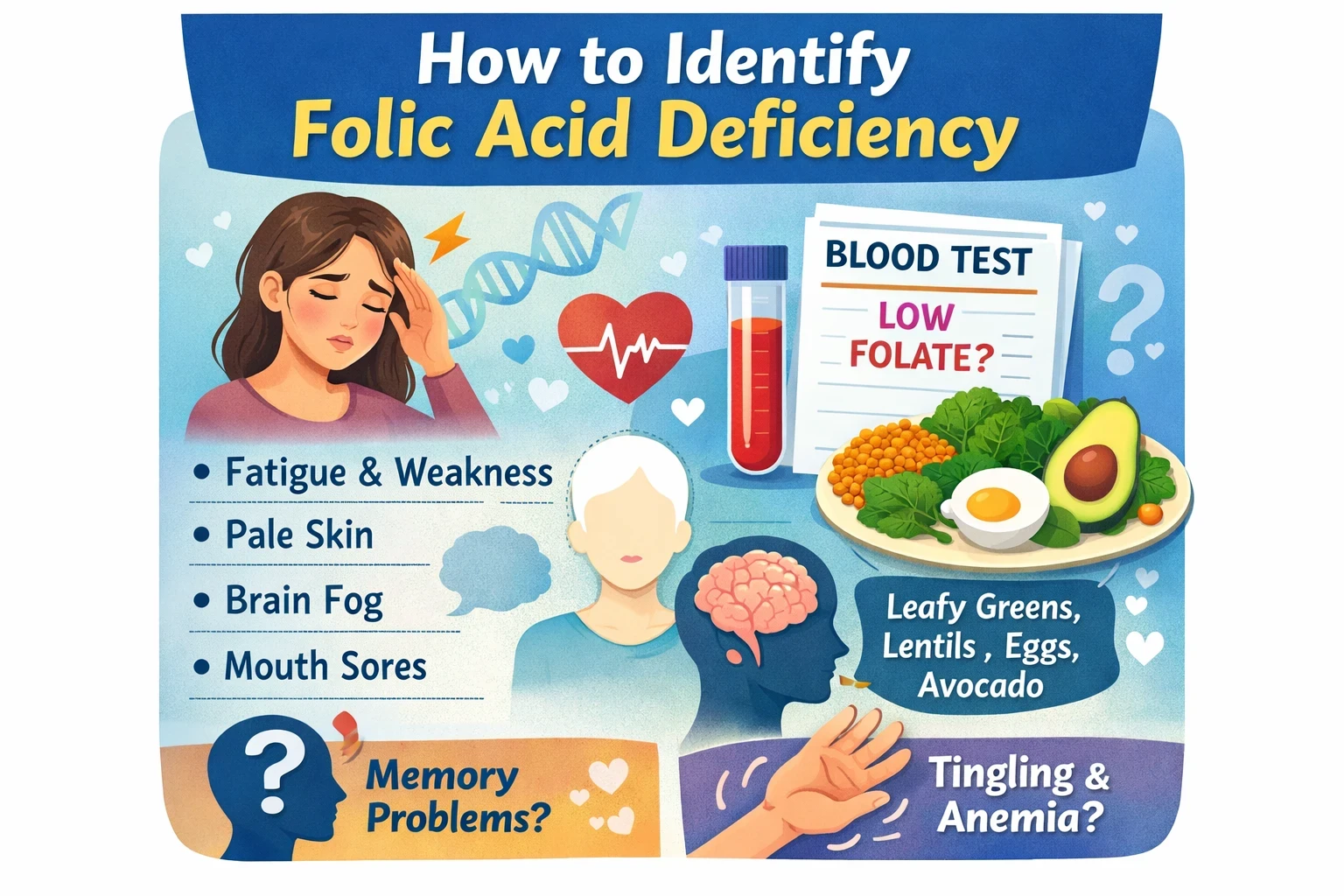
How To Identify Folic Acid Deficiency Know The Facts
How to Identify Folic Acid Deficiency
How to identify folic acid deficiency is a question that often comes up when someone feels unusually tired, mentally foggy, or just “not themselves.”
The tricky part is that symptoms can be subtle at first. They tend to build gradually, which makes them easy to overlook. Folate, also known as vitamin B9, plays a central role in red blood cell production, DNA synthesis, and nervous system balance.
When levels drop, the body doesn’t always shout — it whispers.
Learning how to identify folic acid deficiency early can help prevent bigger problems later.
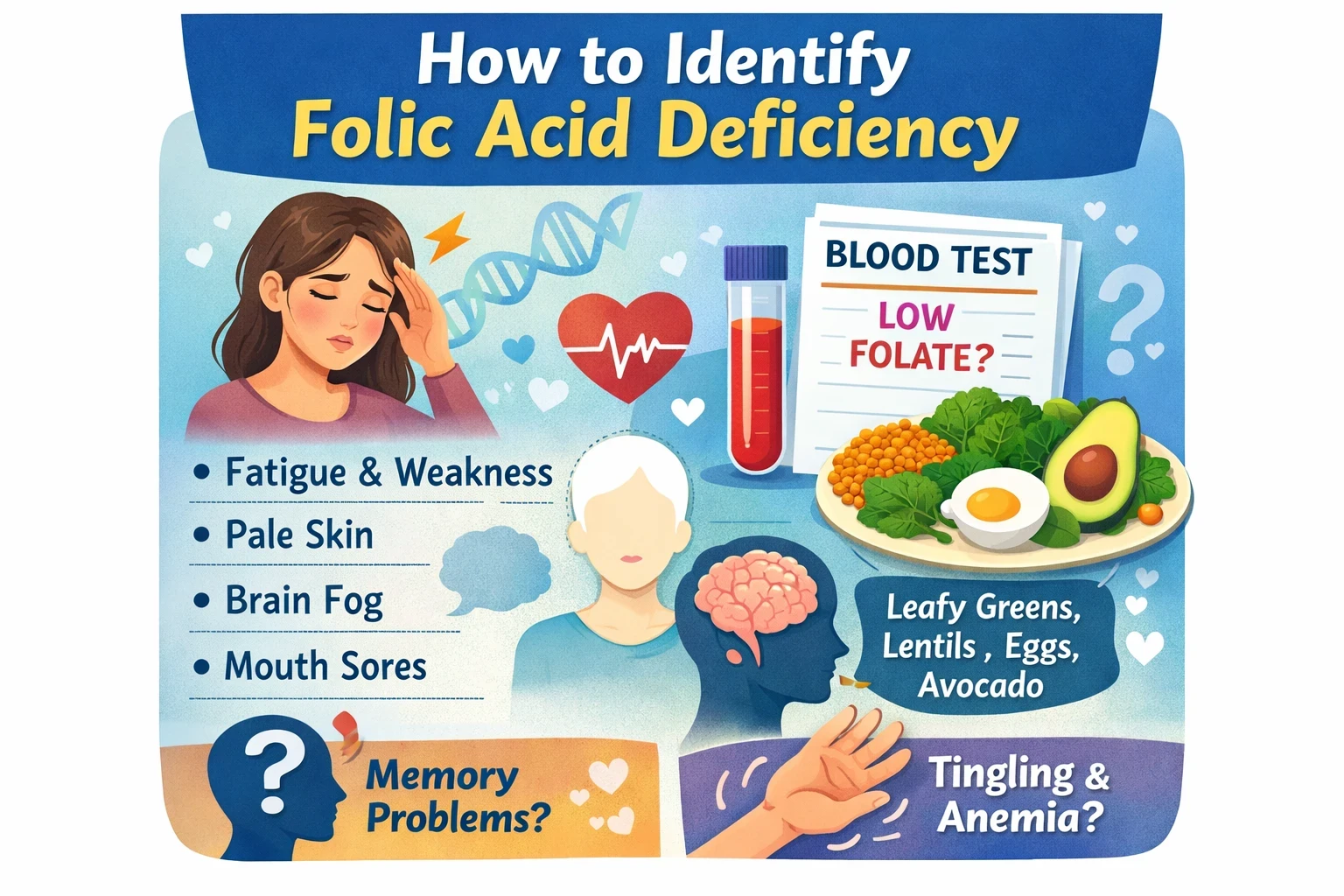
Why Folate Matters More Than You Think
Folate supports oxygen delivery by helping your body create healthy red blood cells.
Without enough of it, you may develop a form of anemia that leaves you feeling drained even after a full night’s sleep. It also works closely with vitamin B12. If either one is low, fatigue and neurological symptoms can show up.
You want a broader understanding of how nutrients influence pain, energy, and recovery, this guide on what causes chronic joint pain explains how underlying imbalances can amplify symptoms.
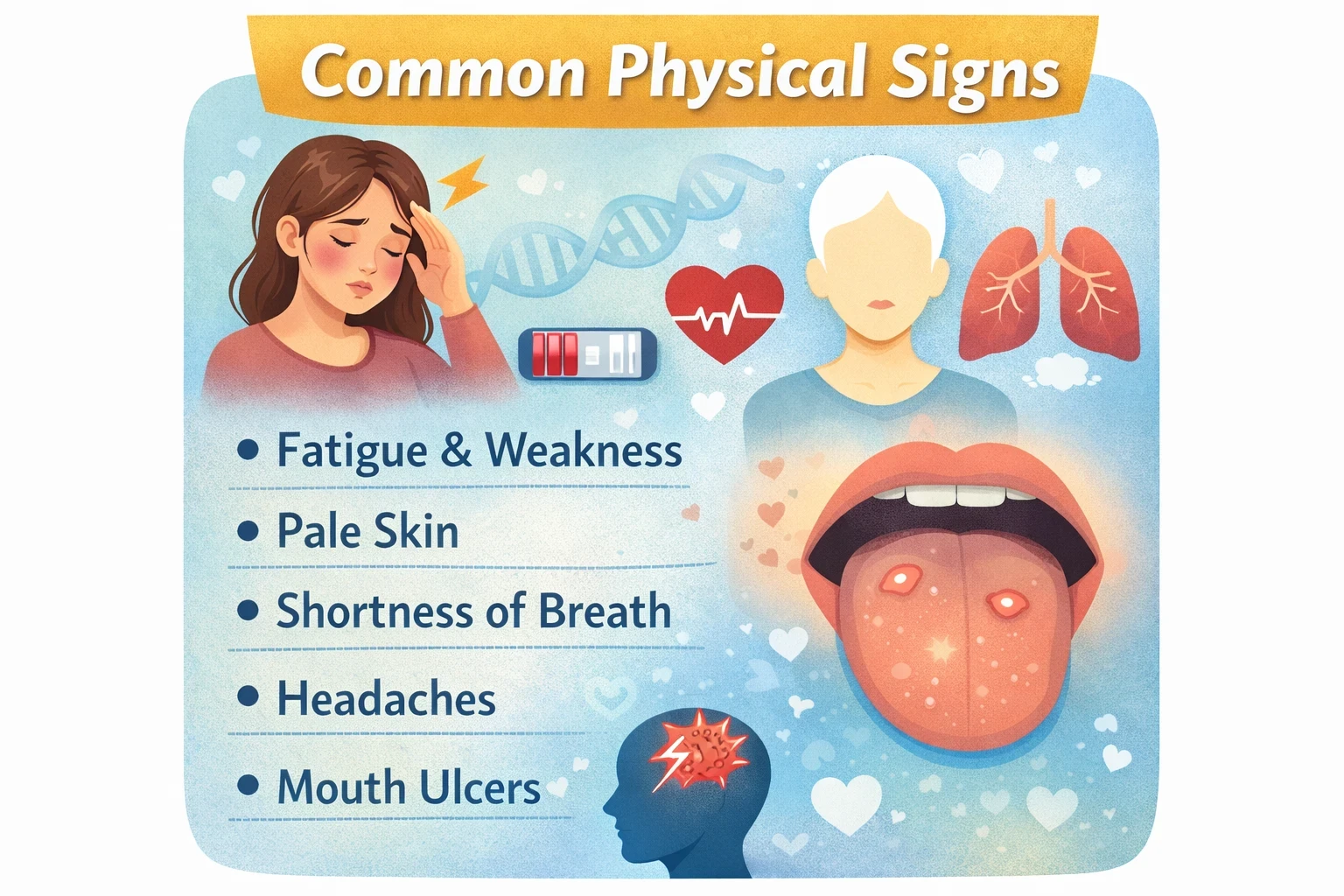
Common Physical Signs
One of the first steps in learning how to identify folic acid deficiency is recognizing early physical changes.
These can include:
• Persistent fatigue
• Weakness or low stamina
• Pale skin
• Shortness of breath during mild activity
• Headaches
Because these symptoms overlap with other issues, people often assume stress, lack of sleep, or aging is to blame.
But if they persist, it’s worth investigating. Some individuals also notice mouth ulcers, a swollen tongue, or digestive discomfort.
These signs can signal impaired cell turnover, which folate directly supports.
Cognitive and Emotional Clues
Low folate doesn’t just affect the body — it can influence mood and mental clarity too. People sometimes report:
• Brain fog
• Irritability
• Low mood
• Difficulty concentrating
Understanding how to identify folic acid deficiency means paying attention to these subtle shifts.
Nutrient deficiencies can influence how the nervous system processes stress signals, which in turn may affect discomfort levels.
You may find it helpful to explore pain education and nervous system sensitivity to see how stress and physiology connect.
Higher-Risk Groups to identify folic acid deficiency
Certain people are more likely to develop low folate levels.
These include:
• Women of childbearing age
• People with digestive disorders
• Individuals with high alcohol intake
• Older adults
• Those on restrictive diets
Pregnancy increases folate demands significantly.
That’s why understanding how to identify folic acid deficiency early is particularly important for women planning a pregnancy.
If you’re exploring women’s health topics, this overview of folic acid deficiency symptoms goes deeper into gender-specific considerations.
When Symptoms Become More Serious
If deficiency continues untreated, anemia can worsen.
This may lead to:
• Heart palpitations
• Noticeable breathlessness
• Extreme exhaustion
• Tingling sensations
These symptoms require medical assessment.
A simple blood test can confirm folate levels and check for anemia markers.
Learning how to identify folic acid deficiency isn’t about self-diagnosing — it’s about recognizing when to seek proper testing.
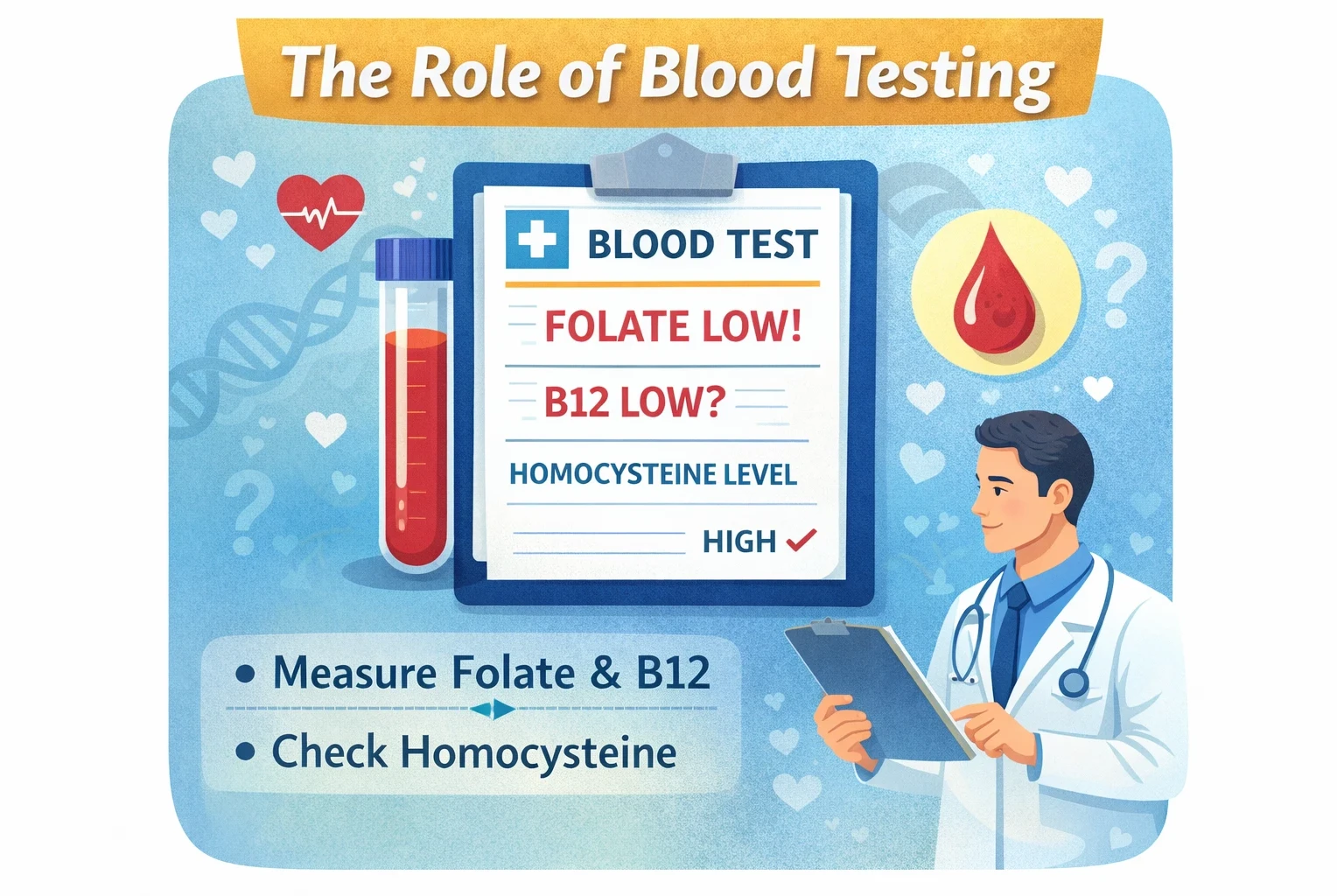
The Role of Blood Testing
Doctors typically measure serum folate levels and may also assess red blood cell folate.
In some cases, homocysteine levels are checked, as elevated homocysteine can signal folate insufficiency.
If B12 is low as well, treatment must be handled carefully.
Correcting folate without addressing B12 can mask underlying issues.
This is why professional guidance matters.
Supplements are widely available, but they’re not a substitute for proper assessment.
Learn more about Approved Science B Supplements here.
Diet Clues You Might Be Missing
Sometimes how to identify folic acid deficiency comes down to reviewing your eating habits.
Folate-rich foods include:
• Leafy greens
• Lentils
• Chickpeas
• Asparagus
• Avocado
Highly processed diets tend to be lower in natural folate.
Even though some foods are fortified, intake may still fall short, especially during times of stress or increased physiological demand.
Can Low Folate Influence Pain and Recovery?
Emerging research suggests nutrient imbalances can affect tissue repair and inflammation pathways.
While folate is not a direct painkiller, its role in cellular turnover means low levels may indirectly influence how the body handles stress and recovery.
If you’re working on a broader health reset, looking at sleep, nutrition, and stress together — as outlined in sleep hygiene and recovery habits — can support overall resilience.
Understanding how to identify folic acid deficiency is part of seeing the bigger picture rather than isolating one symptom.
When to Seek Help
If you experience persistent fatigue, pale skin, or cognitive changes that don’t improve with rest, speak to your healthcare provider.
Blood testing is straightforward and treatment is usually simple once diagnosed.
Folate deficiency is typically corrected with dietary adjustments or supplementation under supervision.
If you have a folate deficiency Approved Science B Supplements may help.
Early detection prevents complications.
Knowing how to identify folic acid deficiency empowers you to take action before small issues grow into larger ones. Scientific Reference
For a science-based overview of folate deficiency and clinical presentation: https://pubmed.ncbi.nlm.nih.gov/19570812/ If something in this list feels familiar, it may be worth having a conversation with your doctor.
Sometimes a simple nutrient check can explain a lot.