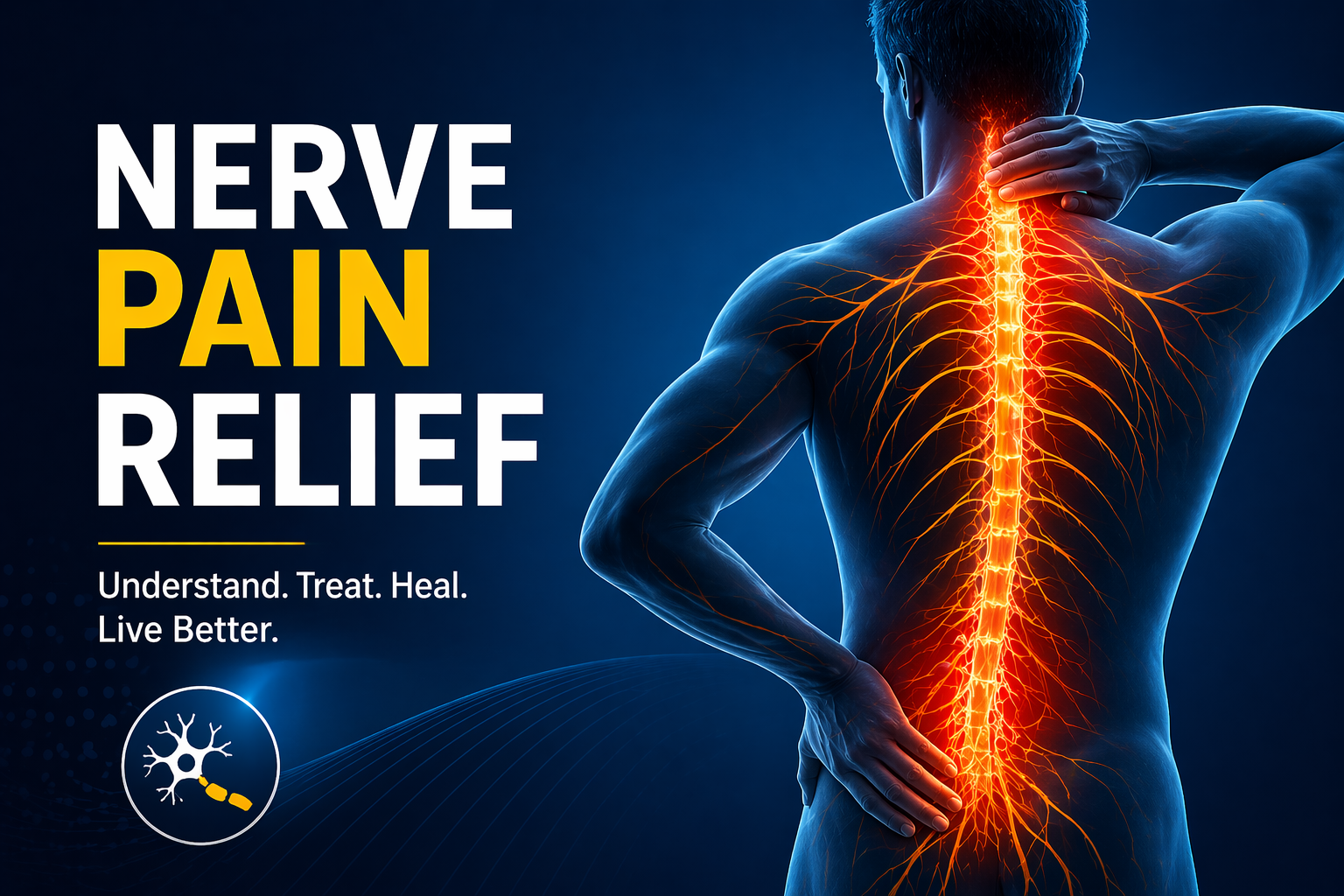
Nerve Pain Relief: What It Is, Why It Happens, and What May Help
Nerve pain relief matters because nerve pain can feel very different from the dull ache of sore muscles or stiff joints. It can burn, sting, shoot, tingle, or feel like an electric shock.
For some people it comes and goes. For others it lingers for months and affects sleep, mood, movement, and confidence.
A good pillar page should explain what nerve pain is, what causes it, what symptoms to watch for, and which treatment options may support recovery in a realistic way.

Nerve pain usually develops when a nerve is irritated, inflamed, compressed, or damaged. That damage changes the way the nerve sends signals.
Instead of sending normal messages about touch, pressure, or temperature, the nerve may begin sending pain signals too easily or too often.
This is why nerve pain can continue even when the original injury seems small or has already healed.
Nerve pain relief often takes time because calming an irritated nervous system is rarely a one-step process.
If you want to understand how nerves may recover over time, read can damaged nerves heal understanding nerve pain and recovery. If you want a broader look at treatment options, see nerve pain treatment science backed ways to support recovery. If you are unsure whether your symptoms sound nerve related, read nerve pain symptoms and warning signs look out for these.
What makes nerve pain different
Nerve pain is often called neuropathic pain. It is different because the nerve itself becomes part of the problem.
In muscle pain, tissue strain or inflammation may be the main issue.
In nerve pain, the communication system is altered.
That can create unusual sensations such as pins and needles, crawling feelings, sudden zaps, or pain from light touch.
Even clothing, bed sheets, or a slight temperature change may feel uncomfortable.
This is one reason nerve pain relief can be frustrating.
Standard pain strategies that help ordinary aches do not always work well when nerve signalling is involved.
Some people try to push through it, but that often leads to more irritation, more guarding, worse sleep, and more stress around movement.
A better approach is to understand the pattern, reduce aggravating factors, and use the right mix of support.

Common causes of nerve pain
There are many possible causes of nerve pain.
A compressed nerve in the spine can send pain down the arm or leg.
Diabetes can affect the small nerves in the feet and hands. Viral infections like shingles can leave the nervous system more sensitive long after the rash has gone.
Surgery, trauma, repetitive strain, vitamin deficiencies, poor blood sugar control, and inflammatory conditions may also contribute.
Sometimes the cause is obvious, but not always.
A person may describe burning feet at night, numb fingers, pain running from the lower back into the leg, or facial pain with no recent injury.
This is why nerve pain relief should always begin with a careful look at the likely source.
Supporting recovery is much easier when the root cause is not being missed.
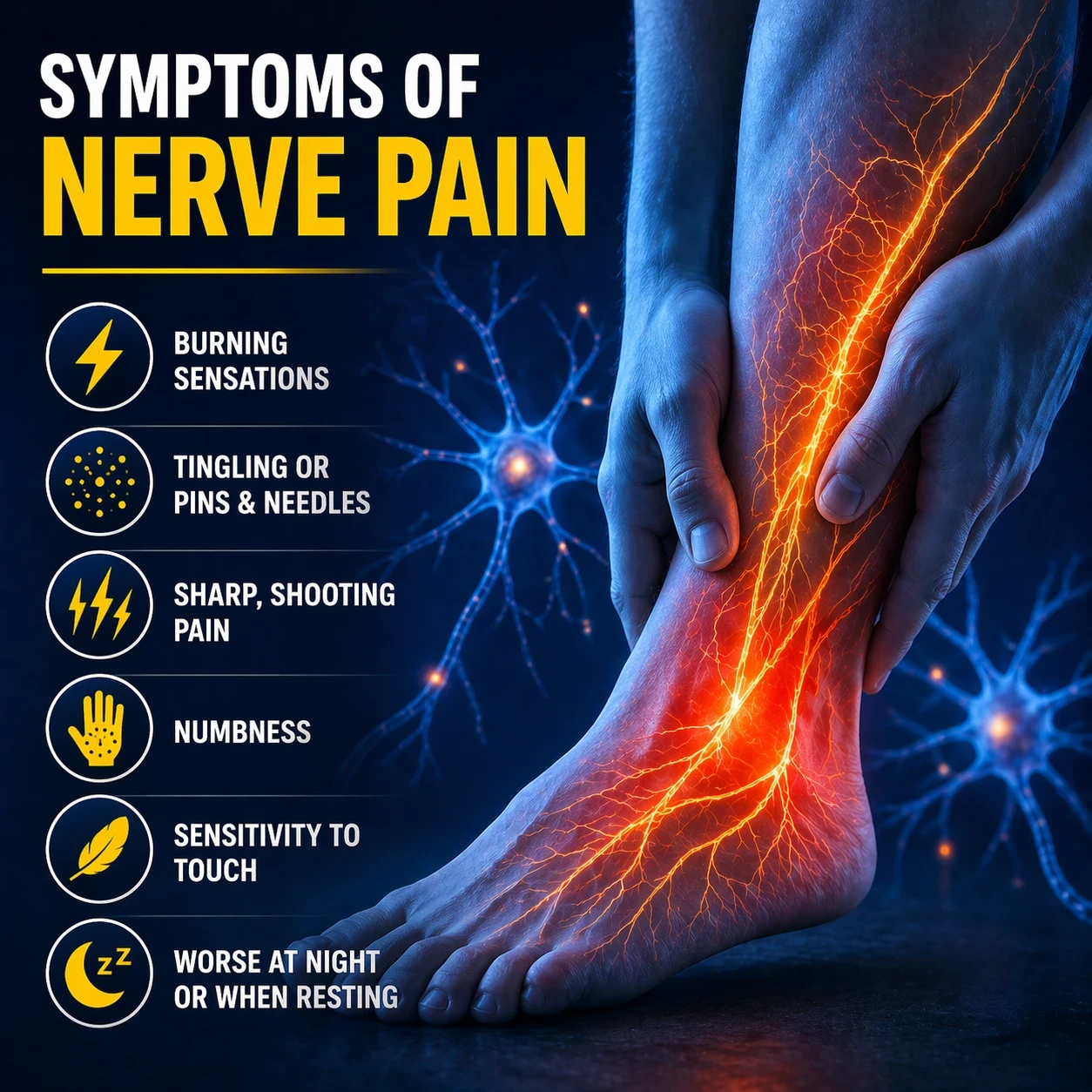
Symptoms that may point to nerve pain
Symptoms vary depending on which nerve is affected, but some patterns are common.
These include burning pain, stabbing pain, tingling, numbness, buzzing sensations, sensitivity to touch, weakness, and pain that travels along a clear pathway.
Some people also notice that symptoms get worse when they are tired, stressed, or inactive for long periods.
Nerve symptoms may be mild at first. A person might notice a patch of numb skin, a strange hot feeling, or occasional shooting pain.
Over time that may become more frequent.
Early attention matters because nerve pain relief is often easier when the nervous system has not been irritated for months or years without support.
Why daily life can make symptoms worse
Daily habits can feed into nerve pain more than many people realise. Long periods of sitting may increase pressure around irritated spinal nerves.
Poor posture can add tension to the neck, shoulders, and back.
Repetitive movement at work may keep sensitive tissue overloaded.
Lack of sleep can lower pain tolerance and make symptoms feel stronger.
Stress may also amplify how the brain interprets incoming danger signals.
This does not mean the pain is imagined. It means the nervous system responds to many inputs at once.
Good nerve pain relief often includes reducing those extra stressors so the body has a better chance to settle down.
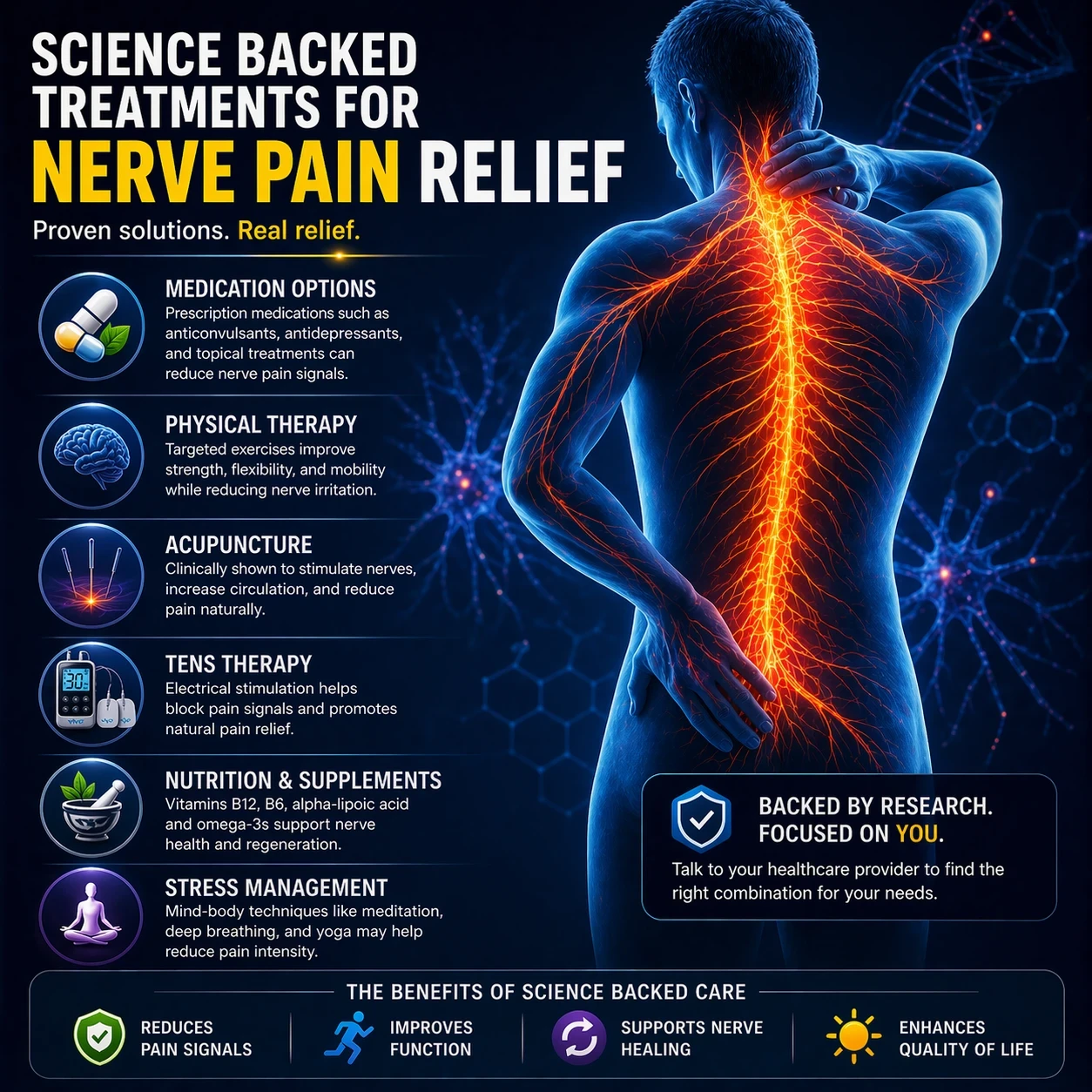
Medical options that may help
Medical treatment depends on the cause and severity.
Some people need assessment first to rule out major nerve compression, worsening weakness, or other warning signs.
Others may benefit from medicines that are commonly used for neuropathic pain.
These may include medications such as gabapentin, pregabalin, duloxetine, or amitriptyline.
They do not repair a damaged nerve directly, but they may reduce the intensity of pain signalling.
Topical options may be a consideration in some cases, particularly where symptoms are more localised.
Some patients also benefit from guided injections or other specialist treatments depending on the diagnosis.
Good nerve pain relief does not mean every option suits every person.
It means choosing the lowest burden approach that reasonably matches the pattern of pain and the person’s overall health.
Movement and physical support
Many people become afraid to move when nerve pain flares. That reaction is understandable, but complete rest usually does not help for long.
Gentle movement can support circulation, reduce stiffness, improve confidence, and help the nervous system tolerate normal activity again.
The key is choosing the right level.
Too much too soon may aggravate symptoms.
Too little for too long may increase deconditioning and sensitivity.
Walking, mobility work, posture changes, and carefully chosen exercises may all play a part.
When a nerve is being irritated by surrounding tissue tension or poor mechanics, physical therapy can be useful.
The aim is not to force the pain away. The aim is to improve function while reducing unnecessary aggravation.
In that sense, nerve pain relief is often about better pacing, better consistency, and better body awareness.

Heat, comfort, and supportive tools
Supportive tools do not solve every case, but they may help manage symptoms.
Gentle heat may relax surrounding muscles and make movement easier.
Some people prefer warmth before activity and a calmer routine before bed.
Cushions, supportive seating, braces, or positioning changes during sleep may also reduce irritation in certain cases.
Check out heat and cold therapy products for pain relief Here.
The benefit often comes from lowering strain around the sensitive area rather than directly treating the nerve itself.
Some may find relief with Advanced Science Nerve Pain Supplements.
Comfort matters more than many people think.
If pain is waking you every night, making sitting unbearable, or causing constant guarding, even small changes in your setup may help.
For some people, the first stage of nerve pain relief is simply reducing the repeated aggravation they face every day.
TENS Therapy for Pain Relief may help. Go Here

Lifestyle factors that support recovery
Healing and symptom control are not only about treatments.
Sleep quality, nutrition, stress regulation, hydration, and blood sugar control may all influence nerve health.
If diabetes or metabolic issues are part of the picture, better control can make a meaningful difference.
If a vitamin deficiency is involved, correcting it matters.
If stress is keeping the body on high alert, calming routines may help reduce symptom intensity.
None of these steps are instant fixes, but together they create better conditions for recovery.
Nerve pain relief is often more successful when people stop looking for one magic solution and start building a steady routine around the basics.
When to seek further medical advice
Some symptoms should not be ignored.
Seek proper medical review if you develop significant weakness, worsening numbness, loss of coordination, bowel or bladder changes, facial drooping, rapidly progressing symptoms, or severe pain that is not improving.
These features may point to a condition that needs faster investigation.
It is also worth getting checked if the pain has become constant, is disturbing sleep for long periods, or is affecting work and daily function.
Nerve pain relief is harder when people wait too long and the problem becomes deeply established.
A balanced view of what to expect
People understandably want fast answers, but nerve symptoms can be stubborn.
Some nerves do recover slowly.
Some symptoms settle as inflammation reduces or compression is addressed.
Other cases become longer term and need ongoing management rather than a simple cure.
That does not mean improvement is impossible. It means progress may come in stages: better sleep first, then fewer flares, then better walking tolerance, then improved confidence with activity.
The most useful mindset is often practical rather than dramatic.
Look for patterns.
Reduce obvious triggers. Build consistency.
Ask whether the plan is helping function as well as pain.
True nerve pain relief is not just about lowering a number on a pain scale.
It is about helping someone move better, sleep better, cope better, and regain more normal daily life.
Final thoughts
Nerve pain can be exhausting, confusing, and slow to settle, but there are sensible ways to approach it.
Start by understanding the likely cause.
Watch the symptom pattern carefully. Address obvious aggravating factors.
Use medical support when needed.
Add movement, pacing, sleep support, and practical lifestyle changes.
Its a tough place to be in. Stick with the process be as patient as possible.
The right plan often combines several small wins rather than one dramatic breakthrough. That is usually where lasting nerve pain relief begins.
Scientific References
https://pmc.ncbi.nlm.nih.gov/articles/PMC6431761/
https://painreliefireland.ie/blog/neuropathic-pain-painful-nerve-fibers
https://www.sciencedirect.com/science/article/pii/S0755498224000101