What Actually Helps Fibromyalgia Long Term
What actually helps fibromyalgia is one of the most common—and most important—questions people ask after diagnosis.
Many people have already tried treatments, advice, or routines that promised quick relief but led to frustration or flare-ups instead.
Fibromyalgia rarely improves through a single fix.
Long-term progress usually comes from steady, layered strategies that calm the nervous system, rebuild confidence, and reduce overall load on the body over time.
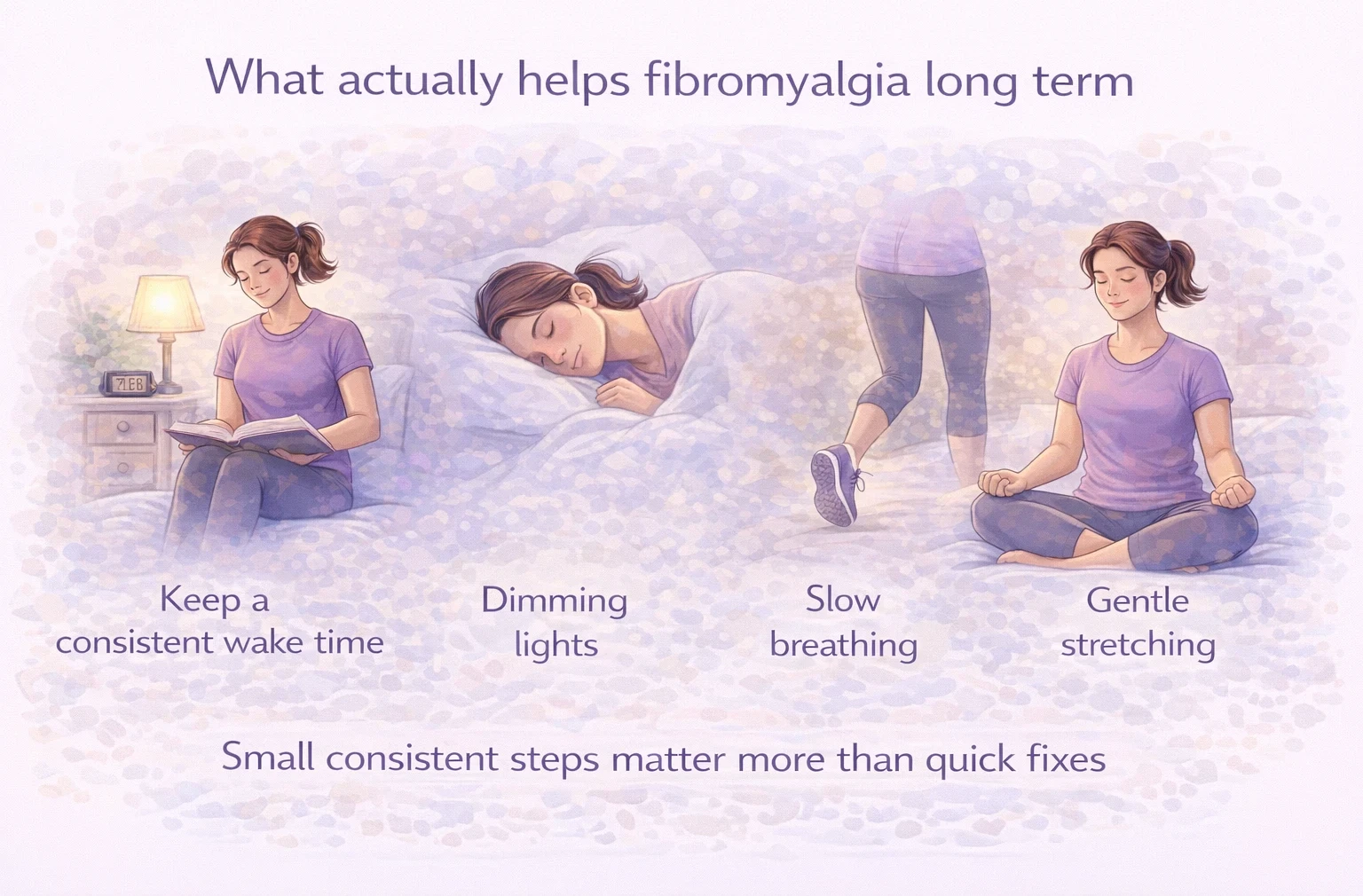
What actually helps fibromyalgia long term
Start with understanding, not fixing
One of the most powerful tools in fibromyalgia management is understanding what is happening in the body.
When people learn:
- Why pain can exist without damage
- Why symptoms fluctuate
- Why flare-ups happen
Fear often reduces. Reduced fear lowers nervous system threat, which can directly reduce symptom intensity.
If you haven’t already, the full explanation of the condition is covered here:
https://beyond-pain-relief.com/what-is-fibromyalgia/
Gentle, consistent movement
Movement is one of the most effective long-term supports for fibromyalgia when done correctly.
What helps:
- Short, repeatable sessions
- Low-intensity activities
- Predictable routines
- Stopping before exhaustion
Movement signals safety to the nervous system.
Over time, this can improve pain thresholds, reduce muscle guarding, and increase confidence.
Progress is often slow at first, but consistency matters far more than intensity.
Improving sleep quality
Sleep is a major driver of fibromyalgia symptoms. Poor sleep increases pain sensitivity, fatigue, and flare frequency.
Helpful priorities include:
- Consistent wake times
- Calm evening routines
- Reducing stimulation before bed
- Managing daytime activity levels
Improving sleep does not require perfection. Even small improvements can have a meaningful impact over time.
Reducing overall nervous system load
Fibromyalgia symptoms improve when total stress on the system decreases.
This includes:
- Emotional stress
- Mental overload
- Sensory overload
- Physical overexertion
Helpful approaches may include:
- Slow breathing or relaxation practices
- Simplifying daily routines
- Setting realistic expectations
- Allowing adequate recovery
Learning how to manage chronic pain without medication often focuses on lowering this overall load rather than chasing symptom elimination:
https://beyond-pain-relief.com/how-to-manage-chronic-pain-without-medication/
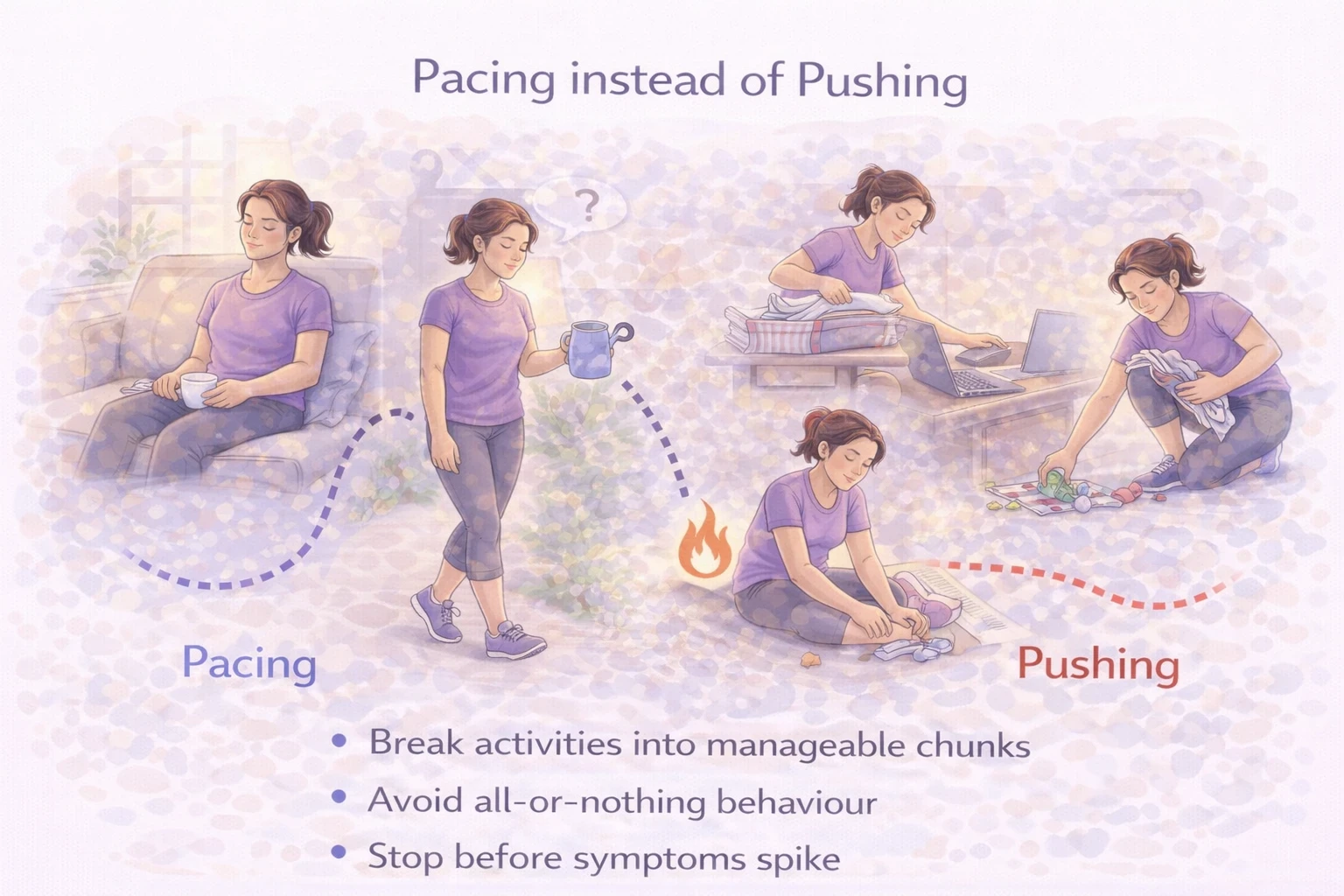
Pacing instead of pushing
Pacing is one of the most effective long-term strategies for fibromyalgia.
Pacing involves:
- Breaking activities into manageable chunks
- Avoiding all-or-nothing behaviour
- Stopping before symptoms spike
Over time, pacing increases capacity and reduces the frequency and severity of flare-ups.
Supportive tools (not cures)
Some people find benefit from supportive options such as:
- Heat therapy
- Gentle self-massage tools
- Compression supports
- Supplements aimed at sleep or muscle relaxation
These tools do not cure fibromyalgia, but they can support comfort and consistency when used appropriately.
Medication: helpful for some, limited for many
Medication can be useful for:
- Improving sleep
- Reducing pain sensitivity
- Supporting mood
However, medication alone rarely resolves fibromyalgia symptoms.
It tends to work best when combined with education, movement, pacing, and sleep support.
Progress is rarely linear
One of the most important things to understand is that progress with fibromyalgia is rarely straight-line improvement.
Progress often looks like:
- Fewer severe flare-ups
- Shorter recovery time
- Improved confidence during symptom spikes
- Better tolerance for daily activities
These changes often appear before pain levels noticeably reduce.
Small consistent steps matter more than quick fixes
What tends not to help long term
Many people find limited benefit from:
- Constant rest
- Fear-based avoidance of activity
- Searching for a single cure
- Aggressively pushing through pain
These approaches often keep the nervous system in a protective state.
A realistic view of improvement
Fibromyalgia is manageable.
While there is currently no cure, many people experience meaningful improvements in symptoms and quality of life over time.
Long-term progress is supported by:
- Reduced fear
- Predictable movement
- Better sleep
- Improved stress regulation
Improvement may be gradual, but it is real.
Key takeaways
- Fibromyalgia responds best to layered, consistent strategies
- Understanding reduces fear and pain sensitivity
- Small steps repeated often matter more than quick fixes
- Progress is measured by stability, not perfection
Scientific research
https://pubmed.ncbi.nlm.nih.gov/27916278/
https://pubmed.ncbi.nlm.nih.gov/31462544/