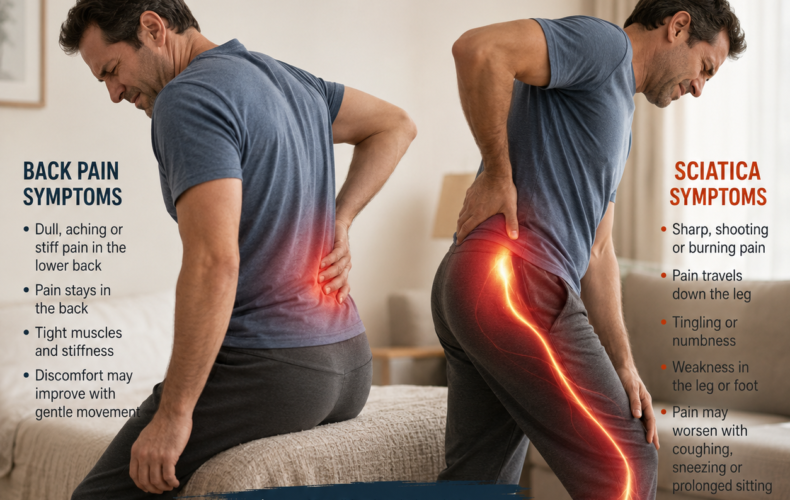
Back Pain Vs Sciatica Symptoms The Difference Is
Back Pain vs Sciatica Symptoms
Back pain vs sciatica symptoms is a comparison many people search for when pain begins spreading through the lower back, hips, or legs. While both conditions can feel similar at first, they are not exactly the same. Understanding the difference between ordinary back discomfort and nerve-related sciatic pain can help you make better decisions about treatment, movement, and recovery.
Many people assume every sharp or persistent ache in the lower spine is sciatica, but lower back discomfort can come from muscles, joints, discs, posture, stress, or irritated nerves. Learning how symptoms behave is often the first clue toward identifying what is really happening.

What Is Back Pain?
Back pain is a broad term used to describe discomfort anywhere along the spine, especially in the lower back. It may feel dull, stiff, sharp, tight, or aching. In some people it appears suddenly after lifting, twisting, or sleeping awkwardly. In others it develops gradually over time due to posture, repetitive strain, inactivity, or aging.
If you want a deeper understanding of causes, triggers, and long-term management, read this detailed guide on back pain.
Common causes of back pain include:
- Muscle strain
- Poor posture
- Weak core muscles
- Disc irritation
- Joint stiffness
- Sedentary lifestyle
- Heavy lifting
- Stress and tension
Back pain often stays localised around the lower spine, although it can sometimes spread slightly into the hips or buttocks.
What Is Sciatica?
Sciatica is a specific type of nerve pain involving irritation or compression of the sciatic nerve. The sciatic nerve is the largest nerve in the body and travels from the lower spine through the hips and down each leg.
Unlike ordinary muscular back discomfort, sciatica usually causes symptoms that radiate downward. This is one of the biggest differences when comparing back pain vs sciatica symptoms.
Sciatica is commonly linked to:
- Bulging or herniated discs
- Spinal narrowing
- Inflammation around spinal nerves
- Piriformis muscle irritation
- Degenerative spinal changes
Many people experience sciatica on only one side of the body.

Back Pain vs Sciatica Symptoms: Key Differences
The main difference between back pain and sciatica is how the symptoms behave.
Typical Back Pain Symptoms
- Aching or stiffness in the lower back
- Pain that worsens after lifting or prolonged sitting
- Tight muscles
- Reduced flexibility
- Discomfort mainly centred in the back
- Pain that improves with gentle movement
Typical Sciatica Symptoms
- Burning or shooting pain
- Pain travelling into the buttock or leg
- Tingling sensations
- Numbness in the leg or foot
- Electric shock-like pain
- Weakness in the affected leg
- Pain made worse by coughing or sneezing
Understanding these differences helps explain why the phrase back pain vs sciatica symptoms matters so much when choosing the right treatment approach.
How Pain Travels Can Reveal the Cause
One of the clearest signs of sciatica is radiating pain. Ordinary back pain usually stays concentrated around the spine. Sciatic pain tends to travel.
For example:
- Muscular back pain may stay near the lower spine
- Sciatica often moves through the buttock into the thigh or calf
- Nerve pain may even reach the foot or toes
This travelling sensation occurs because irritated nerves send signals along their pathway.
You can also learn more about related nerve discomfort in this guide on nerve pain.
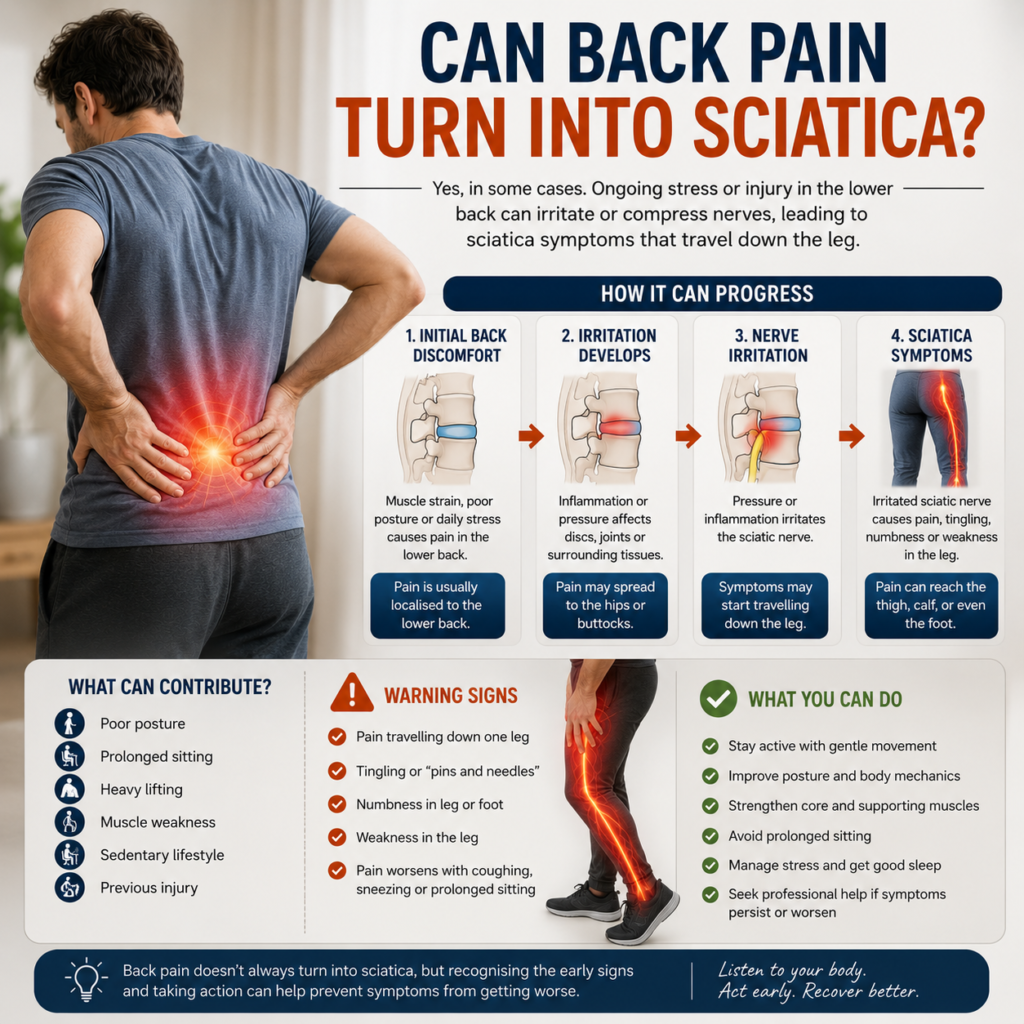
Can Back Pain Turn Into Sciatica?
Yes, in some situations back pain can progress into sciatica symptoms. For example, inflammation around a spinal disc may initially create local stiffness before eventually irritating nearby nerves.
This does not mean every episode of back pain becomes sciatica, but persistent spinal stress can sometimes contribute to nerve irritation over time.
People who sit for long periods, lift incorrectly, or avoid movement due to fear of pain may increase tension around the lower spine. Over time this may affect surrounding nerves.
When Sitting Makes Symptoms Worse
Both conditions can worsen during prolonged sitting, but sciatica is often more sensitive to pressure and compression.
People with sciatica commonly describe:
- Sharp pain when driving
- Leg discomfort while sitting
- Numbness after remaining still
- Difficulty standing upright after sitting
Back pain from muscle strain may feel stiff after sitting, but nerve symptoms tend to feel sharper, hotter, or more electrical.
How Movement Affects Recovery
Gentle movement is often helpful for both conditions. Long periods of complete rest may actually increase stiffness and sensitivity.
Helpful strategies can include:
- Walking regularly
- Gentle stretching
- Improving posture
- Reducing prolonged sitting
- Gradual strengthening exercises
- Heat therapy for muscle tension
Check out heat therapy for Back Pain Symptoms
Back pain vs sciatica symptoms is a comparison many people search for when pain begins spreading through the lower back, hips, or legs. While both conditions can feel similar at first, they are not exactly the same. Understanding the difference between ordinary back discomfort and nerve-related sciatic pain can help you make better decisions about treatment, movement, and recovery.
Many people assume every sharp or persistent ache in the lower spine is sciatica, but lower back discomfort can come from muscles, joints, discs, posture, stress, or irritated nerves. Learning how symptoms behave is often the first clue toward identifying what is really happening.
What Is Back Pain?
Back pain is a broad term used to describe discomfort anywhere along the spine, especially in the lower back. It may feel dull, stiff, sharp, tight, or aching. In some people it appears suddenly after lifting, twisting, or sleeping awkwardly. In others it develops gradually over time due to posture, repetitive strain, inactivity, or aging.
If you want a deeper understanding of causes, triggers, and long-term management, read this detailed guide on back pain.
Common causes of back pain include:
- Muscle strain
- Poor posture
- Weak core muscles
- Disc irritation
- Joint stiffness
- Sedentary lifestyle
- Heavy lifting
- Stress and tension
Back pain often stays localised around the lower spine, although it can sometimes spread slightly into the hips or buttocks.
What Is Sciatica?
Sciatica is a specific type of nerve pain involving irritation or compression of the sciatic nerve. The sciatic nerve is the largest nerve in the body and travels from the lower spine through the hips and down each leg.
Unlike ordinary muscular back discomfort, sciatica usually causes symptoms that radiate downward. This is one of the biggest differences when comparing back pain vs sciatica symptoms.
Sciatica is commonly linked to:
- Bulging or herniated discs
- Spinal narrowing
- Inflammation around spinal nerves
- Piriformis muscle irritation
- Degenerative spinal changes
Many people experience sciatica on only one side of the body.
Back Pain vs Sciatica Symptoms: Key Differences
The main difference between back pain and sciatica is how the symptoms behave.
Typical Back Pain Symptoms
- Aching or stiffness in the lower back
- Pain that worsens after lifting or prolonged sitting
- Tight muscles
- Reduced flexibility
- Discomfort mainly centred in the back
- Pain that improves with gentle movement
Typical Sciatica Symptoms
- Burning or shooting pain
- Pain travelling into the buttock or leg
- Tingling sensations
- Numbness in the leg or foot
- Electric shock-like pain
- Weakness in the affected leg
- Pain made worse by coughing or sneezing
Understanding these differences helps explain why the phrase back pain vs sciatica symptoms matters so much when choosing the right treatment approach.
How Pain Travels Can Reveal the Cause
One of the clearest signs of sciatica is radiating pain. Ordinary back pain usually stays concentrated around the spine. Sciatic pain tends to travel.
For example:
- Muscular back pain may stay near the lower spine
- Sciatica often moves through the buttock into the thigh or calf
- Nerve pain may even reach the foot or toes
This travelling sensation occurs because irritated nerves send signals along their pathway.
You can also learn more about related nerve discomfort in this guide on nerve pain.
Can Back Pain Turn Into Sciatica?
Yes, in some situations back pain can progress into sciatica symptoms. For example, inflammation around a spinal disc may initially create local stiffness before eventually irritating nearby nerves.
This does not mean every episode of back pain becomes sciatica, but persistent spinal stress can sometimes contribute to nerve irritation over time.
People who sit for long periods, lift incorrectly, or avoid movement due to fear of pain may increase tension around the lower spine. Over time this may affect surrounding nerves.
When Sitting Makes Symptoms Worse
Both conditions can worsen during prolonged sitting, but sciatica is often more sensitive to pressure and compression.
People with sciatica commonly describe:
- Sharp pain when driving
- Leg discomfort while sitting
- Numbness after remaining still
- Difficulty standing upright after sitting
Back pain from muscle strain may feel stiff after sitting, but nerve symptoms tend to feel sharper, hotter, or more electrical.
How Movement Affects Recovery
Gentle movement is often helpful for both conditions. Long periods of complete rest may actually increase stiffness and sensitivity.
Helpful strategies can include:
- Walking regularly
- Gentle stretching
- Improving posture
- Reducing prolonged sitting
- Gradual strengthening exercises
- Heat therapy for muscle tension
Many people recovering from lower back issues benefit from understanding how movement and pain sensitivity interact. This article on movement, load, and pain sensitivity explains this in more detail.
Why Understanding Back Pain vs Sciatica Symptoms Matters
Understanding back pain vs sciatica symptoms is important because the wrong assumption can lead people toward treatments that do not match the true source of pain. Many people panic when leg discomfort appears, while others dismiss nerve symptoms as ordinary stiffness. Learning the difference between back pain vs sciatica symptoms helps people respond earlier and make better recovery decisions.
In many cases, muscular back pain improves gradually with movement, posture changes, and reduced strain. Sciatica, however, may involve irritated nerves that need a different management approach. Comparing back pain vs sciatica symptoms also helps explain why some people feel mainly stiffness while others experience burning, tingling, or sharp electric-like pain down the leg.
Another reason people search for back pain vs sciatica symptoms is because symptoms can overlap. Someone may begin with ordinary lower back discomfort before developing nerve irritation later. This can create confusion, especially if symptoms move between the back, hip, buttock, and leg.
Understanding back pain vs sciatica symptoms may also reduce fear. Many episodes improve with time, gradual movement, and better daily habits. While persistent or severe symptoms should always be assessed properly, recognising the difference between muscular pain and nerve pain can make recovery feel less overwhelming.
When to Seek Professional Help
While many cases improve gradually, some symptoms should not be ignored.
Seek medical advice if you experience:
- Loss of bladder or bowel control
- Severe leg weakness
- Numbness around the groin
- Pain after major trauma
- Symptoms rapidly worsening
- Persistent pain lasting several weeks
Persistent nerve symptoms may require assessment to determine whether discs, joints, or nerve compression are involved.
Managing Back Pain and Sciatica Long Term
Long-term recovery often depends on consistency rather than quick fixes. Many people improve when they combine several supportive strategies together instead of relying on one treatment alone.
Helpful long-term habits may include:
- Regular movement
- Better sitting posture
- Strengthening exercises
- Stress reduction
- Improved sleep habits
- Weight management
- Pacing daily activities
Understanding the difference between back pain vs sciatica symptoms can help reduce fear and confusion. While the symptoms may overlap, recognising how nerve pain behaves compared to muscular back discomfort can guide more effective recovery decisions and help people stay active with greater relief.
Many people recovering from lower back issues benefit from understanding how movement and pain sensitivity interact. This article on movement, load, and pain sensitivity explains this in more detail.
Why Understanding Back Pain vs Sciatica Symptoms Matters
Understanding back pain vs sciatica symptoms is important because the wrong assumption can lead people toward treatments that do not match the true source of pain. Many people panic when leg discomfort appears, while others dismiss nerve symptoms as ordinary stiffness. Learning the difference between back pain vs sciatica symptoms helps people respond earlier and make better recovery decisions.
In many cases, muscular back pain improves gradually with movement, posture changes, and reduced strain. Sciatica, however, may involve irritated nerves that need a different management approach. Comparing back pain vs sciatica symptoms also helps explain why some people feel mainly stiffness while others experience burning, tingling, or sharp electric-like pain down the leg.
Another reason people search for back pain vs sciatica symptoms is because symptoms can overlap. Someone may begin with ordinary lower back discomfort before developing nerve irritation later. This can create confusion, especially if symptoms move between the back, hip, buttock, and leg.
Understanding back pain vs sciatica symptoms may also reduce fear. Many episodes improve with time, gradual movement, and better daily habits. While persistent or severe symptoms should always be assessed properly, recognising the difference between muscular pain and nerve pain can make recovery feel less overwhelming.
When to Seek Professional Help
While many cases improve gradually, some symptoms should not be ignored.
Seek medical advice if you experience:
- Loss of bladder or bowel control
- Severe leg weakness
- Numbness around the groin
- Pain after major trauma
- Symptoms rapidly worsening
- Persistent pain lasting several weeks
Persistent nerve symptoms may require assessment to determine whether discs, joints, or nerve compression are involved.
Managing Back Pain and Sciatica Long Term
Long-term recovery often depends on consistency rather than quick fixes. Many people improve when they combine several supportive strategies together instead of relying on one treatment alone.
Helpful long-term habits may include:
- Regular movement
- Better sitting posture
- Strengthening exercises
- Stress reduction
- Improved sleep habits
- Weight management
- Pacing daily activities
- Heat Therapy
Check out Heat Therapy Here.
Understanding the difference between back pain vs sciatica symptoms can help reduce fear and confusion. While the symptoms may overlap, recognising how nerve pain behaves compared to muscular back discomfort can guide more effective recovery decisions and help people stay active with greater confidence.
https://www.nhs.uk/conditions/sciatica/
