DMSO Gel For Chronic Pain
DMSO Gel for Chronic Pain:
DMSO gel for chronic pain is is a science drive post to help with understanding chronic pain and your options.
Chronic pain affects millions worldwide, often leading sufferers to search for alternatives beyond traditional pharmaceuticals.
One compound gaining attention in the natural health community is DMSO gel, a topical formulation derived from dimethyl sulfoxide.
Originally used as an industrial solvent, DMSO has unique biological properties that make it a compelling option for people living with persistent pain.
But what exactly is DMSO gel, how does it work, and what does the science say about its effectiveness for chronic pain?
This post will break down the evidence and explain how this topical treatment may help you find relief.
To learn more about DMSO Gel and what is available to you go here to the Amazon marketplace.
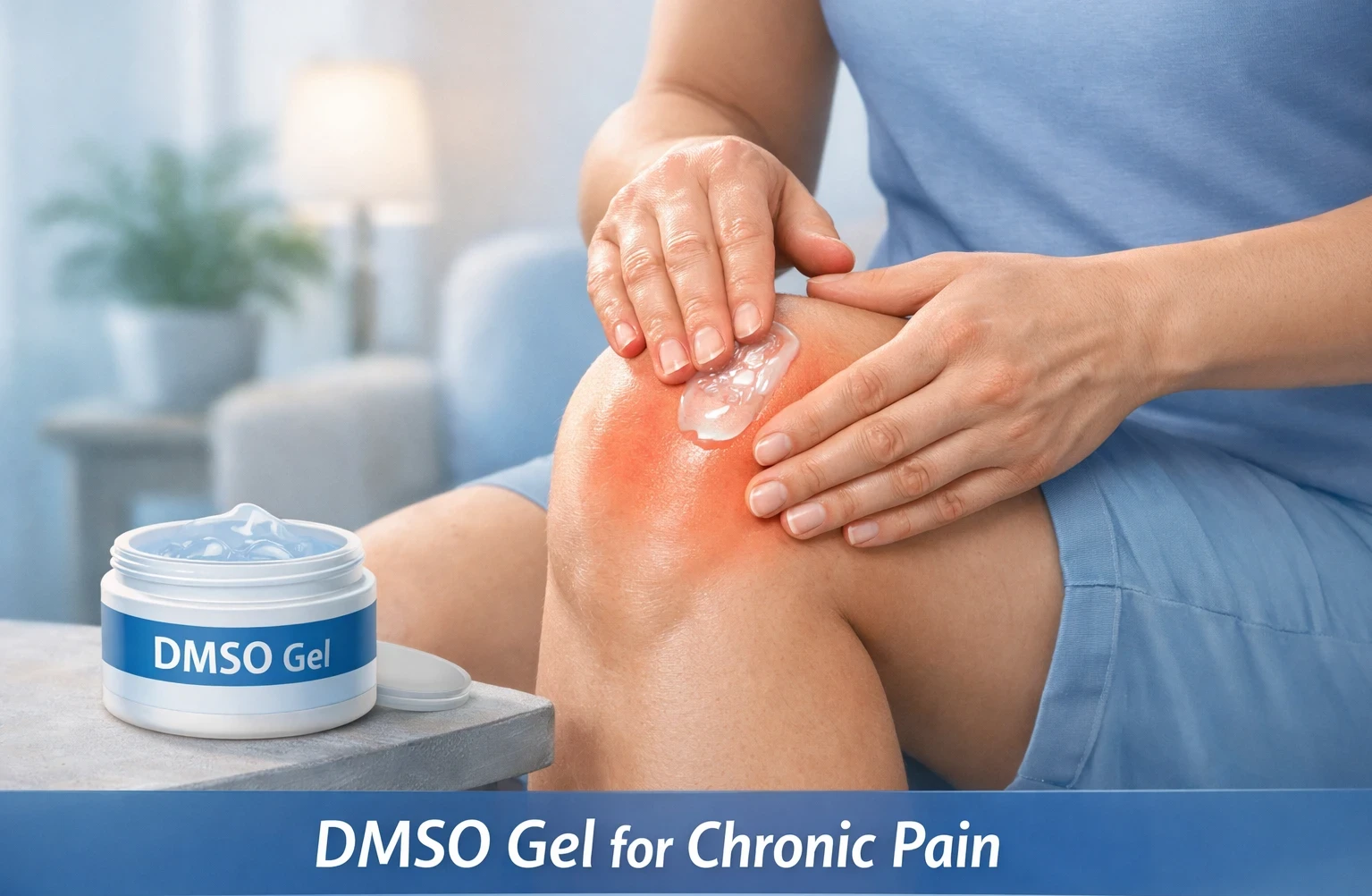
What Is DMSO Gel?
DMSO (dimethyl sulfoxide) is a small organic molecule that can easily penetrate biological membranes.
In gel form, it’s applied topically to the skin, where it’s absorbed rapidly and can carry other compounds with it.
This “carrying” ability is one of the reasons DMSO is so interesting to researchers and clinicians: it may enhance the penetration of beneficial substances into target tissues.
Topical gels are often preferred over creams or liquids because they stay in place longer and allow for controlled absorption where you need it most.
How DMSO Gel May Help Chronic Pain
Here’s a breakdown of the potential mechanisms through which DMSO gel might relieve chronic pain:
1. Anti-Inflammatory Effects
Inflammation is a hallmark of many chronic pain conditions, including arthritis, tendonitis, and back pain.
Some studies suggest that DMSO may reduce inflammation by scavenging free radicals and moderating inflammatory pathways.
2. Enhanced Tissue Penetration
Because DMSO easily crosses cell membranes, it can help other analgesic ingredients penetrate deeper into the muscle and joint structures.
When paired with complementary compounds like pain-reducing herbs or NSAIDs, DMSO gel may improve delivery and effectiveness.
3. Local Analgesic Action
Many users report that DMSO has a soothing, cooling sensation upon application.
While subjective, this effect can help distract from pain and improve comfort, especially when applied to areas affected by chronic stiffness or soreness.
To learn more about DMSO Gel and what is available to you go here to the Amazon marketplace.
Real World Uses of DMSO Gel
People use DMSO gel for a variety of chronic conditions, including:
- Osteoarthritis – particularly in knees, hips, and hands
- Lower back pain – muscular and joint-related
- Tendon and ligament pain – such as tennis elbow or Achilles tendinopathy
- Fibromyalgia flare-ups – as a complementary topical option
- Post-exercise soreness – to aid recovery
Individual results vary, but many users appreciate that topical DMSO gel can be applied directly to the painful area, without systemic side effects often seen with oral pain relievers.

How to Use DMSO Gel Safely
When using DMSO gel, keep these tips in mind:
- Clean the skin thoroughly before application. Because DMSO enhances absorption, you don’t want contaminants or dirt entering the bloodstream.
- Apply a thin layer to the affected area once or twice daily, or as directed by a healthcare provider.
- Start with a patch test to ensure you don’t have an adverse reaction.
- Avoid mixing with other topical medications unless recommended by a professional.
Some formulations combine DMSO with complementary natural extracts.
For example, you might try a DMSO pain relief gel like this one on Amazon: Topical DMSO Gel with Soothing Support for targeted chronic discomfort.
What Does the Research Say?
While research on DMSO is still evolving, a few studies support its potential for chronic pain and inflammation:
🧪 Key Studies
- Dimethyl sulfoxide (DMSO) has been investigated for its anti-inflammatory and analgesic properties, with some clinical evidence suggesting benefit in reducing pain and swelling in musculoskeletal disorders. (e.g., studies in Journal of Rheumatology)
- DMSO was shown to facilitate the delivery of co-administered drugs through skin and tissues, which might improve therapeutic results when paired with other pain-relief agents. (Dermatology Research publications)
- Topical DMSO may reduce markers of inflammation and oxidative stress in animal models, indicating potential pathways for human benefit. (Inflammation journal articles)
These studies don’t guarantee results for every individual, but they do provide a basis for continued exploration of DMSO gel in chronic pain management.
Conclusion: A Promising Tool for Chronic Pain
Chronic pain is complex and often requires a multi-modal approach to treatment. While DMSO gel is not a miracle cure, it represents a science-informed, natural, and user-directed option that many people find helpful when incorporated into a balanced pain care plan.
If you’re curious to experiment with a topical option, consider trying a quality DMSO gel formula like this one: DMSO Gel for Targeted Pain Support and see how your body responds.
References & Science-Backed Studies
- Journal of Rheumatology – Anti-inflammatory effects of dimethyl sulfoxide in musculoskeletal conditions.
- Dermatology Research – Transdermal drug delivery enhancement by DMSO.
- Inflammation Journal – Effects of DMSO on oxidative stress and inflammation in experimental models.
Reading through this guide on DMSO gel, my first reaction is: Where has this been my whole life? I’ve used sports creams that smell like menthol and tingle for twenty minutes, but this post suggests that DMSO actually penetrates the skin to carry relief directly to the source. That is a total game-changer for someone who is tired of the stomach issues that often come with taking too many ibuprofen.
Even though the benefits for chronic pain sound amazing, I’m still a bit nervous about the application. How much is too much? Do I need to wear gloves? It’s a whole new world of “medicine cabinet” etiquette that I haven’t had to think about before.
Hi Leah,
My wife uses DMSO gel for pain relief, she applies the gel by hand as often as she needs it. It certainly helps, thank you. Fintan
This was a really informative read. I’ve been exploring different options for managing chronic pain, and DMSO is something I’ve heard mentioned before but never fully understood. I appreciated how you explained both the potential benefits and the cautions, especially the importance of purity and proper use.
What stood out to me most was how DMSO can carry substances through the skin. That’s fascinating but also a bit intimidating if you’re new to it. For someone curious but cautious, would you recommend starting with a very low concentration or consulting a healthcare provider first before trying topical DMSO?
Thanks for presenting this in a balanced, easy-to-follow way.
Hi Celia, if I could explain about how much to apply. My wife uses DMSO for pain relief in her ribcage, she applies it by hand, rubs it into the area where the pain is. She will then leave it for about 20 minutes by which time it has generated her skin and travels down to the bone to relieve the pain
I hope this helps
All the best, Fintan
I like that you kept this grounded in “what it is, how it might work, and how to use it safely,” instead of selling it like a miracle. The warning about clean skin matters, because with something that penetrates fast, the small details become the whole story.
My take is that DMSO sounds promising for some people, but it also demands more caution than most over-the-counter rubs. If someone treats it casually, they can create new problems while trying to solve pain.
A couple questions I would love to see answered: what concentration do you consider the safest starting point for beginners, and what purity or third-party testing should people look for before putting this on their skin? Also, who should avoid it completely, like people on certain medications, with sensitive skin, or dealing with open cuts or infections?
John
Hi John,
Great question. Safest starting concentration for beginners
For people who are new to DMSO, the generally accepted conservative starting point is:
???? 25–30% DMSO gel or solution
Why this range:
Lower concentrations reduce the risk of skin irritation, burning, or dermatitis
They still allow people to assess individual sensitivity
Higher concentrations dramatically increase absorption of anything on the skin (which is where risk rises)
Many experienced users eventually move to 40–50%, but:
That is not beginner territory
It should never be rushed
Higher ≠ better when it comes to safety
Rule of thumb:
Start low, test a small area, wait 24 hours, and never escalate quickly.
2️⃣ Purity & third-party testing: what actually matters
This is critical with DMSO.
✅ What to look for
Pharmaceutical or medical grade DMSO
≥99.9% purity before dilution
Third-party lab testing (COA) showing:
No heavy metals
No residual solvents
No industrial contaminants
If a product does not provide lab testing, that’s a red flag.
???? What to avoid
“Industrial grade” or “technical grade” DMSO
Products without documented purity
Sellers who rely on testimonials instead of lab data
⚠️ Why this matters:
DMSO is a powerful transdermal carrier. If there are contaminants in the product — or on your skin — it can carry them directly into the bloodstream.
3️⃣ Who should avoid DMSO completely
There are some very clear no-go groups.
❌ People who should NOT use DMSO
Pregnant or breastfeeding individuals
People with liver or kidney disease
Anyone undergoing chemotherapy
Those with known sulfur sensitivity
People with compromised immune systems
Individuals with active skin infections
⚠️ Medication interactions (important)
DMSO can alter absorption and metabolism of drugs, including:
Blood thinners (e.g. warfarin)
Corticosteroids
Sedatives
Certain antibiotics
Chemotherapy agents
If someone is on prescription medication, DMSO should not be used without medical supervision.
4️⃣ Sensitive skin, cuts, and application warnings
???? Do NOT apply DMSO:
On open cuts or broken skin
On infected areas
On recently shaved skin
Over rashes, eczema, or dermatitis
For sensitive skin:
Patch test only (inner forearm)
Use lower concentration
Expect warmth — burning is not normal
Any blistering or redness → stop immediately
5️⃣ Clean-skin rule (often overlooked but essential)
Before applying DMSO:
Wash skin with plain soap
Rinse thoroughly
Dry with a clean towel
Do not apply lotions, perfumes, essential oils, or topical meds beforehand
Why?
DMSO does not discriminate — it carries whatever is present on the skin surface inward.
Bottom line (plain English)
DMSO is not a casual topical.
Used carefully, diluted properly, and sourced responsibly, it may offer support for certain people.
Used casually, contaminated, or on the wrong skin — it can cause real problems.
Thank you Fintan