Fibromyalgia And The Nervous System
Fibromyalgia and the Nervous System
Fibromyalgia and the nervous system are closely connected.
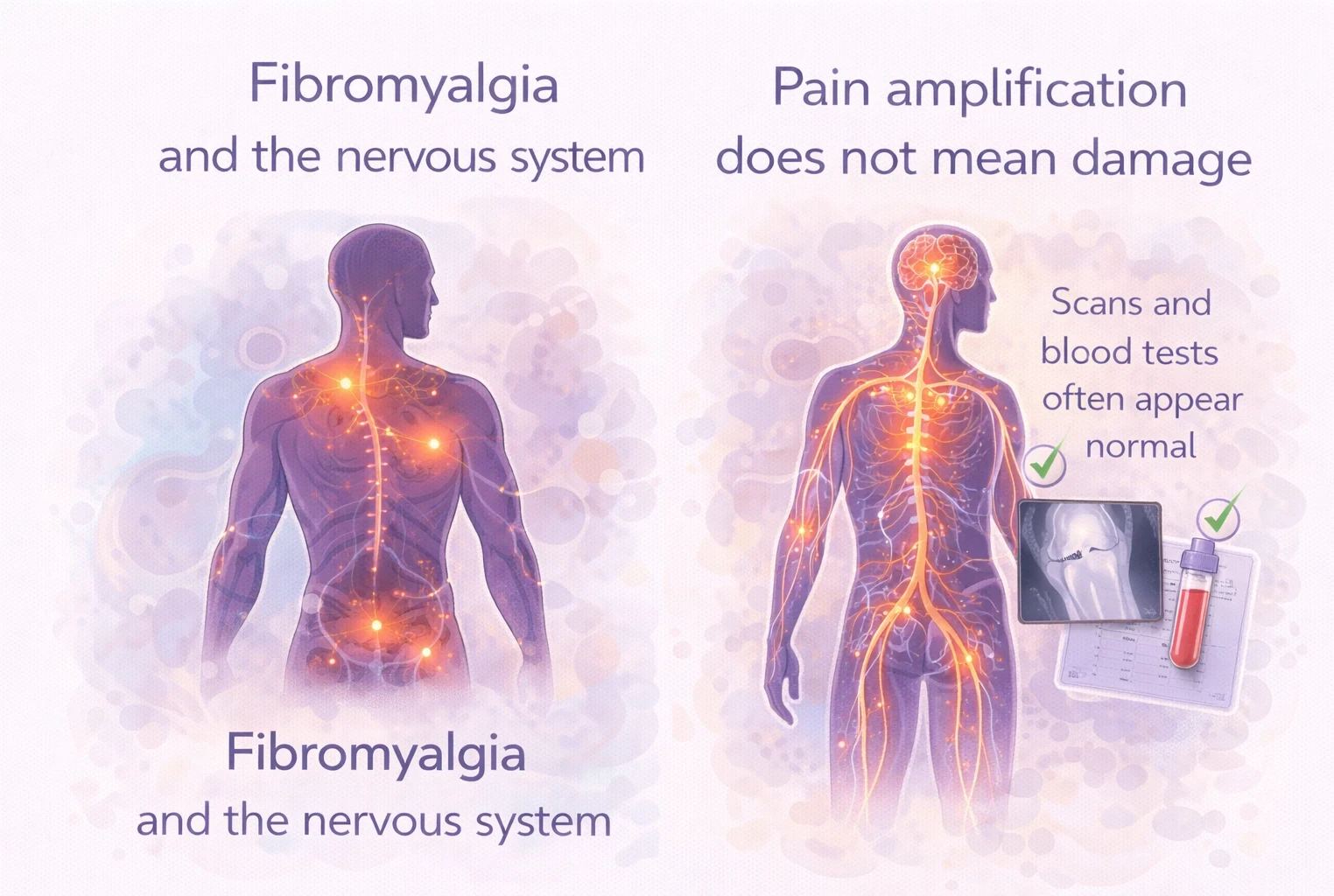
This link explains why fibromyalgia pain can feel intense, widespread, and unpredictable even when scans and blood tests appear normal.
Rather than being caused by ongoing tissue damage, fibromyalgia is best understood as a condition involving how the nervous system processes and amplifies signals.
Understanding this connection often reduces fear and helps people engage more confidently with movement, daily life, and recovery strategies.

Fibromyalgia and the nervous system
How the nervous system creates pain
Pain is not produced directly by muscles, joints, or tissues.
Pain is created by the brain as a protective response after evaluating information from the body and environment.
The nervous system continuously considers:
- Sensory input from the body
- Previous pain experiences
- Stress levels
- Sleep quality
- Perceived safety or threat
When the nervous system senses danger, pain sensitivity increases.
When it senses safety, pain thresholds rise.
In fibromyalgia, this system becomes overly protective.
For a full overview of the condition, see:
https://beyond-pain-relief.com/what-is-fibromyalgia/
Central sensitisation explained simply
A key concept in fibromyalgia is central sensitisation.
This refers to increased sensitivity within the central nervous system (the brain and spinal cord).
With central sensitisation:
- Pain signals are amplified
- Non-painful sensations may feel painful
- Pain spreads beyond the original area
- Symptoms persist even after tissues have healed
This does not mean the nervous system is damaged. It means it has learned to stay on high alert.
Pain amplification does not mean damage
Pain amplification does not equal injury
One of the most important messages for people with fibromyalgia is that increased pain does not mean increased harm.
Fibromyalgia pain:
- Does not reflect ongoing tissue breakdown
- Is not a sign that joints are wearing out
- Does not mean movement is dangerous
Understanding this often reduces fear, which itself lowers pain sensitivity.
Why the nervous system becomes sensitised
Sensitisation usually develops gradually rather than suddenly.
Common contributors include:
- Repeated or long-lasting pain
- Chronic stress or emotional overload
- Poor or disrupted sleep
- Illness or immune challenges
- Lack of recovery between demands
Over time, the nervous system learns to interpret normal sensations as threatening.
The stress response and fibromyalgia
The stress response plays a major role in fibromyalgia symptoms.
When stress is high:
- Muscles tense more easily
- Breathing becomes shallow
- Pain thresholds drop
- Fatigue increases
- Sleep quality worsens
This does not mean stress causes fibromyalgia. It means stress influences how loudly symptoms are expressed.
Learning how to manage chronic pain without medication often includes strategies that calm the nervous system:
https://beyond-pain-relief.com/how-to-manage-chronic-pain-without-medication/
Why scans and tests are often normal
Fibromyalgia does not usually involve inflammation or structural damage that shows up on imaging or blood tests.
This can be frustrating, but it reinforces the idea that fibromyalgia is a processing issue, not a damage issue.
Normal test results do not invalidate symptoms.
They simply point toward a different mechanism.
The nervous system is adaptable
One of the most hopeful aspects of fibromyalgia is that the nervous system is plastic.
This means it can:
- Learn pain
- Unlearn pain
- Become less sensitive over time
Helpful inputs include:
- Gentle, consistent movement
- Improved sleep routines
- Reduced fear around pain
- Predictable daily activity
- Calm, supportive education
Change usually happens gradually, not overnight.
Movement as a nervous system signal
Movement is one of the most powerful signals of safety for the nervous system when done correctly.
Gentle movement:
- Improves pain thresholds
- Reduces muscle guarding
- Builds confidence
- Reininds the brain that the body is capable
The key is staying below flare-up thresholds rather than pushing through symptoms.
Why understanding the nervous system reduces fear
Fear strongly influences pain.
When people believe:
- Pain always means damage
- Movement is dangerous
- Symptoms signal deterioration
The nervous system becomes more protective.
Education reframes pain as something that can be influenced, which often leads to symptom improvement even before physical changes occur.
Putting it all together
Fibromyalgia reflects a nervous system that has learned to protect too aggressively.
This protection can be recalibrated.
With understanding, patience, and consistent inputs, many people experience reduced symptom intensity, fewer flare-ups, and improved confidence.
Scientific research
https://pubmed.ncbi.nlm.nih.gov/31462544/
https://pubmed.ncbi.nlm.nih.gov/27916278/
 Previous Post
 Next Post